Buy The Ordinary if you want a cheap way into retinoids with a molecule its maker and dermatologists describe as low in irritation and can live with a bottle that must sit in the fridge and be finished within three months, because at $12.10 it lets you learn how your skin reacts for the price of a sandwich; buy Medik8 if you already know you tolerate vitamin A and want a stated, laddered dose of retinal, the stronger and better-studied of the two molecules, and you are prepared to pay $87 for the 0.06% tube and more as you climb.
- You are new to retinoids, or coming back after a bad reaction, and want to start with something The Ordinary itself rates as moderate strength for $12.10.
- You want the gentler chemistry on paper: hydroxypinacolone retinoate is an ester of retinoic acid that, the brand says, needs no conversion in the skin and is less likely to cause irritation than retinol.
- You have a fridge you will remember to use, since The Ordinary says the opened bottle should be refrigerated and used within three months.
- You would rather spend the difference on sunscreen, which both brands tell you to wear every morning while using a retinoid.
- You have already used a retinoid without trouble and want retinal, one step from retinoic acid, at a percentage printed on the tube.
- You like a plan: Medik8 sells six strengths from 0.01% to 0.24% and tells you to finish one 30 ml tube before moving up.
- You want a pump tube that needs no fridge and that Medik8 says gives about 100 uses, with vitamin C derivatives, vitamin E and squalane in the same formula.
- You can buy in a sale: Medik8's US site had 30% off on 22 November, which brought Crystal Retinal 6 down to $60.90.
The one difference that matters: The Ordinary's emulsion is built on hydroxypinacolone retinoate, a newer retinoid ester with little independent research behind it, at about 0.2% with an unstated dose of retinol, while Medik8's tube is built on retinaldehyde, a well-studied retinoid one conversion step from retinoic acid, at a stated 0.06% in the strength most people buy, so you are choosing between a cheap, gentle unknown and an expensive, measured known.
The Ordinary sells its emulsion as a “retinol alternative”, but retinol is the tenth ingredient on its label and the “2%” means about 0.2% of the active, so read what the label really says before you buy it to avoid retinol.
| | |
|---|---|---|
| Price and size, US | $12.10 for 30 ml on The Ordinary's US site | $87 for 30 ml (Crystal Retinal 6) on Medik8's US site; $56 to $137 across six strengths |
| Price per ml | 40 cents | $2.90 for strength 6; $1.87 (strength 1) to $4.57 (strength 24) |
| Active ingredient | Hydroxypinacolone retinoate (sold as Granactive Retinoid), plus retinol | Retinaldehyde (retinal), encapsulated |
| Strength on the label | “2%” of Granactive Retinoid, about 0.2% of the active itself; retinol dose not given | 0.06% retinal; the ladder runs 0.01%, 0.03%, 0.06%, 0.1%, 0.2% and 0.24% |
| Distance from retinoic acid | No conversion needed, The Ordinary says | One conversion step |
| How the brand says to start | A few drops in the evening; its retinoid guide suggests a couple of times a week at first | Twice a week for two weeks, every other night for two weeks, then nightly |
| Who the brand says it suits | “Ideal for those already familiar with retinoid use”; all skin types | Strength 6 for “regular vitamin A users”; strength 1 for sensitive skin, 3 for beginners |
| Other named ingredients | Bisabolol, mountain pepper (Tasmannia) extract, rosemary extract | Two vitamin C derivatives, vitamin E, squalane, sodium hyaluronate, cloudberry and carrot seed oils |
| Fragrance | None listed | “No artificial fragrance”; lists vanilla and tonka bean extracts and coumarin |
| Storage and pack | 30 ml glass dropper; refrigerate after opening, use within three months | 30 ml pump tube; about 100 uses, Medik8 says |
| Who owns it | DECIEM of Toronto, wholly owned by The Estée Lauder Companies since May 2024 | Medik8 of Britain, 77.4% owned by L'Oréal since September 2025 |
| Where to buy in the US | The Ordinary's site; Ulta ($12.10) | Medik8's US site; Dermstore ($87) |
Prices checked on 22 November 2026 on The Ordinary's and Medik8's US sites, with Ulta's and Dermstore's listings for comparison. Prices per millilitre are our arithmetic. The 0.2% figure for The Ordinary is INCIDecoder's reading of Granactive Retinoid, which is sold to brands as a solution of the active in a solvent.
A $12 bottle from Toronto, an $87 tube from outside London, and the two giants behind them
Retinoids have decades of research behind their effect on the look of fine lines and texture, and they also sting, peel and redden skin that is not ready for them, so every brand's real pitch is the first without the second. The Ordinary's answer has been an ingredient most shoppers had never heard of, hydroxypinacolone retinoate, in a white emulsion priced so low that trying it is almost free; Medik8's answer, since 2018, has been retinaldehyde, an older and stronger molecule, stabilised by a process the British brand has patented and sold as a ladder of six strengths you are meant to climb tube by tube.
Behind the two bottles now stand the two largest companies in beauty. The Estée Lauder Companies finished buying DECIEM, The Ordinary's Toronto parent, on 31 May 2024 for about $860 million, after a total investment of about $1.7 billion, and L'Oréal agreed in June 2025 to buy 77.4% of Medik8, completing the deal on 10 September 2025. So this is, in a sense, New York's cheapest retinoid against Paris's newest, and the question this page answers is not which group has the better marketing but which tube does the job you need for the money you have.
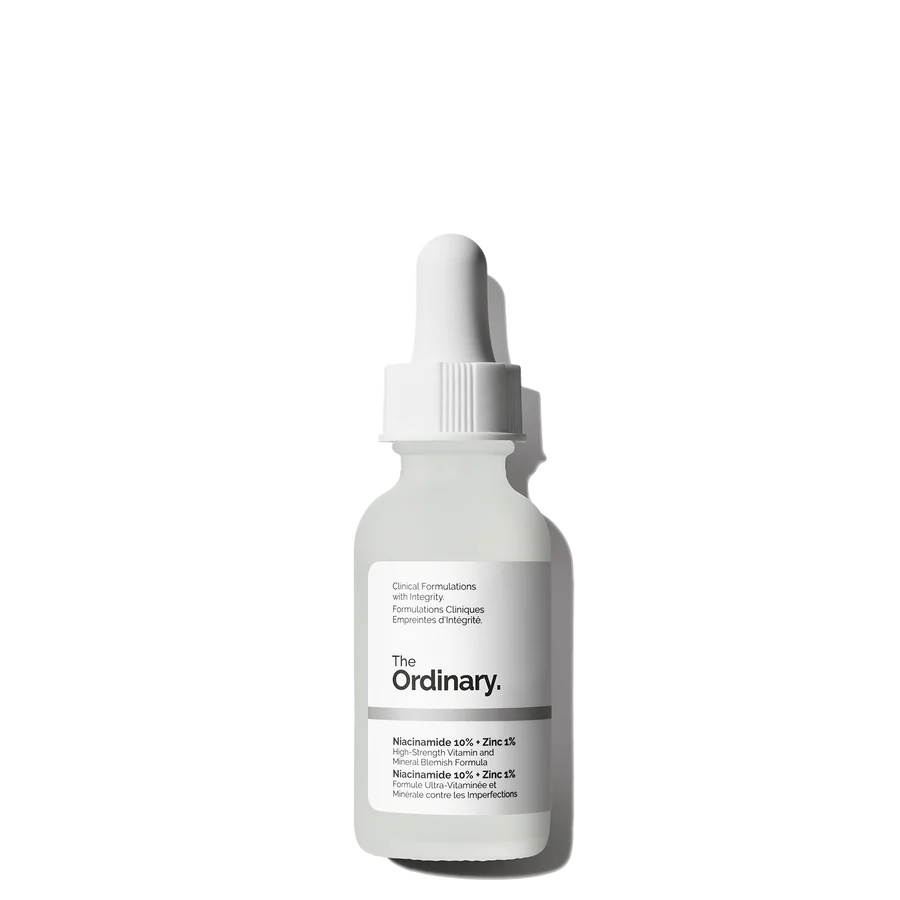
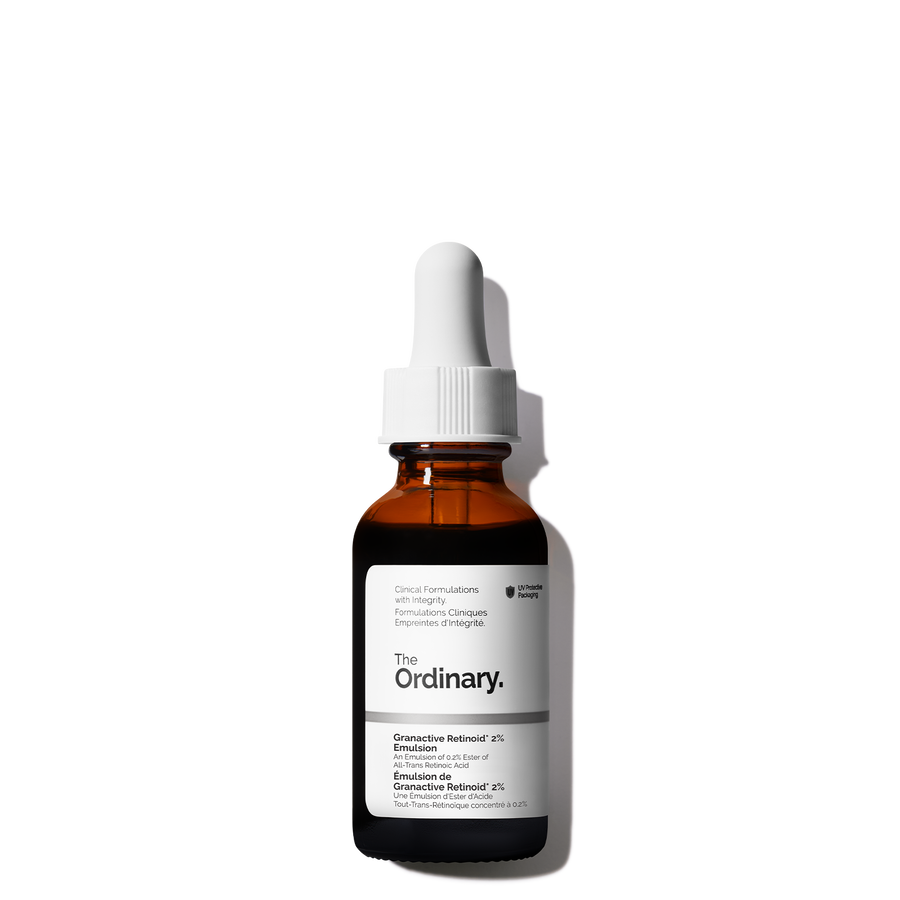
The Ordinary Granactive Retinoid 2% Emulsion: the $12 starter
Granactive Retinoid 2% Emulsion
- Price$12.10
- Size30 ml (1 fl oz)
- Works out at$0.40 per ml
The Ordinary US, 22 Nov 2026
Image: The Ordinary, from theordinary.com
What it costs, and how the price has moved
The Ordinary sells the emulsion in one size on its US site: $12.10 for 30 ml, which works out at 40 cents a millilitre, and Ulta charged the same $12.10 on 22 November. That is cheap even by The Ordinary's standards, but it is not as cheap as it was: an archived copy of the same page shows $10.50 in May 2022, and by April 2024 it had reached $12.10, a rise of 15% that has held since.
The real cost depends on the fridge rule. The Ordinary says that once opened the bottle should be refrigerated and used within three months, so a buyer who uses a few drops a few nights a week will throw away much of each bottle, since a few drops a night barely dents 30 ml in three months. Say you use it every other night for a year: you will need four bottles to stay inside the three-month window whatever you have left over, so the honest annual cost is about $48, still less than a single tube of Medik8.
What's in it: an ester, a solvent, and a retinol
The label on The Ordinary's US page lists 33 ingredients. The base is water, glycerin, caprylic/capric triglyceride (a light emollient), ethyl linoleate and propanediol, and then comes dimethyl isosorbide in sixth place, a solvent that matters because Granactive Retinoid, the trademarked ingredient Grant Industries sells to brands, is a solution of hydroxypinacolone retinoate in it. INCIDecoder explains the arithmetic plainly: “2% Granactive Retinoid” on a front label means 0.2% hydroxypinacolone retinoate and 1.8% dimethyl isosorbide in the bottle.
Ninth on the list is that hydroxypinacolone retinoate, usually shortened to HPR, and tenth is plain retinol, followed by an extract of Tasmannia lanceolata, the Australian mountain pepper. Lower down come bisabolol, a soothing compound from chamomile, rosemary leaf extract and hydroxymethoxyphenyl decanone, both antioxidants, and a run of emulsifiers, gums and preservatives. There is no fragrance on the list, The Ordinary describes the formula as alcohol-free, silicone-free and vegan with a pH of 5 to 6, and it tells you to shake the bottle before use, which is the emulsion's way of telling you it can separate.
The Ordinary's “retinol alternative” has retinol in it, and its 2% is really about 0.2%
The Ordinary's US page calls the emulsion “a moderate-strength retinol-alternative formulation” and, a few lines further down, warns that it “must not be used in conjunction with other retinoids, including retinol”. Yet retinol sits tenth on its own ingredient list, directly after the hydroxypinacolone retinoate, and archived copies of the page show it there since at least May 2022. The warning is about adding a second product rather than about what is in this one, but a shopper who picks this bottle specifically to avoid retinol, because retinol has irritated her before, is not avoiding it, and The Ordinary does not say how much the bottle contains.
The headline number needs reading too. The “2%” refers to Granactive Retinoid, which reaches brands as a solution, so the active ester is about a tenth of that, 0.2%, according to INCIDecoder, and dimethyl isosorbide sits sixth on the label for the same reason. None of this makes the product bad, and many buyers say it suits them, but it means the bottle is best understood as a low dose of a newer retinoid with a small, undisclosed dose of the classic one, while Medik8 prints the exact percentage of its single retinoid on every strength it sells.
How The Ordinary tells you to start
The product page itself is brief: apply a few drops to the face in the evening, after water-based serums and before heavier creams, use sun protection during the day, patch-test first and stop if irritation occurs. The Ordinary now places the emulsion one rung up its own ladder, describing it as “ideal for those already familiar with retinoid use” and steering complete beginners to its newer Retinol 0.3% Emulsion, while its retinoid guide advises starting “sparingly, maybe a couple of times a week” and adds that its retinoids “can safely be used daily” once skin adjusts.
The brand's pages do not quite agree with one another. The page for The Ordinary's stronger Retinal 0.2% Emulsion tells newcomers to explore “the Granactive Retinoid 2% Emulsion, or the Retinol 0.2% in Squalane” first, which casts this bottle as a starting point, while the emulsion's own page says it is for people who already know retinoids; either way, a newcomer should start it two nights a week and build up.
What buyers and experts say
Ulta's page showed the emulsion at 4.5 out of 5 from 534 reviews on 22 November, a strong score for a product this cheap, and the expert view of its active is warm but cautious. The consultant dermatologist Derrick Phillips told Marie Claire in July 2024 that hydroxypinacolone retinoate offers retinoid action with a low risk of irritation, and in the same article Medik8's own chief product officer, Daniel Isaacs, called it a “promising molecule” while noting there is less data behind it than behind other retinoids, a fair summary from a man who sells the competing molecule.
The practical complaints are the ones The Ordinary's own instructions predict. A fridge and a three-month limit are a nuisance for anyone who uses a few drops twice a week, the emulsion has to be shaken, and The Ordinary's warnings, to patch-test first, to wear sunscreen and to stop if irritation occurs, are there because any retinoid, however mild its reputation, can sting, peel or break out the skin of someone who is not ready for it.
You can expect visible improvements in fine lines and pigmentation with low irritation risk.
Dr Derrick Phillips, consultant dermatologist, in Marie Claire UK, July 2024
The story: a Toronto disruptor, now part of Estée Lauder
DECIEM was founded in Toronto in 2013 by the late Brandon Truaxe, and The Ordinary, its flagship brand, made its name selling formulas named after their active ingredients, at prices that embarrassed the rest of the shelf. Estée Lauder first invested in 2017, became the majority owner in 2021 and bought the rest of the company on 31 May 2024 for about $860 million, according to Estée Lauder's own announcement, which said The Ordinary then ranked in the top two in prestige skin care in Canada and the US.
The bet has paid off for the parent. In its results for the year to June 2026, Estée Lauder said skin care sales rose 4% organically to $7.34 billion, “primarily driven by growth from La Mer, The Ordinary and Estée Lauder”, which makes this $12.10 bottle a small part of the same business that sells $135 bottles of Advanced Night Repair, a serum we compare with Shiseido's in Ultimune vs Advanced Night Repair.
What goes wrong with The Ordinary
The evidence is thin. INCIDecoder notes that most of what is known about hydroxypinacolone retinoate comes from the ingredient's maker and a handful of small studies, and that independent work on real faces is scarce, so The Ordinary's line that it is “proven to deliver comparable visible results to retinol” is a claim to take on trust. The one independent study we found that measured it is more encouraging on a practical point: a 2021 study from the University of Ljubljana of 12 commercial retinoid products found that most lost retinoid over six months, by up to 80% at room temperature, and that hydroxypinacolone retinoate was the most stable of the retinoids it measured.
The other problems are practical: the fridge rule and three-month limit waste product, the emulsion can separate if you forget to shake it, the undeclared retinol undermines the “retinol alternative” label for anyone who reacts to retinol, and people who already use a stronger retinoid will probably find the low dose does little, which is why The Ordinary sells a 5% version in squalane and its own retinal for them.
Medik8 Crystal Retinal: the $87 ladder
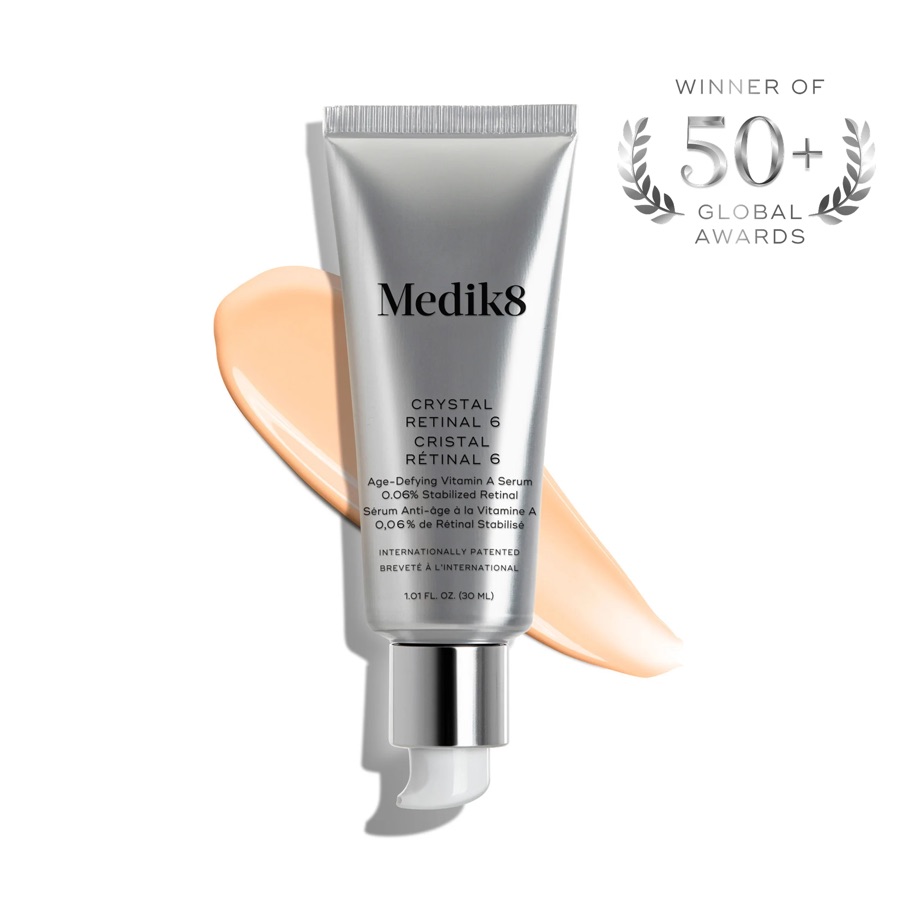
Crystal Retinal 6
- Price$87
- Size30 ml (1.01 fl oz)
- Works out at$2.90 per ml
Medik8 US, 22 Nov 2026 (list price; $60.90 in a 30%-off sale that day)
Image: Medik8, from medik8.com
What it costs, strength by strength
Medik8's US site sells Crystal Retinal in six strengths, all in a 30 ml tube: strength 1 (0.01% retinal) for $56, strength 3 (0.03%) for $66, strength 6 (0.06%) for $87, strength 10 (0.1%) for $111, strength 20 (0.2%) for $123 and strength 24 (0.24%) for $137, which works out at $1.87, $2.20, $2.90, $3.70, $4.10 and $4.57 a millilitre. Every step up the ladder costs more per millilitre, the opposite of the usual bigger-is-cheaper rule, so the price rises with the dose. On 22 November the whole range was 30% off, bringing strength 6 to $60.90, and Dermstore listed strength 6 at the same $87.
Prices have crept rather than leapt. When Shawna Hudson reviewed the serum for Who What Wear in July 2024, strength 10 cost $107; it now costs $111, a rise of under 4% in two years. Britons, oddly, pay a little more for their own brand: Medik8's UK site charges £69 for strength 6, about $90.56 at the European Central Bank's rate of 20 November, though that price includes Britain's 20% VAT while the American one is before sales tax.
What's in it: retinal in a cage, plus vitamin C and a little vanilla
The strength-6 tube lists 41 ingredients. The base is water, caprylic/capric triglyceride, glycerin and isododecane, a light, quick-drying emollient, with olive-derived emulsifiers; seventh comes cyclodextrin, a ring-shaped sugar molecule widely used to encapsulate fragile ingredients, and Medik8, which holds a global patent for stabilising retinaldehyde, says its stability system keeps the retinal potent “until the very last drop”. Retinal itself is 22nd, which is normal for an ingredient used at 0.06%.
Around it sit vitamin E, squalane, sodium hyaluronate, two vitamin C derivatives (3-O-ethyl ascorbic acid and tetrahexyldecyl ascorbate), cloudberry and carrot seed oils and honeysuckle extracts, and near the end come vanilla fruit extract, tonka bean extract and coumarin, a fragrant compound found in tonka beans, with a red dye and titanium dioxide. Medik8 says the serum has “no artificial fragrance” and is paraben-free, alcohol-free and certified by the Vegan Society, which the label supports, but anyone who reacts to fragrance compounds should notice that a natural one is there. The higher strengths are tinted peach, and Medik8 warns that strengths 20 and 24 can colour pillowcases if they have not dried.
What the “11 times faster” claim rests on
Medik8's page says retinaldehyde “acts 11x faster than standard retinOL” and cites a 1990 paper by G. Siegenthaler and colleagues in the Biochemical Journal. The paper's abstract describes a laboratory study of extracts from cultured human skin cells, in which differentiating cells turned retinal into retinoic acid at 51.6 picomoles an hour per milligram of protein and retinol at 4.49, a ratio of about 11.5, which is where the number comes from.
That is a real finding about the chemistry, and it is the textbook reason retinal is considered stronger than retinol, but it is a measurement in a test tube, not a comparison of two serums on faces, and it says nothing about hydroxypinacolone retinoate at all. The clinical figures Medik8 publishes for the product itself come from what it calls an independent study of 33 people using one tube of strength 6 for 12 weeks: a 20% reduction in the look of wrinkles and of dark spots, 11% firmer skin, and 100% of participants saying it felt gentle. We would read those as the brand's numbers, which they are.
How Medik8 tells you to start
Medik8 is far more prescriptive than The Ordinary. It recommends a patch test 24 hours before first use, then two pumps on the face and neck twice a week for the first two weeks, every other night for the next two weeks, and every night after that, always followed by a moisturiser and always with sunscreen the next morning. It matches strengths to experience: strength 1 for sensitive skin, 3 for “new vitamin A users”, 6 for “regular vitamin A users”, 10 for advanced users, 20 for experienced users and 24 for experts only, and it asks you to use at least one full tube of each strength before moving up.
On pregnancy and breastfeeding Medik8 says it cannot give advice on medical conditions and that buyers should ask their doctor, while generally recommending they avoid vitamin A and offering a bakuchiol serum instead; The Ordinary recommends avoiding retinoids at those times too. If you have rosacea, eczema or acne that is being treated, a dermatologist should choose your retinoid, not either brand's quiz.
What reviewers and dermatologists say
Published reviews dwell on how little it irritates. Shawna Hudson of Who What Wear, who worked up from strength 1 to strength 10 in 2024, called Medik8's formula “one of the best on the market (IMO) because it causes little to no irritation”, and said it suited her dehydrated, acne-prone skin because it “dries down to such a nice matte finish”, though she warned that it “mattifies really fast”, so you have to spread it quickly.
Her only real complaint was that quick-drying finish; she acknowledged the price, then $107 for strength 10, and defended it by comparing it with “more-expensive formulas that were super irritating”. The consultant dermatologist Derrick Phillips summed up the wider trade-off for Marie Claire in July 2024, saying retinal suits “those seeking faster results than retinol” but “may cause more irritation than retinol”, which is exactly why Medik8 sells it in six steps rather than one.
my incredibly sensitized, breakout-prone skin wasn't irritated at all by this, which shocked me to my core!
Shawna Hudson, Who What Wear, July 2024
The story: a shed behind a pharmacy, and a sale to L'Oréal
Medik8 was founded in 2009 by the British scientist Elliot Isaacs, who, according to the brand's founders' page, began experimenting with formulas at the back of his father's pharmacy, a room the family called “The Shed”; his brother Daniel, a chemist, joined in 2011 as chief product officer, and in 2018 the brothers formulated Crystal Retinal in the company's own labs just outside London. The serum became the brand's signature, and Medik8 now has more than 300 staff and sells its vitamin C by day, vitamin A by night routine across Europe and, increasingly, America.
L'Oréal announced on 9 June 2025 that it had agreed to buy a majority of Medik8, calling Crystal Retinal the brand's “iconic” serum in its press release. Its 2025 annual report gives the details: a 77.4% stake, completed on 10 September 2025, Medik8 sales of £66.1 million in 2024, and an option to buy out the remaining shareholders, valued at €325.3 million at the end of 2025 and exercisable in 2029. Premium Beauty News reported that Medik8's sales had been £45.3 million in the year to September 2023, so the brand's sales grew by nearly half in a little over a year before L'Oréal bought it.
What goes wrong with Medik8
The price climbs as you do, and the climb is slow, as the panel below sets out, so the true cost of Crystal Retinal is not one $87 tube but several over a year or more. The vanilla, tonka and coumarin at the end of the list matter for fragrance-sensitive skin, the tint in the higher strengths can mark pale bedding, and the one-tube rule means a buyer who started too low may spend months on a dose that does little. Retinal is also a stronger molecule than anything in The Ordinary's bottle, so even encapsulated it will make some people peel, and if you are the kind of person who skips instructions, the cheaper, milder bottle is the safer mistake.
Medik8's ladder takes about ten months and $264 to reach a strength The Ordinary sells for $14.90
Follow Medik8's own rules as a new user: start on strength 3, phase it in over four weeks (four nights in the first fortnight, seven in the second), finish the tube, which Medik8 says gives about 100 uses, then finish a tube of strength 6 and one of strength 10 before moving to strength 20. By our arithmetic that is about 117 nights on the first tube and 100 on each of the next two, roughly 317 nights or ten and a half months, and $264 in tubes at list price, before your first night on 0.2% retinal, which then costs $123 a tube, or $4.10 a millilitre.
The Ordinary sells the same concentration of retinaldehyde, 0.2%, in its Retinal 0.2% Emulsion for $14.90 for 15 ml, or 99 cents a millilitre, about a quarter of Medik8's price. The two brands disagree on more than price, though: The Ordinary calls its retinal for “expert retinoid users” and tells them to start once a week and build up only to twice a week, while Medik8 says its 0.2% and even 0.24% strengths can be used every night once you have climbed the ladder. The formulas differ too, and Medik8's encapsulation is patented, so the cheaper bottle is not a copy; but anyone who already tolerates a strong retinoid can test retinal at 0.2% for less than the price of Medik8's entry tube.
Retinal or retinoid ester: what's the actual difference?
Skin uses vitamin A in one form, retinoic acid, which is what prescription tretinoin is, and every cosmetic retinoid is a step or more away from it. Retinol has to be converted twice, first to retinal and then to retinoic acid; retinal has to be converted once; and hydroxypinacolone retinoate is an ester of retinoic acid that, according to The Ordinary's guide and INCIDecoder, binds to the skin's retinoid receptors without conversion at all. “A retinoid that requires fewer conversion steps to become retinoic acid generally provides faster and more potent results but can also cause more irritation,” Dr Phillips told Marie Claire, adding that formulation matters a great deal.
That makes hydroxypinacolone retinoate the odd one out, because it skips the conversion steps yet is marketed as the gentle choice. Dr Phillips said it “provides potent retinoid action without causing extensive irritation”, and Medik8's own Daniel Isaacs, in the same article, said there was less data behind it than other retinoids while calling it a “promising molecule”. The honest summary is that retinal is the better-studied ingredient and the stronger one at any given percentage, while hydroxypinacolone retinoate is newer, described as gentle by its maker and by dermatologists, and supported mostly by its maker's research, so you are choosing between a known strength and a promising unknown.
How each brand tells you to start, side by side
The Ordinary gives you a few lines on the bottle and a guide that says to start sparingly and build up as your skin allows, trusting you to judge, while Medik8 gives you a calendar, a ladder, a strength quiz and a rule about finishing each tube, trusting you to follow it; both insist on sunscreen every morning and both tell you not to combine retinoids. Say you have never used one and your skin is normal: on The Ordinary's advice you would start its Retinol 0.3% Emulsion or this emulsion two nights a week, and on Medik8's you would start strength 3, not strength 6, on the same schedule, so either path takes about a month to reach nightly use, which is the most useful thing either brand tells you.
Which is gentler, and which suits sensitive or oily skin?
On paper, The Ordinary's emulsion is the gentler of the two at the strengths most people buy, because its main active is an ester at about 0.2% and the brand rates it only moderate in strength; Medik8 answers with a lower starting dose rather than a gentler molecule, and its strength 1, at 0.01% retinal, is the one it recommends for sensitive skin. If your skin has reacted to retinol before, remember that The Ordinary's bottle contains some, and start with Medik8's strength 1 or with a patch test of either.
For oily skin, Medik8's isododecane base dries to a matte finish, as Who What Wear noted, while The Ordinary describes its emulsion as a “creamy serum”, which some oily skins may find slower to sink in; for dry skin, The Ordinary's glycerin and emollients and Medik8's squalane and hyaluronate both help, and both brands want you to follow with a moisturiser. Breakouts and irritation are possible with any retinoid, The Ordinary states plainly that its emulsion “is not a treatment for acne”, and anyone treating acne should take the choice to a dermatologist.
Which is better value?
Per millilitre, The Ordinary wins easily: 40 cents against $2.90 for Medik8's strength 6, so the Canadian bottle is about a seventh of the price. Even allowing for the three-month limit, a year of The Ordinary used every other night costs about $48 in four bottles, while a year of Medik8 at strength 6 nightly, at about 100 uses a tube, means three to four tubes, or $261 to $348 at list price.
Value is not only price, though: The Ordinary's emulsion cannot give you a strong retinal at a known dose at any price, while paying seven times as much for Medik8's strength 6 makes little sense for a beginner whom Medik8 itself would start on strength 3 or 1.
| Where and how much | The Ordinary Granactive Retinoid 2% Emulsion | Medik8 Crystal Retinal |
|---|---|---|
| Entry price, US | $12.10 for 30 ml (40 cents a ml) | $56 for 30 ml of strength 1 ($1.87 a ml) |
| The version most people buy | $12.10 (only one strength) | $87 for strength 6 ($2.90 a ml); $60.90 in the 22 November sale |
| Top of the range | Granactive Retinoid 5% in Squalane, $16.70 for 30 ml | $137 for strength 24 ($4.57 a ml) |
| 0.2% retinal from each brand | Retinal 0.2% Emulsion, $14.90 for 15 ml (99 cents a ml) | Strength 20, $123 for 30 ml ($4.10 a ml) |
| A year of use | About $48 (four bottles, every other night, three-month limit) | $261 to $348 (three to four tubes of strength 6, nightly) |
| Price change | $10.50 (May 2022) to $12.10, up 15% | Strength 10: $107 (July 2024) to $111, up 4% |
Prices from The Ordinary's and Medik8's US sites on 22 November 2026, with earlier prices from archived copies of The Ordinary's page and from Who What Wear's July 2024 review. Yearly figures are our arithmetic and assume Medik8's estimate of about 100 uses a tube.
Alternatives worth a look
If you already tolerate retinoids and want retinal without Medik8's price, The Ordinary's own Retinal 0.2% Emulsion is the obvious alternative: $14.90 for 15 ml in an airless pump, sold as the brand's “highest-strength retinoid formulation” for expert users, with directions to start once a week and build only to twice a week. It is a different formula, with hydroxyapatite and ergothioneine where Medik8 has cyclodextrin and seed oils, and The Ordinary calls its retinal “stabilized” without saying how, so think of it as the strong end of The Ordinary's shelf rather than a copy of Crystal Retinal.
Complete beginners can start lower still with The Ordinary's Retinol 0.3% Emulsion, $9.50 for 30 ml, or Medik8's strength 1 at $56, and anyone who wants a calm, hydrating serum to sit alongside a retinoid will find two that contain none in our comparison of Shiseido Ultimune and Estée Lauder Advanced Night Repair.
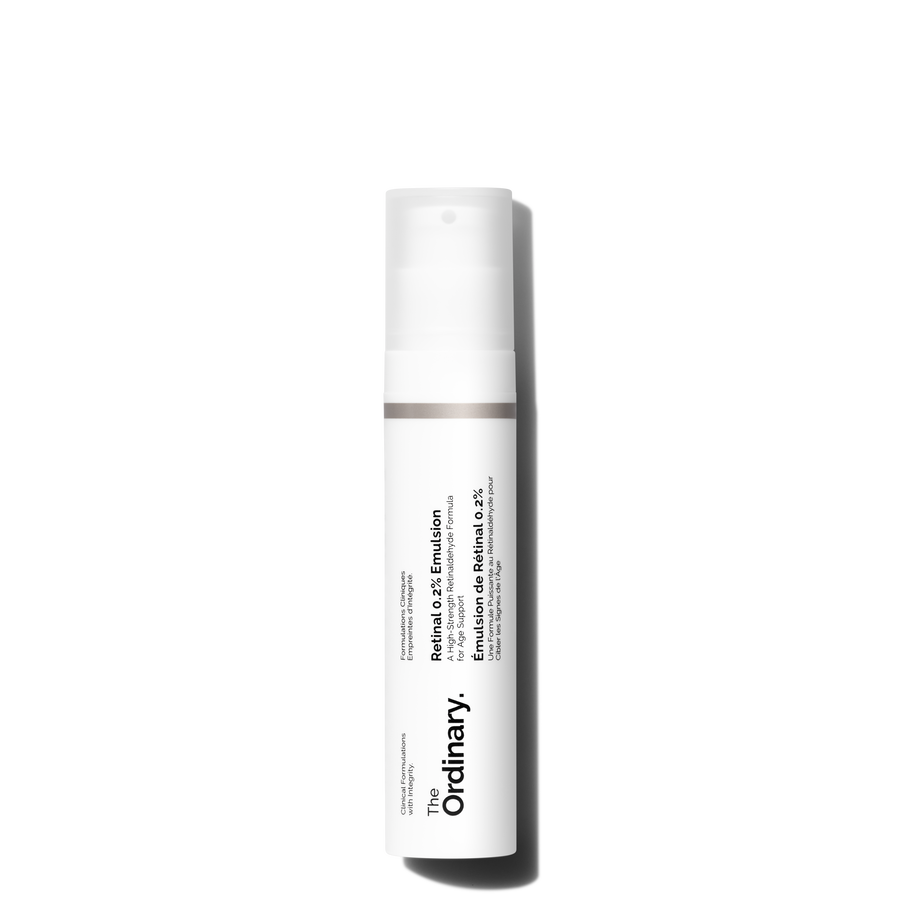
Retinal 0.2% Emulsion
- Price$14.90
- Size15 ml (0.5 fl oz)
- Works out at$0.99 per ml
The Ordinary US, 22 Nov 2026
Image: The Ordinary, from theordinary.com
Our verdict
For most people trying a retinoid for the first time we would buy The Ordinary's Granactive Retinoid 2% Emulsion. At $12.10 it is a low-risk way to learn how your skin handles vitamin A, its main active is described as low in irritation by its maker and by dermatologists and was the most stable retinoid in an independent test, and if it does nothing for you, you have lost less than the cost of a lipstick. Buy it knowing that it contains a little retinol, that its real dose is about 0.2%, and that it wants to live in the fridge.
We would buy Medik8's Crystal Retinal if you already use a retinoid comfortably and want to move to retinal at a dose you can see on the tube, and then we would buy it in a sale, start one strength lower than you think, and follow Medik8's calendar exactly. It is the better-made, better-documented product of the two, but it is not seven times better for a beginner, and an experienced user who simply wants 0.2% retinal can get it from The Ordinary for about a quarter of Medik8's price per millilitre.
Questions people ask
Is Medik8 Crystal Retinal better than The Ordinary Granactive Retinoid?
It is stronger and better documented, since it uses retinaldehyde at a stated dose from 0.01% to 0.24%, while The Ordinary's emulsion uses about 0.2% of a newer retinoid ester plus some retinol. For a beginner The Ordinary's $12.10 bottle is the sensible first step; for an experienced user Medik8 offers more control.
Is retinal stronger than retinol?
Yes, generally: retinal is one conversion step from retinoic acid and retinol is two, so retinal acts faster and can irritate more. The “11 times faster” figure Medik8 quotes comes from a 1990 laboratory study of skin-cell extracts, not from a study of its serum on faces.
Does The Ordinary Granactive Retinoid 2% Emulsion contain retinol?
Yes, retinol is the tenth ingredient on its label, straight after hydroxypinacolone retinoate, and archived copies of the page show it there since at least May 2022. The Ordinary does not say how much the bottle contains.
Which Medik8 Crystal Retinal strength should I start with?
Medik8 recommends strength 1 (0.01%) for sensitive skin, strength 3 (0.03%) for new vitamin A users and strength 6 (0.06%) for regular users, and asks you to finish one tube of each strength before moving up.
Do you have to refrigerate The Ordinary Granactive Retinoid?
The Ordinary says that once opened the emulsion should be refrigerated and used within three months. Medik8's Crystal Retinal comes in a pump tube with no refrigeration instruction.
Can you use Crystal Retinal every night?
Yes, according to Medik8, once you have phased it in: twice a week for two weeks, every other night for two weeks, then nightly, followed by moisturiser and with sunscreen the next morning.
Can I use either while pregnant or breastfeeding?
The Ordinary recommends avoiding retinoid products at those times, and Medik8 says to ask your doctor while generally advising against vitamin A and offering a bakuchiol serum instead.
How we put this together
We read each brand's own product pages and full ingredient lists, what buyers report in public reviews and forums, and the news coverage linked on this page. Prices are the brand's own list prices in the US on the date shown, unless the page names another shop. Nothing here is rated or scored, and no brand paid to appear.
Sources (22)
- The Ordinary US: Granactive Retinoid 2% Emulsion (price, ingredients, directions)
- The Ordinary US: Granactive Retinoid 2% Emulsion, archived May 2022
- The Ordinary US: Granactive Retinoid 2% Emulsion, archived April 2024
- The Ordinary US: Retinal 0.2% Emulsion
- The Ordinary US: retinoid range and prices
- The Ordinary: The definitive guide to using retinoids
- INCIDecoder: The Ordinary Granactive Retinoid 2% Emulsion and hydroxypinacolone retinoate
- Ulta: The Ordinary Granactive Retinoid 2% Emulsion (price and rating)
- Medik8 US: Crystal Retinal (prices, strengths, ingredients, directions, claims)
- Medik8 UK: Crystal Retinal (UK prices)
- Medik8: Founders' story
- Dermstore: Medik8 Crystal Retinal 6
- Who What Wear: Medik8 Crystal Retinal review by Shawna Hudson, July 2024
- Marie Claire UK: What's the difference between retinol and retinal?, July 2024
- Siegenthaler et al., Retinol and retinal metabolism, Biochemical Journal 1990 (PubMed abstract)
- Temova Rakuša et al., Retinoid stability and degradation kinetics in commercial cosmetic products, 2021 (PubMed abstract)
- The Estée Lauder Companies: completes acquisition of DECIEM, June 2024
- The Estée Lauder Companies: fiscal 2026 results, August 2026
- L'Oréal: L'Oréal Groupe to acquire a majority stake in Medik8, June 2025
- L'Oréal 2025 Universal Registration Document: Medik8 acquisition note
- Premium Beauty News: L'Oréal confirms acquisition of Medik8, June 2025
- European Central Bank reference rates via Frankfurter, 20 November 2026