Buy Advanced Night Repair if fragrance bothers you or you want a serum built on a ferment and a peptide with forty years of history behind it, because Estée Lauder makes it without synthetic fragrance or drying alcohol; buy Ultimune if you like a light, scented serum and want the better price per millilitre, especially in the 75 ml refill at $1.87, since Shiseido's formula is cheaper than Estée Lauder's at every matching size.
- You want the cheaper serum: $125 for 50 ml against $135, and $230 for 120 ml against $258 for Estée Lauder's 115 ml.
- You will rebuy, because the 75 ml refill costs $140, or $1.87 a millilitre, the lowest price per millilitre of either serum in any size.
- You like a scented product: Ultimune lists fragrance, linalool and citronellol, and BusinessWorld's reviewer likened the smell to a well-known green-tea perfume.
- You can shop in Japan, where Shiseido launched the current generation at ¥15,180 for 50 ml, about $95.69.
- Fragrance irritates you: Estée Lauder says the serum is formulated without synthetic fragrance, and none is listed.
- You avoid alcohol in skincare, since Estée Lauder says it contains no drying alcohol, while Ultimune lists denatured alcohol fourth.
- You want a named peptide and a ferment near the top of the label: bifida ferment lysate is second and tripeptide-32 eleventh.
- You can wait for an offer: on 22 November Ulta paired it with a 12-piece Estée Lauder gift set for $90 with select purchases.
The one difference that matters: Advanced Night Repair is a fragrance-free ferment-and-peptide serum that leaves out drying alcohol but adds two dyes, while Ultimune is a humectant serum with fermented camellia, denatured alcohol and fragrance, so the choice turns less on Tokyo against New York than on whether your skin minds scent and alcohol.
The fermented camellia Shiseido advertises sits 22nd to 27th on Ultimune's label, below denatured alcohol and a silicone, while Estée Lauder's ferment sits second, so read what the two labels really say before you pay for a story.
| | |
|---|---|---|
| Price and size, US | $125 for 50 ml on Shiseido's US site; $80 for 30 ml to $230 for 120 ml | $135 for 50 ml at Ulta; $20 for 7 ml to $258 for 115 ml |
| Price per ml, US | $2.50 (50 ml); $1.92 (120 ml); $1.87 (75 ml refill) | $2.70 (50 ml); $2.24 at best (115 ml) |
| Price in Japan | ¥15,180 for 50 ml at its March 2025 launch, about $95.69 | Not compared |
| Current generation | Fourth, launched in Japan on 1 March 2025; first version 2014 | The 2020 Synchronized Multi-Recovery Complex; first version 1982 |
| Headline ingredients | Fermented camellia (seed, leaf and flower extracts), reishi and iris root extracts, ectoin | Bifida ferment lysate, tripeptide-32, sodium hyaluronate, yeast extract, caffeine |
| First five ingredients | Water, glycerin, butylene glycol, denatured alcohol, dimethicone | Water, bifida ferment lysate, PEG-8, propanediol, a silicone |
| Fragrance and colour | Fragrance, linalool and citronellol listed; no dyes | No synthetic fragrance, Estée Lauder says; Red 4 and Yellow 5 dyes |
| How to use | Two pumps morning and evening, after cleanser and softener | One dropper morning and evening, on clean skin before moisturiser |
| Skin types the brand names | All, including sensitive; non-comedogenic | Not stated on Ulta's listing; Estée Lauder calls the texture oil-free |
| Refill | 75 ml for $140; fits only the 2025 bottle | None |
| Who makes it | Shiseido, Tokyo, founded 1872 | The Estée Lauder Companies, New York, founded 1946 |
| Where to buy in the US | Shiseido's site; Ulta ($80 for 30 ml) | Ulta ($135 for 50 ml); Estée Lauder's own site |
Prices checked on 22 November 2026 on Shiseido's US site and Ulta; Estée Lauder's own US site did not open for us, so its serum is priced at Ulta's listing. The Japanese price is Shiseido's reference price at launch, converted at the European Central Bank rate of 20 November 2026 ($1 = ¥158.64). Prices per millilitre are our arithmetic.
Two first steps, two companies that need them to sell
Both bottles are sold as the serum you put on before every other serum, and both are among the most important skincare products their makers own. Estée Lauder launched Night Repair in 1982 and has rewritten it only four times since, most recently in 2020, and Ulta's page alone showed 22,185 reviews of the current version; Shiseido launched Ultimune in 2014 and released its fourth version in March 2025, describing it as “a serum reborn” and, in travel-retail launches, as the world's first anti-ageing serum built around memory T cells, a part of the immune system that Shiseido says its fermented camellia attracts.
Both companies depend heavily on China and on airport shops, where much of their premium skincare is sold, both have found those markets harder going lately, and both are leaning on these two bottles. Estée Lauder told investors in August that its skin care sales rose 4% organically in the year to June 2026, helped by “Advanced Night Repair and Revitalizing Supreme+”, and Shiseido's finance chief said in November that recovery in travel retail and mainland China was “slower than anticipated”. So the question this page answers is not which company tells the better story, since both tell a lavish one, but which formula earns its price.
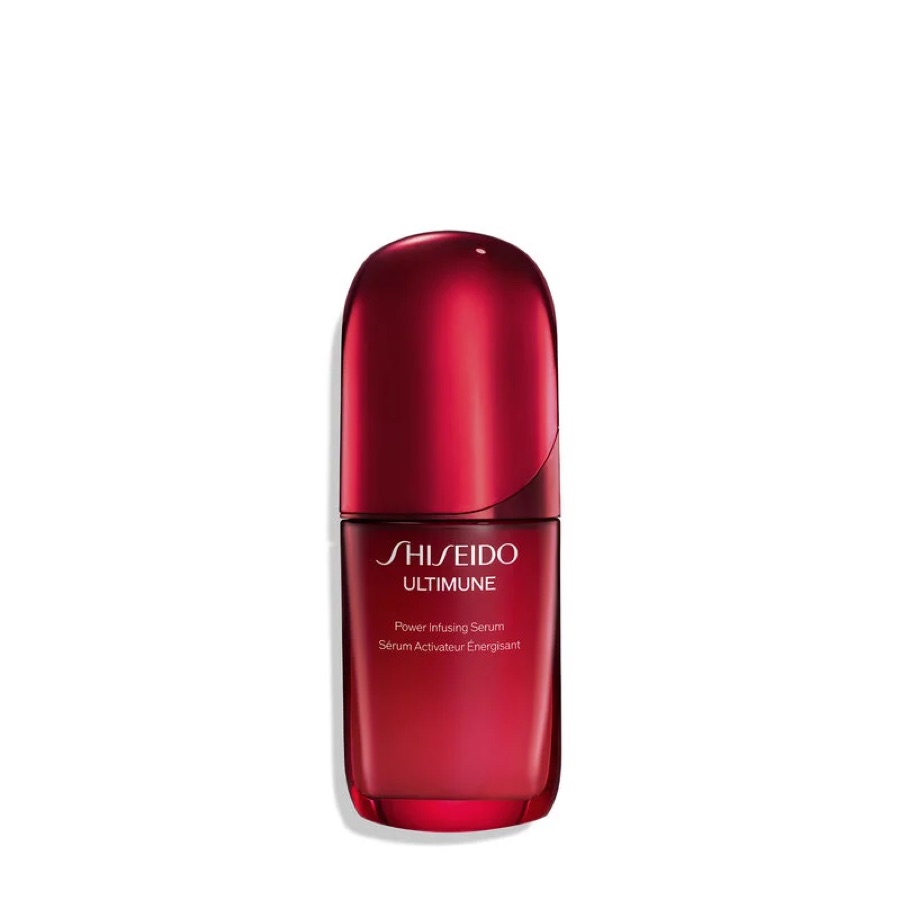
Shiseido Ultimune Power Infusing Serum: the red bottle, now in its fourth generation
Ultimune Power Infusing Serum (2025 formula)
- Price$125
- Size50 ml (1.6 fl oz)
- Works out at$2.50 per ml
Shiseido US, 22 Nov 2026
Image: Shiseido, from shiseido.com
What it costs, size by size, and in Japan
Shiseido's US site sells the current Ultimune in five versions: $80 for 30 ml, $125 for 50 ml, $165 for 75 ml, $230 for 120 ml and a 75 ml refill for $140, which works out at $2.67, $2.50, $2.20, $1.92 and $1.87 a millilitre. That is a sensible ladder, with every larger size cheaper per millilitre, and the refill is the best buy Shiseido offers, provided you own the right bottle: the page warns that refills are “only compatible with latest packaging”, so owners of a pre-2025 bottle need to buy a new bottle first. Ulta charged the same $80 for 30 ml on 22 November.
The new generation came with a price rise. An archived copy of Shiseido's page shows the third-generation 50 ml bottle at $110 in May 2024, so today's $125 is 14% more, while the 30 ml bottle, $75 in January 2022 and in April 2020, now costs $80. In Japan, Shiseido's launch announcement set reference prices of ¥9,900 for 30 ml and ¥15,180 for 50 ml including tax, about $62.41 and $95.69 at the European Central Bank's rate of 20 November.
What's in it: humectants, alcohol, camellia and a little fragrance
The label on Shiseido's US page runs to 48 ingredients and opens with water, glycerin and butylene glycol, two humectants that draw water into the skin, then denatured alcohol in fourth place and dimethicone, a silicone, fifth. That alcohol is the detail most comparisons skip: it helps the serum feel light and dry quickly, and many people never notice it, but anyone who avoids alcohol in skincare should know that it sits higher on Ultimune's label than any of the plant extracts Shiseido advertises. Further down come trehalose, ectoin and xylitol, more moisture-holding ingredients, rose water, and a cluster of camellia: Camellia japonica seed oil, flower extract, leaf extract and seed extract.
Shiseido calls its headline technology “Power Fermented Camellia+”, made from camellias grown on the Goto Islands of Nagasaki, whose leftovers from oil pressing it says are fermented with a Japanese process using ki-koji to deliver “14 powerful amino acids”, and its press release says fermentation raises the camellia seed's amino acids 3.4 times. The label carries an Aspergillus ferment, the koji mould, near the end, and also a fermented roselle (Lactobacillus/hibiscus ferment filtrate), the star of the previous generation, along with the reishi mushroom and iris root extracts that have been in Ultimune since at least 2020. Near the end come linalool and citronellol, the antioxidant BHT and three preservatives, and the very last ingredient is fragrance; there are no dyes.
How it feels, and what Shiseido promises
Shiseido describes a “fresh, fast-absorbing texture”, recommends two pumps morning and evening after cleanser and a softener or essence, and says the serum suits all skin types, “including sensitive”, is non-comedogenic, dermatologist-tested and free of parabens and mineral oil. Its claims are large and carefully footnoted: that it “slows the skin aging cycle”, defined as the cycle of fine lines and wrinkles that starts with dryness; that 95% of 107 women in a consumer test saw better radiance and texture and less visible wrinkles in a week; and, in its launch release, that a clinical test on 34 women over eight weeks recorded 51% more radiance, 38% more firmness and 63% more smoothness.
Shiseido's travel-retail launch went further. The Moodie Davitt Report reported in February 2025 that Shiseido called the new Ultimune “the world's first Memory T cell anti-ageing serum”, saying its fermented camellia raises a protein that draws memory T cells to clear ageing cells from the skin. That is a striking piece of immunology to hang on a moisturising serum, and Shiseido has not published the work on its US product page, so we would read it as the brand's theory rather than as something a bottle on your shelf has been shown to do.
What reviewers say
Ulta's page showed Ultimune at 4.7 out of 5 from 566 reviews on 22 November, and the most detailed published review of the new formula we found, by Zsarlene Chua in the Philippine newspaper BusinessWorld in March 2025, describes it much as Shiseido does. She found the serum thin, quick to absorb and hydrating without leaving the skin greasy, called it well suited to oily and combination skin, used two pumps on her own dry-to-normal skin, and said that after a week of twice-daily use her skin felt smoother, plumper and more “glowy”.
She was candid about the limits. “Am I able to vet their anti-aging claims as early as now? No,” she wrote, describing Ultimune as a generalist serum that will not replace targeted treatments, and she noted that it smells like Elizabeth Arden's Green Tea perfume, light and short-lived to her nose but a fragrance all the same. BusinessWorld also reported the claim made for the new serum at its Philippine launch, that it slows “the aging process by 50%”, which we would treat as marketing until Shiseido publishes the study behind it.
it does have a fragrance, so people who are sensitive to fragrances should watch out.
Zsarlene Chua, BusinessWorld, March 2025
The story: a 2014 serum on its fourth version
Shiseido was founded in 1872, and Ultimune is one of its younger stars: it launched in 2014, was sold in America as the Ultimune Power Infusing Concentrate, gained what Shiseido called ImuGeneration Technology, with reishi and iris root, in a version on sale by 2020, was renamed a serum in a version with fermented roselle by early 2022, and was relaunched in Japan on 1 March 2025 with fermented camellia. The Moodie Davitt Report put the debut at 2014 and the new formula as its fourth iteration, sold as a bestseller in 88 countries and regions.
The relaunch came at an awkward time for its maker. Cosmetics Business reported on 11 November that Shiseido's core operating profit had risen 124% to ¥67.5 billion and its net sales 7% to ¥741.1 billion in the nine months to September, but its finance chief, Ayako Hirofuji, said recovery in travel retail and mainland China was “slower than anticipated”, the two markets where a serum like Ultimune, sold heavily in airport shops across Asia, matters most.
What goes wrong with Ultimune
The fragrance and the alcohol are the two things to weigh. Both are common in Japanese skincare and both suit plenty of people, but a serum marketed for sensitive skin that lists denatured alcohol fourth and fragrance, linalool and citronellol at the end is not the obvious choice for anyone whose skin reacts to either, and even BusinessWorld's otherwise happy reviewer warned fragrance-sensitive buyers to watch out.
The refill also needs care, since it fits only the 2025 bottle, and the price has risen 14% for the 50 ml size with the new generation. And the boldest claims, from slowing the ageing cycle to recruiting immune cells, rest on Shiseido's own research, so we would buy Ultimune for what reviewers describe, a light, hydrating, pleasant first step, rather than for immunology.
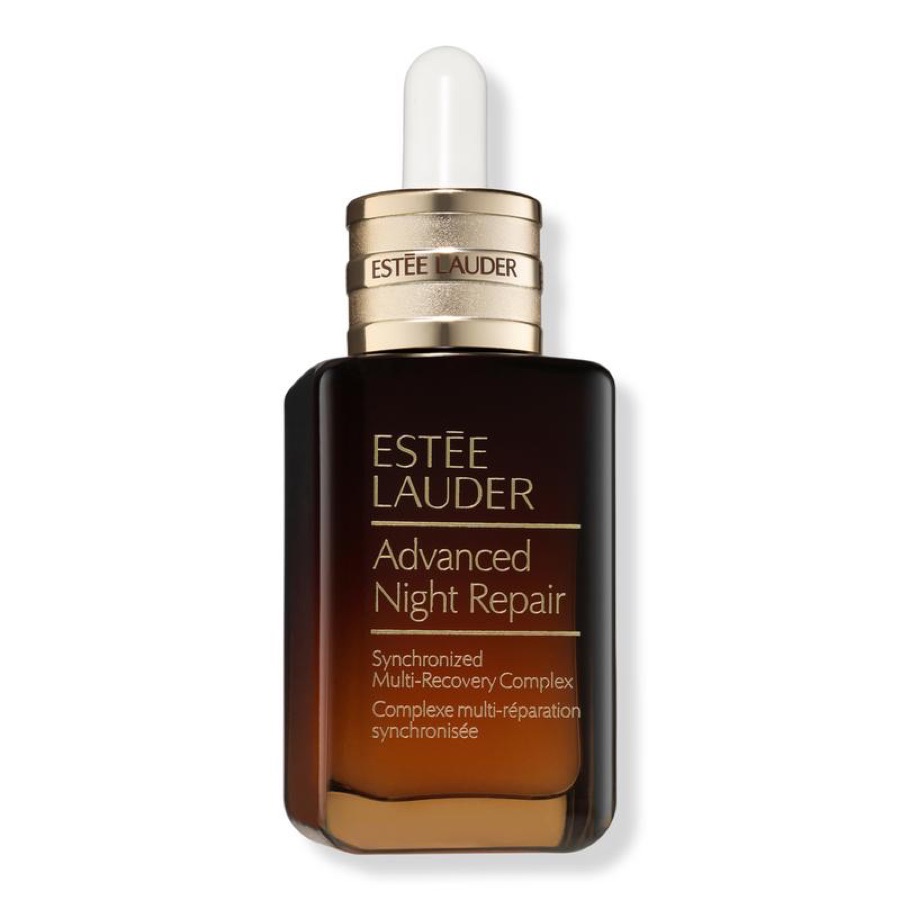
Estée Lauder Advanced Night Repair: the brown bottle, unchanged since 2020
Advanced Night Repair Synchronized Multi-Recovery Complex
- Price$135
- Size50 ml (1.7 fl oz)
- Works out at$2.70 per ml
Ulta, 22 Nov 2026 (Estée Lauder's own US site did not open for us)
See it on ulta.com Estée Lauder Advanced Night Repair →
Image: Estée Lauder, from ulta.com
What it costs, size by size
Estée Lauder's own US site did not open for us, so we priced the serum at Ulta. On 22 November Ulta listed five sizes: $20 for 0.24 ounces (7 ml), $55 for 0.67 ounces (20 ml), $88 for 1 ounce (30 ml), $135 for 1.7 ounces (50 ml) and $258 for 3.9 ounces (115 ml), which works out at $2.86, $2.75, $2.93, $2.70 and $2.24 a millilitre. The 30 ml bottle is the worst value on the shelf, dearer per millilitre than the 7 ml mini, and the 115 ml bottle is the only size that brings the price meaningfully down.
Matched size for size, Estée Lauder is the more expensive serum: 10% more per millilitre than Ultimune at 30 ml, 8% more at 50 ml, and 17% more in the largest bottles, and it has no refill to bring the price down further. Ulta's holiday offers were running on the day we checked, including a 12-piece gift set for $90 with select Estée Lauder purchases and 5% off subscriptions, so a patient shopper rarely needs to pay list price for nothing extra.
What's in it: a ferment, a peptide, and two dyes
The ingredient list on Ulta's page opens with water and bifida ferment lysate, a lysate of a bacterium used across skincare as a moisturising and soothing ingredient, which also sat second on the label of the 2013 version, according to a list INCIDecoder recorded in 2018. Then come PEG-8, propanediol and a silicone, bis-PEG-18 methyl ether dimethyl silane, for slip, and humectants such as methyl gluceth-20 and glycereth-26; tenth is baobab seed extract, eleventh tripeptide-32, the peptide Marie Claire's reviewer called Estée Lauder's “exclusive peptide”, and twelfth sodium hyaluronate, the salt form of hyaluronic acid.
Lower down sit yeast extract, a Lactobacillus ferment, kola nut extract, chamomile, caffeine, sodium RNA, squalane, vitamin E and a set of emulsifiers, with phenoxyethanol and potassium sorbate as preservatives and BHT as an antioxidant. Estée Lauder says the serum is formulated without mineral oil, synthetic fragrance, phthalates, sulfates, sulfites, parabens, drying alcohol and paraffin, and the label agrees. What it does contain, at the very end, are two dyes, Red 4 and Yellow 5, whose purpose the label does not explain, in a serum that comes in brown glass and is applied clear to the skin.
How it feels, and what Estée Lauder promises
Estée Lauder pitches the serum as several serums in one and tells you to use one dropper on clean skin before moisturiser, morning and evening, a twice-daily routine that is easy to forget given the name. Its claims, listed on Ulta with footnotes, are short-term and specific: a 128% surge in moisture immediately, from a test on 148 women; a 14% reduction in fine lines the morning after a single night, from 26 women; skin that looks repaired after three nights in a test on 42 women described as “clinically qualified poor sleepers”; 72-hour hydration and eight hours of antioxidant protection.
Mica Ricketts, reviewing it for Marie Claire in February 2024, described a serum that is “lightweight without being watery” with “an almost gel-like juiciness”, said it sank in with no greasy residue or tackiness on her oily, acne-prone skin, and added that very dry skin would probably still want a thick moisturiser on top. Ulta's listing makes the same point in Estée Lauder's own words, calling it an “Oil-free texture” that 90% of 543 women in a consumer test said absorbed quickly.
What reviewers say
Ulta's page showed the serum at 4.5 out of 5 from 22,185 reviews on 22 November, a score built over six years of the current formula, and the published verdicts are fond. Ricketts wrote that the formula “truly lives up to the hype” and that, after a couple of weeks of morning and evening use, her skin felt “more buoyant and smooth”, while conceding that it is expensive; Lauria Locsmondy, writing in the newsletter The Midst in October 2023, said she had used it every night and morning for 17 years since an aunt gave her a first bottle at 30.
Loyalty of that kind cuts both ways, because the 2020 formula is not the one those long-time users started on, as our full review of Advanced Night Repair sets out ingredient by ingredient. The published reviews we found say little about irritation, but a serum with seven plant, seaweed and ferment ingredients, two dyes and a long list of emulsifiers will not suit every skin, and Estée Lauder's own listing on Ulta makes no claim about sensitive skin either way.
it's lightweight without being watery and has an almost gel-like juiciness to it that feels instantly quenching on the skin.
Mica Ricketts, Marie Claire UK, February 2024
The story: Estée's 1982 serum and its four rewrites
Estée Lauder's own company history says that in 1982 Estée Lauder learned that night was the best time for skin to repair itself and created Night Repair, which became Advanced Night Repair in 1991. The Moodie Davitt Report, covering the 2020 launch, listed the later versions: the Synchronized Recovery Complex of 2009, the Synchronized Recovery Complex II of 2013 and the Synchronized Multi-Recovery Complex of August 2020, which Estée Lauder's travel-retail chief, Jean Yves Minet, called “an innovation that only happens once in a decade”, and the publication repeated Estée Lauder's claim that the 1982 original was the first skincare product to use hyaluronic acid.
The 2020 version came out of what Estée Lauder described as seven years of research into epigenetics, and its Canadian launch release said it helped skin increase natural cell renewal by 43% in a laboratory test on 62-year-old skin cells, adding that “only around 25% of aging is predetermined by your genes”. Six years on it is still the current formula, the franchise around it now includes an eye cream and a treatment essence that Ulta's page recommends alongside it, and Estée Lauder's results for the year to June 2026 credited Advanced Night Repair with helping the brand's sales grow.
What goes wrong with Advanced Night Repair
The price per millilitre is high at every size, and the 30 ml bottle is poor value against both the 50 ml and the mini, so buy the 50 ml in a sale or the 115 ml outright. The dyes are unnecessary, by any reasonable reading, in a serum that comes in brown glass, and nothing on Ulta's listing explains them.
The other risk is the length of the list. Leaving out fragrance and drying alcohol helps, but a serum with seven plant, seaweed and ferment ingredients, two dyes and a long run of emulsifiers still gives sensitive skin plenty to react to, and Ulta's listing makes no claim about sensitive skin, so patch-test it on your jaw for a few nights, and ask a dermatologist first if you have rosacea or eczema.
What the two labels really say
Ingredient lists put the biggest ingredients first, so while a list cannot give exact percentages, it does show which ingredients dominate a formula and which are there in small amounts. Read that way, the two serums are built very differently, and the difference is not the one their advertising suggests.
Estée Lauder's ferment sits second on its label; Shiseido's fermented camellia sits 22nd to 27th
Advanced Night Repair's label opens water, bifida ferment lysate, so the ingredient the serum has been built around since at least 2013 is the largest thing in the bottle after water, and its peptide and hyaluronic acid follow at 11th and 12th of 43. Ultimune's label opens water, glycerin, butylene glycol, denatured alcohol, dimethicone and diglycerin, then trehalose tenth, rose water 16th and ectoin 17th, and only then the four camellia ingredients Shiseido builds its marketing on, at 22nd, 23rd, 26th and 27th of 48. The fermented roselle that headlined the 2022 version is 28th, iris root and reishi 29th and 30th, and the Aspergillus ferment, the koji mould behind “Power Fermented Camellia+”, is 41st, below linalool.
None of that means the camellia does nothing, since small amounts of an active ingredient can matter, but it does mean that what you mostly put on your face with Ultimune is a well-made humectant serum with alcohol and silicone for a fast, light finish, scented with fragrance, while what you mostly put on with Advanced Night Repair is a ferment lysate in a water-and-PEG base with no fragrance and two dyes. Shoppers choosing between them on the strength of fermented camellia and memory T cells on one side, or epigenetics on the other, are choosing on the smallest parts of each label.
Which suits dry, oily or sensitive skin?
For dry skin both work as a hydrating first layer and both expect a moisturiser on top; Ultimune is heavier on humectants such as glycerin, butylene glycol and diglycerin, Advanced Night Repair on ferment lysates, sodium hyaluronate and squalane, and Marie Claire's reviewer suggested very dry skin still wants a thick moisturiser over it. For oily and combination skin, both are light: Shiseido calls Ultimune non-comedogenic and BusinessWorld's reviewer said it does not make skin oily, while Estée Lauder calls its texture oil-free and Marie Claire's oily-skinned reviewer found no greasy residue.
For sensitive skin, the labels point to Advanced Night Repair, which leaves out fragrance and drying alcohol, both of which Ultimune contains, even though Shiseido is the one that names sensitive skin among the types its serum suits; Advanced Night Repair's dyes and extracts are its own small risk. If your skin is reactive, buy the smallest size of either, patch-test it on your jaw for a few days, and see a dermatologist if you have rosacea or eczema.
Which is better value?
Ultimune, at every size. Per millilitre it costs $2.67 against $2.93 at 30 ml, $2.50 against $2.70 at 50 ml and $1.92 against $2.24 in the largest bottles, and its 75 ml refill, at $1.87, is cheaper than any size of Advanced Night Repair. Neither page we could open says how long a bottle lasts, and both brands ask for a dose morning and evening, one dropper for Estée Lauder and two pumps for Shiseido.
Say you get through 300 ml a year, a 50 ml bottle every two months: that costs $750 in 50 ml bottles of Ultimune, or $585 if you buy one 75 ml bottle and then three refills, against $810 in 50 ml bottles of Advanced Night Repair, or about $673 at the 115 ml bottle's rate.
| Size and price | Shiseido Ultimune | Estée Lauder Advanced Night Repair |
|---|---|---|
| Smallest full size | $80 for 30 ml ($2.67 a ml) | $88 for 30 ml ($2.93 a ml) |
| 50 ml | $125 ($2.50 a ml) | $135 ($2.70 a ml) |
| Largest | $230 for 120 ml ($1.92 a ml) | $258 for 115 ml ($2.24 a ml) |
| Refill | $140 for 75 ml ($1.87 a ml) | None |
| Mini | Not sold on Shiseido's US site | $20 for 7 ml ($2.86 a ml) |
| Price change | 50 ml: $110 (May 2024) to $125, up 14%; 30 ml: $75 (2020, 2022) to $80 | Not tracked: Estée Lauder's site did not open |
| At home | ¥15,180 for 50 ml in Japan, about $95.69 | US is home |
Prices from Shiseido's US site and Ulta on 22 November 2026; earlier Ultimune prices from archived copies of Shiseido's page; the Japanese price is Shiseido's March 2025 reference price, converted at the ECB rate of 20 November 2026. The yearly figures in the text assume six 50 ml bottles' worth a year and are our arithmetic.
Shiseido raised Ultimune's American price with the new formula, and Americans now pay about 31% more than Japanese buyers
Archived copies of Shiseido's US page show the 30 ml Ultimune at $75 in April 2020 and again in January 2022, and the 50 ml at $110 in May 2024, under the third-generation formula; the fourth generation costs $80 and $125, rises of 7% and 14%. In Japan, Shiseido launched the same generation in March 2025 at ¥9,900 for 30 ml and ¥15,180 for 50 ml including consumption tax, about $62.41 and $95.69 at the ECB rate of 20 November, so an American pays 28% more for the small bottle and 31% more for the 50 ml, before sales tax.
Even after that rise, Ultimune remains cheaper than Advanced Night Repair at every matching size in America, by 8% to 17% a millilitre, so Estée Lauder's serum, made by the home team, is the dearer of the two in its own country. A shopper passing through Japan can buy the 50 ml Ultimune for about what Ulta charges for 30 ml of Advanced Night Repair.
Alternatives worth a look
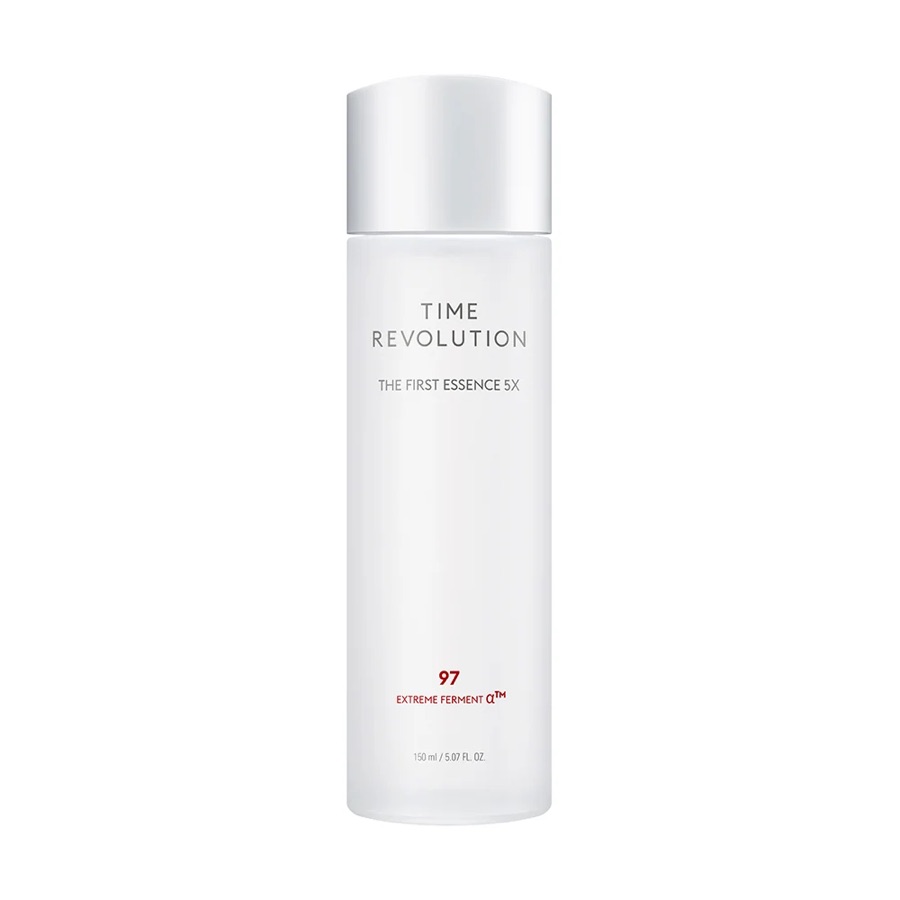
If what you like about Advanced Night Repair is the bifida ferment, Korea makes it for much less. Missha's Time Revolution Night Repair Ampoule 5X lists bifida ferment lysate first, ahead of water, with nine more ferments, niacinamide and adenosine, for $39 for 50 ml on Missha's US site, or 78 cents a millilitre, under a third of Estée Lauder's price, though it adds essential oils, including bergamot and lavender, and limonene, which Estée Lauder's formula leaves out.
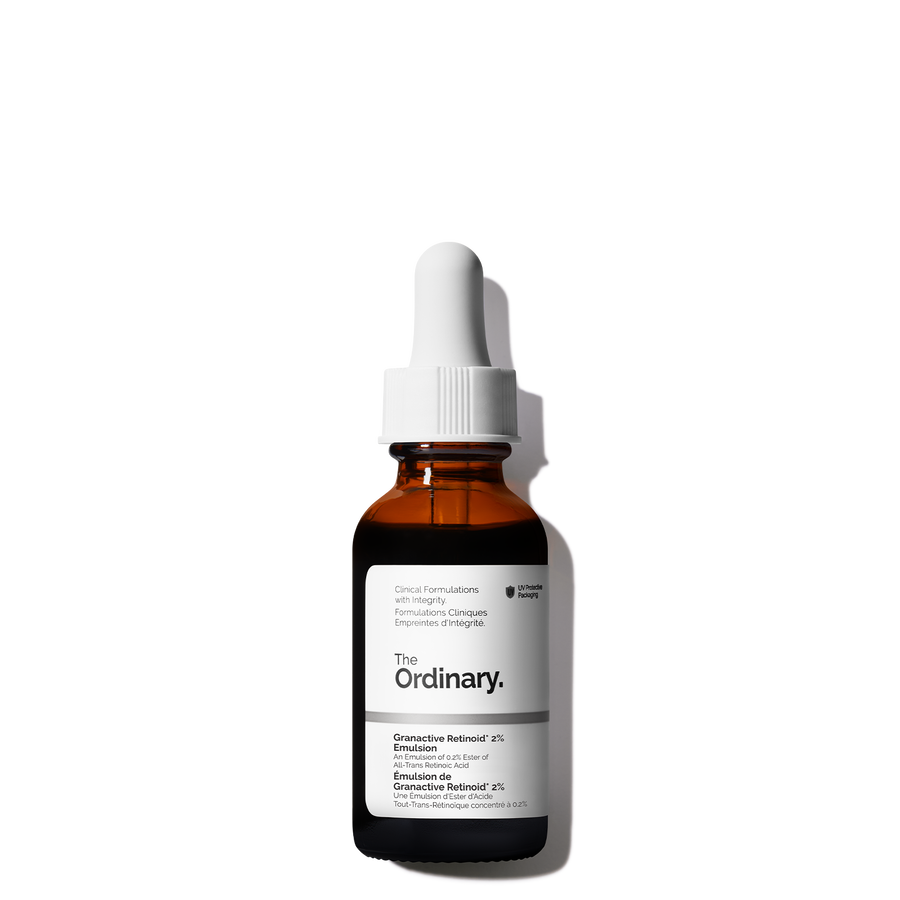
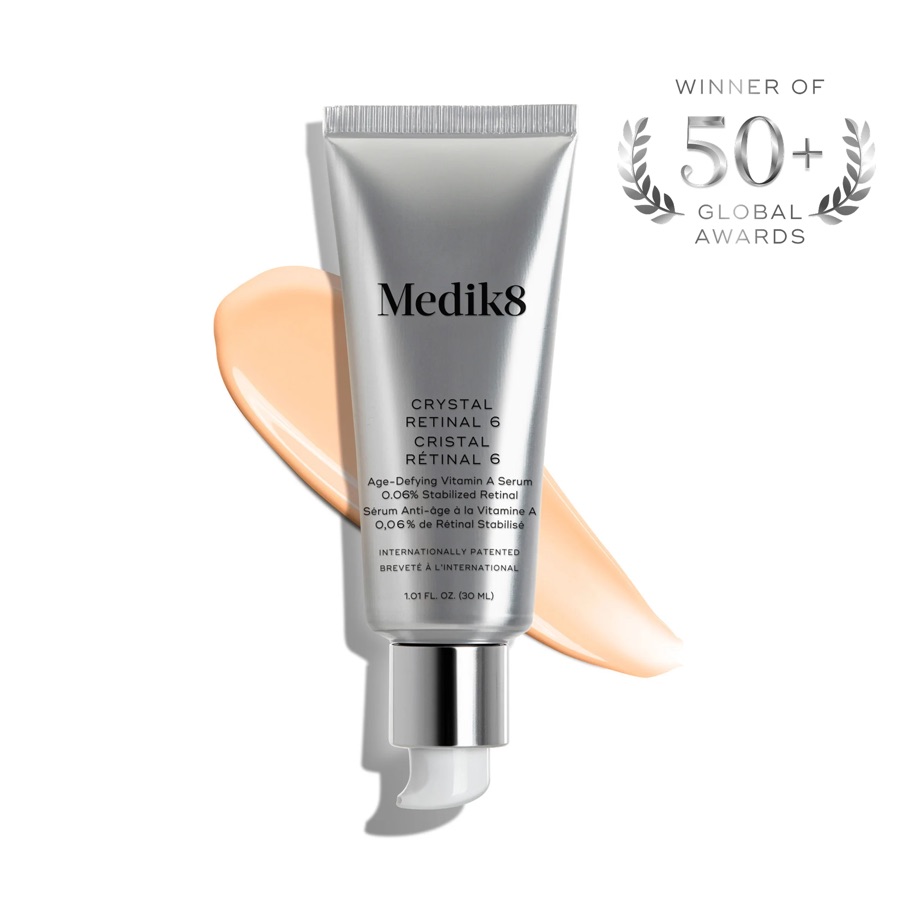
If you want the French take on the same idea, Lancôme's Advanced Génifique also lists bifida ferment lysate second, claims 10% “bifidus prebiotic”, and cost $220 for 100 ml at Ulta, but it lists denatured alcohol fourth and fragrance, much like Ultimune. And if you were thinking of a retinoid instead of either, our comparison of The Ordinary's retinoid and Medik8's Crystal Retinal covers the two we would start with.
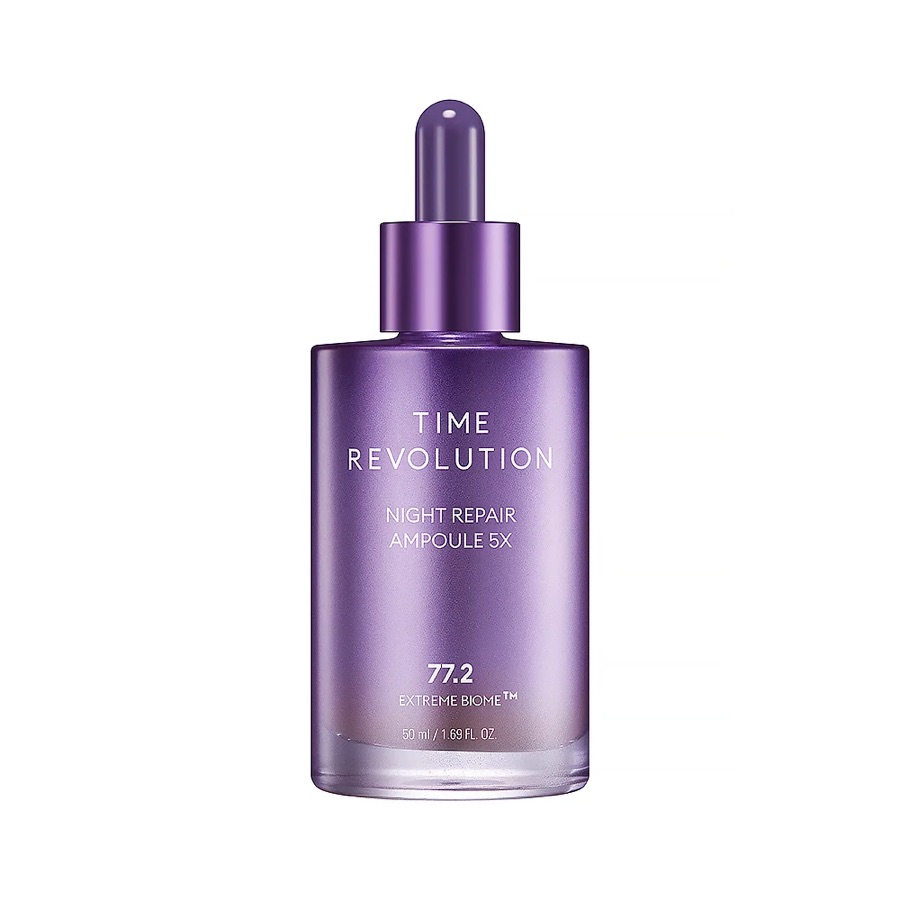
Time Revolution Night Repair Ampoule 5X
- Price$39
- Size50 ml (1.69 fl oz)
- Works out at$0.78 per ml
Missha US, 22 Nov 2026 (list price; $31.10 on sale that day)
Image: Missha, from misshaus.com
Our verdict
We would buy Advanced Night Repair, narrowly, for anyone with sensitive or fragrance-averse skin, because its formula leaves out the fragrance and drying alcohol that Ultimune contains and puts a ferment and a named peptide near the top of the list; but we would buy it in a sale or in the 115 ml bottle, because at list price it is the dearer serum at every size and its 30 ml bottle is poor value.
We would buy Ultimune if you like a light, scented serum and want the better value, and then in the refill, which at $1.87 a millilitre is the cheapest way to own either, as long as you have the 2025 bottle for it to fit. Neither serum does anything a well-made, cheaper hydrating serum cannot also do for most skin, and if the bifida ferment is what appeals, Missha's Night Repair Ampoule costs under a third as much per millilitre as Estée Lauder's.
Questions people ask
Which is better, Shiseido Ultimune or Estée Lauder Advanced Night Repair?
Advanced Night Repair is the better choice for sensitive or fragrance-averse skin, because it is formulated without synthetic fragrance or drying alcohol, while Ultimune lists both fragrance and denatured alcohol. Ultimune is the better value, cheaper per millilitre at every size and with a 75 ml refill at $1.87 a millilitre.
Can you use Ultimune and Advanced Night Repair together?
Both are sold as the first serum after cleansing, so layering them adds cost more than benefit; if you do, Shiseido says Ultimune goes on after cleanser and softener and before other serums, and Estée Lauder says Advanced Night Repair goes on clean skin before other serums and moisturiser.
Can you use Advanced Night Repair in the morning?
Yes, Estée Lauder tells buyers to use it morning and evening, one dropper on clean skin before moisturiser, despite the name. Ultimune is also meant for twice-daily use, two pumps each time.
Is Shiseido Ultimune fragrance-free?
No, the current Ultimune lists fragrance, linalool and citronellol, and BusinessWorld's reviewer, who liked it, warned fragrance-sensitive buyers to watch out. Estée Lauder says Advanced Night Repair is formulated without synthetic fragrance.
Is Ultimune cheaper in Japan?
Yes, Shiseido launched the current 50 ml bottle in Japan at ¥15,180 including tax, about $95.69, against $125 on its US site, so American buyers pay about 31% more.
What is the newest version of Ultimune?
The fourth generation, launched in Japan on 1 March 2025 with Shiseido's “Power Fermented Camellia+”; the first Ultimune appeared in 2014. Its refill fits only the new bottle.
Does Advanced Night Repair contain retinol?
No, retinol is not among the 43 ingredients on its label; its main ingredients are bifida ferment lysate, tripeptide-32 and sodium hyaluronate.
How we put this together
We read each brand's own product pages and full ingredient lists, what buyers report in public reviews and forums, and the news coverage linked on this page. Prices are the brand's own list prices in the US on the date shown, unless the page names another shop. Nothing here is rated or scored, and no brand paid to appear.
Sources (22)
- Shiseido US: Ultimune Power Infusing Serum (prices, ingredients, claims)
- Shiseido US: Ultimune Power Infusing Serum 50 ml, archived May 2024
- Shiseido US: Ultimune Power Infusing Serum 30 ml, archived January 2022
- Shiseido US: Ultimune Power Infusing Concentrate, archived April 2020
- Shiseido (Japan): new Ultimune launch release with reference prices, March 2025
- Shiseido: new Ultimune launch release (English), 2025
- Shiseido: company at a glance
- The Moodie Davitt Report: Shiseido launches new Ultimune Power Infusing Serum, February 2025
- Cosmetics Business: Shiseido returns to profit in Q3, November 2026
- Ulta: Shiseido Ultimune Power Infusing Serum (price and rating)
- BusinessWorld: review of the reformulated Ultimune by Zsarlene Chua, March 2025
- Marie Claire UK: Estée Lauder Advanced Night Repair, reviewed by Mica Ricketts, February 2024
- The Midst: My dirty little secret, Estée Lauder's Advanced Night Repair, by Lauria Locsmondy, October 2023
- INCIDecoder: Advanced Night Repair Synchronized Recovery Complex II ingredient list (uploaded April 2018)
- Ulta: Estée Lauder Advanced Night Repair (prices, ingredients, claims, rating)
- The Estée Lauder Companies: our heritage
- The Estée Lauder Companies: fiscal 2026 results, August 2026
- The Moodie Davitt Report: Estée Lauder reveals new Advanced Night Repair, August 2020
- Estée Lauder (Canada): new Advanced Night Repair Synchronized Multi-Recovery Complex, August 2020
- Missha US: Time Revolution Night Repair Ampoule 5X
- Ulta: Lancôme Advanced Génifique Radiance Boosting Face Serum
- European Central Bank reference rates via Frankfurter, 20 November 2026