Buy Missha if you want a watery, fragrance-free first step that hydrates, adds niacinamide and costs about a quarter of the Japanese bottle per millilitre, because at $39 for 150 ml it is the better buy for almost everyone; buy SK-II only if you specifically want Pitera, the galactomyces ferment that makes up more than 90% of SK-II's seven-ingredient formula, and you are prepared to pay $245 for 230 ml in the US, or about a quarter less in Japan.
- You want Pitera itself, the galactomyces ferment filtrate SK-II makes only in Japan and lists first on a label of just seven ingredients.
- You prefer the shortest possible formula, with no niacinamide, no plant extracts and nothing else that could clash with the rest of your routine.
- You can buy in Japan, where SK-II's own site charges ¥29,150 (about $183.75) for the 230 ml bottle that costs $245 in the US.
- You have oily or combination skin, which SK-II names among the skin types it suits, and you are happy to pay for a brand with 45 years of history behind one product.
- You want a ferment essence for $39 for 150 ml on Missha's US site, 26 cents a millilitre against SK-II's 98 cents at best.
- You want extras in the same bottle: niacinamide, adenosine, ceramide NP and sodium PCA, which SK-II's formula does not contain.
- You prefer a paraben-free formula, since SK-II preserves its essence with methylparaben and Missha says its own is made without parabens.
- You have dry, dull or sensitive skin, the types Missha names, and you want a product sold in Korea as a registered brightening and anti-wrinkle cosmetic.
The one difference that matters: SK-II's essence is seven ingredients, mostly one Japanese ferment, galactomyces, while Missha's is fifteen ingredients built on water, glycerin and a different yeast ferment, with niacinamide and adenosine added, so the Korean bottle is a cheaper essence in the same spirit, not a copy of the Japanese one.
The two bottles do not contain the same ferment: SK-II's is galactomyces, Missha's is a yeast ferment extract that now sits sixth on its Korean label, so read what the dupe claim does and doesn't hold before you switch.
| | |
|---|---|---|
| Price and size, US | $99 for 75 ml, $190 for 160 ml, $245 for 230 ml, $325 for 330 ml on SK-II's US site | $39.00 for 150 ml on Missha's US site (on sale for $31.10 on 22 Nov) |
| Price per ml, US | $1.32 (75 ml) falling to 98 cents (330 ml) | 26 cents (21 cents on sale) |
| Price at home | ¥12,650 for 75 ml (about $79.74) to ¥29,150 for 230 ml (about $183.75) on SK-II Japan | ₩44,000 for 180 ml (about $32.85), ₩30,800 on sale, on Missha's Korean shop |
| The ferment on the label | Galactomyces ferment filtrate (Pitera), listed first; SK-II says more than 90% | Yeast ferment extract, listed sixth in Korea, plus bifida ferment lysate; Missha claims 97% “Desert Cica Yeast Ferment” |
| Number of ingredients | 7 | 15 |
| Other named ingredients | None beyond two glycols and water | Niacinamide, adenosine, ceramide NP, sodium PCA |
| Preservatives | Sodium benzoate, methylparaben, sorbic acid | 1,2-hexanediol and ethylhexylglycerin; paraben-free, Missha says |
| Fragrance | None listed | None listed; “formulated without artificial fragrances” |
| Skin types the brand names | Normal, dry, combination and oily | Normal, sensitive, dull, dry or aging |
| Who makes it | SK-II, owned by Procter & Gamble; Pitera made only in Japan | Cosmax for Able C&C; made in Korea |
| Where to buy in the US | SK-II's site; Sephora ($99 for 75 ml) | Missha's US site; Soko Glam lists it at $54.00 |
Prices checked on 22 November 2026 on SK-II's US and Japanese sites, Missha's US site and Able C&C's Korean shop (Able Shop), with Sephora's price as reported by NBC Select and Soko Glam's from its own listing. Yen and won are converted at the European Central Bank reference rates of 20 November 2026: $1 = ¥158.64 = ₩1,339.44. Prices per millilitre are our arithmetic.
A $99 bottle, and the Seoul brand that offered to swap it for free
In October 2011 Missha, a Korean chain that had made its name selling ₩3,300 cosmetics, ran a month-long campaign promising a free bottle of its new Time Revolution The First Treatment Essence to anyone who brought in an empty bottle of SK-II's Facial Treatment Essence, under the slogan “Experience freely, evaluate cold-heartedly,” according to Korea JoongAng Daily, which reported in February 2012 that Missha's 150 ml essence had sold more than 80,000 bottles in its first seven weeks. The paper called it “unprecedentedly blatant copycat marketing”, and a rival brand's spokeswoman accused Missha of “cashing in on an already established name value”, but the comparison stuck, and fifteen years later the two bottles are still sold, reviewed and searched for as a pair.
What has changed is almost everything else. SK-II's essence, which Procter & Gamble owns, now costs $99 for its smallest bottle in America, and its sales in China, an important market for the brand, have been hit by a 2006 product scare and a 2023 boycott. Missha's essence has gone through five generations, the latest called The First Essence 5X, and its parent, Able C&C, is now controlled by a private-equity firm and earns about 70% of its revenue abroad. The question this page answers is not whether the Korean bottle is cheaper, which it plainly is, but whether it is the same kind of product at all.
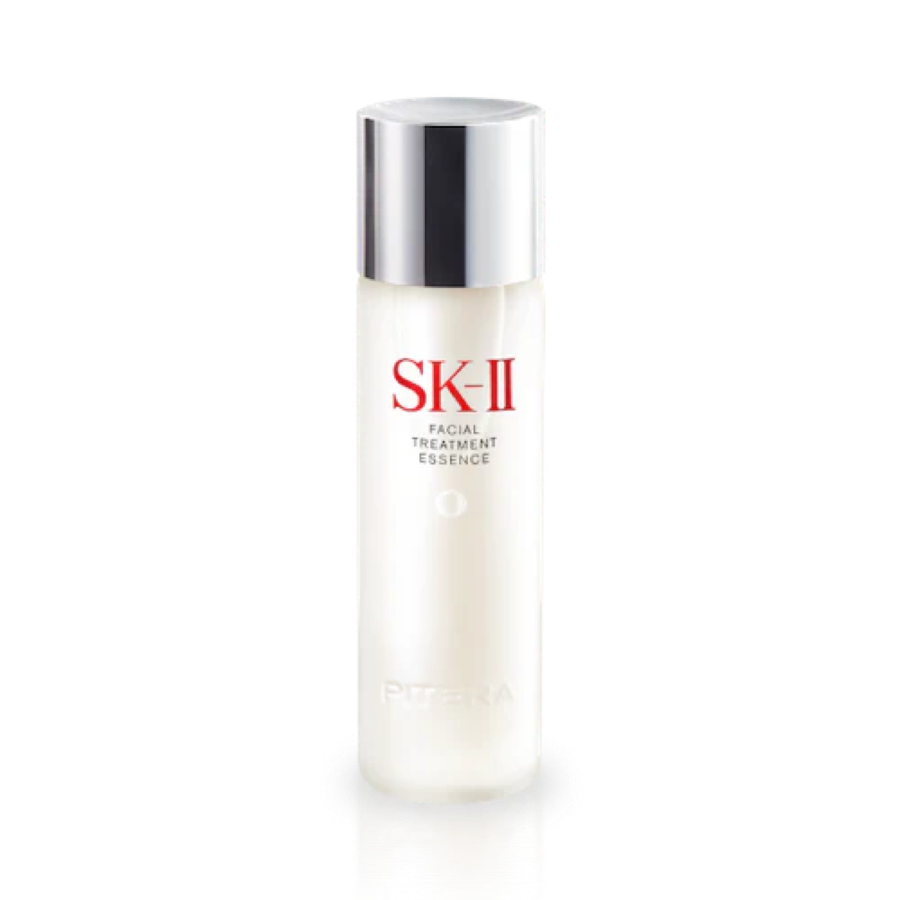
SK-II Facial Treatment Essence: what $99 buys
PITERA Facial Treatment Essence
- Price$99
- Size75 ml (2.5 fl oz)
- Works out at$1.32 per ml
SK-II US, 22 Nov 2026; also $190 for 160 ml, $245 for 230 ml and $325 for 330 ml. In Japan ¥12,650 for 75 ml on SK-II's Japanese site.
See it on sk-ii.com SK-II Facial Treatment Essence →
Image: SK-II, from sk-ii.com
What it costs, in dollars and in yen
SK-II sells its PITERA Facial Treatment Essence on its US site in four sizes: $99 for 2.5 oz (75 ml), $190 for 5.4 oz (160 ml), $245 for 7.7 oz (230 ml) and $325 for 11 oz (330 ml), which works out at $1.32, $1.19, $1.07 and 98 cents a millilitre. That is a steep but honest ladder, since every step up saves money per millilitre, and a holiday sale running from 13 November to 7 December had the smallest bottle at $79.20 on the day we checked. NBC Select listed the same 75 ml bottle at $99.00 at Sephora in April, when it named the essence the best Japanese skincare product overall and, in the same breath, “very pricey”.
Japanese shoppers pay noticeably less. SK-II's Japanese site lists ¥12,650 for 75 ml, ¥23,100 for 160 ml and ¥29,150 for 230 ml, all including Japan's 10% consumption tax, or about $79.74, $145.61 and $183.75 at the European Central Bank's rate of 20 November, and it does not list the 330 ml pump bottle at all. So an American pays 24% more than a Japanese buyer for the smallest bottle and 33% more for the 230 ml one, and the gap widens as the bottle grows. If you are travelling to Japan, the 230 ml bottle is the one to bring home; if you are buying in the US, skip the 75 ml unless you are trying the essence for the first time, because it costs 11% more per millilitre than the 160 ml bottle and 24% more than the 230 ml one.
What's in it: seven ingredients, one ferment
The full list on SK-II's US page is seven items long: galactomyces ferment filtrate, which SK-II calls Pitera, then butylene glycol, pentylene glycol, water, sodium benzoate, methylparaben and sorbic acid. SK-II says the bottle contains “more than 90% PITERA”, which matches the label, since the ferment comes first and only two glycols, which hold water and help the formula spread, and water itself stand between it and the three preservatives at the end. Methylparaben is the one some shoppers go out of their way to avoid, although SK-II's page sets out a long statement on how it checks every ingredient's safe range.
Pitera is the whole product. SK-II's explainer says it was “identified out of over 350 kinds of yeasts”, that it contains “over 50 micronutrients” such as vitamins, minerals and amino acids, and that it is “made exclusively in Japan for SK-II”. Its origin story, repeated on the product page, is that scientists in the 1970s noticed that elderly sake brewers had younger-looking hands than their age and went looking for the reason in fermentation. Galactomyces ferment filtrate is the generic ingredient name, and other brands sell essences with the same name on the label, but SK-II's Pitera comes from its own strain and process, so two bottles with the same first ingredient are not necessarily the same liquid.
The Japanese label adds a detail the American one lacks. On SK-II's Japanese site the first ingredient is written ガラクトミセス培養液(ギュウニュウ), galactomyces culture fluid followed, in brackets, by the Japanese word for cow's milk, while the American list says only galactomyces ferment filtrate; SK-II does not explain the bracket on either site, but anyone who avoids milk-derived ingredients may want to ask the brand before buying.
How it feels, and what SK-II promises
SK-II describes a “lightweight essence” with a “unique watery formula” that “absorbs quickly and easily into skin”, and its instructions are a small ritual: two or three shakes into the palms, pressed over the face and neck for a minute and patted in until absorbed, morning and evening, after cleansing and toning. In Japan the brand pitches the same bottle as three products in one, a booster, a lotion (the Japanese name for a hydrating toner) and a serum, and tells buyers to pour a pool the size of a 100-yen coin into the palm. It says the essence suits normal, dry, combination and oily skin.
The claims are big and mostly cosmetic: firmer, smoother, softer-looking skin in two weeks, “visible transformation in radiance & age spots” in a month, and, after a year on SK-II's full regimen, “up to 10 years of visible skin damage & signs of aging minimized”. The product page also says it is “proven to reduce redness”, with a footnote limiting that to redness due to dryness. We would read the timeline as marketing, since SK-II does not publish the studies behind it on the page, and treat the essence as what it most clearly is, a hydrating first step.
What dermatologists and reviewers say
Independent commentary tends to describe Pitera in SK-II's own terms rather than test it. “Pitera is a proprietary ingredient from SK-II derived from yeast fermentation,” the New York dermatologist Brendan Camp told Who What Wear in April 2025, adding that it is used to improve cell turnover, stimulate the production of hyaluronic acid and protect skin from UV damage. His colleague Noah Gratch, in the same article, advised people prone to fungal acne to avoid galactomyces altogether, warning that “yeast is a fungus that may exacerbate” the problem, which is advice to take to your own dermatologist if it applies to you.
The sceptical view is about ferments in general. Michelle Wong, the chemist behind Lab Muffin, looked at fermented skincare in 2017 and concluded: “A few ingredients can be improved by fermentation, but there isn't anything universally beneficial about fermenting things.” That is not a verdict on Pitera in particular, but it is a useful corrective to the idea that any ferment is a miracle, and it is the reason we judge both bottles on their whole formula rather than on the word “ferment” alone.
Although this essence is best for mature skin, I love using it as a replacement for my usual toner step.
Ashley Morris, NBC Select, April 2026
The story: sake brewers, Procter & Gamble and China
SK-II says the essence has been around for more than 45 years, and for most of that time its fortunes have turned on China. In 2006 Chinese authorities expressed concern about small amounts of chromium and neodymium in SK-II products imported from Japan, and Procter & Gamble pulled the whole line from sale in China, saying the products were safe and that “we simply needed to remove our brand from this unfortunate controversy,” Dermatology Times reported in October 2006; P&G said then that it would keep making SK-II in Japan.
The second blow came after Japan began releasing treated water from the Fukushima nuclear plant in August 2023. In the quarter to December 2023, SK-II's sales in Greater China fell 34%, P&G said, and its finance chief, Andre Schulten, told investors that “our consumer research indicates SK-II brand sentiment is improving,” CNBC reported. The recovery has since come through in P&G's figures: in its results for the year to June 2026, the company credited “growth of the super-premium SK-II brand” for its skin-care product mix in the final quarter, even as volumes in Greater China fell.
What goes wrong with SK-II
The price is the obvious problem, and it is a real one: a 75 ml bottle used morning and evening as SK-II suggests will not last long, and even the 330 ml bottle costs nearly a dollar a millilitre, roughly four times Missha's American price. The formula is also very plain for the money, with no humectant beyond the glycols, no soothing extras and a paraben preservative, so most people will still need a serum or moisturizer on top, and anyone prone to fungal acne has reason, on Gratch's advice, to think twice about a bottle that is mostly yeast ferment.
Finally, SK-II's own claims run well ahead of anything it publishes on its pages, and the most careful independent writing on ferments, such as Lab Muffin's, is cautious about them as a category. None of that makes the essence bad; it makes it a pleasant, simple hydrating step that is priced as if it were a treatment.
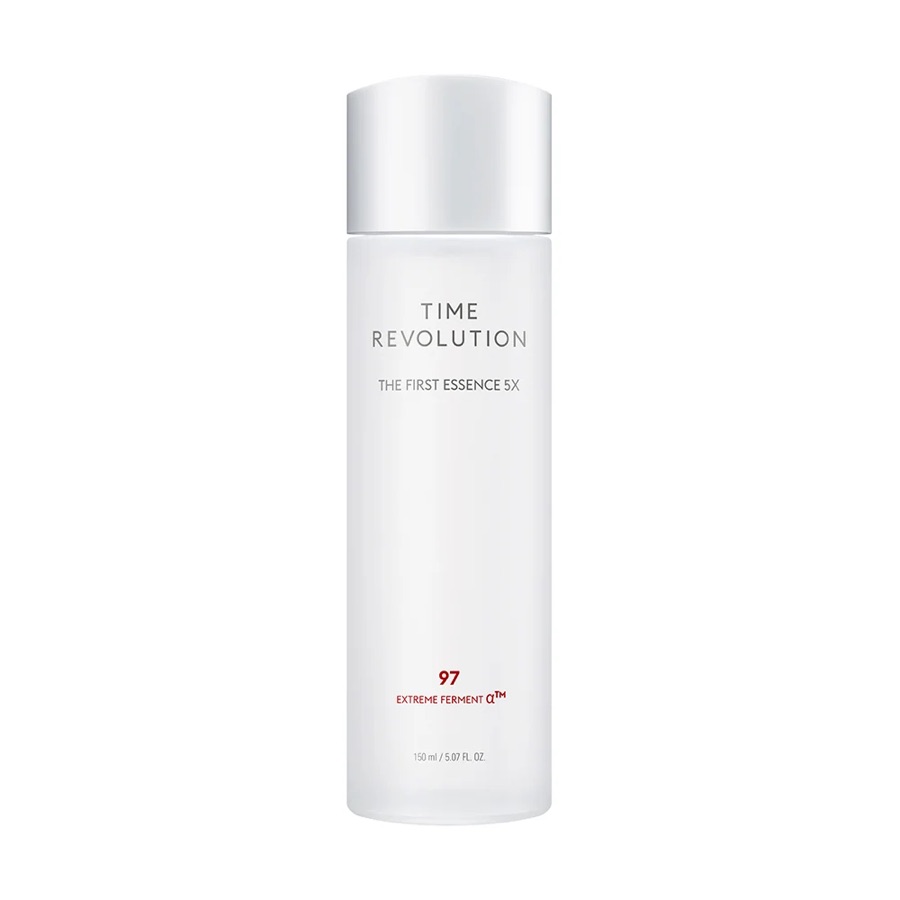
Missha Time Revolution The First Essence 5X: the $39 answer
Time Revolution The First Essence 5X
- Price$39
- Size150 ml (5.07 fl oz)
- Works out at$0.26 per ml
Missha US list price, 22 Nov 2026 (on sale for $31.10 that day). In Korea ₩44,000 (about $32.85) for 180 ml on Able C&C's shop.
Image: Missha, from misshaus.com
What it costs, in Seoul and in the US
Missha's US site lists The First Essence 5X at $39.00 for 150 ml (5.07 fl oz), or 26 cents a millilitre, and it was on sale for $31.10 on 22 November, about 21 cents a millilitre. Shop around carefully, because the same bottle was listed at $54.00 on Soko Glam, 38% more than Missha's own list price for an identical 150 ml.
Koreans get a bigger bottle for less. On Able Shop, the official online shop of Missha's parent, Able C&C, the 5X comes in a 180 ml bottle listed at ₩44,000 and sold for ₩30,800 on the day we checked, about $32.85 and $22.99, and 1,714 Korean buyers had given it an average of 4.8 out of 5. At list price that is 18 cents a millilitre in Korea against 26 cents in the US, so Americans pay about 42% more per millilitre for a bottle 30 ml smaller.
What's in it: a different yeast, and a longer list
The Korean label on Able Shop lists 15 ingredients: water, glycerin, propanediol, 1,2-hexanediol, niacinamide, yeast ferment extract, bifida ferment lysate, diethoxyethyl succinate, sodium PCA, ethylhexylglycerin, adenosine, butylene glycol, ceramide NP, hydrogenated lecithin and xanthan gum, made in Korea by the manufacturer Cosmax for Able C&C. Soko Glam's American listing names the same 15 ingredients in a slightly different order. Missha calls its ferment “Fermented Cicaenzyme (Yeast) Extract” and claims the essence contains “97% Desert Cica Yeast Ferment” made with what it calls a three-step “EXTREME FERMENT α” method, though no centella, the plant usually meant by cica, appears on either list.
The extras are the real difference from SK-II. Niacinamide, a form of vitamin B3, is fifth on the list, and adenosine is there too, which is why the Korean listing describes the essence as a registered “dual-function” cosmetic for wrinkles and brightening, a category Korea's food and drug ministry reviews; ceramide NP and sodium PCA are skin-identical moisturizers, and bifida ferment lysate is a second ferment, from a bacterium rather than a yeast. Missha says the formula has a pH of 5.5 and is made without artificial fragrances or colors, parabens, sulfates, animal products, alcohol, mineral oils, essential oils and silicone.
Missha's 97% and SK-II's 90% are not the same kind of number
SK-II's label puts galactomyces ferment filtrate first of seven ingredients, and SK-II says the bottle is more than 90% Pitera, so its headline number and its ingredient list agree. Missha's current Korean label for the 5X begins with water, glycerin, propanediol, 1,2-hexanediol and niacinamide, and only then lists yeast ferment extract, the ingredient behind its 97% claim; the list marks seven ingredients with an asterisk, water and glycerin among them, and neither that page nor Missha's US page explains the mark or says how the 97% is counted.
The label has also moved. In April 2021 Missha's US page for the fourth-generation essence, in an archived copy, listed yeast ferment extract first, and the earliest 5X list recorded by INCIDecoder, in March 2021, did the same in 12 ingredients; today's list has 15, adds glycerin, propanediol and xanthan gum, and moves water from seventh place to first. Missha doesn't say whether that is a new formula or a fuller way of declaring the same ferment, but a shopper comparing the two labels today is comparing a bottle led by its ferment with one led by water.
How it feels, and what Missha promises
Missha tells buyers to make the essence the first step after cleansing, either wiped on with a cotton pad or patted in by hand, and says it delivers “dense moisture” and eight benefits from clarity to protection, with a claim that it is “clinically proven to improve skin tone, texture, and moisture within 14 days of use”. It recommends the 5X for normal, sensitive, dull, dry or aging skin, and sells a separate First Essence Enriched, also 150 ml, that adds beta-glucan and a fermented black yeast extract for dry or aging skin.
Buyers on Missha's US site describe it as light: one reviewer in May 2025 called the texture “feather-light, almost like water”, and another in September 2025 called it “not too watery”. The site's 340 reviews averaged 4.86 out of 5 on 22 November, and the praise is mostly about hydration and gentleness, though one reviewer in September 2026 wrote that “the light fragrance is lovely”, an odd remark about a bottle Missha sells as made without artificial fragrance.
What buyers say
The SK-II comparison is never far away. “This is one the best essence. It reminds me of Sk-II,” one reviewer wrote on Missha's US site in December 2025, and the May 2025 reviewer quoted above said it left skin “deeply hydrated and visibly plumper”. Giorgia Guazzarotti, who compares the two on her blog Beautiful With Brains, is blunter about the dupe question: “Nope. They contain different ingredients, so you couldn't call them real dupes,” she wrote in a comparison last updated in August 2025, before naming Missha's the winner for anyone who wants an essence with probiotics, and noting that SK-II's ferment was once listed under a different name, Saccharomycopsis ferment filtrate.
Low scores are rare on Missha's own site, as they tend to be on any brand's shop, and we found few detailed critical reviews of the current 5X in the places we could open, so we would weigh that praise as the opinion of happy customers rather than as a measure of how it suits everyone; the reviews that mention price do so to praise it, one in May 2026 under the title “High end quality at affordable pricing”.
Nope. They contain different ingredients, so you couldn't call them real dupes.
Giorgia Guazzarotti, Beautiful With Brains, August 2025
The story: an empty-bottle swap and five generations
Missha grew out of Beauty Net, an online cosmetics shop founded in 2000 by Seo Young-pil, a former researcher at Pigeon, who built the brand on cheap “3,300 KRW cosmetics” and opened the first Missha shop in front of Ewha Womans University in Seoul in 2002, according to Asia Economy; IMM Private Equity bought Seo's 25.5% stake in 2017 for ₩188.2 billion. The First Treatment Essence arrived in 2011 with the SK-II swap campaign, and Missha has relaunched it roughly every few years since: its US page in 2021 sold the fourth generation, “Rx”, at a list price of $52 with a “double-fermentation” method, pearl powder and rice extract, and the 5X, the fifth generation, followed. Missha says it sold more than 13 million bottles between 2008 and 2022.
The brand is doing well abroad. Overseas sales now make up about 70% of Able C&C's revenue, and its US and European sales rose 230% and 43% in the first quarter of 2026, Edaily reported in July, adding that the American subsidiary had returned to profit.
What goes wrong with Missha
The essence is now in its fifth generation in fifteen years, so reviews, ingredient lists and dupe comparisons written about one generation often do not apply to the bottle you can buy today, and even the current label has changed since 2021, as the panel above shows. The 97% claim is not explained anywhere we could find, and the “cica” in its name does not correspond to any centella on the list.
Niacinamide, the main thing Missha adds over SK-II, does not suit every skin, which is why even The Ordinary steers sensitive skin towards a gentler strength, as we explain in The Ordinary vs Minimalist niacinamide, so a patch test makes sense. And outside Missha's own shop, prices for the same bottle range widely, from $31.10 on sale at Missha to $54.00 at Soko Glam.
Is Missha really an SK-II dupe?
The dupe claim holds on the things you notice at the sink. Both are watery, clear liquids meant to go on straight after cleansing; neither lists fragrance, alcohol or oils; both lead with a microbial ferment and both are marketed on the idea that fermentation makes ingredients better for skin. If what you want from SK-II is a refreshing, layerable first step, Missha delivers that for about a quarter of the price per millilitre.
It does not hold on the label. The ferments are different: galactomyces ferment filtrate in SK-II, yeast ferment extract plus a bifida lysate in Missha, and SK-II says its Pitera comes from one strain chosen out of more than 350 yeasts, so even another galactomyces essence would not be the same liquid. The proportions are different: SK-II's ferment comes first of seven ingredients, Missha's sixth of fifteen. And the extras are different: Missha adds niacinamide, adenosine and ceramide, which SK-II does not contain, and drops the parabens SK-II uses. So the Korean bottle is better described as a cheaper essence in the same tradition than as a copy, and in some ways, for anyone who wants niacinamide or avoids parabens, it is the more complete formula.
Which suits oily, dry or sensitive skin?
For oily and combination skin, SK-II's own list of skin types includes them, and its seven-ingredient formula contains nothing heavy, so it is the more obvious match on paper; Missha does not name oily skin among its recommendations, although its formula is also light. For dry and dull skin, Missha is the better fit on the brands' descriptions, because it adds glycerin, sodium PCA and ceramide NP to the ferment, while SK-II relies on its glycols alone and expects you to follow with a cream.
For sensitive skin, Missha names it and SK-II doesn't, and Missha's list avoids parabens, essential oils and alcohol, but it does contain niacinamide, which some sensitive skins dislike. If you have rosacea, eczema or a tendency to fungal acne, ask a dermatologist before adding either, since both are built on microbial ferments and, as Noah Gratch told Who What Wear, yeast-derived ingredients are not for everyone.
Which is better value?
Missha, by any measure. At list prices in the US, 150 ml of Missha costs $39, while the same 150 ml of SK-II, bought at the 230 ml bottle's rate, would cost about $160, so the Korean essence is roughly a quarter of the price per millilitre. Say a 150 ml bottle lasts you two months of morning-and-evening use: a year of Missha then costs $234 at list price, or $186.60 at this week's sale price, while a year of SK-II bought in 230 ml bottles costs about $959, and about $886 even in the 330 ml size.
If you are set on SK-II, buy it in Japan or buy the biggest bottle you can afford, because both cut the price per millilitre sharply, and use the 75 ml bottle only as a trial. If you are buying Missha, buy it from Missha's own site, where it cost $39 or less on 22 November, rather than from retailers charging up to $54.
| Where and how much | SK-II Facial Treatment Essence | Missha First Essence 5X |
|---|---|---|
| Smallest bottle, US | $99 for 75 ml ($1.32 a ml) | $39 for 150 ml (26 cents a ml) |
| Best US price per ml | 98 cents (330 ml, $325) | 21 cents (150 ml on sale, $31.10) |
| At home, list price | ¥29,150 for 230 ml, about $183.75 (80 cents a ml) | ₩44,000 for 180 ml, about $32.85 (18 cents a ml) |
| US premium over home price | 24% (75 ml) to 33% (230 ml) | 42% per ml, at list prices |
| One year at two months a 150 ml bottle | About $959 (230 ml bottles) | $234 (list) or $186.60 (sale) |
Prices checked 22 November 2026 on SK-II's US and Japanese sites, Missha's US site and Able Shop. Conversions at ECB rates of 20 November 2026 ($1 = ¥158.64 = ₩1,339.44); the yearly figures are our arithmetic for 900 ml a year.
Americans pay a bigger mark-up on the cheap Korean bottle than on the Japanese luxury one
Compare each essence's American price with its price at home and the gaps run the opposite way to what most shoppers would guess. SK-II's 230 ml bottle costs $245 in the US against ¥29,150, about $183.75, on its Japanese site, a premium of 33%, and the 75 ml bottle's premium is 24%. Missha's 5X costs 26 cents a millilitre at its American list price against 18 cents in Korea, a premium of 42%, and Korean buyers get 180 ml in the bottle where Americans get 150 ml; at the two shops' sale prices on 22 November, $31.10 and ₩30,800, the gap widens to 62%.
The Korean bottle is still far cheaper, but the ratio narrows on the way to America. At home, per millilitre, SK-II's 230 ml bottle costs about 4.4 times as much as Missha's 180 ml one; in the US, it costs about 4.1 times as much. The dupe's discount is real, just a little smaller than it looks from Seoul.
Alternatives worth a look
If what you want is the same ingredient name as SK-II for less, the closer match on the label is not Missha but COSRX, whose Galactomyces 95 Tone Balancing Essence lists galactomyces ferment filtrate first and claims 95% of it, followed by niacinamide, panthenol and glycerin, for $24 for 100 ml, or 24 cents a millilitre, on COSRX's US site, where it was backordered on 22 November. It is not Pitera, which comes from SK-II's own strain, but it is the same kind of ferment, which Missha's is not.
If what you want is simply a hydrating first step in the Japanese style, Hada Labo's Gokujyun Premium lotion, which we compare with a Korean favorite in Hada Labo Premium Lotion vs Klairs Supple Toner, costs ¥1,100 for 170 ml in Japan, and our full review of SK-II's essence sets out the case for and against the Japanese bottle in more detail.
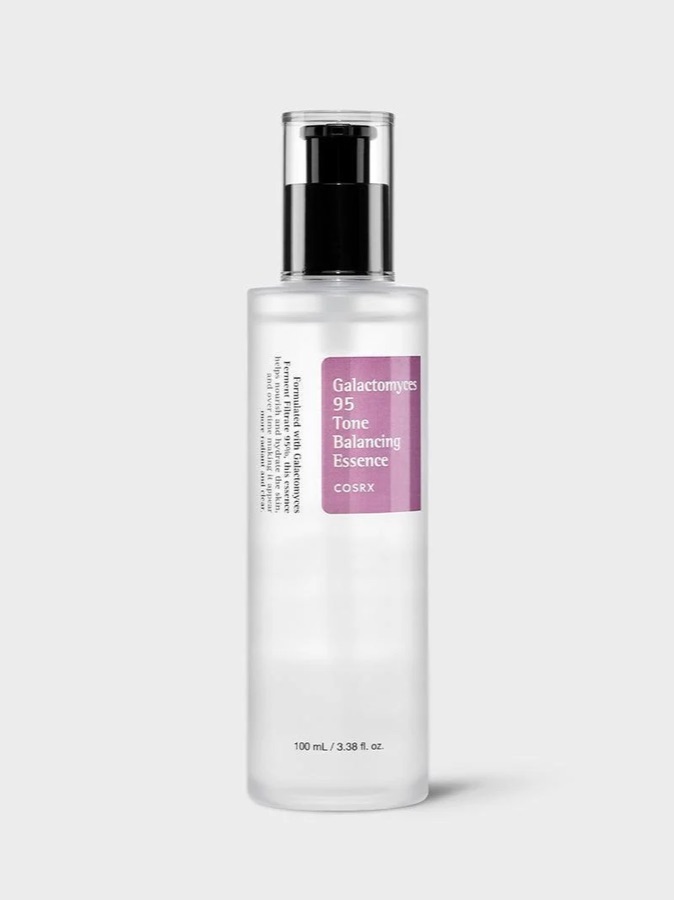
Galactomyces 95 Tone Balancing Essence
- Price$24
- Size100 ml (3.38 fl oz)
- Works out at$0.24 per ml
COSRX US, 22 Nov 2026 (backordered that day)
Image: COSRX, from cosrx.com
Our verdict
We would buy the Missha. At $39 for 150 ml on Missha's US site, less on sale, it costs about a quarter as much per millilitre as SK-II, it does the same job as a watery first step after cleansing, and its formula adds niacinamide, adenosine and ceramide while leaving out the parabens SK-II uses. It is not a copy of SK-II, and its 97% claim deserves more explanation than Missha gives, but judged as an essence rather than as a dupe it is the better-rounded bottle for most skin.
We would buy SK-II only for Pitera itself, from a shopper who has tried the 75 ml bottle and noticed a difference worth paying for, and then in Japan or in the largest size, which brings the price down to 80 cents a millilitre at home or 98 cents in the US. If you want a galactomyces essence without SK-II's price, COSRX's Galactomyces 95 is the closer cousin on the label, and if you want hydration and nothing else, a Japanese drugstore lotion will do the job for a fraction of either.
Questions people ask
Is Missha First Essence a dupe for SK-II Facial Treatment Essence?
Not in the strict sense: the two contain different ferments, galactomyces in SK-II and a yeast ferment extract with a bifida lysate in Missha, and Missha adds niacinamide and adenosine that SK-II lacks. They do the same job as a watery first step, and Missha costs about a quarter as much per millilitre.
What is the difference between SK-II and Missha essence?
SK-II's is seven ingredients led by its galactomyces ferment, Pitera, which it says makes up more than 90% of the bottle, preserved with methylparaben. Missha's 5X has 15 ingredients led by water and glycerin, with yeast ferment extract sixth, plus niacinamide, adenosine and ceramide, and no parabens.
Is SK-II cheaper in Japan?
Yes, SK-II's Japanese site charges ¥29,150 (about $183.75) for the 230 ml bottle that costs $245 on its US site, and ¥12,650 (about $79.74) for the 75 ml bottle that costs $99, so Americans pay 24% to 33% more at the exchange rate of 20 November 2026.
Does SK-II Facial Treatment Essence contain parabens or fragrance?
It contains methylparaben, one of three preservatives alongside sodium benzoate and sorbic acid, but no fragrance is listed among its seven ingredients. Missha says its First Essence 5X is made without parabens or artificial fragrances.
Which is better for sensitive skin, SK-II or Missha?
Missha names sensitive skin among the types it suits and SK-II does not, and Missha's formula leaves out parabens, essential oils and alcohol, but it contains niacinamide, which some sensitive skins dislike. Patch-test either, and ask a dermatologist first if you have rosacea, eczema or fungal acne.
Is Missha First Essence 5X the same as the First Treatment Essence?
It is the fifth generation of the same product line, which Missha launched as The First Treatment Essence in 2011 and has reformulated several times since, including a fourth-generation “Rx” version with pearl powder and rice extract. Reviews of older generations may not describe the bottle sold today.
Is there a cheaper galactomyces essence than SK-II?
Yes, COSRX's Galactomyces 95 Tone Balancing Essence lists galactomyces ferment filtrate first and costs $24 for 100 ml on COSRX's US site, though it is not SK-II's own Pitera strain and adds niacinamide and panthenol.
How we put this together
We read each brand's own product pages and full ingredient lists, what buyers report in public reviews and forums, and the news coverage linked on this page. Prices are the brand's own list prices in the US on the date shown, unless the page names another shop. Nothing here is rated or scored, and no brand paid to appear.
Sources (20)
- SK-II US: PITERA Facial Treatment Essence, prices, claims and ingredients
- SK-II US: All about PITERA
- SK-II Japan: フェイシャル トリートメント エッセンス, prices and Japanese ingredient list
- Missha US: Time Revolution The First Essence 5X
- Able Shop (Able C&C, Korea): Time Revolution The First Essence 5X 180 ml, price and Korean ingredient list
- Missha US: The First Treatment Essence Rx (4th Gen), archived 24 April 2021
- INCIDecoder: Missha Time Revolution The First Essence 5X (list uploaded March 2021)
- Soko Glam: Missha Time Revolution The First Essence 5X
- Korea JoongAng Daily: Copycat cosmetics products flood market, February 2012
- Asia Economy: What kind of company was Missha?, September 2022
- Edaily: IMM PE expects to realize gains as Able C&C grows, July 2026
- Dermatology Times: P&G pulls SK-II line from China market, October 2006
- CNBC: P&G's SK-II sales hurt by Japan wastewater release, January 2024
- Procter & Gamble: fourth-quarter and fiscal-year 2026 results, July 2026
- Who What Wear: dermatologists on galactomyces, April 2025
- Lab Muffin: What's the deal with fermented skincare?, May 2017
- Beautiful With Brains: SK-II vs Missha First Essence 5X, updated August 2025
- NBC Select: The best Japanese skin care products, April 2026
- COSRX US: Galactomyces 95 Tone Balancing Essence
- European Central Bank reference rates via Frankfurter, 20 November 2026