In the US, buy The Ordinary, which costs $6.00 for 30 ml against Minimalist's $10.00 at Target and has kept the same 11-ingredient formula since at least 2018; in India, buy Minimalist, which costs ₹539 against The Ordinary's ₹600 at Nykaa and wraps the same 10% niacinamide in a longer formula with glycerin, hyaluronic acid and a marine ferment.
- You shop in the US or Canada, where it costs $6.00 (C$6.60) for 30 ml on The Ordinary's own sites, and the 60 ml bottle brings the US price down to 18 cents a millilitre.
- You want a short ingredient list, 11 items that have not changed on the brand's product page since at least March 2018.
- You want to know how much zinc you are getting, since The Ordinary states 1% zinc PCA and Minimalist gives no figure for its zinc.
- You want to buy it almost anywhere: its own site and stores, Ulta at the same $6.00, and Nykaa in India at ₹600.
- You shop in India, where it costs ₹539 for 30 ml (MRP ₹599) on Minimalist's site, ₹61 less than The Ordinary at Nykaa, and ₹899 for 60 ml.
- You want hydrators in the same bottle, since glycerin, sodium hyaluronate and allantoin sit in its list beside the niacinamide.
- You like to see where ingredients come from: Minimalist names Lonza in Switzerland as its niacinamide supplier and Lipotec USA for its Matmarine.
- You would rather back an Indian brand, made in Jaipur, that was selling ingredient-led serums in India 20 months before The Ordinary arrived there in June 2022.
The one difference that matters: both bottles hold 10% niacinamide, but The Ordinary's is a bare formula of 11 ingredients with a stated 1% zinc, while Minimalist's runs to 23 ingredients that add hydrators, a second zinc salt, acetyl glucosamine and a marine ferment, so you are choosing between a plain tool and a fuller serum, not between strengths.
Both serums can pill under moisturizer or sunscreen, and The Ordinary advises against using its serum in the same routine as pure vitamin C, so read how to avoid both problems before your first bottle.
| | |
|---|---|---|
| Price, 30 ml | $6.00 on The Ordinary US; C$6.60 in Canada; ₹600 at Nykaa in India | ₹539 on Minimalist's site (MRP ₹599), about $5.82; $10.00 at Target in the US |
| Price, 60 ml | $10.80 (C$11.90 in Canada) | ₹899 (MRP ₹999), about $9.70 |
| Lowest price per ml | 18 cents (60 ml, US) | ₹14.98, about 16 cents (60 ml, India) |
| Niacinamide | 10% | 10% |
| Zinc | 1% zinc PCA | Zinc PCA and zinc glycinate, no percentage given |
| Other named actives | None | Matmarine (a marine ferment), acetyl glucosamine, sodium hyaluronate |
| Number of ingredients | 11 | 23 on the Indian site; 20 on Target's US listing |
| pH, as stated by the brand | 5.00 to 6.50 | 5.5 to 6.5 |
| Fragrance | None in the formula | Fragrance-free, essential-oil-free |
| Bottle | Frosted bottle with dropper | Dark bottle with dropper |
| Brand from, and owner | Toronto, 2016; wholly owned by The Estée Lauder Companies since 2024 | Jaipur, 2020; 90.5% owned by Hindustan Unilever since April 2025 |
| Where to buy | theordinary.com, its own stores and Ulta in the US; Nykaa in India | beminimalist.co in India; Target, and Ulta's marketplace, in the US |
Prices checked on 22 November 2026 on each brand's own site, and at Ulta, Target and Nykaa where named. Dollar figures for rupee and Canadian prices use the European Central Bank reference rates of 20 November 2026: $1 = ₹92.68 = C$1.4307.
A $6 bottle, and the Indian brand that answered it
The Ordinary's Niacinamide 10% + Zinc 1% cost $5.90 on its maker's website in March 2018 and $6.00 on 22 November 2026, a rise of ten cents in more than eight years in which almost everything else in a bathroom cabinet got dearer, and the bottle still carries a “Bestseller” badge on the brand's own page. It is the serum that taught a generation of shoppers to read percentages on labels, but for most of its life Indian shoppers could not simply walk into a shop and buy it, because The Ordinary only became “finally available in India” in June 2022, through Nykaa, and until then, as Harper's Bazaar India put it that August, people paid customs on imported batches or waited for travelers to bring bottles home.
Minimalist was built in that gap. Two brothers from Jaipur, Mohit and Rahul Yadav, launched it in October 2020 with serums named after a single ingredient and its strength, printing the hero ingredient, its source and its concentration on the front of every carton, and by Mohit's account the company was turning over ₹100 crore within eight months. Six years later neither brand is independent: The Ordinary belongs entirely to The Estée Lauder Companies of New York, and Minimalist to Hindustan Unilever, Unilever's Indian arm, so this is now a contest between two corporate portfolios as much as between two serums.
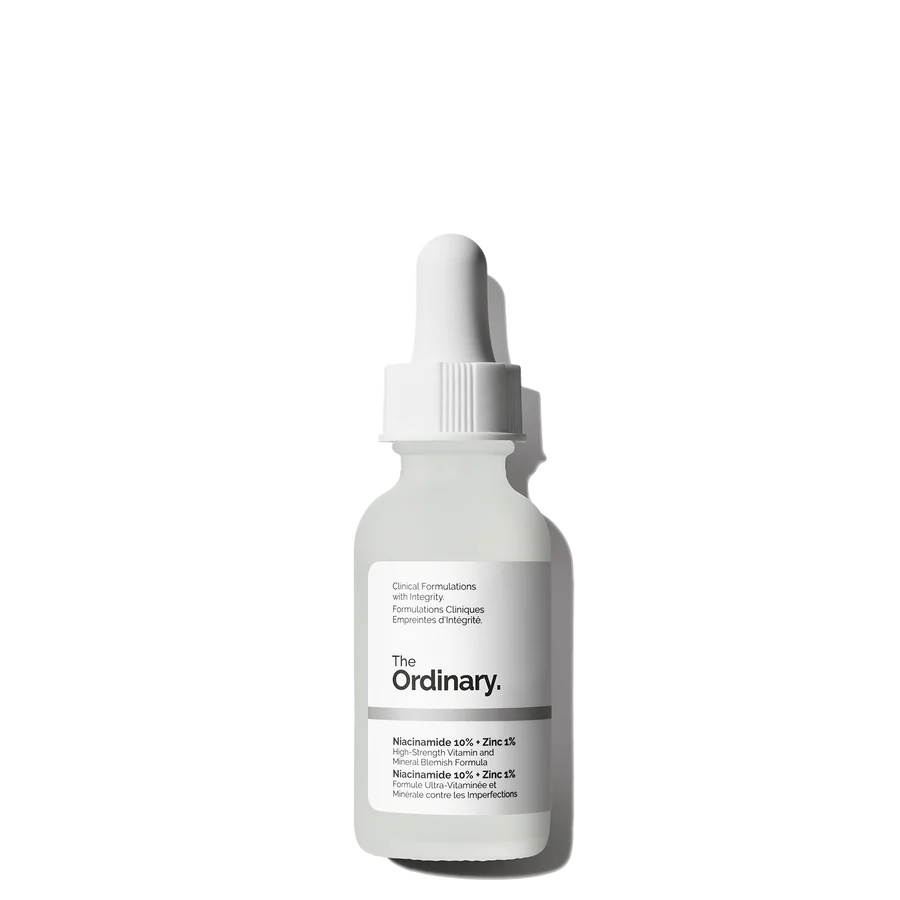
The Ordinary Niacinamide 10% + Zinc 1%: the $6 original
Niacinamide 10% + Zinc 1%
- Price$6
- Size30 ml (1 fl oz)
- Works out at$0.20 per ml
The Ordinary US, 22 Nov 2026
Image: The Ordinary, from theordinary.com
What it costs, in three currencies
The Ordinary sells the serum for $6.00 for 30 ml and $10.80 for 60 ml on its US site, which works out at 20 cents and 18 cents a millilitre, and Ulta charged the same $6.00 for the 30 ml bottle on 22 November 2026. In Canada, the brand's home, the Canadian site charged C$6.60 and C$11.90, about $4.61 and $8.32 at the European Central Bank's reference rate of 20 November, which makes Canada the cheapest of the three markets we checked.
In India, Nykaa sold the 30 ml bottle for ₹600, about $6.47, noting that its stock was “directly purchased from The Ordinary”, and the listing had gathered 171,673 ratings averaging 4.4 out of 5, a following few serums anywhere can match. We would buy the 60 ml bottle in North America if you use the serum morning and evening as the brand suggests, since it saves 10% per millilitre, but not before trying the 30 ml first, because a serum that disagrees with your skin is no bargain at any size.
One practical warning for this week: The Ordinary's promotion terms say its websites will be closed on 27 November 2026, Black Friday, and that its standalone stores will be “transaction-free for the entire day”, so anyone planning a holiday order should place it before or after that Friday.
What's in the bottle
The full ingredient list on The Ordinary's page has 11 items: water, niacinamide, pentylene glycol, zinc PCA, dimethyl isosorbide, tamarind seed gum, xanthan gum, isoceteth-20, ethoxydiglycol, phenoxyethanol and chlorphenesin. That list has not changed in at least eight years, because an archived copy of the product page from March 2018 shows the same 11 ingredients in the same order, though the stated pH range has widened from 5.50 to 6.50 then to 5.00 to 6.50 today.
Niacinamide is a form of vitamin B3, and zinc PCA is the zinc salt of pyrrolidone carboxylic acid, which the 2018 page said was there “to balance visible aspects of sebum activity”, while pentylene glycol, ethoxydiglycol and dimethyl isosorbide are solvents that keep the niacinamide dissolved and help the serum spread, tamarind seed gum and xanthan gum give it its slightly slippery body, isoceteth-20 helps everything mix, and phenoxyethanol with chlorphenesin preserves it. The brand calls it water-based and alcohol-free, oil-free, silicone-free, vegan and gluten-free, and says it suits all skin types.
The Ordinary's current page says the serum targets “signs of congestion, dryness, dullness, textural irregularities, visible shine”, claims it was non-comedogenic in a clinical study of 35 people using it twice a day for eight weeks, and promises visible plumpness and radiance after 15 minutes. Its 2018 page was more modest, and more useful, in one respect: it stated plainly that while niacinamide and zinc PCA reduce the look of blemishes, “neither is a treatment for acne.”
What buyers say
On Ulta the serum had 6,004 reviews averaging 4.2 out of 5 on 22 November, a lower score than on Nykaa, and the recent ones split in a familiar way between people whose oily skin settled down and people who reacted badly. “It's gentle, and effective at balancing oil production! Consistency and patience is key,” wrote a reviewer in Denton, Texas, in November 2026, while a reviewer in Utah who titled the review “Made my skin break out” wrote in October that “It took me too long to isolate which of my skincare products was the culprit,” by which time the bottle could no longer go back to the store.
The critical review that Ulta features at the top of the page makes the most useful point for anyone without oily skin: its author did a patch test, introduced the serum slowly, and still found after about a week of using three drops on face and neck that “my cheeks became hard like rough leather”, which the reviewer put down to having dry rather than oily skin. The Ordinary's own blog describes the 10% serum as “ideal for oily and blemish-prone skin” and points sensitive skin to a different product, which is the same advice in more careful words.
From Brandon Truaxe's Toronto company to Estée Lauder
The Ordinary's own history says it was founded in 2016 by Brandon Truaxe with the idea of challenging the beauty industry by selling high-quality skincare at accessible prices, as a brand of DECIEM, the Toronto company he had founded in 2013. The bottles still carry the line “Clinical Formulations with Integrity”, and the naming system, an ingredient and a percentage in plain type on a white label, is the same plain approach that Minimalist's cartons take, with the ingredient and its strength on the front.
The Estée Lauder Companies first invested in DECIEM in 2017, became the majority owner in 2021 and bought the remaining interests on 31 May 2024 for about $860 million, taking its total investment to about $1.7 billion over three stages, according to its announcement, which refers to “the late Brandon Truaxe”. The same release said DECIEM ranked in the top two of prestige skincare in Canada and the US, and in the top four in France, Germany and the UK, in the quarter to March 2024, a long way for a company whose best-known product costs $6.
What goes wrong with The Ordinary
Pilling is a common enough complaint that The Ordinary has written a whole guide about it, which we come to below. The second problem is the one in the Ulta review: at 10% the serum is aimed at oily skin, and people with dry or sensitive skin are better off starting with the brand's 5% emulsion or with something gentler, as The Ordinary's own blog suggests.
The brand also tells buyers not to use the serum in the same routine as direct vitamin C, warning that combining the two “may decrease effectiveness”, and to patch-test first and stop if irritation occurs. Finally, the formula contains no glycerin or hyaluronic acid, so most people will want a moisturizer on top, which adds a second product, a second cost and a second chance of pilling.
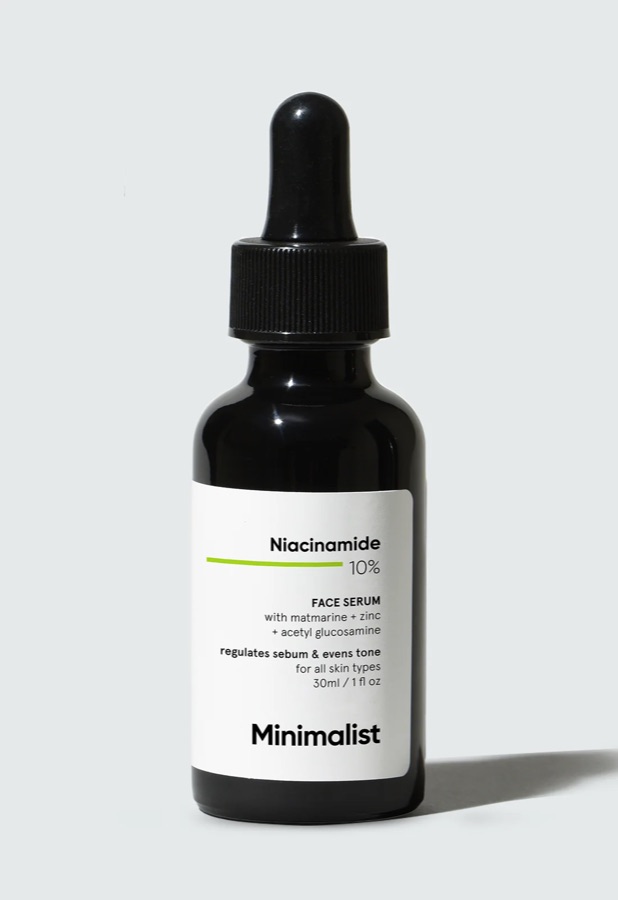
Minimalist Niacinamide 10%: Jaipur's answer
Niacinamide 10% Face Serum
- Price₹539 (about $5.82)
- Size30 ml (1 fl oz)
- Works out at₹17.97 per ml
Minimalist India, 22 Nov 2026 (MRP ₹599; $1 = ₹92.68); $10.00 at Target US
See it on beminimalist.co Minimalist Niacinamide 10% →
Image: Minimalist, from beminimalist.co
What it costs in rupees, and in dollars
Minimalist's own site sold the 30 ml bottle for ₹539 on 22 November 2026, 10% below its maximum retail price of ₹599 and including 18% GST, which the page breaks down as ₹457 plus ₹82 of tax. The other sizes cost ₹899 for 60 ml (MRP ₹999), ₹237 for a 10 ml trial bottle and ₹499 for 20 ml, or about $5.82, $9.70, $2.56 and $5.38, which works out at ₹17.97, ₹14.98, ₹23.70 and ₹24.95 a millilitre.
Those numbers make two choices easy. The 60 ml bottle is the buy for anyone who already knows the serum suits them, and the 20 ml bottle should be skipped entirely, because it costs more per millilitre than even the 10 ml trial size, which is the sensible way to find out whether your skin likes it. The page also listed five offers on the day we checked, among them buy two and get a third free and an extra 10% off orders above ₹599, so few regular buyers in India pay the list price, and the list price itself has barely moved: an archived copy of the page from November 2020 shows ₹595 against the same ₹599 MRP.
Americans pay a good deal more. Target sold the 1 fl oz (30 ml) bottle for $10.00, about 33 cents a millilitre, after promising “new offerings from Minimalist” in its spring 2026 press release in January, and Ulta listed it through its marketplace, where a third-party seller offered it at $11.99. At Target's price an American pays about 72% more than an Indian buying from Minimalist's site, and $4 more than for The Ordinary's bottle at Ulta.
What's in the bottle, and why the American one differs
Minimalist's Indian page lists 23 ingredients: water, niacinamide, dimethyl isosorbide, ethoxydiglycol, propanediol, zinc PCA, pentylene glycol, glycerin, Pseudoalteromonas ferment extract, zinc glycinate, acetyl glucosamine, allantoin, sodium hyaluronate, hydroxyethylcellulose, phenoxyethanol, xanthan gum, lecithin, sclerotium gum, pullulan, sodium lactate, PEG/PPG-17/6 copolymer, ethylhexylglycerin and lactic acid. The ferment extract is Matmarine, a trade-named ingredient made from a marine microorganism, which Minimalist says helps regulate oiliness and reduce the look of pores and buys from Lipotec USA, while its niacinamide comes from Lonza in Switzerland, a sourcing detail The Ordinary's page doesn't give.
Beyond the niacinamide, the extras fall into three groups: zinc in two forms, zinc PCA and zinc glycinate, though without a stated percentage; humectants and soothers, glycerin, sodium hyaluronate (the salt of hyaluronic acid), allantoin and acetyl glucosamine, an amino sugar; and four gum-like polymers that thicken it, hydroxyethylcellulose, xanthan gum, sclerotium gum and pullulan. The brand gives the pH as 5.5 to 6.5, calls the serum fragrance-free, essential-oil-free and non-comedogenic, recommends it for people 16 and over, and gives a shelf life of 18 months from manufacture.
The bottle an American buys may not be quite the same. The ingredient list on Target's listing has 20 items, puts glycerin ahead of niacinamide, adds butylene glycol, and leaves out pentylene glycol, sodium lactate, lactic acid and the PEG/PPG copolymer, so anyone comparing reviews from India with a bottle bought in Ohio should check the carton rather than assume. A retailer's listing can lag behind a label, which is why we would not call this a different formula outright, but it is a difference no Minimalist page mentions.
What buyers say
Minimalist's US reviews are still too few to weigh, with 12 ratings averaging 4.25 on Target, but the most recent written complaint among them is the same one The Ordinary hears: “It absorbs a little too quickly and also causes pilling on the skin,” a three-star reviewer wrote on Target in October 2026. On Minimalist's own page, where reviews carry no dates, one reviewer wrote that “it feels like the niacinamide serum stopped being as effective after using it for a while”, and a two-star review from someone with oily, breakout-prone skin describes more breakouts and red cheeks after three weeks of twice-daily use.
Those reviews say less about Minimalist than about 10% niacinamide in general, because the pattern, delighted oily-skinned buyers and unhappy dry or reactive ones, is the same split that shows in The Ordinary's recent reviews on Ulta. What a shopper should take from them is to start with the 10 ml bottle, use two or three drops rather than a palmful, and stop if the skin complains.
From a Jaipur start-up to Hindustan Unilever
Minimalist's founders were not first-timers, according to a 2024 profile in Inc42: Rahul Yadav is a chemical engineer who started a fashion business while studying at IIT-Roorkee, Mohit left a job at Credit Suisse, and the brothers had built and sold other businesses, including a kidswear shop, before a custom hair-care venture in 2018 taught them how hard it is to scale. “We started in October 2020 and grew to an INR 100 Cr business,” Mohit told the publication, which reported operating revenue of ₹184 crore in the year to March 2023, early funding from Peak XV's Surge programme and a ₹110 crore Series A in July 2021 led by Peak XV, with Unilever Ventures among the investors.
That early Unilever cheque turned into a takeover. Hindustan Unilever agreed on 22 January 2025 to buy 90.5% of Uprising Science, Minimalist's company, at a pre-money enterprise valuation of ₹2,955 crore, a deal TechCrunch put at over $340 million, and completed it in April 2025 for ₹2,706.44 crore in cash, with the remaining 9.5% to follow about two years after completion and the founders staying on to run the business. In its first full year under HUL, the year to March 2026, Minimalist's operating revenue rose 36.3% to ₹690.2 crore and it made a net profit of ₹25.9 crore, Inc42 reported in August 2026.
If our product is 10-20% costlier than the average but offers an innovative solution, we are fine with it.
Mohit Yadav, co-founder of Minimalist, to Inc42, April 2024
What goes wrong with Minimalist
Outside India the value case weakens sharply, because at $10.00 the American bottle costs two-thirds more than The Ordinary's, and the ingredient list on Target's listing does not match the Indian one. Inside India the only real catch is the size ladder, where the 20 ml bottle is a poor deal, and the stacking offers that make the sticker price hard to compare from one week to the next.
Minimalist's marketing also goes further than The Ordinary's has: its product page calls niacinamide an ingredient that “repairs skin, reduces occurrence of acne, and fades blemishes”, and its Target listing credits the zinc with “anti-inflammatory and anti-bacterial support”, claims we would read as marketing rather than as promises. And with four gum-like polymers in the formula, against The Ordinary's two gums, it is no less likely to pill under a heavy sunscreen, as its Target reviewer found.
The Ordinary's playbook, and India's version of it
The Ordinary's formula for success since 2016 has been easy to describe and hard to copy at scale: one or two named actives, the percentage printed on the front, a plain clinical label and a price under $10. When Minimalist launched in October 2020, Indian shoppers who wanted that kind of product mostly had to import it, and two months after The Ordinary arrived on Nykaa in June 2022, Harper's Bazaar India was steering readers towards home-grown brands that built single-ingredient formulas and, as the magazine put it, “educate new users about what ingredients are used.”
Others work to the same template. The Derma Co, sold by Honasa Consumer of Gurugram, offers a 10% Niacinamide Face Serum with 2% Zinc PCA at ₹599 for 30 ml, the same idea with twice The Ordinary's stated zinc, and Open magazine reported in July 2025 that India's skincare market was worth $8.78 billion in 2024, double its size a decade earlier, and the multinationals have since moved in.
The ending is the same on both sides of the world: the challengers have been bought. Estée Lauder spent about $1.7 billion on DECIEM, Hindustan Unilever paid ₹2,706 crore for 90.5% of Minimalist after its parent's venture arm had invested in 2021, and the trade now runs in both directions, with the Canadian original on Nykaa at ₹600 and the Indian answer on Target's website at $10, which Target's own press release pitched as beauty “without the luxury markup”.
Minimalist's serum contains eight of The Ordinary's 11 ingredients, and has moved closer to it since 2020
Compare the two ingredient lists line by line and eight of The Ordinary's 11 ingredients appear in Minimalist's Indian formula: water, niacinamide, pentylene glycol, zinc PCA, dimethyl isosorbide, ethoxydiglycol, xanthan gum and phenoxyethanol. Only three, tamarind seed gum, isoceteth-20 and chlorphenesin, are missing, and Minimalist then adds 15 more, so its serum is best understood as The Ordinary's base with a second layer of hydrators, soothers, thickeners and a marine ferment on top.
The resemblance has grown. Minimalist's November 2020 page describes an aloe-juice formula of 13 ingredients that shared only six with The Ordinary's; since then the brand has swapped the aloe juice for water and added pentylene glycol, which brought its base closer to the Canadian one, along with glycerin, the ferment, a second zinc salt, acetyl glucosamine, allantoin, sodium hyaluronate and a lactate buffer. The Ordinary's list, over the same period and longer, has not changed by a single ingredient.
Pilling, purging and the 10% question
Both serums can pill, and The Ordinary's pilling guide explains why in terms that apply to both: polymers such as the thickeners in serums and creams “can cause pilling” because of their “chain and mesh-like structures”, which clump together when layers are rushed or overloaded. The Ordinary's bottle contains two such gums and Minimalist's four, so the brand's advice holds for either: use two or three drops, apply the water-based serum first, and let it absorb fully before the next layer. Say you put sunscreen on straight after the serum every morning and find little rolls of product along your hairline by nine o'clock: halve the drops and wait a couple of minutes, because The Ordinary's guide would put the problem down to the layering rather than to the bottle.
Purging is a different matter, and niacinamide is not the usual suspect. NBC Select, drawing on the dermatologist Mamina Turegano in March 2026, describes purging as “a temporary breakout that happens when an active ingredient increases skin cell turnover”, most commonly a retinoid, and the same piece lists “niacinamide (at low percentages)” among the calming ingredients she suggests while skin adjusts. A rash of new spots after starting either serum is therefore better treated as a sign that the bottle doesn't suit you than as a phase to push through, and anyone with active acne should take the question to a dermatologist.
On strength, The Ordinary itself steers sensitive skin away from the 10% serum towards its 5% emulsion, and Minimalist sells a 5% serum with hyaluronic acid that it labels for dry and sensitive skin, so neither brand presents 10% as the right starting point for everyone. On vitamin C, The Ordinary's advice is to use the two “in separate routines”, its niacinamide in the morning and vitamin C at night, for example, which costs nothing to follow.
Which is cheaper, in rupees and in dollars?
In India, Minimalist is cheaper at every comparable size, and the gap widens with quantity. Say you are in Bengaluru with ₹1,200 to spend: two 30 ml bottles of The Ordinary at Nykaa cost exactly that, while 60 ml of Minimalist costs ₹899 on its own site and leaves ₹301 in your pocket, before any of its stacking offers. In the US the sums run the other way, because 60 ml of The Ordinary costs $10.80 on its own site while 60 ml of Minimalist means two $10.00 bottles at Target, almost twice the price.
| Where and how much | The Ordinary Niacinamide 10% + Zinc 1% | Minimalist Niacinamide 10% |
|---|---|---|
| 30 ml at home | C$6.60 in Canada (about $4.61); $6.00 in the US at The Ordinary and Ulta | ₹539 in India on Minimalist's site (about $5.82); MRP ₹599 |
| 30 ml abroad | ₹600 at Nykaa in India (about $6.47) | $10.00 at Target in the US; $11.99 from a seller on Ulta's marketplace |
| 60 ml at home | $10.80 in the US; C$11.90 (about $8.32) in Canada | ₹899 (about $9.70); MRP ₹999 |
| Smallest bottle | 30 ml | 10 ml for ₹237 (about $2.56) |
| Lowest price per ml | About 14 cents (60 ml in Canada); 18 cents in the US | ₹14.98, about 16 cents (60 ml in India) |
Prices checked 22 November 2026. Conversions at the European Central Bank reference rates of 20 November 2026 ($1 = ₹92.68 = C$1.4307); prices per millilitre are our arithmetic.
Each brand is cheapest at home, but only one charges foreigners much more
The Ordinary prices its 30 ml bottle almost flat around the world: about $4.61 in Canada, $6.00 in the US and about $6.47 at Nykaa in India, so an Indian buyer pays roughly ₹44, or 8%, more than the American price converted into rupees. Minimalist's bottle travels far less kindly, costing about $5.82 on its Indian site and $10.00 at Target, so an American pays about 72% more, the equivalent of ₹927 for a bottle that sells for ₹539 in Jaipur.
Both list prices have also stayed remarkably still. The Ordinary's US price has moved from $5.90 in March 2018 to $6.00 now, and Minimalist's maximum retail price was ₹599 in November 2020 and is ₹599 today, while its selling price has actually fallen, from ₹595 to ₹539, so over six years The Ordinary has added ten cents to its American price and Minimalist nothing to its Indian list price.
Where an American or an Indian reader can buy each
In the US, The Ordinary is the easy one: its own website, its standalone stores, where the product page offers in-store pickup, and Ulta all sold the 30 ml bottle for $6.00 on the day we checked, with the 60 ml bottle on The Ordinary's site at $10.80. Minimalist reaches Americans mainly through Target's website, where seven of its serums and exfoliants were listed at $10 to $13, and through a marketplace seller on Ulta; Minimalist's own shop is built for India, with pincode delivery checks and cash on delivery, and we found no sign on it of shipping to the US.
In India the picture flips. Minimalist sells from its own site at ₹539 for 30 ml, with offers on top, and The Ordinary's serum is on Nykaa at ₹600, where Indian shoppers have been able to buy it since June 2022, so an Indian reader can compare the two side by side on price alone in a way an American, paying $10 for the Indian brand, cannot.
Alternatives worth a look
For dry or sensitive skin, both brands offer a gentler version. The Ordinary's Niacinamide 5% Face and Body Emulsion costs $14.00 for 100 ml, which is 14 cents a millilitre and cheaper per millilitre than its own 10% serum, and the brand presents it as the niacinamide for sensitive skin, while Minimalist's Niacinamide 5% Face Serum costs ₹539 for 30 ml (MRP ₹599), the same as its 10%, and pairs the vitamin with 1% hyaluronic acid in a formula the brand labels for dry and sensitive skin.
For oily skin that wants more zinc, the Indian brand The Derma Co sells its 10% Niacinamide Face Serum with 2% Zinc PCA for ₹599 for 30 ml on its own site, which puts it ₹1 below The Ordinary at Nykaa and ₹60 above Minimalist, and makes it the closest Indian match to The Ordinary's niacinamide-and-zinc idea, with double the stated zinc.
Our verdict
In the US and Canada we would buy The Ordinary, because at $6.00 for 30 ml, or $10.80 for 60 ml, it costs much less than Minimalist's $10.00 bottle at Target, its 11-ingredient formula has not changed in at least eight years, and it tells you exactly how much zinc it contains. Pair it with your usual moisturizer, keep it away from your vitamin C routine, and if your skin is dry or easily upset, start with the brand's 5% emulsion instead.
In India we would buy Minimalist, ideally the 60 ml bottle at ₹899, because it costs less than The Ordinary at Nykaa, it adds glycerin, hyaluronic acid and other soothing extras that The Ordinary leaves to your moisturizer, and it is made in Jaipur by a brand Harper's Bazaar India was already holding up in 2022 as the home-grown alternative. The niacinamide is the same 10% in both bottles; what differs is everything around it, and in its home market Minimalist offers more of it for less.
Questions people ask
Is Minimalist niacinamide better than The Ordinary?
Neither is stronger, since both contain 10% niacinamide; Minimalist's formula adds hydrators and a marine ferment to a base that shares eight of The Ordinary's 11 ingredients. Minimalist is the better buy in India at ₹539 against ₹600, and The Ordinary is the better buy in the US at $6.00 against $10.00.
Is Minimalist available in the USA?
Yes, Target's website sells Minimalist Niacinamide 10% for $10.00 for 1 fl oz (30 ml), and a third-party seller lists it on Ulta's marketplace for $11.99. The ingredient list on Target's listing differs slightly from the one on Minimalist's Indian site, so check the carton.
Who owns Minimalist now?
Hindustan Unilever owns 90.5% of Minimalist's company, Uprising Science, after completing its purchase in April 2025 for ₹2,706.44 crore. The deal provides for HUL to buy the remaining 9.5% about two years after completion, and the founders, Mohit and Rahul Yadav, stayed on to run the business.
Is 10% niacinamide too strong?
It can be for dry or sensitive skin, which is why The Ordinary describes its 10% serum as ideal for oily and blemish-prone skin and points sensitive skin to its 5% emulsion. Minimalist also sells a 5% serum labelled for dry and sensitive skin, and both brands advise a patch test first.
Does niacinamide cause purging?
Niacinamide is not the kind of ingredient usually linked with purging, which NBC Select, drawing on dermatologist Mamina Turegano, ties to actives that speed up skin cell turnover, most commonly retinoids. New breakouts after starting a niacinamide serum are better treated as a sign it doesn't suit you, and persistent acne is a question for a dermatologist.
Why does The Ordinary Niacinamide pill?
The Ordinary says pilling usually comes from using too much product, layering too fast or combining incompatible formulas, and that thickening polymers in serums can clump together. It recommends two to three drops, applied first as a water-based serum and left to absorb fully before the next layer.
Can I use niacinamide with vitamin C?
The Ordinary recommends using its Niacinamide 10% + Zinc 1% and direct vitamin C in separate routines, warning that combining them may decrease effectiveness. The simplest way to follow that is niacinamide in the morning and vitamin C at night, or the other way round.
How we put this together
We read each brand's own product pages and full ingredient lists, what buyers report in public reviews and forums, and the news coverage linked on this page. Prices are the brand's own list prices in the US on the date shown, unless the page names another shop. Nothing here is rated or scored, and no brand paid to appear.
Sources (27)
- The Ordinary: Niacinamide 10% + Zinc 1% (US), price, ingredients and FAQs
- The Ordinary: Niacinamide 10% + Zinc 1% (Canada)
- DECIEM product page for Niacinamide 10% + Zinc 1%, archived 26 March 2018
- The Ordinary: product pilling guide
- The Ordinary: What is niacinamide?
- The Ordinary: About us
- The Ordinary: Niacinamide 5% Face and Body Emulsion
- Ulta: The Ordinary Niacinamide 10% + Zinc 1%, price and reviews
- Nykaa: The Ordinary Niacinamide 10% + Zinc 1%, 30 ml
- Nykaa Beauty Book: The Ordinary launches at Nykaa, June 2022
- The Estée Lauder Companies: completes acquisition of DECIEM, June 2024
- Minimalist: Niacinamide 10% Face Serum, prices, ingredients and reviews
- Minimalist Niacinamide 10% + Zinc page, archived 24 November 2020
- Minimalist: Niacinamide 5% Face Serum
- Target: Minimalist Niacinamide 10% Face Serum, 1 fl oz
- Ulta marketplace: Minimalist Niacinamide 10% Face Serum
- Target: spring 2026 beauty assortment press release, 28 January 2026
- The Derma Co: 10% Niacinamide Face Serum with 2% Zinc PCA
- Inc42: how Minimalist built an INR 100 Cr business, April 2024
- TechCrunch: Hindustan Unilever acquires Minimalist, January 2025
- Inc42: HUL to acquire Minimalist at a valuation of INR 2,955 Cr, January 2025
- Inc42: HUL completes acquisition of 90.5% stake in Minimalist, April 2025
- Inc42: HUL-owned Minimalist turns profitable in FY26, August 2026
- Harper's Bazaar India: a not-so-ordinary guide to Indian skincare, August 2022
- Open: Glow state, inside India's skincare arms race, July 2025
- NBC Select: skin purging vs breakouts, March 2026
- European Central Bank reference rates via Frankfurter, 20 November 2026