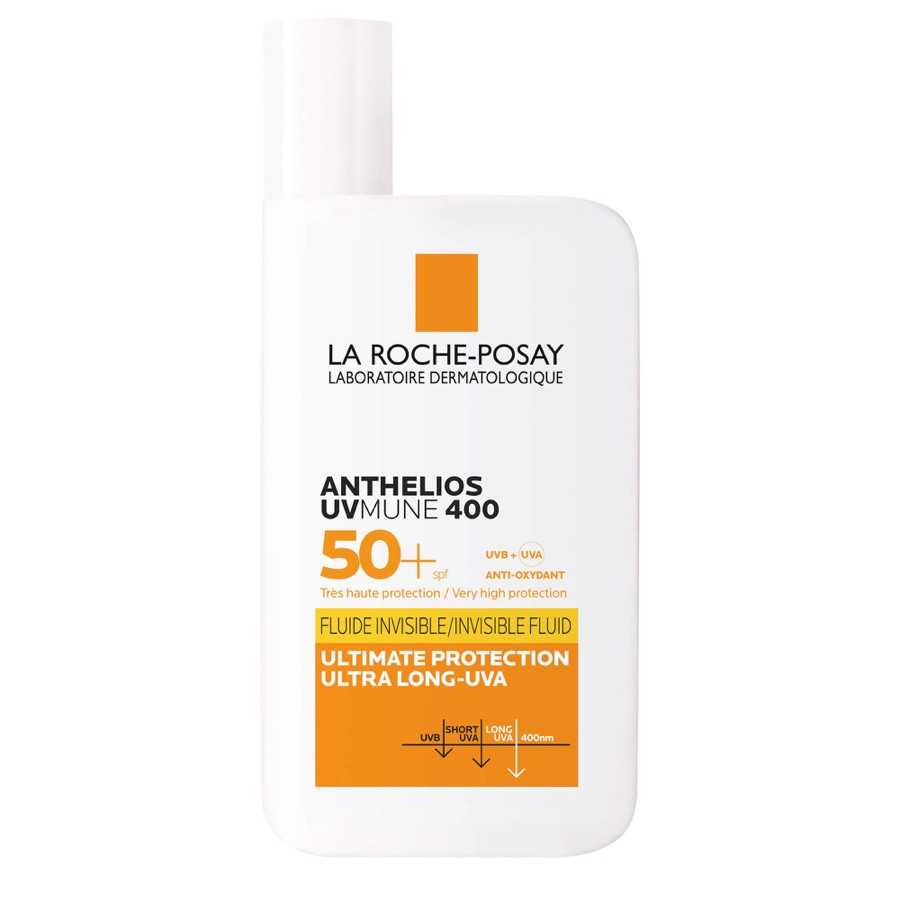
American sunscreens use older filters because the US treats sunscreen as a drug and has added just one filter to its list since the late 1990s, bemotrizinol, in June 2026; the first products with it, such as La Roche-Posay's Anthelios UVDefense, reached shelves this autumn, but the world's best-known imports, from Beauty of Joseon's Relief Sun to Japan's Bioré UV Aqua Rich, are still made with filters the FDA has not listed.
- The FDA's list named 17 filters after June 2026, and a September order takes two of them, PABA and trolamine salicylate, off it from 11 September 2027, while the EU's list holds 29 filter substances.
- Only 3 US filters, zinc oxide, titanium dioxide and bemotrizinol, are confirmed by the FDA as safe and effective; it still wants more data on the other 12, including avobenzone and oxybenzone, as it first said in February 2019.
- Bemotrizinol took almost 21 months from DSM's request on 23 September 2024 to the final order on 10 June 2026, through a faster route created by the CARES Act of March 2020.
- Consumer Reports measured the American versions of three Korean sunscreens at SPF 16 to 19 in July 2026, against SPF 36 to 48 for the Korean originals.
- Olive Young stopped serving US customers from its global website on 29 May 2026, which leaves importers and overseas sites, whose parcels the FDA lets through case by case.
On 10 June 2026 the Food and Drug Administration added bemotrizinol to the list of filters that American sunscreens may contain, the first new ingredient on that list since the late 1990s, almost 21 months after the ingredient maker DSM asked for it in a formal request and nearly 12 years after the agency wrote to the filter's sponsors asking for more data. Even with it, the American list names 17 filters, two of which are on their way off it, against 29 filter substances on the European Union's list, and only three of the American 17, zinc oxide, titanium dioxide and bemotrizinol, have been confirmed by the FDA as safe and effective, according to its final order, its sunscreen questions page and the EU's Annex VI.
The gap shows on the shelf in ways shoppers can measure. In July, Consumer Reports tested the Korean and American versions of sunscreens from three Korean brands, Beauty of Joseon, Innisfree and Round Lab, and the Korean formulas, which those brands do not sell in the US, measured average SPFs of 36 to 48, while the American versions, made with older FDA-listed filters, measured SPF 16 to 19 despite labels promising 36 to 50. The FDA's commissioner, Marty Makary, conceded last December that “the agency has historically moved too slowly in this area, leaving Americans with fewer options than consumers abroad,” and this story is about how slowly, why, and what Americans can actually buy now.
| Filter, as named on the label | Better known as | Relief Sun (Korea) | UVMune 400 (France) | Bioré Aqua Rich (Japan) | On the US list? |
|---|---|---|---|---|---|
| Bis-ethylhexyloxyphenol methoxyphenyl triazine | Bemotrizinol, Tinosorb S | – | Yes | Yes | Yes, since June 2026, up to 6% |
| Diethylamino hydroxybenzoyl hexyl benzoate | Uvinul A Plus (DHHB) | Yes | Yes | Yes | No, and not under FDA review |
| Ethylhexyl triazone | Uvinul T 150, octyl triazone | Yes | Yes | Yes | No; FDA asked for more data in 2014 |
| Methylene bis-benzotriazolyl tetramethylbutylphenol | Bisoctrizole, Tinosorb M | Yes | – | – | No; FDA asked for more data in 2014 |
| Diethylhexyl butamido triazone | Iscotrizinol, Uvasorb HEB | Yes | – | – | No; FDA asked for more data in 2014 |
| Methoxypropylamino cyclohexenylidene ethoxyethylcyanoacetate | Mexoryl 400 | – | Yes | – | No |
| Drometrizole trisiloxane | Mexoryl XL | – | Yes | – | No; FDA asked for more data in 2014 |
| Terephthalylidene dicamphor sulfonic acid | Ecamsule, Mexoryl SX | – | Yes | – | Only in L'Oréal products approved one by one since 2006 |
| Butyl methoxydibenzoylmethane | Avobenzone | – | Yes | – | Yes, up to 3%; FDA wants more data |
| Ethylhexyl salicylate | Octisalate | – | Yes | – | Yes, up to 5%; FDA wants more data |
| Ethylhexyl methoxycinnamate | Octinoxate | – | – | Yes | Yes, up to 7.5%; FDA wants more data |
| Filters on the US list | 0 of 4 | 3 of 8 | 2 of 4 |
Filter lists from Beauty of Joseon's Japanese shop, La Roche-Posay's UK site (archived October 2025) and Kao's Japanese shop. All 11 filters are on the EU's Annex VI list. US status from the FDA's final order of 10 June 2026, its sunscreen questions page and its Sunscreen Innovation Act page, checked 22 November 2026.
A drug in America, a cosmetic almost everywhere else
The difference begins with a definition. In the US a sunscreen is an over-the-counter drug, sold under the FDA's sunscreen monograph, a rulebook that lists the active ingredients, strengths and label wording a product may use without its own individual approval, which is why every American sunscreen carries a Drug Facts panel. Korea and the EU class sunscreens as cosmetics, which Consumer Reports notes makes adding new filters quicker: Korean tubes carry the words 기능성 화장품, “functional cosmetic”, which Lab Muffin, passing on advice from the blog The Monodist, suggests checking for on both the tube and the box, and the EU keeps a single list of permitted filters, Annex VI of its Cosmetics Regulation, with a maximum strength for each.
Being a drug means a filter joins the American list only when a company pays for the safety and effectiveness studies the FDA asks for, after which the filter is open to every competitor. DSM-Firmenich, the Swiss-Dutch company that makes bemotrizinol, spent about $20 million bringing it through the process, according to reporting cited by Glossy, and its reward under the FDA's order is 18 months in which only DSM and its licensees may market sunscreens with it, a head start that DSM has shared with BASF, which sells the same molecule as Tinosorb S, according to Korea JoongAng Daily.
How the American list stopped growing
The American list did not freeze by design so much as by drift, and the dates, all from the FDA's own notices, tell the story better than any summary.
- 1978: the FDA opens the sunscreen file whose docket number, FDA-1978-N-0018, still appears on the notices it publishes today, including one from September 2026.
- April 1997: a policy notice lets sunscreens use avobenzone, a UVA filter, at up to 3%.
- October 1998: the FDA proposes adding zinc oxide at up to 25%.
- May 1999: a final monograph for sunscreens is published.
- July 2006: L'Oréal's Anthelios SX is approved as a new drug containing ecamsule, a filter usable only in that approved product.
- 2014 and 2015: the FDA tells the sponsors of eight filters used abroad, from bemotrizinol to bisoctrizole, that it needs more data, as its Sunscreen Innovation Act page records.
- February 2019: the FDA proposes that only zinc oxide and titanium dioxide have enough evidence, that PABA and trolamine salicylate do not, and that 12 others need more data.
- March 2020: the CARES Act creates a faster way to add ingredients, by administrative order.
- September 2021: the FDA reissues its 2019 proposals as a proposed order and receives more than 15,000 comments.
- September 2024: DSM asks the FDA to add bemotrizinol.
- December 2025: the FDA proposes adding it at up to 6%.
- June 2026: a final order adds bemotrizinol, effective 9 August.
- September 2026: a second final order takes PABA and trolamine salicylate off the list from 11 September 2027.
- August to October 2026: the first bemotrizinol sunscreens go on sale in the US, starting with Ultra Violette's Unblock Screen SPF 50 on Sephora.com on 31 August, followed in October by La Roche-Posay's Anthelios UVDefense on 20 October and a new Neutrogena Ultra Sheer.
Read in order, the timeline shows an agency that published its sunscreen rulebook in 1999 and then spent two decades in which requests to add filters, eight of them pending by 2015, stalled for want of the studies it asked for. Even the FDA's June announcement could not quite settle how long the wait had been: its headline spoke of expanding sunscreen options for the first time in 20 years, a count that works only from L'Oréal's ecamsule approval in 2006, while its text called bemotrizinol “the first new active ingredient added to the over-the-counter (OTC) sunscreen monograph since the late 1990s.”
In 2026 America's sunscreen list shrinks: one filter in, two out
Count the year's two orders and the American list of sunscreen filters ends 2026 shorter than it started. The June order took the list to 17 by adding bemotrizinol, and the September order, published in the Federal Register on 11 September, takes PABA and trolamine salicylate off from 11 September 2027, which leaves 15, the first time the FDA has formally taken a sunscreen ingredient off its list, according to the Washington firm ArentFox Schiff.
Of those 15, only zinc oxide, titanium dioxide and bemotrizinol carry the FDA's confirmation that they are safe and effective. The other 12, which between them make up nearly every chemical sunscreen on American shelves, from avobenzone and homosalate to octocrylene, are still waiting on the data the FDA first asked for in 2019, and its questions page notes that the CARES Act “does not establish a deadline” for finishing that review. Europe's 29 filters, by contrast, each come with a settled maximum strength.
The 2020 reform that took six years to deliver one filter
The CARES Act, the pandemic relief package signed on 27 March 2020, also rewrote how the FDA handles over-the-counter drugs, replacing slow rulemaking with administrative orders and letting a company ask for an ingredient to be added, according to the FDA's sunscreen questions page. It turned the old sunscreen rules into a “deemed final order” and required a fresh proposal by September 2021, which the FDA published on 24 September 2021, restating its 2019 view that 12 filters needed more data, and that proposal, apart from the decision on PABA and trolamine salicylate, is still open five years later.
DSM used the new request route on 23 September 2024, the FDA proposed adding bemotrizinol on 12 December 2025, took comments until 26 January 2026 and issued the final order on 10 June, effective 9 August, which the agency noted was within seven months of its proposal. Korean manufacturers moved fast: Kolmar Korea told Korea JoongAng Daily in August that roughly 80 percent of the sunscreen inquiries it had received since the FDA's announcement concerned bemotrizinol, and that it expects products with it to arrive in earnest in the second half of 2027, while its rival Cosmax put the head start bluntly: “The exclusivity means only products using DSM's bemotrizinol can be distributed.”
One filter does not convert a Korean formula, though. As the Korea Times pointed out in August, popular Korean sunscreens combine filters such as Uvinul A Plus, Uvinul T 150, Tinosorb M and Uvasorb HEB, and none of those is on the American list.
What reached American shelves this autumn
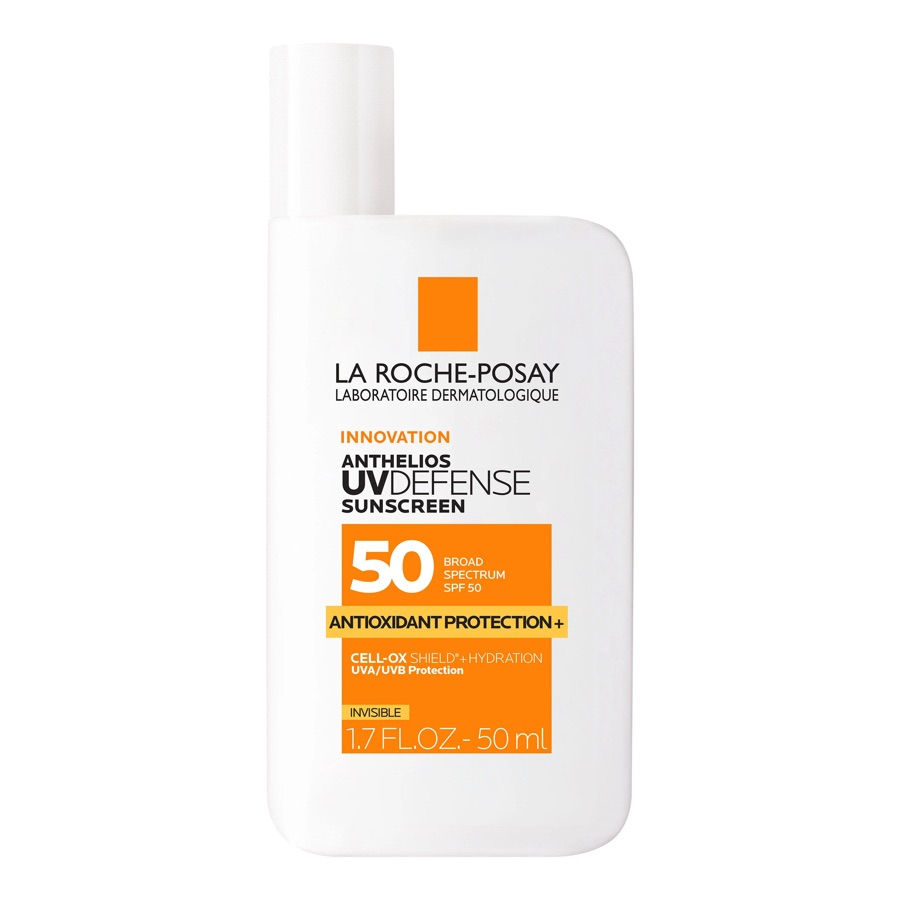
Anthelios UVDefense Sunscreen SPF 50 with BEMT
- Price$39.99
- Size50 ml (1.7 fl oz)
- Works out at$0.80 per ml
- FinishInvisible, milky
- Sun protectionSPF 50
La Roche-Posay US (archived copy of 12 Nov 2026; the site blocks automated readers); LovelySkin also $39.99 on 22 Nov 2026
See it on laroche-posay.us Anthelios vs Relief Sun →
Image: La Roche-Posay, from laroche-posay.us
The first bemotrizinol sunscreen went on sale at the end of August, when the Australian brand Ultra Violette put its Unblock Screen SPF 50, with 3% bemotrizinol alongside octocrylene and zinc oxide, on Sephora.com at $40 on 31 August, according to its own release and its Drug Facts label, and the big names followed in October. La Roche-Posay's Anthelios UVDefense went on sale on 20 October at $39.99 for 50 ml, according to Cosmetics Business, Neutrogena released a new Ultra Sheer SPF 70, according to the Associated Press. The La Roche-Posay bottle shows what the first wave looks like: its Drug Facts list bemotrizinol at 2%, a third of the 6% the FDA allows, alongside avobenzone, 11% homosalate, octisalate and octocrylene, the same four filters found in every one of the 26 chemical Anthelios labels on DailyMed.
In other words, the first American bemotrizinol sunscreens add the new filter to proven formulas rather than starting again, which is sensible for a company with a best-selling range to protect but means shoppers should not expect a European or Korean sunscreen in an American bottle. La Roche-Posay's US general manager, Grace Riggenbach, told Glossy that sales were “tracking ahead of what we expected” and that the brand wants to use the filter “across more parts of our portfolio”, and we set its American bottle against what the same brand sells in Europe in Anthelios vs Relief Sun.
September's other order: the first filters taken off the list
The FDA's other sunscreen decision of 2026 went the opposite way. On 11 September it published a final order taking PABA (aminobenzoic acid) and trolamine salicylate off its list of sunscreen filters from 11 September 2027, after concluding that there are no conditions under which sunscreens containing them are safe and effective, and it said on its questions page that it was “not aware of any sunscreen drug products currently sold in the U.S.” that contain either. The practical effect on shoppers is nil, but the direction is telling: the first two changes to the list since the late 1990s came in the same year, and one of them made it shorter.
Some coverage went further. An Associated Press report in October said the FDA had acted against oxybenzone, but the FDA's own records, its questions page and the September order, list oxybenzone among the 12 filters still awaiting data rather than among those taken off, and we could find no FDA order removing it. It still appears on current labels, including a La Roche-Posay Anthelios Ultra Light spray whose label on DailyMed was updated in March 2026.
One new filter still leaves the world's best-known sunscreens off American shelves, and the limits run both ways
Run the three foreign best-sellers in our table against the American list and bemotrizinol's arrival barely changes the count: Relief Sun has none of its four filters on the US list, Bioré's Japanese Aqua Rich has two of its four, and La Roche-Posay's European UVMune 400 has three of its eight, plus ecamsule, which appears in America only in L'Oréal products approved one at a time. None of the three could be sold in the US as it is, and Uvinul A Plus, the one filter all three share, is not among the eight that the FDA's Sunscreen Innovation Act page lists as awaiting review.
The traffic does not run only one way. The American bottles sold by La Roche-Posay and Kao contain 11% and 10% homosalate, above the 7.34% the EU has allowed in face products placed on its market since 1 January 2025, so neither could go on sale as a face sunscreen in Europe unchanged, while Beauty of Joseon's Day Dew, at 7%, comes in just under. Europe's list keeps moving too: from 1 January 2027, cosmetics placed on the EU market must keep DnHexP, a phthalate impurity in Uvinul A Plus, below 10 parts per million.
Same name, different bottle
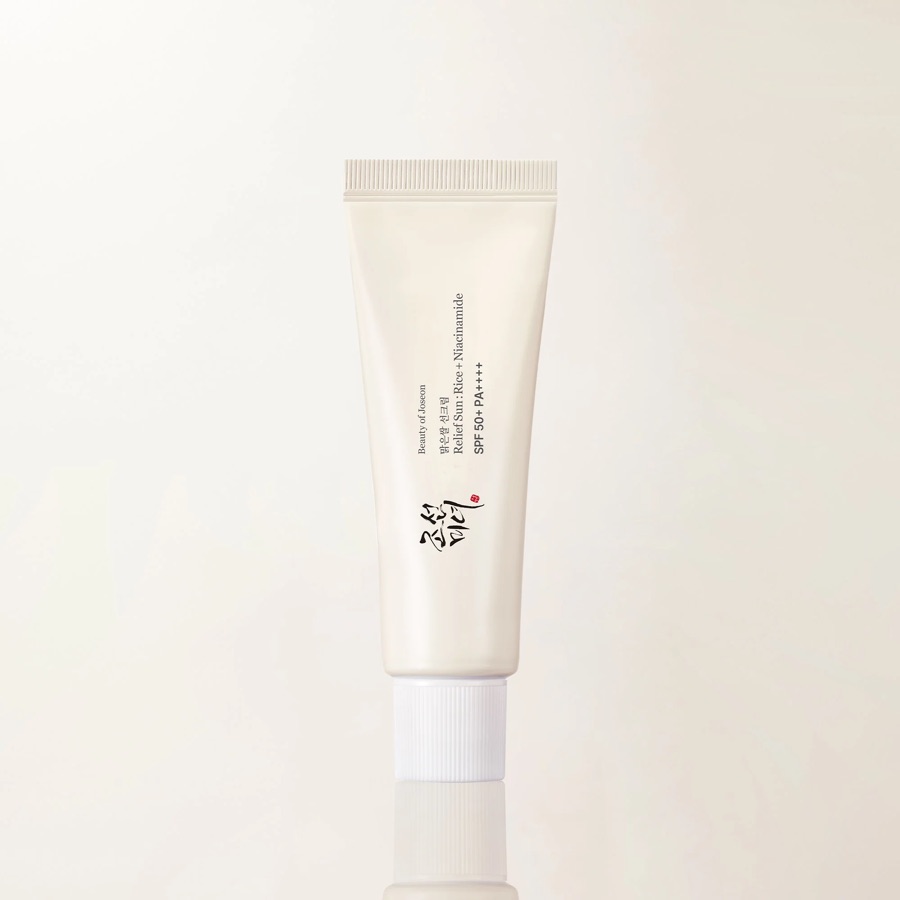
Relief Sun: Rice + Niacinamide SPF50+ PA++++ (formerly Rice + Probiotics)
- Price£15.50 (about $20.34)
- Size50 ml
- Works out at£0.31 per ml
- FinishDewy
- Sun protectionSPF 50
Cult Beauty UK, 22 Nov 2026 (listed under the old name Rice + Probiotics); not sold on Beauty of Joseon's US shop; $ at ECB rate of 20 Nov 2026
See it on cultbeauty.co.uk Anthelios vs Relief Sun →
Image: Beauty of Joseon, from beautyofjoseon.com
For shoppers, the most confusing result is that one brand name can sit on two different sunscreens. Beauty of Joseon took Relief Sun and three other sunscreens off its US shop in February 2025, Korea JoongAng Daily reported, and sells Americans Day Dew Sunscreen SPF 50, which it describes as “made for the U.S. market using FDA-approved UV filters”, namely avobenzone, homosalate, octisalate and octocrylene. Innisfree and Round Lab also sell separate American formulas, and Olive Young's new US business carries only those; its merchandising lead, Priscilla Kang, told The Zoe Report that “many K-beauty brands have developed U.S.-exclusive sunscreen formulations, which are the versions available at Olive Young U.S.”
| Brand | Korean formula | Measured SPF | American formula | Measured SPF |
|---|---|---|---|---|
| Beauty of Joseon | Relief Sun: Rice + Probiotics SPF 50+ PA++++ | 36 | Day Dew Sunscreen SPF 50 | 19 |
| Innisfree | Intensive Long Lasting Sunscreen EX SPF 50+ PA++++ | 48 | Daily UV Defense SPF 36 | 16 |
| Round Lab | Birch Juice Moisturizing Sunscreen SPF 50+ PA++++ | 46 | Birch Juice Mild Up Sunscreen UVLock SPF 50+ Broad Spectrum | 16 |
Consumer Reports' average tested SPF, published 10 July 2026, three testers per product. The Korean formulas scored 5 out of 5 for both UVA and UVB; the American ones scored 2 for UVB, and Round Lab's American version 3 for UVA.
Consumer Reports was careful about what this proves. It tested SPF on three people per product, “fewer than the FDA's protocol calls for”, with a statistical check, and its blind sensory panel found the Korean originals no lighter to wear than their American cousins: “none stood out as being super lightweight or having a barely-there feel,” said Mely Llamas, who ran the panel. The finding is narrower than “Korean sunscreen is better”: for these three brands, the reformulated American versions protected far less than their labels claimed, and the Korean originals fell short of theirs too, but by much less, an average of SPF 43 against 17 across the three pairs.
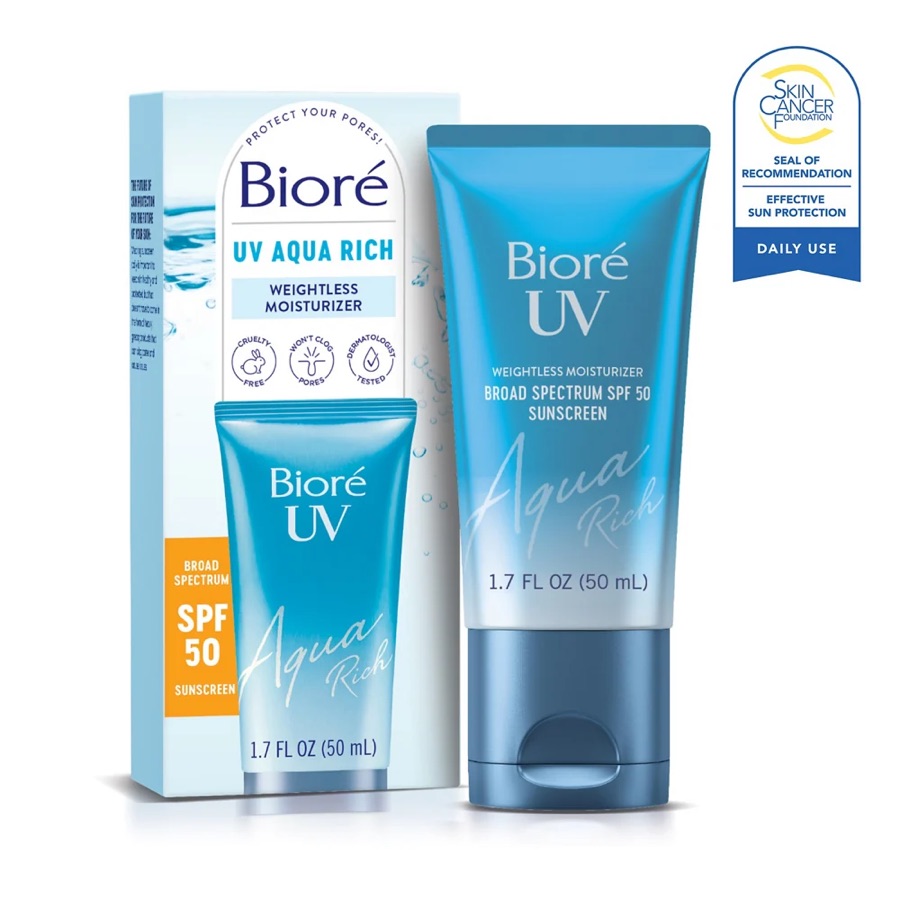
UV Aqua Rich SPF 50 (US formula)
- Price$15.99
- Size50 ml (1.7 fl oz)
- Works out at$0.32 per ml
- FinishInvisible
- Sun protectionSPF 50
Bioré US (Kao USA), 22 Nov 2026
See it on us.biore.com Unseen vs UV Aqua Rich →
Image: Bioré, from biore.com
Japan offers the same lesson in a different accent. Kao's Bioré UV Aqua Rich Watery Essence, sold in Japan as SPF50+ PA++++ and super waterproof, uses octinoxate, ethylhexyl triazone, Uvinul A Plus and bemotrizinol, according to Kao's Japanese shop, whereas the UV Aqua Rich SPF 50 that Kao sells on its US site for $15.99 uses avobenzone, 10% homosalate, octisalate and octocrylene, and Kao describes it as a “cult classic from Japan now revamped and available in the US”. Both versions contain alcohol and fragrance, so the American one is not a cruder copy so much as a different sunscreen wearing the same name, and the only way to know which you are holding is to read the active ingredients.
Where Americans still find the originals
Americans who want the originals have had fewer places to look each year. Korea JoongAng Daily described shoppers stockpiling in early 2025, quoting a January TikTok post comparing Round Lab's Korean and American formulas, viewed more than 200,000 times, which told followers, “This is the only time to stock up before it's gone — forever.” SKIN1004 removed its sunscreens from its US website in March 2025, and Olive Young closed its global website to American shoppers on 29 May 2026, the day its first US store opened in Pasadena, California.
What remains is importers and overseas websites. On 22 November the online Asian grocer Weee! listed the Korean-labelled Relief Sun at $18.99 for 50 ml, close to the $18 Beauty of Joseon asks for Day Dew on its US shop, and Consumer Reports bought its own Korean test tubes from overseas sites. It warns, though, that such a parcel may not arrive, because FDA staff decide case by case which personal shipments of drugs like these to let through.
Is the rest of the world simply ahead?
It is ahead on choice, which the FDA's own commissioner has conceded, but its sunscreens have their own shortcomings. The Korean tubes in Consumer Reports' test fell short of their SPF50+ labels too, the EU has tightened its limits on homosalate, from 2025, and on an impurity in Uvinul A Plus, from 2027, and the Associated Press noted that the EU's environmental agency found “limited evidence of environmental toxicity” for bemotrizinol while calling for longer-term research.
Where America really lags is speed. A filter that Europe has used for decades, by the FDA's own account, took nearly 12 years to get from the FDA's request for more data to an American shelf, 12 of the 15 filters left on the American list still lack the FDA's final word on safety, and the first bottle we checked that uses the new filter contains a third of what the rules allow. None of this makes American sunscreen pointless, and an American SPF 30 worn generously still protects, but American shoppers have fewer and older tools than shoppers in Seoul, Paris or Tokyo, and that gap will close one filter at a time.
What can you do?
Wear what you have, generously. Consumer Reports' advice is the same wherever your tube was made: a broad-spectrum sunscreen of SPF 30 or more, reapplied every two hours and straight after swimming or heavy sweating, and its K-beauty test is a reminder to judge a tube by what is inside it, since the American versions fell furthest short of their labels.
Look for bemotrizinol on the Drug Facts panel. It is the one new filter American sunscreens may contain, and La Roche-Posay's Anthelios UVDefense, at $39.99 for 50 ml, is the first we have checked; expect more from DSM's licensees during its 18-month head start, and Korean-made ones from the second half of 2027 if Kolmar Korea's forecast holds.
Read the filters, not the brand name. Day Dew is not Relief Sun and the American Bioré is not the Japanese one, so the active ingredients in the Drug Facts box, not the logo or the word “Korean”, tell you what you are buying; our Anthelios vs Relief Sun comparison sets the versions side by side.
If you shop abroad, check the label. In Korea, look for 기능성 화장품 on both the tube and the box, the check Lab Muffin recommends, and remember that a sunscreen made for another market will carry that market's SPF and UVA ratings rather than an American Drug Facts panel.
Consider a mineral sunscreen. Zinc oxide and titanium dioxide are, with bemotrizinol, the only filters the FDA has confirmed as safe and effective, and they protect against both UVA and UVB; their drawback is the white streaking that, as the Associated Press noted, puts off many people with darker skin, which is exactly the gap bemotrizinol was added to fill.
Questions people ask
Why are European sunscreens better than American ones?
European sunscreens can choose from 29 UV-filter substances against 17 on the FDA's list, including modern UVA filters such as Uvinul A Plus and the Mexoryls, because the EU treats sunscreen as a cosmetic and the US treats it as a drug. More choice does not guarantee a better product, though, and independent tests have found sunscreens from both systems falling short of their labels.
How many sunscreen filters does the FDA allow?
Seventeen after June 2026, falling to 15 when PABA and trolamine salicylate come off the list on 11 September 2027, and only three of them, zinc oxide, titanium dioxide and bemotrizinol, are confirmed as safe and effective. Ecamsule appears only in L'Oréal products approved one at a time.
What is bemotrizinol?
Bemotrizinol, sold as Tinosorb S and called BEMT on American packs, is a UVA and UVB filter that the FDA added to its sunscreen list on 10 June 2026 at up to 6%, the first addition since the late 1990s. Studies the FDA reviewed found that almost none of it is absorbed through the skin.
Can you buy Korean sunscreen in the US?
You can buy the American versions that Korean brands such as Beauty of Joseon, Innisfree and Round Lab make for the US, from their own shops and from Olive Young US. The Korean originals are no longer sold to US customers by those brands or by Olive Young, though importers and overseas websites still list some of them.
Has the FDA removed oxybenzone from sunscreens?
No. The FDA's records list oxybenzone among 12 filters still awaiting safety data, and the only filters it has taken off its list, in September 2026, are PABA and trolamine salicylate, from 11 September 2027.
Which US sunscreens contain bemotrizinol?
La Roche-Posay's Anthelios UVDefense SPF 50, $39.99 for 50 ml with 2% bemotrizinol, went on sale on 20 October 2026, and Neutrogena and Ultra Violette also launched bemotrizinol sunscreens in the US this autumn. Look for bemotrizinol among the active ingredients on the Drug Facts panel.
When will Korean sunscreens with new filters be sold in the US?
Korean-made sunscreens with bemotrizinol should arrive in earnest in the second half of 2027, according to the manufacturer Kolmar Korea, but most popular Korean formulas also use filters such as Uvinul A Plus and Tinosorb M that are not on the FDA's list, so they will still need American versions.
How we put this together
We read each brand's own product pages and full ingredient lists, what buyers report in public reviews and forums, and the news coverage linked on this page. Prices are the brand's own list prices in the US on the date shown, unless the page names another shop. Nothing here is rated or scored, and no brand paid to appear.
Sources (34)
- FDA: Final order OTC000039 adding bemotrizinol (June 2026, corrected August 2026)
- FDA press release: bemotrizinol added, 9 June 2026
- FDA press release: bemotrizinol proposed, 11 December 2025
- FDA: Questions and answers on regulatory actions for sunscreens (current as of 10 September 2026)
- FDA: Sunscreen Innovation Act pending ingredients
- Federal Register: PABA and trolamine salicylate order, 11 September 2026
- Federal Register: bemotrizinol final order notice, 10 June 2026
- Federal Register: sunscreen proposed order, September 2021
- Federal Register: sunscreen proposed rule, February 2019
- Federal Register: sunscreen final monograph, May 1999
- Federal Register: zinc oxide proposal, October 1998
- Federal Register: avobenzone policy, April 1997
- Drugs@FDA: Anthelios SX (ecamsule), approved July 2006
- European Commission: Annex VI, UV filters allowed in cosmetics (consolidated 18 May 2026)
- ArentFox Schiff: FDA removes PABA and trolamine salicylate, September 2026
- Consumer Reports: Does Korean sunscreen work better?, July 2026
- Associated Press (via Anchorage Daily News): The first new sunscreen type in 25 years, October 2026
- Korea JoongAng Daily: FDA approves bemotrizinol, opening door to Korean sunscreen, August 2026
- Korea JoongAng Daily (via Daum): Americans are hoarding Korean sunscreen, April 2025
- The Korea Times: US finally approves new UV filter, August 2026
- Cosmetics Business: La Roche-Posay unveils first US Anthelios with BEMT, October 2026
- Glossy: Inside La Roche-Posay's BEMT launch, November 2026
- DailyMed: Anthelios UV Defense Drug Facts
- DailyMed: all La Roche-Posay Anthelios labels
- Beauty of Joseon Japan: Relief Sun Rice + Niacinamide (filters and ingredients)
- Beauty of Joseon US: Day Dew explainer and FAQ
- La Roche-Posay UK: Anthelios UVMune 400 Invisible Fluid (archived 6 October 2025)
- Kao Japan (My Kao Mall): Bioré UV Aqua Rich Watery Essence ingredients
- Bioré US: UV Aqua Rich SPF 50
- The Zoe Report: Olive Young opens in the US, May 2026
- Weee!: Beauty of Joseon Relief Sun listing
- Lab Muffin: Korean sunscreen reviews, June 2022
- Ultra Violette press release: Unblock Screen with bemotrizinol at Sephora (31 August 2026)
- DailyMed: Ultra Violette Unblock Screen SPF 50 label (bemotrizinol)