If you live in the US, buy Anthelios UVDefense, La Roche-Posay's $39.99 fluid built around the newly approved filter bemotrizinol, because the Relief Sun most people mean is no longer sold on Beauty of Joseon's US shop and the brand's American replacement measured SPF 19 in Consumer Reports' tests; if you live in the UK or Europe, where both are on sale, buy Relief Sun at £15.50 for everyday wear on dry or normal skin, and La Roche-Posay's European Anthelios UVMune 400, at £21, for beaches, sport and sweat.
- You shop in the UK or Europe, where the Korean formula is on sale, at £15.50 for 50 ml at Cult Beauty against £21 for Anthelios UVMune 400.
- Your skin is dry or normal and you want a creamy, dewy sunscreen that can stand in for a light moisturizer, which is how Beauty of Joseon and Who What Wear UK both describe it.
- You want a fragrance-free, alcohol-free formula for under makeup, and you are happy to switch to a water-resistant sunscreen for swimming, as the brand itself advises.
- You want the better independent result of Beauty of Joseon's two formulas, since Consumer Reports gave Relief Sun its top UVA and UVB scores even though it measured an average SPF of 36.
- You live in the US and want a sunscreen sold there by its own brand that contains bemotrizinol, the first new American filter since the late 1990s, which UVDefense pairs with four older filters for $39.99.
- You want a fragrance-free formula that its maker says suits all skin types including sensitive skin, with a milky, invisible finish and a PA++++ UVA claim printed on an American product.
- You swim, sweat or ski in Europe, where Anthelios UVMune 400 Invisible Fluid claims resistance to water, sweat and sand and adds L'Oréal's Mexoryl 400 filter for ultra-long UVA.
- You would rather not depend on importers and personal shipments, which the FDA lets in or stops case by case.
The one difference that matters: Anthelios is on sale on both sides of the Atlantic, in two different formulas made to each side's rules, whereas the Relief Sun people rave about is sold in Britain and Europe but not in the US, where Beauty of Joseon sells a different sunscreen under a different name.
The Relief Sun sold in Korea and Britain and the Day Dew sunscreen Beauty of Joseon sells Americans are different formulas, and Consumer Reports measured them at SPF 36 and SPF 19. What the tests found.
| | |
|---|---|---|
| Price and size | $39.99 for 50 ml (1.7 fl oz) at La Roche-Posay US | £15.50 for 50 ml at Cult Beauty UK; not on Beauty of Joseon's US shop |
| Price per ml | $0.80 | £0.31 (about $0.41); $0.38 at Weee! in the US |
| The other version | Anthelios UVMune 400 Invisible Fluid SPF50+ in the UK and EU, £21 for 50 ml | Day Dew Sunscreen SPF 50 in the US, $18 for 50 ml, a different formula |
| UV filters | Avobenzone 3%, bemotrizinol 2%, homosalate 11%, octisalate 5%, octocrylene 6% | Ethylhexyl triazone, Uvinul A Plus (DHHB), iscotrizinol, bisoctrizole; none allowed in US sunscreens |
| Label claim | SPF 50 broad spectrum; PA++++ claimed by the brand | SPF50+ PA++++ |
| Independent SPF test | None published that we could find (on sale since 20 Oct 2026) | Consumer Reports, July 2026: average SPF 36, top UVA and UVB scores |
| Finish, as the brand puts it | Weightless, milky, invisible, no white cast | Creamy yet lightweight, dewy, no white cast |
| Water resistance | No claim | No claim; brand advises a water-resistant sunscreen for swimming |
| Fragrance and alcohol | Fragrance-free; no denatured alcohol listed | Fragrance-free and alcohol-free |
| Skin type the brand names | All skin types, including sensitive | Dry skin (Aqua-Fresh suggested for oily) |
| Who makes it | La Roche-Posay, France (founded 1975), owned by L'Oréal | Beauty of Joseon, Seoul, owned by Goodai Global since 2019 |
| Sold in the US? | Yes, by La Roche-Posay, Ulta Beauty and Amazon, among others | Not by Beauty of Joseon, because its filters aren't on the FDA's list; some importers carry it |
US prices from La Roche-Posay's US site (archived copy of 12 November 2026, because the site blocks automated readers), Weee! and Beauty of Joseon's US shop; UK prices from Cult Beauty and LookFantastic; all checked 22 November 2026. Pound prices are converted at the ECB rate of 20 November 2026, $1.3125 to the pound.
Four bottles behind two names
Ask for these two sunscreens in New York and then in London and you will be handed four different bottles, which is the most important thing to understand before comparing them. La Roche-Posay sells Americans Anthelios UVDefense, a fluid it launched on 20 October 2026 around bemotrizinol, a filter the FDA added to its permitted list in June, while it sells Britons and Europeans Anthelios UVMune 400, a fluid built around L'Oréal's own Mexoryl 400 filter, which the FDA has never approved. Beauty of Joseon sells most of the world Relief Sun, the rice-extract sunscreen that its own page says “took over TikTok”, but it pulled Relief Sun from its US shop in February 2025, according to Korea JoongAng Daily, and now offers Americans Day Dew Sunscreen SPF 50, which it describes as “made for the U.S. market using FDA-approved UV filters”.
The reason is regulatory rather than commercial. America treats sunscreen as an over-the-counter drug, and a filter can be used only if it is named in the FDA's sunscreen monograph, a list that until this June had not gained a new ingredient since the late 1990s, whereas Korea and the EU treat sunscreen as a cosmetic and allow many more filters, a story we tell in full in Why Americans can't buy the world's sunscreens. In July, Consumer Reports put a number on the consequences, measuring the Korean Relief Sun at an average SPF of 36 and the American Day Dew at SPF 19, and it left the Korean tube out of its official ratings because its filters are not on the FDA's list.
Anthelios UVDefense: what $39.99 buys in America
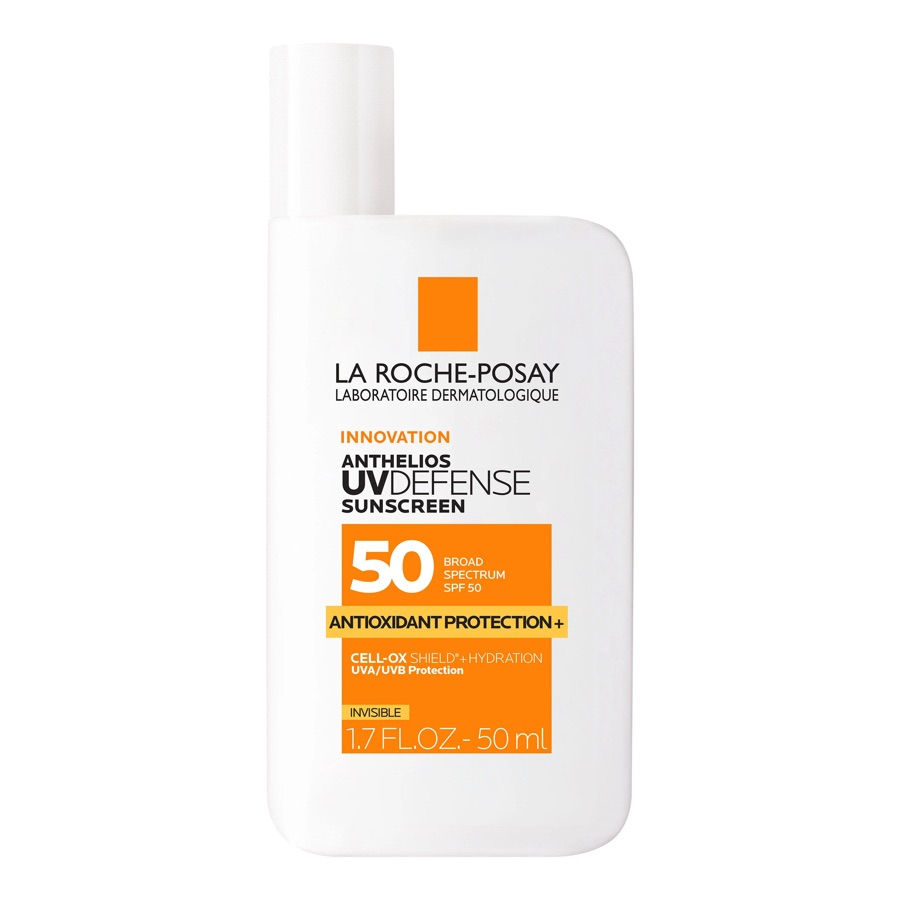
Anthelios UVDefense Sunscreen SPF 50 with BEMT
- Price$39.99
- Size50 ml (1.7 fl oz)
- Works out at$0.80 per ml
- FinishInvisible, milky
- Sun protectionSPF 50
La Roche-Posay US (archived copy of 12 Nov 2026; the site blocks automated readers); LovelySkin also $39.99 on 22 Nov 2026
See it on laroche-posay.us Why Americans can't buy the world's sunscreens →
Image: La Roche-Posay, from laroche-posay.us
Anthelios UVDefense Sunscreen SPF 50 with BEMT costs $39.99 for a 50 ml bottle on La Roche-Posay's US site, which works out at 80 cents a millilitre, and the same price appears at the dermatology retailer LovelySkin. That makes it the dearest sunscreen on this page by a distance, roughly twice what Beauty of Joseon charges Americans for Day Dew and twice what importers ask for Relief Sun, so the fair question is what the extra money pays for. La Roche-Posay's answer is a single ingredient: its product page calls bemotrizinol “sunscreen's next frontier” and “the first FDA-approved UV filter in over 25 years”, and the bottle carries the word “Innovation” above the name.
What's in it: one new filter and four familiar ones
The Drug Facts panel that L'Oréal filed for UVDefense, published on DailyMed in November, lists five active ingredients: avobenzone at 3%, bemotrizinol at 2%, homosalate at 11%, octisalate at 5% and octocrylene at 6%. The last four are the same filters found in every one of the 26 chemical Anthelios labels on DailyMed's list of La Roche-Posay products, so UVDefense is best understood as a familiar American Anthelios with one modern filter added, rather than a European formula brought across the Atlantic.
The details matter more than the headline. The FDA's final order allows bemotrizinol at up to 6%, and La Roche-Posay has used a third of that ceiling, while leaning on 11% homosalate, a concentration Europe has not allowed in face products placed on its market since 1 January 2025, when the EU's list of permitted UV filters capped homosalate in face products at 7.34%. Homosalate is also one of the 12 American filters that the FDA, on its sunscreen questions page, still lists as needing more data before it can be called safe and effective, which does not mean it is unsafe, only that the evidence the agency asked for in 2019 has not yet been supplied.
Bemotrizinol itself is no stranger to La Roche-Posay or to anyone who has bought sunscreen in Europe or Asia, where it is sold as Tinosorb S. “BEMT may be new to US sunscreen formulations, but it is a filter La Roche-Posay already knows well,” Steve Lynch, an associate vice-president at L'Oréal, told Cosmetics Business in October. The FDA reviewed studies in more than 500 people in which almost none of it was absorbed through the skin, the Associated Press reported, and David Andrews of the Environmental Working Group told the AP that “BEMT is significantly more stable” in sunlight than avobenzone, which he called “particularly unstable on its own”.
The rest is a silicone fluid, dimethicone second only to water, with glycerin, vitamin E and two extracts La Roche-Posay calls Litchiderm, from lychee peel, and Exo-P, a ferment, which it credits with “16-hour antioxidant + anti-pollution protection”; that is a laboratory claim we found no independent test of.
How it feels and who it suits, according to La Roche-Posay
La Roche-Posay describes a “weightless, milky texture” that “melts into skin” with an “invisible finish and no white cast”, and says that in a consumer study of 171 people, 94% agreed that it felt weightless and blended invisibly; it recommends UVDefense for all skin types including sensitive skin, for daily wear and under makeup. It is fragrance-free and paraben-free and contains neither oxybenzone nor octinoxate, the two filters that Hawaii and parts of Florida have taken off their shelves over concerns about coral reefs, and it makes no water-resistance claim, so its own label tells you to “use a water resistant sunscreen if swimming or sweating”.
The brand also claims “1.5x UVA protection vs. the #1 sunscreen on Amazon” without naming the rival, a comparison no shopper can check. Its product page admits, to its credit, that its star rating “includes incentivized reviews”, and after barely a month on sale there is not yet a body of independent reviews to set against La Roche-Posay's description of how it wears.
The story: from a 1986 UVA filter to an American relaunch
La Roche-Posay was founded in France in 1975 by the pharmacist René Levayer, and it launched its first Anthelios, Anthelios Anti-UVA Filter, in 1986, according to a history of the range that Cosmetics Business published last year. “Anthelios means ‘against the sun’ in Greek,” Alexia Papadopoulos, the brand's global deputy general manager, told the magazine, which reported that the range sells more than 15 products a second worldwide and has tripled in size since UVMune 400 arrived in 2022.
Its American history is more tangled, because Europe's filters could not simply cross the Atlantic. In July 2006 the FDA approved Anthelios SX, a cream with L'Oréal's Mexoryl SX (ecamsule), through a full new-drug application, the slow and expensive route that lets one company use one filter in one approved product, and L'Oréal won similar approvals for Anthelios 20 and Anthelios 40 in 2006 and 2008. Today none of the 42 Anthelios labels on DailyMed lists ecamsule, and UVDefense is the only one with bemotrizinol, which is why La Roche-Posay is treating it as a turning point: its US general manager, Grace Riggenbach, told Glossy this month, “We're tracking ahead of what we expected at this moment,” and said the brand wants to use the filter “across more parts of our portfolio”.
The European Anthelios: UVMune 400 Invisible Fluid
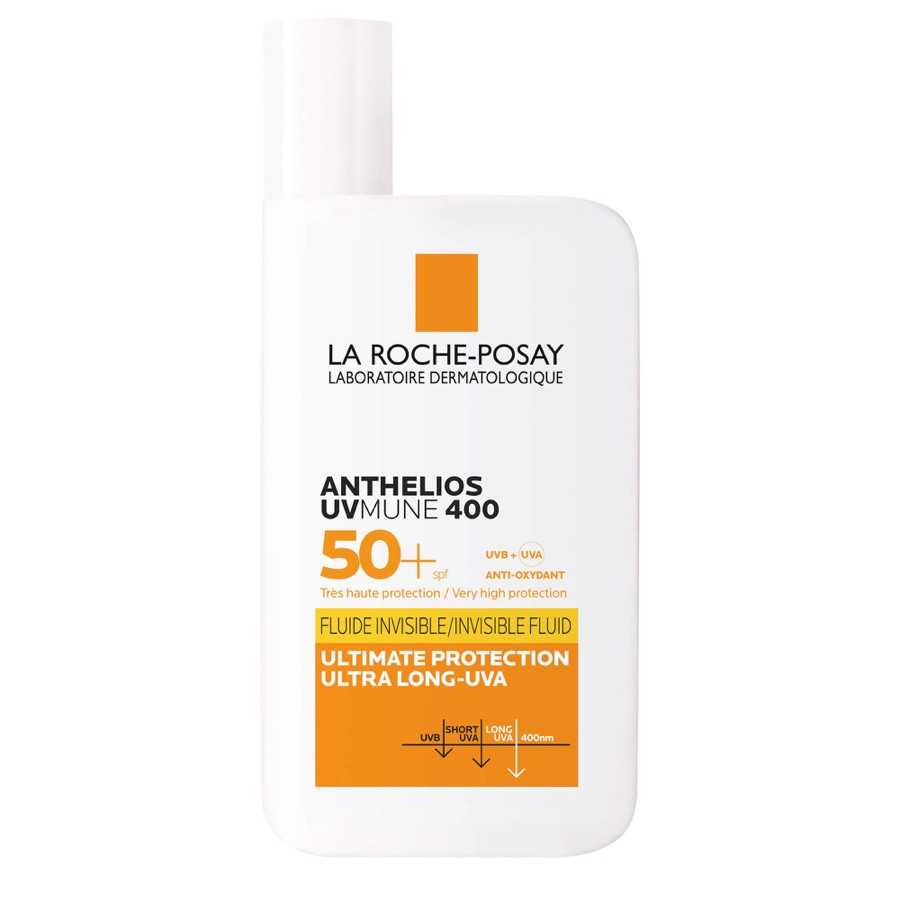
Anthelios UVMune 400 Invisible Fluid SPF50+
- Price£21 (about $27.56)
- Size50 ml
- Works out at£0.42 per ml
- FinishInvisible
- Sun protectionSPF 50
LookFantastic and Cult Beauty UK recommended price, 22 Nov 2026 (Cult Beauty's Black Friday price that day: £15.75); not sold in the US; $ at ECB rate of 20 Nov 2026
See it on lookfantastic.com Why Americans can't buy the world's sunscreens →
Image: La Roche-Posay, from laroche-posay.co.uk
In Britain and the EU, the Anthelios to set against Relief Sun is UVMune 400 Invisible Fluid SPF50+, which costs £21 for 50 ml at Cult Beauty and LookFantastic, or 42p a millilitre, and was down to £15.75 in Cult Beauty's Black Friday sale on 22 November. Its ingredient list on La Roche-Posay's UK site, in the latest copy we could open, from October 2025, names eight filters: Mexoryl 400 (methoxypropylamino cyclohexenylidene ethoxyethylcyanoacetate), which the brand says protects against “ultra long UVA” between 380 and 400 nanometres, plus bemotrizinol, Uvinul A Plus, ethylhexyl triazone, avobenzone, octisalate, Mexoryl XL and Mexoryl SX. Only three of the eight are on the FDA's monograph list, which is why this bottle is not sold in the US.
La Roche-Posay pitches it as an “ultra-resistant formula specifically developed for sensitive skin” that resists water, sweat and sand, “does not leave white marks” and does not sting the eyes. Michelle Wong, the chemist who writes the science blog Lab Muffin, was less charmed when she reviewed the range in June 2024: “Unfortunately, there were a few sensory aspects that really felt like a step down from previous Fluids,” she wrote, describing a texture that is “very runny, like water”, a musty smell she traced to the new filter, more alcohol than earlier fluids, and a formula that “did sting a bit during application”. Denatured alcohol is the second ingredient on the UK list, which is worth knowing if alcohol bothers your skin.
Neither Anthelios could be sold on the other side of the Atlantic, and what keeps the American one out of Europe is a European limit
Set the two ingredient lists side by side and the American and European Anthelios share only three filters: avobenzone, octisalate and bemotrizinol. UVMune 400 cannot be sold in the US because five of its eight filters, Mexoryl 400 among them, are missing from the FDA's list of 17. The less obvious point is that UVDefense could not be sold as a face sunscreen in the EU either, because it contains 11% homosalate, and the EU's Annex VI has capped homosalate in face products at 7.34% for products placed on the market since 1 January 2025.
The two continents also disagree about the new filter itself: the FDA allows bemotrizinol at up to 6%, the EU at up to 10%, and La Roche-Posay's American bottle uses 2%. So the honest description of UVDefense is not the European Anthelios arriving in America, but an American formula with one European filter added, built to American limits and, on homosalate, outside European ones.
What goes wrong with Anthelios
UVDefense is new and untested by anyone but its maker, it costs more than twice as much per millilitre as every other sunscreen on this page, and with only 2% bemotrizinol most of its protection still comes from the homosalate, octisalate, octocrylene and avobenzone mix that critics of American sunscreens have complained about for years. The European fluid's weaknesses are about comfort instead, a watery texture that is easy to spill, alcohol high on the list and the smell Wong noticed, which matter in a product you are meant to apply generously every morning.
Relief Sun: the £15.50 tube Americans can't buy from the brand
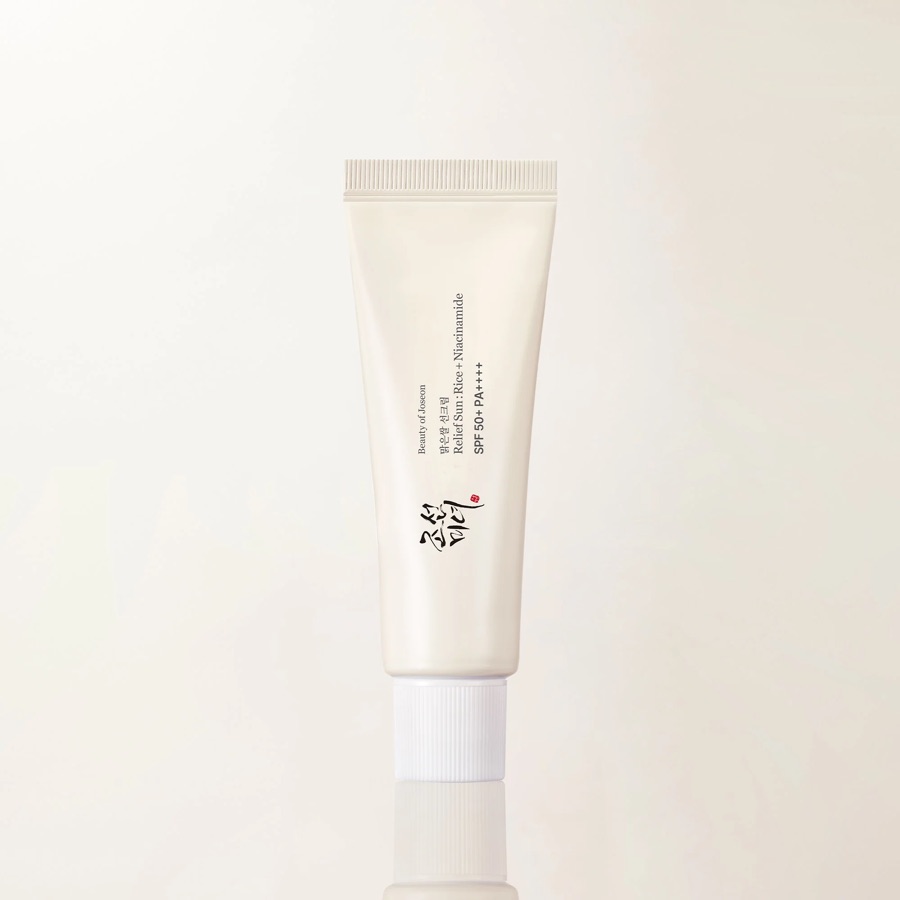
Relief Sun: Rice + Niacinamide SPF50+ PA++++ (formerly Rice + Probiotics)
- Price£15.50 (about $20.34)
- Size50 ml
- Works out at£0.31 per ml
- FinishDewy
- Sun protectionSPF 50
Cult Beauty UK, 22 Nov 2026 (listed under the old name Rice + Probiotics); not sold on Beauty of Joseon's US shop; $ at ECB rate of 20 Nov 2026
See it on cultbeauty.co.uk Why Americans can't buy the world's sunscreens →
Image: Beauty of Joseon, from beautyofjoseon.com
Relief Sun: Rice + Niacinamide SPF50+ PA++++ costs £15.50 for 50 ml at Cult Beauty in Britain, or 31p a millilitre, and ¥3,200 on Beauty of Joseon's Japanese shop. The brand's US shop no longer stocks it, and its Relief Sun page returns “Page Not Found” to American visitors while Day Dew sells beside it, but Americans still find it through importers: on 22 November the online Asian grocer Weee! listed the Korean-labelled tube at $18.99, about 38 cents a millilitre and less than half the price of Anthelios UVDefense.
The name on the tube is new. Beauty of Joseon has renamed Relief Sun: Rice + Probiotics as Relief Sun: Rice + Niacinamide, and its product page insists that “the Relief Sun formula, ingredients, and size all remain unchanged”, calling the switch part of a “global labeling refresh”; British retailers such as Cult Beauty still list it under the old name, so you may see either label on shelves for some time.
What's in it: four filters, none of them American
Relief Sun uses four filters, which its page names as ethylhexyl triazone, diethylamino hydroxybenzoyl hexyl benzoate, diethylhexyl butamido triazone and methylene bis-benzotriazolyl tetramethylbutylphenol, better known to formulators as Uvinul T 150, Uvinul A Plus, iscotrizinol and Tinosorb M (bisoctrizole). All four are on the EU's list of permitted filters and none is on the FDA's, and three of them have sat in the FDA's queue since 2014, when the agency wrote to their sponsors asking for more data, according to its Sunscreen Innovation Act page. That is why Beauty of Joseon does not sell Relief Sun in the US, and it is also why the FDA's approval of bemotrizinol in June changes nothing for this tube, which does not contain it.
Around the filters sits a moisturizing base: water, then dibutyl adipate and propanediol, with rice extract, niacinamide, glycerin, adenosine and a string of rice and soybean ferments that gave the old name its “probiotics”. Who What Wear UK noted 30% rice extract, and Lab Muffin reported the same figure from the packaging. The brand says the formula is fragrance-free and alcohol-free, and its clinical claims are modest and specific, a 24-hour moisturizing effect in a study of 22 people and a non-sensitizing result in 32, which we prefer to the vaguer promises printed on many sunscreen tubes.
How it feels: creamy, dewy and best kept dry
Beauty of Joseon calls Relief Sun a “creamy-yet-lightweight” sunscreen that leaves skin “dewy, bouncy, and bright” and absorbs “without white cast”, and it labels it a sunscreen for dry skin, pointing people with oily or combination skin to its Aqua-Fresh version. Reviewers largely agree about the texture: Eleanor Vousden, beauty editor of Who What Wear UK, wrote in April that “the SPF50+ formula is delivered in a soft, creamy lotion texture that melts weightlessly onto the skin on contact,” and found it hydrating enough to use in place of her moisturizer.
White cast is where reviewers part company with the brand a little. Michelle Wong, writing on Lab Muffin in 2022, found that it has very little white cast but warned that it can show on moderately darker skin, because bisoctrizole is made of insoluble particles, and Consumer Reports' blind sensory panel found in 2026 that all six Korean-brand sunscreens it tried, Relief Sun included, “initially felt greasy and left a white cast” before mostly settling after about ten minutes. Wong also warned that because it is designed to wash off easily, “it's not going to stay nicely spread out on your skin very well if you're sweating or moving a lot.”
It’s not greasy at all, it sinks into skin quickly and is very hydrating.
Michelle Wong, Lab Muffin, on Relief Sun, June 2022
Does it really reach SPF 50+?
Relief Sun's label promises SPF50+ PA++++, the top ratings available in Korea, and Wong reported in 2022 that its SPF had been certified by two separate laboratories, one in Korea and one in Spain. Consumer Reports, which bought its Korean tubes from overseas websites and tested them under a protocol modelled on the FDA's, measured an average SPF of 36 in July 2026, while giving Relief Sun its top score of 5 for both UVA and UVB protection. That is short of the 50+ on the tube, though above the SPF 30 that Consumer Reports itself recommends for everyday use, and far better than the result for the sunscreen Beauty of Joseon sells Americans instead.
Two caveats apply. Consumer Reports tested SPF on three people per product, “which is fewer than the FDA's protocol calls for,” although it says it uses a statistical analysis to verify its results, and it tested one batch at one time. It also asked Beauty of Joseon, Innisfree and Round Lab to comment and reported that they “did not immediately respond”, and we found no later response from Beauty of Joseon in the press or on its own site.
What Americans get instead: Day Dew
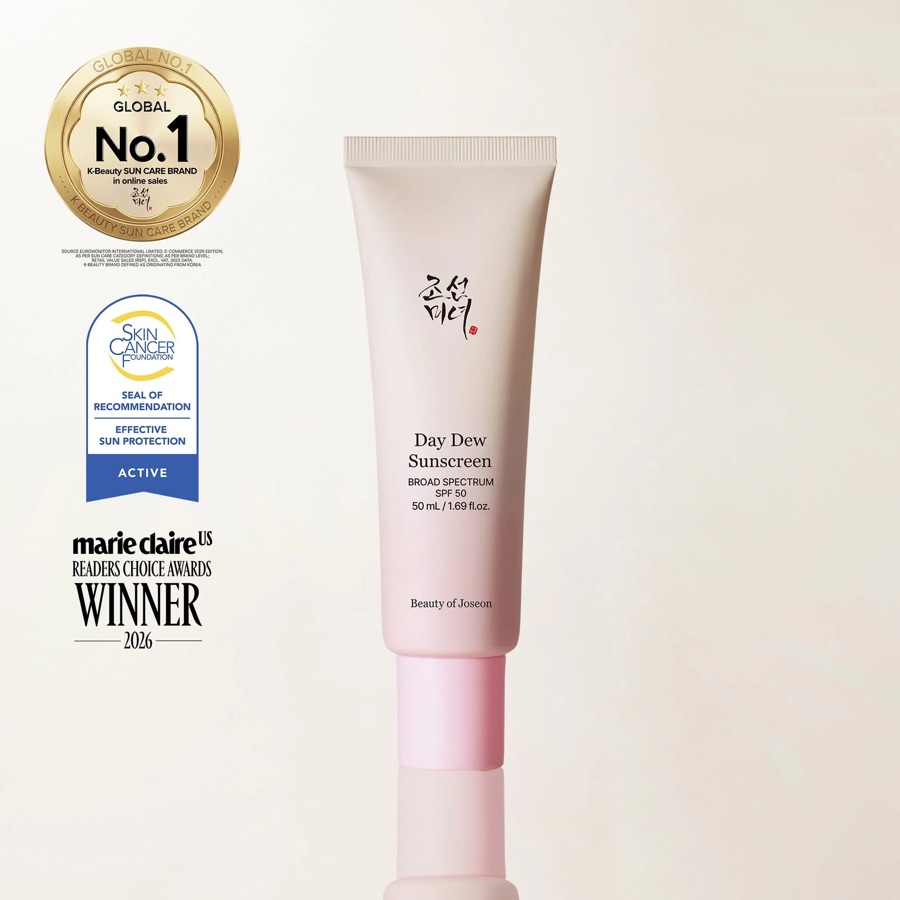
Day Dew Sunscreen SPF 50 (US formula)
- Price$18
- Size50 ml (1.69 fl oz)
- Works out at$0.36 per ml
- FinishDewy
- Sun protectionSPF 50
Beauty of Joseon US, 22 Nov 2026 (on sale that day for $12.60)
See it on beautyofjoseon.com The best Korean skincare at Sephora →The best sunscreens at Sephora →
Image: Beauty of Joseon, from beautyofjoseon.com
Day Dew Sunscreen SPF 50 costs $18 for 50 ml on Beauty of Joseon's US shop, or 36 cents a millilitre, and was on sale for $12.60 on 22 November. The brand calls it “a reimagination of our iconic SPF”, made with FDA-approved filters, which in practice means avobenzone at 3%, homosalate at 7%, octisalate at 5% and octocrylene at 5%, with niacinamide, panthenol and hyaluronic acid in the base, and unlike Relief Sun it claims 80 minutes of water resistance.
Consumer Reports measured Day Dew at an average SPF of 19 against the 50 on its label, with the top UVA score but only 2 out of 5 for UVB, and the same pattern held for the American versions from Innisfree and Round Lab, which measured SPF 16 each. Day Dew has its fans, and one reviewer on the brand's site this month praised the absence of white cast while warning that it “stings my eyes as the day goes by”, but a sunscreen that tested at less than half its labelled SPF is not one we would recommend while that result stands unanswered.
Americans pay about the same for Beauty of Joseon's US formula and got roughly half the measured SPF
Day Dew lists at $18 for 50 ml on Beauty of Joseon's US shop, and the Korean Relief Sun costs $18.99 for 50 ml at Weee! or ¥3,200 (about $20) on the brand's Japanese shop, so the two cost an American almost exactly the same. In Consumer Reports' July tests, though, Relief Sun averaged SPF 36 with a UVB score of 5 out of 5, while Day Dew averaged SPF 19 with a UVB score of 2, which means the version made to American rules delivered about 53% of the measured SPF for the same money.
Beauty of Joseon is not an outlier. Across the three brands Consumer Reports tested, the American versions averaged SPF 17 against 43 for their Korean originals, even though all three American labels claim SPF 36 or higher. The Korean tubes fell short of their SPF50+ labels too, but by far less.
The story: from a Joseon-era encyclopedia to the world's best-selling K-beauty sunscreen
Beauty of Joseon says its products were “developed from the historical teachings recorded in the Gyuhap Chongseo”, a Joseon-dynasty household encyclopedia written by a female scholar, and it has belonged since 2019 to Goodai Global, a Seoul company, according to a June 2026 announcement in which Goodai said that Euromonitor had named Beauty of Joseon the world's No. 1 K-beauty sun-care brand by online sales in 2025. Goodai credits Relief Sun's rise to customer reviews and posts on TikTok, Instagram and YouTube rather than advertising, and it now also owns TIRTIR, SKIN1004 and Round Lab, which means that three of the Korean brands Americans were stockpiling in 2025 now sit in one company. Lab Muffin reported in 2022 that Relief Sun was made by Kolmar, a large Korean sunscreen manufacturer.
Its American story is shorter and sadder. Korean sunscreens were sold widely online in the US for years, but in February 2025 Beauty of Joseon pulled four sunscreens from its US shop, Relief Sun and its Matte Sun Stick among them, Korea JoongAng Daily reported, and said it had changed its formula for the American market. Olive Young, the Korean beauty chain that had kept shipping the original formulas to Americans through its global website, closed that route on 29 May 2026 when it opened a US business that offers only “U.S.-exclusive sunscreen formulations”, in the words of Priscilla Kang of CJ Olive Young USA, speaking to The Zoe Report.
What goes wrong with Relief Sun
Relief Sun's weaknesses are the mirror image of its charms, because the creamy, washable texture that makes it pleasant under makeup also makes it a poor choice for a sweaty day or a swim, and Consumer Reports' SPF 36 suggests that the 50+ on the tube is optimistic. Its particle filter can leave a faint cast on darker skin, the dewy finish will not suit every oily face, and in the US the only sources are importers and grocers, so you are trusting the seller on storage and authenticity.
Which protects better?
On the evidence available in November 2026, Relief Sun has the stronger independent record for the simple reason that it has one: Consumer Reports measured it at SPF 36 with top UVA and UVB scores, while no independent lab has yet published a result for Anthelios UVDefense. On paper the two are closer than the label numbers suggest, because both claim PA++++, the Asian UVA rating that Consumer Reports notes is “used outside the U.S.”, and both rely on photostable modern filters for UVA, bemotrizinol in the French bottle and Uvinul A Plus with bisoctrizole in the Korean tube, although UVDefense also leans on avobenzone.
In Europe the comparison is with UVMune 400, which has twice as many filters, the only one aimed at the 380 to 400 nanometre band and a water-resistance claim Relief Sun lacks, although we found no independent SPF test of it in the press. For a long day outdoors we would take the Anthelios, and for the office whichever you will happily wear in the generous amount every sunscreen needs.
Which suits oily, dry or sensitive skin?
For dry and normal skin, Relief Sun is the better fit on the brands' own descriptions, because Beauty of Joseon designed it as a moisturizing cream and labels it for dry skin, and reviewers from Who What Wear UK to Lab Muffin describe it as hydrating. For oily skin neither is the obvious pick: Beauty of Joseon recommends its Aqua-Fresh version instead, Wong found that UVMune 400's fluid dried down “much tackier than I expected” and a bit shiny, and UVDefense is too new for many independent accounts of how it wears on an oily T-zone by mid-afternoon.
For sensitive skin, La Roche-Posay makes the more explicit promises, describing UVDefense as suitable for sensitive skin and UVMune 400 as developed for it, and all three are fragrance-free, although the European fluid lists denatured alcohol second and the other two do not list it at all. If you have eczema, rosacea or another skin condition, ask a dermatologist before switching, because a sunscreen your skin reacts to is a sunscreen you will stop wearing.
Which is better value?
Relief Sun is the better value wherever it is on sale. In Britain it costs £15.50 for 50 ml against £21 for UVMune 400, so the Korean tube is about 26% cheaper, and in the US, where the comparison is with UVDefense, Weee!'s $18.99 is less than half of La Roche-Posay's $39.99. Say a 50 ml bottle lasts you two months of daily use on your face: a year then costs about £93 of Relief Sun against £126 of UVMune 400 in Britain, or $239.94 of UVDefense in the US.
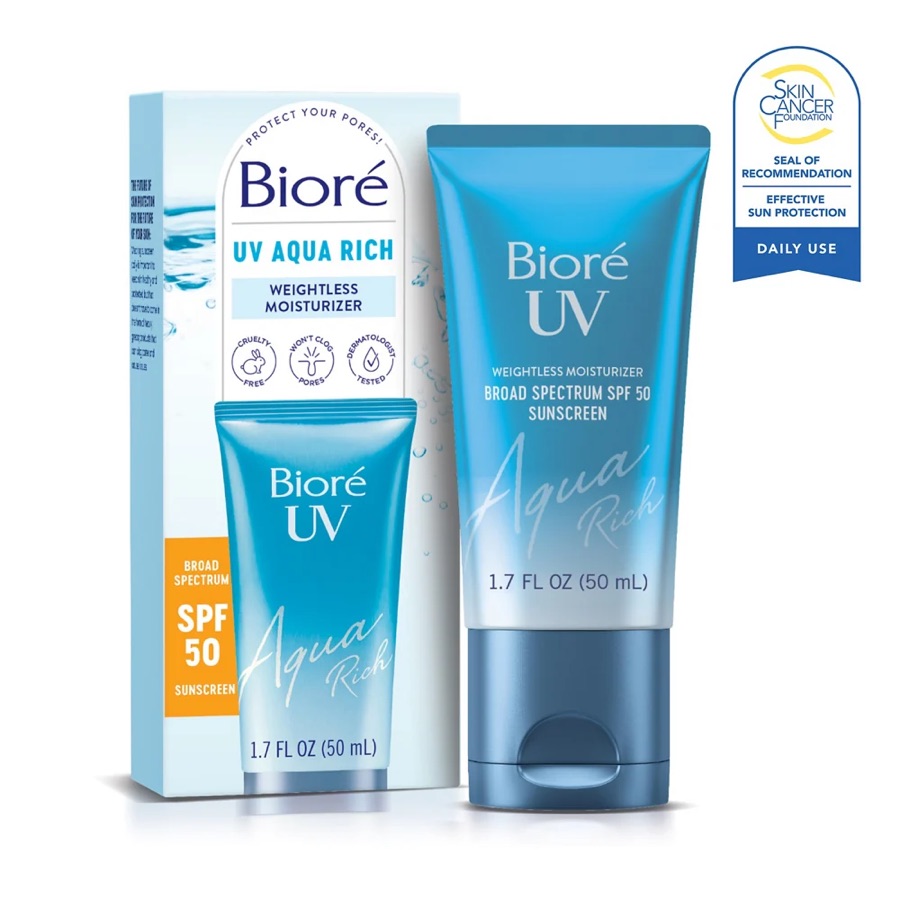
Prices move in November, when Cult Beauty's Black Friday sale briefly put UVMune 400 at £15.75. In the US, Bioré's UV Aqua Rich SPF 50, $15.99 for 50 ml on Kao's US shop, is the cheapest US-formula option from an Asian brand we found, though it uses the same four older filters as Day Dew.
Can Americans buy Relief Sun, and should they?
Americans can still find Relief Sun, but not from Beauty of Joseon's US shop or from Olive Young, which since May 2026 offers US customers only the American versions of Korean sunscreens; what is left is importers such as Weee! and overseas websites. Consumer Reports bought its own test tubes from overseas sites and warns that such a parcel may not arrive, because FDA staff decide case by case which personal shipments of sunscreens made with non-US filters to let through.
Our view is that an American who already loves Relief Sun and buys it from a reputable seller is accepting a delivery risk and trusting that seller, and that most Americans should instead buy UVDefense or one of the other bemotrizinol sunscreens now reaching shelves, which carry FDA Drug Facts in English and are sold by companies you can take a complaint to. More are coming, though slowly: the final order gives DSM, which asked for the approval, 18 months in which only it and its licensees may sell bemotrizinol sunscreens, and Kolmar Korea told Korea JoongAng Daily that it expects Korean-made products with the filter to arrive in earnest in the second half of 2027.
Our verdict
In the US, we would buy Anthelios UVDefense. It is expensive at $39.99 and so far tested by no one but its maker, but it is the only one of these four bottles that an American can buy from its own brand with a filter Europe and Asia have used for years, and Beauty of Joseon's American alternative, Day Dew, measured SPF 19 in the one independent test we know of. Americans who already import Relief Sun know the trade-offs and we would not lecture them, but we would not start the habit now that bemotrizinol sunscreens are arriving on American shelves.
In Britain and Europe, we would buy Relief Sun for everyday wear on dry or normal skin, because it costs about a quarter less than UVMune 400, sits comfortably under makeup, is fragrance-free and alcohol-free, and its SPF 36 in Consumer Reports' test, though short of the label, is still solid protection. We would keep a bottle of UVMune 400 for the beach, the ski slope and the sweaty commute, where its water resistance and eight filters earn the extra 11p a millilitre, and we would apply either one generously and reapply every two hours outdoors, because neither does its job from a thin smear at breakfast.
Questions people ask
Can you buy Beauty of Joseon Relief Sun in the US?
Not from Beauty of Joseon, which took it off its US shop in February 2025 because its four UV filters are not on the FDA's list of filters US sunscreens may contain. Some importers still list it, and the FDA decides case by case whether personal shipments from overseas are let through.
Which is better, La Roche-Posay Anthelios or Beauty of Joseon Relief Sun?
It depends where you live: in the US we would buy Anthelios UVDefense ($39.99), which its own brand sells there with the new filter bemotrizinol, while in the UK or EU we would buy Relief Sun (£15.50) for daily wear on dry or normal skin and Anthelios UVMune 400 (£21) for swimming and sport.
Does Beauty of Joseon Relief Sun leave a white cast?
Very little on most skin, according to the brand and most reviewers, but the chemist Michelle Wong found that it can show on moderately darker skin because of its particle filter, bisoctrizole. Consumer Reports' panel also saw a brief white cast that mostly faded within about ten minutes.
Did Beauty of Joseon change the Relief Sun formula?
No, according to the brand, which renamed Relief Sun: Rice + Probiotics as Relief Sun: Rice + Niacinamide and says the formula, ingredients and 50 ml size are unchanged. The Day Dew Sunscreen it sells in the US is a different formula with different filters.
Is Relief Sun water resistant?
No, it makes no water-resistance claim, and Beauty of Joseon advises a water-resistant sunscreen for swimming or sweating. Anthelios UVMune 400 claims resistance to water, sweat and sand, and Day Dew claims 80 minutes of water resistance.
Can you buy La Roche-Posay UVMune 400 in the US?
Not from La Roche-Posay, because five of its eight filters, including Mexoryl 400, are not on the FDA's sunscreen list. Americans get Anthelios UVDefense instead, which pairs bemotrizinol with four older American filters.
What is BEMT in La Roche-Posay sunscreen?
BEMT is bemotrizinol, a UVA and UVB filter sold in Europe as Tinosorb S, which the FDA added to its sunscreen list on 10 June 2026 as the first new ingredient since the late 1990s. Anthelios UVDefense contains 2% of it, and the FDA allows up to 6%.
How we put this together
We read each brand's own product pages and full ingredient lists, what buyers report in public reviews and forums, and the news coverage linked on this page. Prices are the brand's own list prices in the US on the date shown, unless the page names another shop. Nothing here is rated or scored, and no brand paid to appear.
Sources (31)
- La Roche-Posay US: Anthelios UVDefense SPF 50 with BEMT (archived 12 November 2026)
- DailyMed: Anthelios UV Defense Drug Facts (active and inactive ingredients)
- DailyMed: all La Roche-Posay Anthelios labels
- LovelySkin: Anthelios UVDefense listing
- La Roche-Posay UK: Anthelios UVMune 400 Invisible Fluid (archived 6 October 2025)
- Cult Beauty: Anthelios UVMune 400 Invisible Fluid
- LookFantastic: Anthelios UVMune 400 Invisible Fluid
- Lab Muffin: La Roche-Posay UVMune 400 science and review, June 2024
- Cosmetics Business: La Roche-Posay unveils first US Anthelios with BEMT, October 2026
- Cosmetics Business: The untold story of Anthelios, October 2025
- Glossy: Inside La Roche-Posay's BEMT launch, November 2026
- Drugs@FDA: Anthelios SX (ecamsule), approved July 2006
- Beauty of Joseon Japan: Relief Sun Rice + Niacinamide (ingredients, filters and renaming FAQ)
- Beauty of Joseon US: Day Dew Sunscreen SPF 50
- Beauty of Joseon US: Day Dew explainer and FAQ
- Beauty of Joseon: About the brand
- Cult Beauty: Beauty of Joseon Relief Sun
- Weee!: Beauty of Joseon Relief Sun listing
- Consumer Reports: Does Korean sunscreen work better?, July 2026
- Who What Wear UK: Beauty of Joseon SPF review, April 2026
- Lab Muffin: Korean sunscreen reviews, June 2022
- Korea JoongAng Daily (via Daum): Americans are hoarding Korean sunscreen, April 2025
- Korea JoongAng Daily: FDA approves bemotrizinol, opening door to Korean sunscreen, August 2026
- The Zoe Report: Olive Young opens in the US, May 2026
- PR Newswire Asia: Beauty of Joseon named No. 1 K-beauty suncare brand online, June 2026
- FDA: Final order OTC000039 adding bemotrizinol (June 2026, corrected August 2026)
- FDA: Questions and answers on regulatory actions for sunscreens
- FDA: Sunscreen Innovation Act pending ingredients
- European Commission: Annex VI, UV filters allowed in cosmetics (consolidated 18 May 2026)
- Associated Press (via Anchorage Daily News): The first new sunscreen type in 25 years, October 2026
- Bioré US: UV Aqua Rich SPF 50