Buy CeraVe Moisturizing Cream if you want one tub for face and body built on ceramides, cholesterol and hyaluronic acid, in a formula whose ingredient list hasn't changed since at least January 2020; buy Cetaphil Moisturizing Cream if it is mostly for dry skin below the neck and you want the cheaper ounce, which means its 20-ounce tub at about 80 cents an ounce.
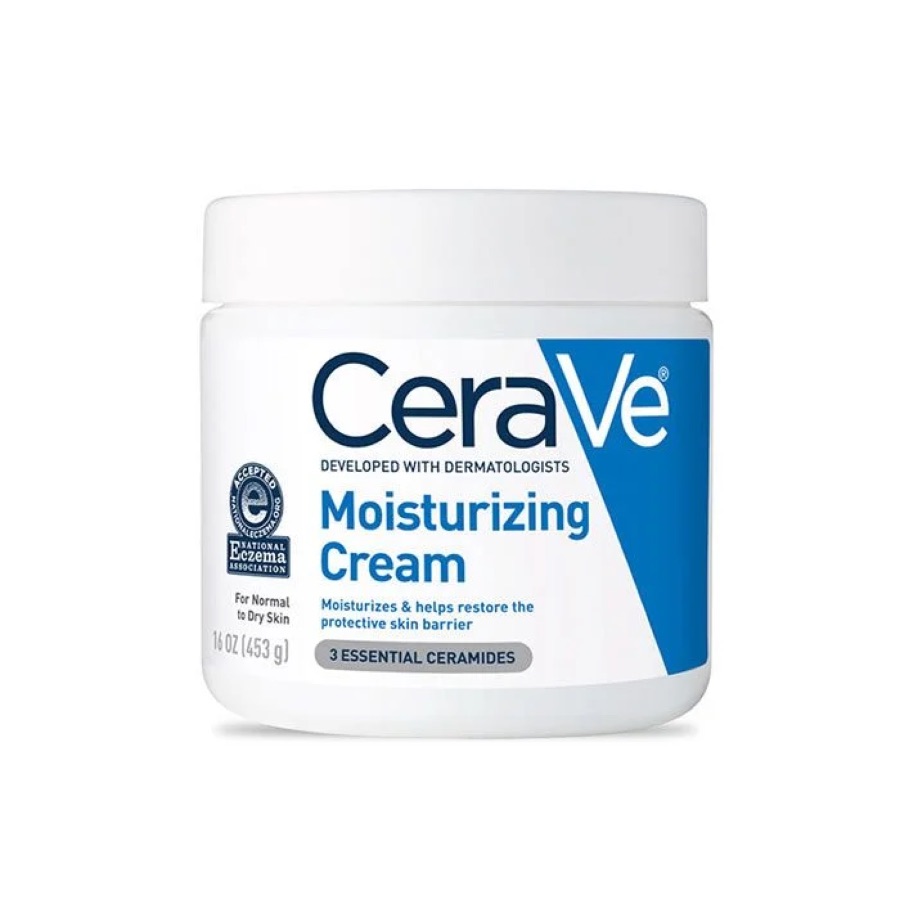
- You want ceramides, since CeraVe's tub carries three of them along with cholesterol, and Cetaphil's Moisturizing Cream contains none at all.
- You plan to use it on your face as well as your body, because CeraVe labels it for normal to dry skin and calls it non-comedogenic, while Cetaphil aims its tub at dry to very dry skin.
- You want a pump, which CeraVe sells on its 16-ounce cream for $17.99 at Target and which isn't among the seven sizes Cetaphil lists for its cream.
- You value a formula that stays put: the 24 ingredients on CeraVe's US page in January 2020 are the same 24, in the same order, today.
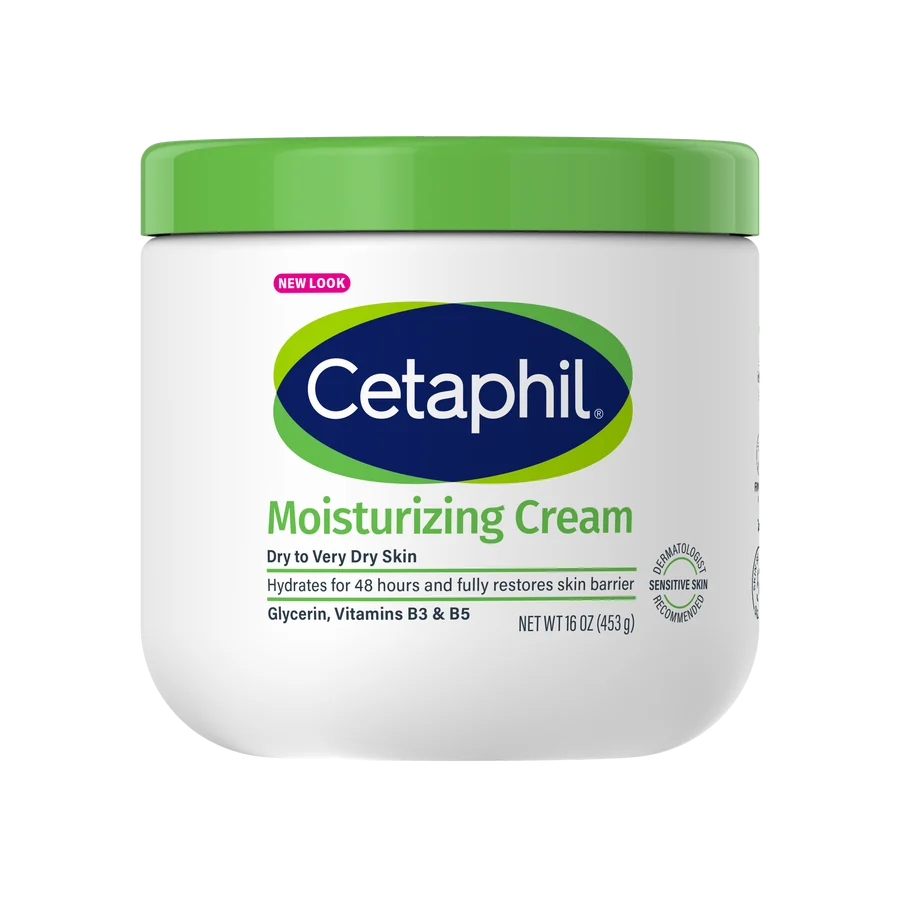
- You mainly need a body cream for dry to very dry skin, which is the skin type Cetaphil prints on the front of the tub.
- You want the lowest price per ounce, which is Cetaphil's 20-ounce tub at $15.99 at Target, about 80 cents an ounce against CeraVe's $1.00 in its largest tub.
- You like niacinamide and panthenol, the two B vitamins Cetaphil added to the cream when it reformulated its best-known products in 2021.
- You want petrolatum, the classic occlusive, high up the list: it is the third ingredient in Cetaphil's cream and the seventh in CeraVe's.
The one difference that matters: CeraVe is built around ceramides and cholesterol, the kinds of fat found in the skin's outer layer, whereas Cetaphil, despite the near-identical tub, contains no ceramides at all and relies on glycerin, petrolatum, plant oils, niacinamide and panthenol instead.
Neither cream contains fragrance, but Cetaphil's lists sweet almond oil, so anyone who avoids nut oils should read both full ingredient lists before buying.
| | |
|---|---|---|
| Price, 16-ounce tub | $15.99 at Target | $14.49 at Target |
| Price per ounce, 16-ounce tub | $1.00 | About 91 cents |
| Cheapest per ounce | $1.00 (16 oz tub) | About 80 cents (20 oz tub, $15.99) |
| Sizes | 1.89, 8, 12 and 16 oz at Target, plus a 16 oz pump | 1, 1.7, 3, 8.8, 16 and 20 oz, plus a two-pack of 16 oz |
| Skin type on the tub | Normal to dry | Dry to very dry |
| Key ingredients | Ceramides NP, AP and EOP, cholesterol, sodium hyaluronate, petrolatum, dimethicone | Glycerin, petrolatum, niacinamide, panthenol, sunflower seed and sweet almond oils |
| Ceramides | Three | None |
| Fragrance | Fragrance-free | Fragrance-free |
| National Eczema Association seal | Yes | Yes |
| Brand's main claims | Non-comedogenic, for ages 3 and up, slow-release MVE technology | 48-hour hydration, hypoallergenic, won't clog pores |
| Brand from, and owner | United States, 2005; owned by L'Oréal since 2017 | Texas, 1947; owned by Galderma of Switzerland |
| Where to buy | Drugstores, supermarkets and big-box stores; CeraVe sends shoppers to retailers | Drugstores, supermarkets and big-box stores; Cetaphil sends shoppers to retailers |
Prices from Target's website on 22 November 2026; they can differ from store to store and change often. CeraVe's US site shows a price of $14.99 without naming a size, and Cetaphil's lists sizes but no prices, so we used one big retailer for both.
Two white tubs, two very different family trees
CeraVe and Cetaphil sit side by side on almost every American drugstore shelf, in white tubs of nearly the same size at prices a dollar or two apart, and plenty of shoppers treat them as the same thing with different logos. They are not, because the two creams come from different eras and different corporate homes: Cetaphil traces itself to a cleansing lotion that a Texas pharmacist created in 1947 and now belongs to Galderma, the Swiss dermatology company, while CeraVe was launched in 2005 with dermatologists and has belonged to L'Oréal since 2017, when the French group agreed to pay $1.3 billion for it and two smaller brands.
The family trees have lately begun to tangle. L'Oréal, which co-founded Galderma with Nestlé in 1981 and sold out of it in 2014, bought back in with a stake in 2024 and agreed in December 2025 to raise that stake to 20%, so the owner of CeraVe now holds a sizeable slice of the company that makes its oldest rival, even as the two creams compete for the same $15 at the till. Cetaphil, meanwhile, rewrote the formulas of its best-known products in 2021, adding niacinamide and panthenol to this cream, while CeraVe's ingredient list has not moved in at least six years, which means the comparison many people remember from a decade ago no longer holds.
Same base, different headlines: the two creams share only eight ingredients
Lay the two ingredient lists side by side, CeraVe's 24 against Cetaphil's 23, and they overlap on just eight items: water, glycerin, petrolatum, dimethicone, cetyl alcohol, carbomer, disodium EDTA and the preservative phenoxyethanol. That shared core is the standard chassis of a drugstore cream, a humectant, two occlusives, a fatty alcohol, a thickener, a stabilizer and a preservative, and it is the part of each tub that neither brand advertises.
Everything each brand gives you as a reason to buy sits outside that overlap. CeraVe's three ceramides, cholesterol, phytosphingosine and sodium hyaluronate appear nowhere in Cetaphil's list, and Cetaphil's niacinamide, panthenol, sunflower seed oil, sweet almond oil and dicaprylyl ether appear nowhere in CeraVe's, so the real choice at the shelf is not between two versions of one cream but between two different sets of extras on a common base, and on that base Cetaphil lists petrolatum third while CeraVe lists it seventh.
CeraVe Moisturizing Cream: three ceramides in a tub
Moisturizing Cream
- Price$15.99
- Size16 oz (453 g)
- Works out at$0.04 per gram
Target.com, 22 Nov 2026 (CeraVe sells through retailers, not direct)
Image: CeraVe, from cerave.com
What it costs, size by size
CeraVe doesn't sell from its own US site, which shows a price of $14.99 on the product page without saying which size it means and then hands buyers to retailers through a “Buy Online” button, so our prices come from Target's website on 22 November 2026. There the cream cost $4.29 for a 1.89-ounce travel tub ($2.27 an ounce), $13.59 for 8 ounces ($1.70 an ounce), $15.99 for 12 ounces ($1.33 an ounce) and $15.99 for the 16-ounce tub, which works out at $1.00 an ounce, with a 16-ounce pump version at $17.99, or $1.12 an ounce.
Read that list twice, because the 12-ounce tub and the 16-ounce tub cost exactly the same at Target that day, so anyone who reaches for the smaller one is paying for four ounces of empty shelf. We would skip both the 12-ounce and the 8-ounce sizes unless cupboard space is genuinely tight, and we would treat the pump as a $2 hygiene charge that a family sharing one tub for months may be glad to pay, since it keeps fingers out of the cream. The tub's own label gives its contents as 16 ounces, or 453 grams, a weight rather than the fluid ounces Target's listing title suggests, which matters only if you are comparing it with a lotion sold by volume.
What's in the tub, and what each part is for
CeraVe's US page lists 24 ingredients: water, glycerin, cetearyl alcohol, caprylic/capric triglyceride, cetyl alcohol, ceteareth-20, petrolatum, potassium phosphate, ceramide NP, ceramide AP, ceramide EOP, carbomer, dimethicone, behentrimonium methosulfate, sodium lauroyl lactylate, sodium hyaluronate, cholesterol, phenoxyethanol, disodium EDTA, dipotassium phosphate, tocopherol, phytosphingosine, xanthan gum and ethylhexylglycerin. The three ceramides are the reason the brand exists, and CeraVe pairs them with cholesterol and phytosphingosine, other fats of the kind found in the skin's outer layer, saying the combination “helps restore your skin's natural barrier, helping to keep moisture in and harmful elements out.”
Around that core sit the familiar workhorses of a drugstore moisturizer, each doing a job that is easy to explain. Glycerin and sodium hyaluronate, the salt form of hyaluronic acid, are humectants that draw water into the top layer of skin, while petrolatum and dimethicone sit on the surface to slow the evaporation that CeraVe's page calls transepidermal water loss, and the fatty alcohols near the top of the list give the cream its body. Tocopherol is vitamin E, used here as much to protect the formula as the skin, and phenoxyethanol with ethylhexylglycerin is the preservative system, a common pairing in fragrance-free creams.
CeraVe also claims what it calls MVE Delivery Technology, which it says “continually releases these ingredients for long-lasting hydration”, and its 20th-anniversary page describes MVE as “like a time-release system” and notes that the name is a registered trademark of DFB Technology, Ltd. That is a claim about how the cream behaves on skin, which no shopper can check at the counter, so we would buy the tub for its ingredient list rather than for its delivery system. The list itself has been remarkably steady: an archived copy of the same page from January 2020 shows the same 24 ingredients in the same order, even though CeraVe adds a standard warning that its lists are “updated regularly”.
How CeraVe says it feels, and what buyers report
CeraVe describes the cream as “rich, non-greasy” and says it “absorbs in a flash”, without the “gunky residue” it attributes to other dry-skin creams, and it labels the formula fragrance-free, allergy-tested and non-comedogenic, meaning it is not expected to clog pores. The brand pitches it at normal to dry skin on the face and body, for the whole family from age 3, and its page adds two less obvious details: the cream is eligible for Health Savings Account and Flexible Spending Account purchases, and the product is Cradle to Cradle Certified at the silver level, a sustainability standard covering materials, water and fair labor.
On Target's website the 16-ounce tub and its size variants carried 20,021 ratings averaging 4.72 out of 5 on the day we checked, and the most recent reviews return again and again to thickness and the lack of scent. “Thick and creamy and NO fragrance. You only need a small amount,” wrote one reviewer in November 2026, who said a dermatologist had recommended it and that it was the only moisturizer that really worked for them, while another, the same month, gave it five stars with a useful warning attached: “It's decently thick, for those who want a lighter cream, I would look for something else.”
From a 2005 launch to L'Oréal's $1.3 billion bet
CeraVe launched in 2005 with just three products, the Moisturizing Cream, a Moisturizing Lotion and a Hydrating Facial Cleanser, after what its anniversary page describes as a group of dermatologists identifying a need, and the cream has been its anchor ever since. The brand had expanded to more than 35 countries by 2018, by its own timeline, and by 2019 it was calling itself the number one dermatologist-recommended skincare brand, a claim that comes from the company rather than from any independent count we could open.
L'Oréal agreed on 10 January 2017 to buy CeraVe, together with the acne brand AcneFree and the skincare line Ambi, from Valeant Pharmaceuticals for $1.3 billion in cash, when the three brands together had about $168 million of annual sales, according to L'Oréal's announcement. It placed CeraVe in its Active Cosmetics Division beside La Roche-Posay, Vichy and SkinCeuticals, and the division's then president, Brigitte Liberman, said at the time that “we believe CeraVe has a great potential for international growth in the years to come.” By 2021 the bet looked sound: Glossy reported that in Piper Sandler's autumn 2020 survey of American teenagers, Cetaphil ranked third among skincare brands, behind CeraVe and Neutrogena.
What goes wrong with CeraVe
Price is the first complaint, and it is fair, because CeraVe costs more per ounce than Cetaphil in every comparable size at Target, and the reviewer who praised its thickness ended with “Just so expensive but it does work.” The odd pricing of the 12-ounce tub makes things worse for anyone who doesn't stop to do the sums, since it costs a third more per ounce than the 16-ounce tub sitting next to it.
Texture is the second, and it cuts both ways, because the same richness that dry skin welcomes can feel heavy on an oily T-zone or under makeup. CeraVe itself points people with normal to oily skin towards its Daily Moisturizing Lotion, which it describes as lightweight and oil-free, so an oily-skinned buyer who wants ceramides should start there rather than with the tub. A jar is also a less hygienic package than a pump or a tube, which is the real case for paying $2 more for the pump version if several people will be dipping into it.
Cetaphil Moisturizing Cream: the older tub, rewritten in 2021
Moisturizing Cream
- Price$14.49
- Size16 oz (453 g)
- Works out at$0.03 per gram
Target.com, 22 Nov 2026 (Cetaphil sells through retailers, not direct)
Image: Cetaphil, from cetaphil.com
What it costs, size by size
Cetaphil's US product page lists the cream in seven sizes, 1 ounce, 1.7 ounces, 3 ounces, 8.8 ounces, 16 ounces, a two-pack of 16-ounce tubs and 20 ounces, but shows no prices and sends buyers to retailers, so these figures also come from Target on 22 November 2026. There the cream cost $5.79 for 3 ounces ($1.93 an ounce), $11.59 for 8.8 ounces ($1.32 an ounce), $14.49 for the 16-ounce tub, about 91 cents an ounce, and $15.99 for the 20-ounce tub, which brings it down to about 80 cents an ounce, the cheapest ounce of either brand.
The 20-ounce tub is the obvious buy, because it costs only $1.50 more than the 16-ounce one for four more ounces, and we would ignore the two-pack of 16-ounce tubs that Target sold as a value bundle for $27.54, which works out at about 86 cents an ounce and is therefore dearer per ounce than the single big tub. The 16-ounce label gives the net weight as 16 ounces, or 453 grams, exactly the same as CeraVe's, so the price comparison between the two big tubs is like for like.
What changed in 2021, and why some fans noticed
Galderma announced on 22 September 2021 that it had reformulated Cetaphil's best-known cleansers and moisturizers, and that its most prominent products, the Moisturizing Cream among them, now carried what it called a dermatologist-backed blend of niacinamide (vitamin B3), panthenol (vitamin B5) and glycerin, according to the company's release. The same year it launched 16 new products, taking the range to 59, and Glossy reported that the brand was courting the 70% of Americans who, according to the consumer research it cited, consider their skin sensitive. “We're passionate about innovation and relaunching the [traditional] products, but [we're] doing it carefully,” June Risser, who ran Galderma's consumer business, told Glossy that September.
The 2021 formula is the one in shops today, because the ingredient list on an archived copy of Cetaphil's page from January 2022 matches the current one word for word. The range of sizes has grown since an archived 2019 page offered only 3, 8.8 and 16 ounces, and the 16-ounce tub pictured on Cetaphil's site today has a green lid and a pink “New look” flash on its label.
Not every longtime buyer welcomed the change. A reviewer who said they had championed the cream for over a decade wrote on Cetaphil's own site in April 2022 that “on paper it looks great with the B3 etc., however in reality this formula is less moisturizing than your old one,” and gave the new version three stars. One review is not a verdict, and the cream still averaged 4.6 out of 5 across 2,928 reviews on Cetaphil's page when we checked, but it is a reminder that a reformulation can change how a familiar product feels even when the new ingredient list reads better.
This new moisturizer does not leave that same deweyness on the skin, and is not as moisturizing.
A longtime buyer, reviewing the reformulated cream on Cetaphil's US site, April 2022
What's in the tub
Cetaphil's page lists 23 ingredients: water, glycerin, petrolatum, dicaprylyl ether, dimethicone, glyceryl stearate, cetyl alcohol, sunflower seed oil, PEG-30 stearate, panthenol, niacinamide, sweet almond oil, tocopheryl acetate, pantolactone, dimethiconol, acrylates/C10-30 alkyl acrylate crosspolymer, carbomer, propylene glycol, disodium EDTA, benzyl alcohol, phenoxyethanol, sodium hydroxide and citric acid. The striking thing is the position of petrolatum, the occlusive that sits on skin to slow water loss, which comes third, straight after water and glycerin, whereas in CeraVe's list it comes seventh, behind three fatty alcohols and an oil.
Cetaphil says glycerin and panthenol “hydrate, soothe and preserve the skin barrier”, that niacinamide helps smooth skin texture and retain moisture, and that sweet almond oil and vitamin E (here as tocopheryl acetate) comfort dry skin, and it claims the cream hydrates for 48 hours, shows “significant skin barrier improvement in 3 days with complete restoration in 1 week” and that 97% of users reported their skin seemed more hydrated over time. Those figures come from Cetaphil's own studies, which it doesn't publish on the page, so we read them as marketing rather than as evidence. The cream is labelled fragrance-free, paraben-free, hypoallergenic and unlikely to clog pores, and Cetaphil says on its page that it carries no expiry date but is best used within two years of opening.
What is not in the list matters as much: there are no ceramides, even though Cetaphil's website has a ceramides entry in its ingredient glossary and the brand sells other products built around them, and there is no hyaluronic acid. The sweet almond oil is the detail anyone with a nut allergy should notice, because CeraVe's cream contains no nut oils at all.
What buyers say, and a caution about the reviews
On Target's website the 16-ounce tub and its size variants carried 4,313 ratings averaging 4.69 out of 5 on 22 November, almost exactly CeraVe's score, and reviewers keep describing a rich cream that spreads easily. “I love its rich and creamy texture. It feels more substantial when applying,” wrote one in November 2026, which is a fair summary of how most of the recent reviews describe it.
Read those reviews with care, though, because of the eight most recent reviews Target displayed for the cream on the day we checked, six carried the label “collected as part of a promotion”, and one of them mentioned trying the cream for the first time from a “PR package”. None of CeraVe's eight most recent reviews on the same day carried that label, so for now the plainest guide to how Cetaphil's cream feels is the older body of reviews and the brand's own description of a “rich, non-greasy cream”.
From a Texas pharmacy to a Swiss-listed company
Cetaphil's own history says the brand began “from humble Texan roots” with a pharmacist who wanted a gentler product for patients, launching in 1947 with Cetaphil Cleansing Lotion, the product now sold as Gentle Skin Cleanser, and it says the range is now sold in more than 70 countries. The company that owns it, Galderma, was founded in 1981 as a joint venture between L'Oréal and Nestlé, became wholly owned by Nestlé in 2014, was sold to a consortium of investors in 2019 and listed on the SIX Swiss Exchange in 2024, according to its own timeline, which also records the opening of a new US headquarters in Miami in 2025 and a staff of more than 7,600.
The twist is L'Oréal's return. Having left Galderma in 2014, the owner of CeraVe made what it called an initial strategic investment in 2024 and announced on 8 December 2025 that it would buy a further 10% from the investor group led by EQT, taking its stake to 20%, with completion expected in the first quarter of 2026, according to L'Oréal's release. L'Oréal said it did not plan to go beyond 20%, and Galderma said it would consider nominating two L'Oréal candidates to its board, so the two tubs on the shelf are rivals with a shareholder in common.
What goes wrong with Cetaphil
The biggest risk is buying it for the wrong reason, because shoppers who have read about ceramides and assume the two white tubs are equivalents will find none in Cetaphil's list, and anyone who preferred the pre-2021 formula has no way back to it. The promotional reviews on Target are a second, quieter problem, since they make the recent star ratings less useful than they look.
The sweet almond oil rules the cream out for some households, and the lack of a pump on any of the seven sizes Cetaphil lists means every tub is a jar that fingers go into. Cetaphil's claim of complete barrier restoration in a week is also a bolder promise than CeraVe makes for its cream, and because the brand does not publish the study behind it on the product page, we would not let that sentence decide the purchase.
What does the eczema seal on both lids actually mean?
Both creams carry the National Eczema Association's Seal of Acceptance, and both appear in the association's product directory, as CeraVe Moisturizing Cream and as Cetaphil's Moisturizing Cream, so the seal does nothing to separate them. The association says that a product with the seal is free of every ingredient on its “Ecz-clusion List”, that each formula must submit at least one clinical safety test (a repeat-insult patch test, a cumulative irritation test or a safety-in-use study), that animal testing is not accepted, and that a panel of doctors makes the final decision.
What the seal is not is a promise that a cream treats eczema, and neither brand says that it is: CeraVe's page simply says the cream is “accepted by the National Eczema Association”, and Cetaphil's says it is accepted “to be gentle on eczema-prone skin”. The association itself warns that a product that works for one person may not work for another, or even for the same person over time, so anyone managing eczema, rather than ordinary dry skin, should take the choice of moisturizer to a dermatologist.
Which suits dry skin, and which suits a face?
The tubs answer half of this themselves, because CeraVe's is labelled for normal to dry skin and Cetaphil's for dry to very dry skin, and both brands say their cream can go on the face as well as the body. Say your shins flake every January but your face only tightens around the nose: the cheaper Cetaphil 20-ounce tub makes sense below the neck, where a cream with petrolatum third on its list and two plant oils has the most work to do, and CeraVe, the one its maker pitches at normal skin as well as dry, is the more sensible choice for the face.
Dermatologists asked to choose tend to call it a draw on gentleness. Debra Jaliman, a New York dermatologist, told Today in February 2026 that both brands make “gentle, fragrance-free products designed for sensitive skin”, and the article drew the line between CeraVe's ceramide-and-hyaluronic-acid formulas for dry or compromised skin and Cetaphil's simpler basics, often suggested to people whose previous products irritated them. For oily skin, neither tub is the right starting point, and both brands sell lighter lotions instead: CeraVe's Daily Moisturizing Lotion and Cetaphil's Moisturizing Lotion.
Which is better value per ounce?
Cetaphil is cheaper at every size we could compare at Target, and its advantage grows with the tub. Someone who gets through a 16-ounce tub every two months would spend $95.94 a year on CeraVe, $86.94 on Cetaphil's 16-ounce tub and about $77 if the same 96 ounces came in Cetaphil's 20-ounce tubs, a saving of roughly $19 a year for choosing the bigger Cetaphil over the biggest CeraVe.
CeraVe's cheapest ounce still costs more than Cetaphil's big tubs, and two 'deals' are traps
The sum that settles the price question is simple: CeraVe's cheapest ounce, $1.00 in its 16-ounce tub, costs more than an ounce from either of Cetaphil's big tubs, about 91 cents in the 16-ounce and about 80 cents in the 20-ounce, so on price alone CeraVe never wins, and the case for it has to rest on the ceramides.
Two size choices also go against the usual rule that bigger packs are better value. CeraVe's 12-ounce tub cost the same $15.99 as its 16-ounce tub at Target on 22 November, which made the smaller tub 33% dearer per ounce, and Cetaphil's two-pack of 16-ounce tubs, sold as a value bundle at $27.54, came to about 86 cents an ounce, more than the single 20-ounce tub sitting beside it.
| Size and price at Target | CeraVe Moisturizing Cream | Cetaphil Moisturizing Cream |
|---|---|---|
| Travel size | 1.89 oz for $4.29 ($2.27 an ounce) | 3 oz for $5.79 ($1.93 an ounce) |
| Middle size | 8 oz for $13.59 ($1.70 an ounce) | 8.8 oz for $11.59 ($1.32 an ounce) |
| Large tub | 12 oz for $15.99 ($1.33 an ounce) | 16 oz for $14.49 (about 91 cents an ounce) |
| Largest tub | 16 oz for $15.99 ($1.00 an ounce) | 20 oz for $15.99 (about 80 cents an ounce) |
| Pump or multipack | 16 oz pump for $17.99 ($1.12 an ounce) | Two 16 oz tubs for $27.54 (about 86 cents an ounce) |
Target's website, 22 November 2026. Prices per ounce are our arithmetic.
Dupes and alternatives
The closest step up from either tub comes from CeraVe itself. Its Intensive Moisturizing Cream, which the brand calls its richest moisturizer for dry to very dry skin, adds shea butter and what CeraVe calls 5% Hydro-Urea (hydroxyethyl urea) to the same three ceramides, claims 72 hours of hydration and, curiously, contains no petrolatum at all; at Target it cost $18.89 for 12 ounces ($1.57 an ounce) and $19.99 for 16 ounces ($1.25 an ounce) on 22 November. Cetaphil's newer tub, the Nourishing & Hydrating Cream for normal to very dry skin, swaps the B vitamins for sunflower seed oil, synthetic beeswax and vitamin E, still without ceramides, and cost $16.99 for 16 ounces.
For the shortest ingredient lists, two older American standbys undercut or match both brands. Vanicream Moisturizing Cream cost $13.19 for 16 ounces at Target (82 cents an ounce), lists just 11 ingredients led by water, petrolatum and sorbitol, and according to its Target listing has also been awarded the National Eczema Association seal, while Eucerin Original Healing Cream cost $15.79 for 16 ounces (99 cents an ounce) and lists only seven, among them petrolatum, mineral oil and lanolin alcohol. Neither contains ceramides, so they are alternatives to Cetaphil's approach rather than to CeraVe's, and the lanolin in Eucerin's is worth noting for anyone who avoids it.
Our verdict
If we were buying one tub for a household that will put it on faces as well as elbows, we would buy CeraVe Moisturizing Cream in the 16-ounce size, because it is the only one of the two with ceramides and cholesterol, its formula has stayed the same for at least six years, its label covers normal as well as dry skin, and at $1.00 an ounce it is still one of the cheaper creams on any drugstore shelf. We would not buy the 12-ounce tub at the same price, and we would pay the extra $2 for the pump only if several people will share it.
If the cream is for dry legs, arms and hands and the price per ounce matters more than the label, Cetaphil's 20-ounce tub at about 80 cents an ounce is the better buy, with petrolatum high in its list and niacinamide and panthenol added in 2021. Just go in knowing that it contains no ceramides, that it contains sweet almond oil, and that many of its newest reviews on Target were written as part of a promotion, so the best guide to it is its ingredient list rather than its latest stars.
Questions people ask
Which is better, CeraVe or Cetaphil moisturizing cream?
CeraVe is the better choice for a face-and-body cream if you want ceramides, because its tub contains three ceramides plus cholesterol and Cetaphil's contains none. Cetaphil is the better value for dry skin on the body, especially in its 20-ounce tub at about 80 cents an ounce at Target, against CeraVe's $1.00 an ounce in its largest tub.
Does Cetaphil Moisturizing Cream have ceramides?
No, the current Cetaphil Moisturizing Cream contains no ceramides; its 23 ingredients are led by water, glycerin and petrolatum, with niacinamide, panthenol, sunflower seed oil and sweet almond oil. CeraVe Moisturizing Cream contains ceramides NP, AP and EOP.
Can I use CeraVe or Cetaphil moisturizing cream on my face?
Yes, both brands say their creams can be used on the face and body, and both describe them as unlikely to clog pores. CeraVe labels its cream for normal to dry skin and Cetaphil for dry to very dry skin, so people with oily skin may prefer the lighter lotions both brands sell.
Are CeraVe and Cetaphil owned by the same company?
No, CeraVe has been owned by L'Oréal since 2017 and Cetaphil by Galderma, a Swiss dermatology company. L'Oréal does, however, own a stake in Galderma, which it agreed in December 2025 to raise to 20%.
Do CeraVe and Cetaphil have the National Eczema Association seal?
Yes, both CeraVe Moisturizing Cream and Cetaphil Moisturizing Cream are listed in the National Eczema Association's directory with its Seal of Acceptance. The seal means a product is free of the association's list of known irritants and has passed a clinical safety test, not that it treats eczema, which is a question for a dermatologist.
Is CeraVe or Cetaphil cheaper?
Cetaphil is cheaper at Target, where its 16-ounce tub cost $14.49 and CeraVe's cost $15.99 on 22 November 2026. Cetaphil's 20-ounce tub, at $15.99, is the cheapest per ounce of either brand, at about 80 cents.
Did Cetaphil change its Moisturizing Cream?
Yes, Cetaphil reformulated the cream in 2021, adding niacinamide and panthenol to a blend with glycerin, and the label now carries a “New look” flash. Some longtime users have written that the new version feels less moisturizing than the old one, while CeraVe's ingredient list has not changed since at least January 2020.
How we put this together
We read each brand's own product pages and full ingredient lists, what buyers report in public reviews and forums, and the news coverage linked on this page. Prices are the brand's own list prices in the US on the date shown, unless the page names another shop. Nothing here is rated or scored, and no brand paid to appear.
Sources (27)
- CeraVe: Moisturizing Cream product page and ingredients
- CeraVe Moisturizing Cream page, archived 3 January 2020
- CeraVe: 20th anniversary timeline
- CeraVe: Intensive Moisturizing Cream
- Cetaphil: Moisturizing Cream product page, ingredients and reviews
- Cetaphil Moisturizing Cream page, archived 14 January 2022
- Cetaphil Moisturizing Cream page, archived 14 November 2019
- Cetaphil: Our story
- Cetaphil: Nourishing & Hydrating Cream
- Target: CeraVe Moisturizing Cream, 16 oz (with sizes and reviews)
- Target: CeraVe Moisturizing Cream, 12 oz
- Target: CeraVe Moisturizing Cream with pump, 16 oz
- Target: Cetaphil Moisturizing Cream, 16 oz (with sizes and reviews)
- Target: Cetaphil Moisturizing Cream, 20 oz
- Target: CeraVe Intensive Moisturizing Cream
- Target: Cetaphil Nourishing & Hydrating Cream
- Target: Vanicream Moisturizing Cream, 16 oz
- Target: Eucerin Original Healing Cream, 16 oz
- National Eczema Association: CeraVe Moisturizing Cream listing
- National Eczema Association: Cetaphil Moisturizing Cream listing
- National Eczema Association: About the Seal of Acceptance
- Galderma: Cetaphil reformulation announcement, 22 September 2021
- Galderma at a glance: company timeline
- L'Oréal: agreement to acquire CeraVe, AcneFree and Ambi, 10 January 2017
- L'Oréal: reinforcing its investment in Galderma, 8 December 2025
- Glossy: Cetaphil reformulates products after 74 years, September 2021
- Today: CeraVe vs Cetaphil, dermatologists weigh in, February 2026