Buy Hada Labo Premium if hydration is the whole point, because its fragrance-free formula stacks eight hyaluronic acids for ¥1,100 in Japan or $13.99 from importers in the US; buy Klairs if you want a lighter, soothing toner with plant extracts and amino acids, and choose its Unscented version, the only one Klairs's own US shop sells, unless you like the original's lavender-and-citrus oils.
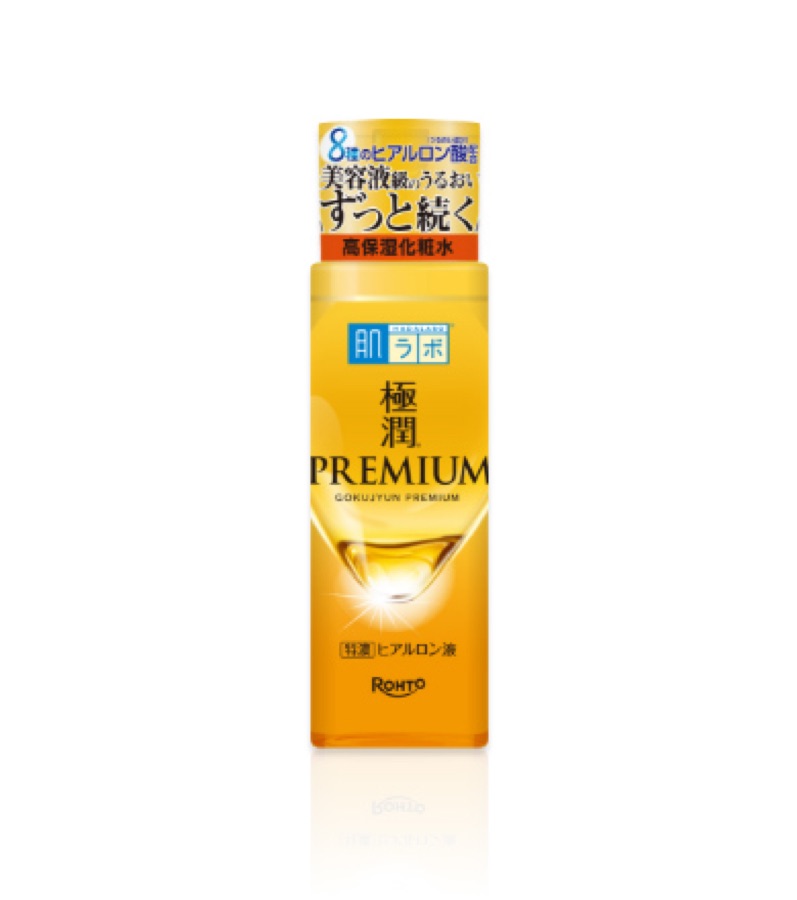
- You want the most water-binding ingredients for the money: eight forms of hyaluronic acid plus diglycerin and sugars, for ¥1,100 (about $6.93) for 170 ml at the Japanese drugstore chain Sundrug.
- You want nothing that smells: Rohto's bottle is fragrance-free, color-free, oil-free, ethanol-free and paraben-free, with no plant extracts or essential oils.
- Your skin is dry or tight, and you like a thick, slippery liquid that Rohto sells as giving serum-grade moisture.
- You can buy the Japanese bottle, either in Japan or from an importer such as Weee!, where it was $13.99 on 22 November.
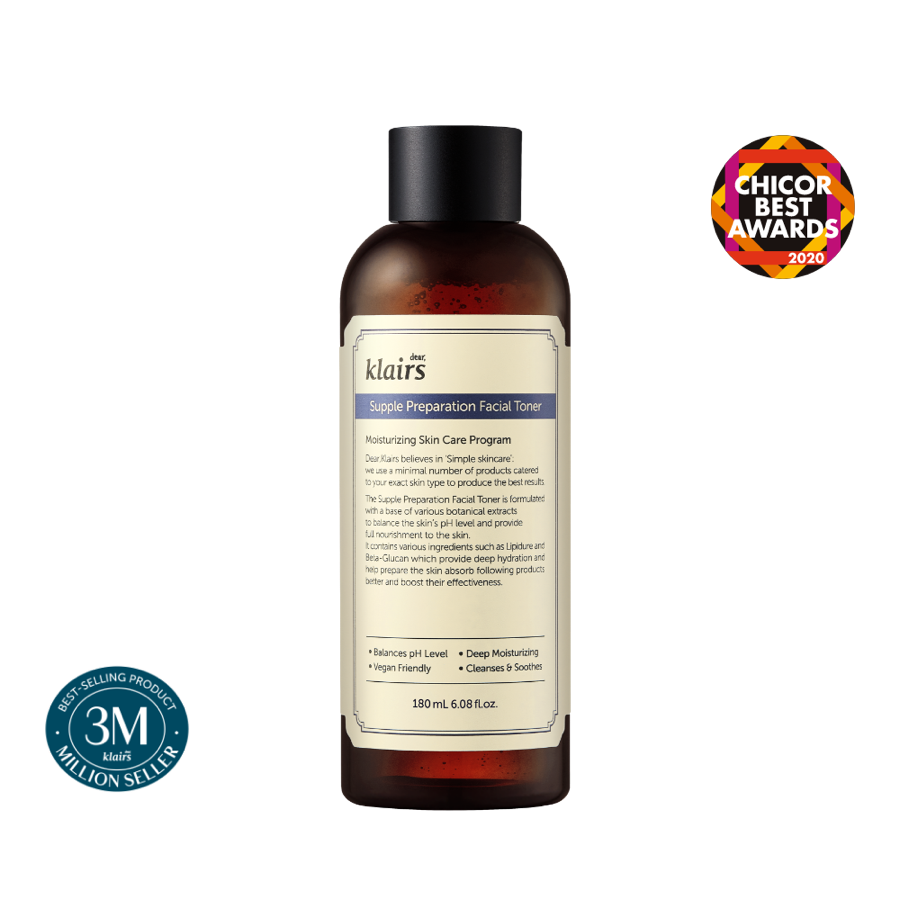
- You want a lighter toner with soothing extras: licorice, centella, aloe, beta-glucan, panthenol and amino acids, which the Hada Labo does not contain.
- You like a scented ritual, since the original adds lemon peel, lavender, orange peel, geranium, ylang-ylang and eucalyptus oils; if you don't, the Unscented version has the same 33 other ingredients.
- You have normal, combination or oily skin and want something that sinks in without a heavy feel, which is how Klairs and its reviewers describe it.
- You shop in the US, where Klairs sells the Unscented directly at $30 list ($18.99 on sale on 22 November) and the original appears at Ulta and Soko Glam for about $22.
The one difference that matters: the Japanese lotion is a fragrance-free stack of eight hyaluronic acids and humectant sugars with no plant extracts at all, while the Korean toner has one hyaluronic acid, six plant extracts and, in its original form, six essential oils, so you are choosing between maximum water-binding and a gentler, botanical, scented step.
The Hada Labo that Rohto's own brand sells in the US, Hada Labo Tokyo Lotion No. 1, is a different 14-ingredient formula with three hyaluronic acids, so check which bottle you are buying.
| | |
|---|---|---|
| Price at home | ¥1,100 for 170 ml at Sundrug (about $6.93); Rohto sets no list price | ₩19,900 for 180 ml on Klairs Korea (about $14.86) |
| Price per ml at home | ¥6.47, about 4 cents | ₩111, about 8 cents |
| In the US | Not sold by Rohto; $13.99 for 170 g at Weee!. Rohto's US line sells a different Lotion No. 1, $24.50 for 150 ml | $22.00 at Ulta (out of stock online on 22 Nov), $21.99 at Soko Glam; Klairs's US shop sells only the Unscented, $30 list |
| What the brand calls it | 高保湿化粧水, a high-moisture lotion, with serum-grade (美容液級) moisture | Facial toner; tagged “essence toner” (에센스토너) in Korea |
| Hydrators | Eight forms of hyaluronic acid, diglycerin, Sacran, hydroxyethyl urea, sugars | Betaine, glycerin, beta-glucan, panthenol, polyquaternium-51, one hyaluronic acid |
| Plant extracts and oils | None | Licorice, centella, luffa, aloe, hollyhock and purslane extracts; caprylic/capric triglyceride |
| Fragrance | Fragrance-free | Six essential oils: lemon peel, lavender, orange peel, geranium, ylang-ylang, eucalyptus |
| Number of ingredients | 33 | 39 (33 in the Unscented version) |
| Texture, as the brand describes it | Thick and slippery (濃厚なとろみ) yet quick to sink in | Elastic, fast-absorbing; “slightly thick and serum-like” for the Unscented |
| Skin type the brand names | Not stated; sold as a high-moisture lotion | All skin types |
| Who makes it | Rohto Pharmaceutical, Osaka | Made in Korea for Wishcompany |
Prices checked 22 November 2026 at Sundrug online and on the Klairs Korea, Klairs US, Hada Labo Tokyo, Ulta, Soko Glam and Weee! sites. Yen and won are converted at the European Central Bank reference rates of 20 November 2026: $1 = ¥158.64 = ₩1,339.44. Ingredient counts are from Rohto's and Klairs's own Japanese and Korean lists.
A Japanese lotion and a Korean toner: two names for one step
Walk into a Japanese drugstore and ask for a toner and you will be pointed to the 化粧水 (keshōsui) shelf, which Japanese brands translate as “lotion”, a word that means a creamy moisturizer to most Americans; walk into a Korean shop and the same step is sold as a toner. “In Japanese skin care, toners are often called ‘lotions’ because they mainly focus on hydration,” NBC Select explained in April, and both of the bottles on this page are lotions in that Japanese sense: watery-to-thick liquids patted on straight after cleansing to put water back into the skin, rather than the alcohol-based astringents many Western toners used to be.
Both brands also blur the line with essences, which the chemist Michelle Wong of Lab Muffin describes as products “loaded with humectants that help with dehydrated skin”, heavier than a toner but lighter than a serum. Rohto sells the Hada Labo as a high-moisture lotion with what it calls 美容液級, serum-grade, moisture, and Klairs's Korean shop tags its toner “essence toner”. The real choice here is not between two categories but between two philosophies: a Japanese pharmaceutical company's single-minded hydrator, and a Seoul brand's soothing, botanical, and in its original form scented, first step.
Hada Labo Gokujyun Premium: eight hyaluronic acids for ¥1,100
Gokujyun Premium Hyaluronic Acid Lotion (極潤プレミアム ヒアルロン液)
- Price¥1,100 (about $6.93)
- Size170 ml
- Works out at¥6 per ml
Sundrug online, Japan, 22 Nov 2026 (Rohto sets no list price). Not sold by Rohto in the US; $13.99 at Weee!.
Image: Hada Labo, from rohto.com
What it costs in Japan, and what Americans pay
Rohto sells the Gokujyun Premium Hyaluronic Acid Lotion (極潤プレミアム ヒアルロン液) in a 170 ml bottle and a 170 ml refill pouch at what Japan calls an “open price”, meaning the maker sets no recommended price and leaves it to shops, as its product page says. On 22 November the drugstore chain Sundrug sold the bottle online for ¥1,100 including tax, about $6.93 or 4 cents a millilitre, and the beauty magazine Maquia lists ¥990 as its editors' reference price for the current version, which it dates to 22 August 2023.
Rohto does not sell this bottle in the US, but importers do: the online Asian grocer Weee! listed it at $13.99 for 170 g on 22 November, roughly twice the Japanese price and still only about 8 cents a millilitre. On Amazon Japan, the same bottle had 1,005 ratings averaging 4.4 out of 5. If you can buy in Japan, buy the bottle once and the refill pouch after that, since Rohto introduced refills in 2005 to cut down on packaging waste.
What's in it: eight hyaluronic acids and a Japanese alga
Rohto's Japanese ingredient list runs to 33 items, and the first six are the base: water, butylene glycol, pentylene glycol, PPG-10 methyl glucose ether, dipropylene glycol and diglycerin, all humectants or solvents that hold water and give the liquid its slip. Then come the eight hyaluronic acids that give the Premium its name, each with a Rohto nickname: sodium hyaluronate; hydrolyzed hyaluronic acid (“nano”); sodium acetylated hyaluronate (“super” hyaluronic acid); hydroxypropyltrimonium hyaluronate (“skin-adsorbing”); sodium hyaluronate crosspolymer (“3D”); a lactic-acid-bacteria ferment of hyaluronic acid; hydrolyzed sodium hyaluronate (penetrating, Rohto says, as far as the outermost layer of skin); and hydrolyzed hyaluronic acid alkyl (C12-13) glyceryl, which Rohto calls Hyalorepair.
The rest is a long tail of water-binders. Sacran, a polysaccharide from Suizenji-nori, a freshwater blue-green alga from Japan, sits next to hydroxyethyl urea, polyquaternium-51, glycosyl trehalose, sorbitol and three xylitol-derived sugars, with carbomer and xanthan gum to thicken and phenoxyethanol with caprylhydroxamic acid to preserve. There are no plant extracts, no oils and no fragrance, and Rohto describes the lotion as weakly acidic, fragrance-free, color-free, oil-free, ethanol-free and paraben-free, in a bottle made partly from plant-based plastic.
How it feels, as Rohto describes it
Rohto sells the Premium as a lotion whose moisture is serum-grade and long-lasting, with a texture it calls 濃厚なとろみ, roughly a rich, syrupy viscosity, that it says nonetheless sinks in smoothly (すっと馴染む). That is the key difference from Hada Labo's basic Gokujyun lotion, which Rohto describes as having a gentler viscosity and four hyaluronic acids rather than eight, says anyone can use on face, body and hair, and also sells in a 400 ml pump bottle.
We would pat a lotion this thick on in thin layers rather than pour it on all at once, because on a humid day or on oily skin a heavy hand can leave a tacky film until a moisturizer goes on top, so start with less than you think you need. If you want Hada Labo hydration with less body, the basic Gokujyun lotion or its light version is the better choice.
The Hada Labo sold in America is a different bottle
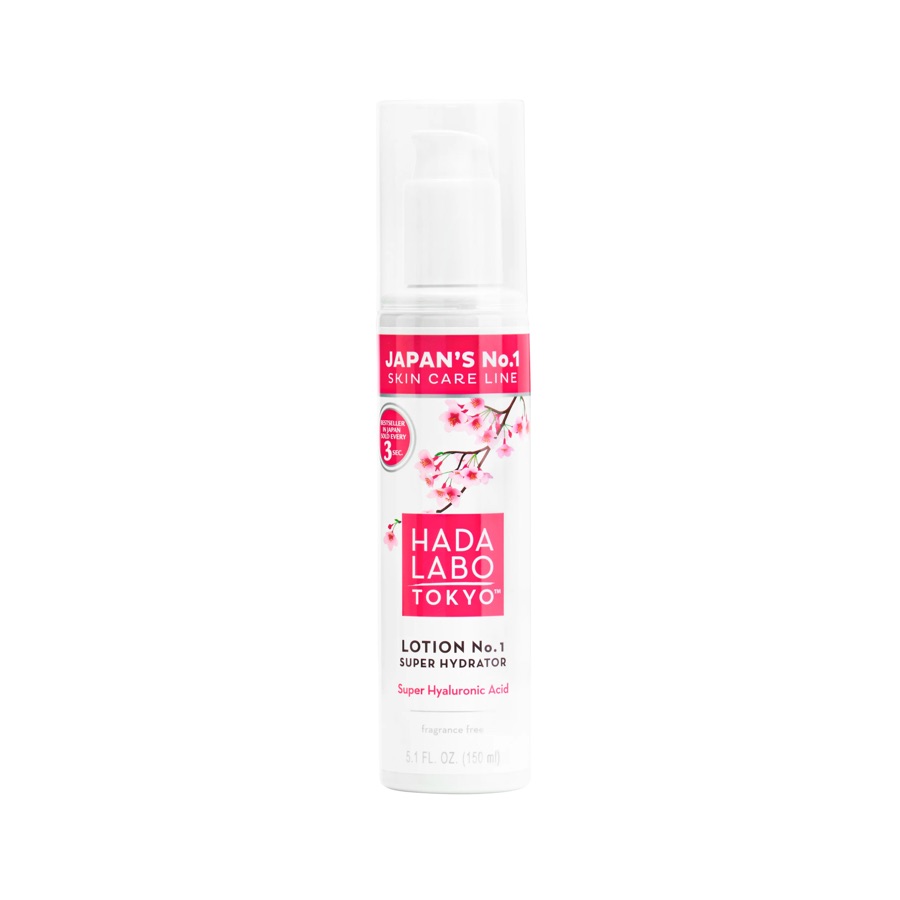
Hada Labo Tokyo Lotion No. 1 Super Hydrator
- Price$24.50
- Size150 ml (5.1 fl oz)
- Works out at$0.16 per ml
Hada Labo Tokyo US, 22 Nov 2026
Image: Hada Labo, from rohto.com
Americans who buy Hada Labo from Rohto's own brand get Hada Labo Tokyo, and its lotion is a different product. Lotion No. 1 Super Hydrator, which appeared on the brand's US shop on 8 October 2026, costs $24.50 for 150 ml (5.1 fl oz) in a pump bottle, about 16 cents a millilitre, and its ingredient panel lists 14 items: water, butylene glycol, pentylene glycol, dipropylene glycol, three hyaluronic acids, diglycerin, PPG-10 methyl glucose ether, hydroxyethylcellulose, sodium citrate, citric acid, disodium EDTA and phenoxyethanol. The brand calls it “a fast-absorbing, water-light toner lotion” and claims a 2.5-fold boost in skin hydration on application.
Two details on the listing suggest where the bottle comes from. Its ingredient panel is headed “GB” and calls water “Aqua”, the European convention, and its barcode begins 590, the prefix that the barcode body GS1 assigns to its Polish office, although GS1 notes that a prefix does not identify where a product was made. Hada Labo Tokyo's own history says only that Hada Labo was created in Japan by Rohto in 2004 and that Hada Labo Tokyo was the first Japanese skincare line to launch at US mass retailers.
In America, Rohto's official Hada Labo costs twice as much per millilitre as the imported Japanese bottle, with three hyaluronic acids instead of eight
Hada Labo Tokyo's Lotion No. 1 costs $24.50 for 150 ml, about 16 cents a millilitre, and lists 14 ingredients including three forms of hyaluronic acid. The Japanese Gokujyun Premium, which Rohto does not sell in the US, cost $13.99 for 170 g at Weee! on 22 November, about 8 cents a millilitre, and its Japanese label lists 33 ingredients including eight forms of hyaluronic acid, Sacran and hydroxyethyl urea. In Japan the same Premium bottle costs ¥1,100, about 4 cents a millilitre, so the official American Hada Labo costs four times as much per millilitre as the Japanese one does at home.
The American lotion is closer to Hada Labo's basic Japanese Gokujyun lotion, which has four hyaluronic acids, than to the Premium, and even that comparison flatters it by one. Anyone in the US who wants the Hada Labo that Japanese shoppers rate 4.4 out of 5 on Amazon Japan needs the gold Japanese bottle with 極潤 PREMIUM on the front, not the white pump bottle with cherry blossoms.
The story: an eye-drop maker's skincare
Rohto Pharmaceutical was founded in Osaka in 1899 as a small family drugstore, according to Hada Labo Tokyo's history page, and it bought The Mentholatum Company, the American firm behind Mentholatum ointment, in 1988. Hada Labo, whose name means “skin lab”, followed in 2004 under the slogan “Perfect and Simple”, and Rohto's brand page says the low price comes from semi-automated production methods it learned making eye drops and from bottles built to almost the same specifications in every country, with refill pouches since 2005 and partly plant-based bottles from 2019.
That pharmaceutical approach shows in the formula, which reads like a list of humectants compiled by a chemist rather than a story told by a marketer, and in the naming: the lotion's formal registered name in Japan is ハダラボスーパーモイスト化粧水c, “Hada Labo super moist lotion c”, the kind of version letter a drug label would carry.
What goes wrong with Hada Labo
The main problem for most readers is the one above: the bottle worth buying is not sold by Rohto in the US, its packaging is in Japanese, and the American Hada Labo is a thinner formula at four times the per-millilitre price. Importers fill the gap, but at about twice the Japanese price and with the usual question of how long a bottle has sat in a warehouse.
The formula itself is very plain, which is the point, but it means the Premium offers nothing beyond hydration: no soothing plant extracts, no niacinamide, no antioxidants. Its viscosity is also more than some oily skins want, and Rohto's own warnings, printed on its Japanese product page, tell buyers to stop using it and see a dermatologist if redness, swelling or itching appears.
Klairs Supple Preparation Facial Toner: Seoul's botanical toner
Supple Preparation Facial Toner
- Price₩19,900 (about $14.86)
- Size180 ml (6.08 fl oz)
- Works out at₩111 per ml
Klairs Korea, 22 Nov 2026. In the US $22.00 at Ulta (out of stock online that day) and $21.99 at Soko Glam.
Image: Dear, Klairs, from klairs.co.kr
What it costs in Seoul and in the US
Klairs's Korean shop sells the Supple Preparation Facial Toner for ₩19,900 for 180 ml, about $14.86 or 8 cents a millilitre, which makes it about twice the price per millilitre of the Hada Labo Premium at home. Klairs gives a shelf life of three years unopened and recommends finishing an opened bottle within 12 months.
In the US the picture is muddier. Ulta lists the original toner at $22.00 as an online-only product with 812 reviews averaging 4.8 out of 5, but it was out of stock online on 22 November; Soko Glam had it at $21.99. Klairs's own US shop, meanwhile, does not list the original at all and sells only the Unscented version, at a list price of $30.00 that was cut to $18.99 on the day we checked, with a 30 ml travel bottle at $6.99.
What's in it: plant extracts, amino acids and six essential oils
The Korean ingredient list has 39 items. After water and butylene glycol come dimethyl sulfone, a sulfur compound, then betaine, a humectant from sugar beet, and caprylic/capric triglyceride, a light emollient derived from coconut or palm oil; then a run of plant extracts, licorice root, centella, luffa, aloe, hollyhock flower and purslane, with glycerin, arginine, panthenol, beta-glucan and one hyaluronic acid, sodium hyaluronate. Polyquaternium-51, which Klairs's label calls by its trade name, Lipidure, is a moisture-holding polymer, and the list ends with amino acids (lysine, acetyl methionine, theanine and proline), natto gum, a fermentation-made polymer, and copper tripeptide-1.
Then come the six essential oils that define the original: lemon peel, lavender, orange peel, scented geranium flower, ylang-ylang flower and eucalyptus leaf. Klairs's label says the formula balances the skin's pH and helps it absorb the products that follow, and calls it vegan, and the Korean listing says it suits all skin types. Interestingly, polyquaternium-51 is also in the Hada Labo Premium, one of six ingredients the two bottles share, alongside water, butylene glycol, sodium hyaluronate, carbomer and disodium EDTA.
Klairs's Unscented toner is the original minus six oils, ingredient for ingredient, and it is the only version on Klairs's own US shop
Put the original's Korean list next to the English list on Klairs's US page for the Unscented and the two are the same 33 ingredients in the same order, from water and butylene glycol down to copper tripeptide-1; the original simply inserts six essential oils, lemon peel, lavender, orange peel, geranium, ylang-ylang and eucalyptus, between sodium phosphate and the copper peptide. So the choice between the two is a choice about scent and essential oils alone, not about hydration, texture claims or actives.
On its own US shop, Klairs lists only the Unscented, and its FAQ there warns that some older reviews mentioning essential oils “refer to the original scented Supple Preparation toner.” Klairs says each version has sold more than 5 million bottles. Since the formulas are otherwise identical, and the Unscented was $18.99 on Klairs's US shop on 22 November against about $22 for the original at Ulta and Soko Glam, we see little reason for an American to seek out the scented bottle unless the scent is the point.
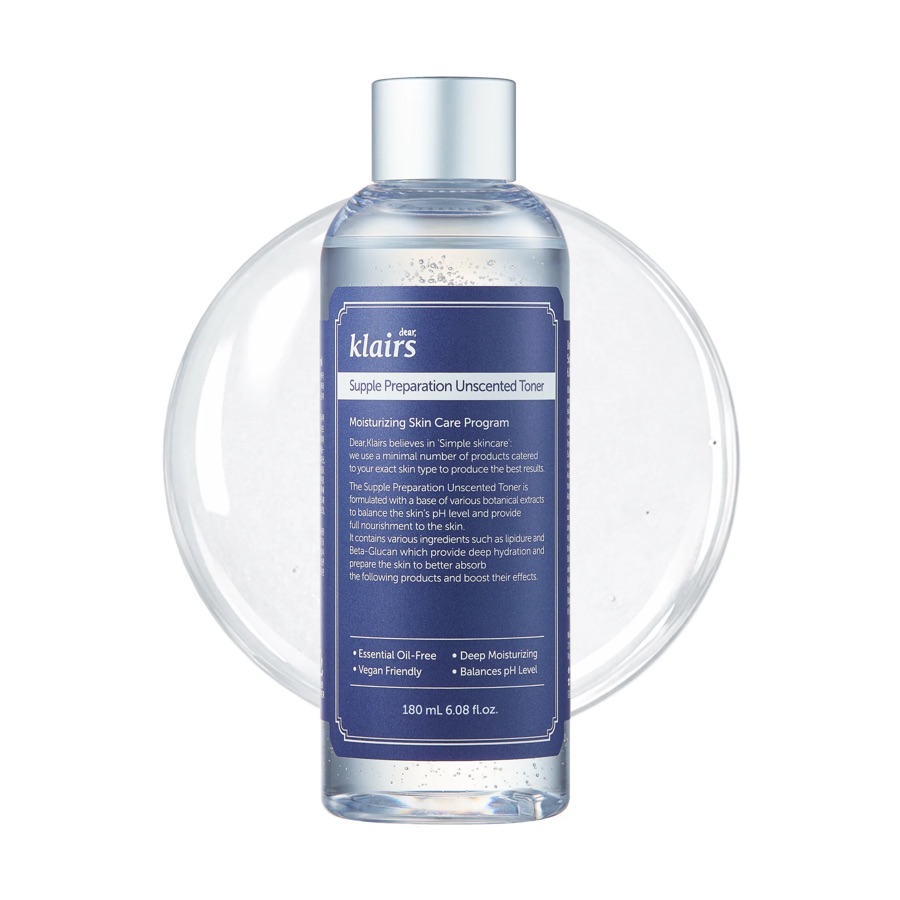
Supple Preparation Unscented Toner
- Price$30
- Size180 ml (6.08 fl oz)
- Works out at$0.17 per ml
Klairs US list price, 22 Nov 2026 (on sale for $18.99 that day). ₩19,900 in Korea.
Image: Dear, Klairs, from klairs.com
How it feels, and what Klairs promises
Klairs describes an elastic, fast-absorbing liquid that leaves “no residue and stickiness”, and its US page calls the Unscented “slightly thick and serum-like rather than a splash-on water”; its instructions are to pat the toner onto a dry face using the warmth of the palms, with repeat applications on dry areas. For the Unscented it also cites a study at the P&K Skin Research Center that it says found improved hydration through the top 20 layers of skin after one use, a cosmetic test of how skin looks and feels rather than a medical claim, as Klairs itself notes.
The scent of the original is mild by most accounts. “With this one its light and refreshing scent with a hint of lavender,” an Ulta reviewer who had used both versions wrote in September 2024, adding that it didn't leave their skin irritated and that they like to apply two layers. Renee Jacques, writing on Soko Glam's blog when the Unscented launched in June 2018, said the essential oils were the reason for the new version, since they can be “irritating to those who are allergic to fragrance or have sensitive skin”, and that those with dry skin and no allergies should stick with the original.
They both have a thick, viscous, serum-like consistency, which is probably my favorite thing about them.
An Ulta reviewer, on the scented and Unscented Supple Preparation toners, September 2024
What buyers say
The praise on Ulta is about texture and gentleness, and the most memorable line in the review Ulta features at the top of the page is a complaint about the whole category: “Most toner simply feel like overpriced water to me,” wrote its author, who says they stockpile this one in 180 ml, 30 ml and 3 ml bottles. The critical review Ulta features alongside it is mild, and useful: its author has sensitive skin and had no trouble with the essential oils, but found the toner “isn't as hydrating as I would like”, and suggested it would suit normal skin or anyone not looking to their toner for hydration.
That is the fairest one-line summary of the Klairs against the Hada Labo: on the brands' own descriptions and on reviewers' accounts, the Korean toner is the gentler, lighter, more pleasant step, and the Japanese lotion is the one that does more of the hydrating.
The story: “simple but enough”
Dear, Klairs was founded in 2010 under the motto “simple but enough” and is sold in Korea by Wishcompany; by 2020, according to Wishtrend's brand story, the Supple Preparation toner had sold more than a million bottles. The Unscented version followed for shoppers who wanted the formula without essential oils, and Klairs now says each version has sold more than 5 million bottles.
Much of its following is online and abroad: Klairs's US page counts more than 7,700 reviews and ratings for the Unscented alone across Amazon, iHerb and YesStyle, alongside 1,206 on its own site averaging 4.8 out of 5.
What goes wrong with Klairs
The essential oils are the obvious catch, and Klairs's own decisions to launch an unscented version and to sell only that one on its US shop say as much: six oils, including two citrus peel oils and lavender, are a lot to put in a product marketed to sensitive skin. Buy the Unscented unless you know the scent agrees with you.
The second catch is that the toner hydrates less than its texture suggests, as Ulta's featured critical review says; on paper, its single hyaluronic acid and handful of humectants are a much lighter load than the Hada Labo's eight hyaluronic acids and sugars. And in the US the original is patchily stocked, out of stock online at Ulta and missing from Klairs's own shop on the day we checked.
Lotion or toner: does the name change how you use it?
Not much. Both go on straight after cleansing and before any serum or cream, Klairs tells buyers to pat its toner in with the warmth of the palms, and both can be layered: Klairs recommends multiple applications on dry areas, and Lab Muffin describes the Korean habit, the “7-skin method”, of patting on a hydrating essence seven times in a row. With the Hada Labo, we would use two thin layers rather than one thick one, because the thick Premium liquid is easy to overdo.
Say your skin feels tight within an hour of washing it in winter. Two pats of the Hada Labo Premium followed by your usual cream put more humectants on your face than the Klairs does, while the Klairs is the one to reach for on a summer morning when your skin feels hot and you want something light under sunscreen.
Which suits oily, dry or sensitive skin?
For dry and dehydrated skin, the Hada Labo Premium is the better fit on what is in the bottle, with eight hyaluronic acids, diglycerin, sugars and hydroxyethyl urea all working to hold water, and Rohto sells it explicitly as a high-moisture lotion. For oily and combination skin, the Klairs is the more comfortable choice on the brands' descriptions and its reviewers' accounts, lighter and less tacky, although it does contain a light emollient, caprylic/capric triglyceride, fifth on its list.
For sensitive skin, the fragrance-free Hada Labo or the Klairs Unscented are the two to consider, and the original Klairs, with its six essential oils, is the one to avoid unless you already know it suits you. If you have eczema, rosacea or another skin condition, ask a dermatologist before adding a new step, since even gentle formulas can disagree with reactive skin.
Which is better value?
The Hada Labo Premium, wherever you can buy the Japanese bottle. At home it costs about 4 cents a millilitre against the Klairs's 8 cents, and in the US, at Weee!'s $13.99, it still costs about 8 cents a millilitre, less than the Klairs Unscented's sale price of 10.5 cents on Klairs's US shop and well under the 12 cents the original costs at Ulta and Soko Glam. The one Hada Labo that is poor value is the American Lotion No. 1, at 16 cents a millilitre for a much simpler formula.
Say you get through a bottle every six weeks: a year of the Japanese Premium bought in Japan costs about ¥9,500, roughly $60, while a year of the Klairs in Korea costs about ₩172,000, roughly $129, and a year of the original Klairs at Ulta about $191.
| Where and how much | Hada Labo Gokujyun Premium (Japan) | Klairs Supple Preparation Facial Toner |
|---|---|---|
| At home | ¥1,100 for 170 ml (about $6.93, 4 cents a ml) at Sundrug | ₩19,900 for 180 ml (about $14.86, 8 cents a ml) |
| In the US | $13.99 for 170 g at Weee! (about 8 cents a ml) | $22.00 at Ulta, $21.99 at Soko Glam (about 12 cents a ml) |
| The brand's own US version | Hada Labo Tokyo Lotion No. 1, $24.50 for 150 ml (16 cents a ml), a different formula | Unscented, $30.00 list, $18.99 on sale for 180 ml (10.5 cents a ml on sale) |
| A year at one bottle every six weeks | About ¥9,500, roughly $60 (Japan) | About ₩172,000, roughly $129 (Korea); about $191 at Ulta |
Prices checked 22 November 2026. Conversions at ECB rates of 20 November 2026 ($1 = ¥158.64 = ₩1,339.44); yearly figures are our arithmetic for about 8.7 bottles a year.
Our verdict
For hydration, we would buy the Hada Labo Gokujyun Premium, the Japanese bottle in gold, not the American Hada Labo Tokyo. It costs half as much per millilitre as the Klairs at home and less in the US even through an importer, it carries eight hyaluronic acids and a long list of other humectants, and it has no fragrance, essential oils or plant extracts to disagree with sensitive skin. Its drawbacks are a Japanese-only label, a thick texture that oily skin may not love and the need to find a reliable importer.
For a lighter, soothing step, we would buy the Klairs, and specifically the Unscented version, which has exactly the same formula minus the six essential oils and was the cheaper of the two in the US on 22 November. Keep the original for anyone who has used it happily for years and likes its faint lavender; for everyone else, the oils add risk without adding anything the label says the toner needs.
Questions people ask
Is Hada Labo lotion a toner?
Yes, in American terms: Japanese brands call the hydrating liquid used straight after cleansing a “lotion” (化粧水, keshōsui), which is the step Western and Korean brands call a toner. Hada Labo's Premium is a thick, high-moisture version of it.
What is the difference between Hada Labo Premium and regular Gokujyun lotion?
The Premium contains eight forms of hyaluronic acid against the regular lotion's four, plus Sacran and hydroxyethyl urea, and Rohto describes it as thicker, with serum-grade moisture. Both are fragrance-free and come in 170 ml bottles at an open price in Japan.
Is the Hada Labo sold in the US the same as in Japan?
No, Rohto's US brand, Hada Labo Tokyo, sells Lotion No. 1 Super Hydrator, a 14-ingredient formula with three hyaluronic acids, at $24.50 for 150 ml. The Japanese Gokujyun Premium, with 33 ingredients and eight hyaluronic acids, is sold in the US only by importers such as Weee!.
Does Klairs Supple Preparation toner have essential oils?
The original Facial Toner does: lemon peel, lavender, orange peel, scented geranium, ylang-ylang and eucalyptus oils. The Unscented version has the same other 33 ingredients and no essential oils or fragrance.
Which is better, Klairs scented or unscented?
The formulas are identical apart from six essential oils, so the Unscented is the safer choice for sensitive skin and, on 22 November 2026, was also cheaper in the US at $18.99 on Klairs's site. The original is only worth choosing if you like its lavender-and-citrus scent.
Is Hada Labo Premium lotion sticky?
It can feel tacky if you use too much, because Rohto describes it as a thick, syrupy lotion, so we would use two thin, patted-in layers followed by a moisturizer rather than one heavy pour. Hada Labo's basic Gokujyun lotion and its light version are thinner.
Can you use Hada Labo or Klairs for the 7-skin method?
Yes, both are designed to be layered: Klairs recommends multiple applications on dry areas, and the 7-skin method simply means patting on a hydrating toner or essence several times in a row. The thinner Klairs is easier to layer many times than the thick Hada Labo Premium.
How we put this together
We read each brand's own product pages and full ingredient lists, what buyers report in public reviews and forums, and the news coverage linked on this page. Prices are the brand's own list prices in the US on the date shown, unless the page names another shop. Nothing here is rated or scored, and no brand paid to appear.
Sources (20)
- Rohto Japan: 肌ラボ 極潤プレミアム ヒアルロン液, product page
- Rohto Japan: 極潤プレミアム ヒアルロン液 full ingredient list
- Rohto Japan: 肌ラボ 極潤ヒアルロン液 (basic Gokujyun lotion)
- Rohto Japan: Hada Labo brand concept
- Sundrug online: 極潤プレミアム ヒアルロン液 170 ml
- Maquia: 極潤プレミアムヒアルロン液 product listing
- Amazon Japan: 肌ラボ 極潤プレミアム ヒアルロン液 170 ml
- Weee!: Rohto Hadalabo Gokujyun Premium Hyaluronic Lotion
- Hada Labo Tokyo US: Lotion No. 1 Super Hydrator
- Hada Labo Tokyo US: About
- GS1: Company prefixes
- Klairs Korea: 서플 프레퍼레이션 페이셜 토너 180ml, price and ingredient list
- Klairs US: Supple Preparation Unscented Toner
- Ulta: Klairs Supple Preparation Facial Toner, price and reviews
- Soko Glam: Klairs Supple Preparation Facial Toner
- Soko Glam, The Klog: the unscented Klairs toner, June 2018
- Wishtrend: Learn the brand, Dear, Klairs, April 2020
- NBC Select: The best Japanese skin care products, April 2026
- Lab Muffin: How essences boost your skincare routine, May 2020
- European Central Bank reference rates via Frankfurter, 20 November 2026