Buy Protini if you want a fragrance-free, silicone-free gel-cream built around nine peptides, five of them lab-made copies of human proteins, and the cheapest millilitre on this page, 99 cents in its 100 ml jar; buy The Water Cream if your skin is oily or combination and you want an oil-free, quick-sinking gel that Tatcha aims at shine and pores, and you are comfortable with a formula that lists perfume, alcohol and three fragrance components.
- You want a fragrance-free moisturizer, which Drunk Elephant says is also free of essential oils, silicones, dyes and solvent alcohols.
- Firmness and fine lines are your main concern, since Drunk Elephant pitches its nine peptides and ten amino acids at “visibly firmer skin” and cites a 31-person, eight-week study.
- You will use a lot of it, because the 100 ml jar costs $99, or 99 cents a millilitre, a fifth less per millilitre than Water Cream's biggest jar.
- Your skin is normal, combination or on the drier side of oily, and you want a light gel-cream that does not feel thin, which is how NewBeauty's reviewer described it in January 2026.
- Your skin is oily or combination and shine is the problem, which is what Tatcha recommends it for and what its clinical claims are about.
- You want an oil-free formula with a light, water-gel feel, which a reviewer on Tatcha's own page says “absorbs immediately”.
- You like the Japanese ingredients Tatcha builds its brand on, fermented Akita rice, Uji green tea and Okinawa algae, plus Japanese wild rose and leopard lily.
- You do not mind fragrance, since the formula lists perfume, alcohol, limonene, linalool and citral.
The one difference that matters: Protini is a fragrance-free peptide cream with marula oil and no silicones, sold on firmness, whereas Water Cream is an oil-free, silicone-based gel with perfume and Japanese plant extracts, sold on pores and shine, so at almost the same price they are aimed at different skin and different problems.
Tatcha says Water Cream is made without synthetic fragrances, yet its ingredient list names parfum, limonene, linalool and citral, so anyone who avoids fragrance should read both ingredient lists before buying.
| | |
|---|---|---|
| Price and size | $72 for 50 ml at Drunk Elephant US | $74 for 50 ml at Tatcha US |
| Price per ml, standard jar | $1.44 | $1.48 |
| Biggest jar | 100 ml for $99 ($0.99 a ml) | 75 ml for $93 ($1.24 a ml) |
| Refill and mini | Refill 50 ml $63; 15 ml $24 | Refill 50 ml $68; 15 ml $25 |
| Key ingredients the brand names | Nine “signal peptides”, pygmy waterlily, soybean folic acid ferment | Hadasei-3 (rice, green tea, algae), Japanese coix seed, wild rose, heartleaf |
| Peptides | Nine, plus ten amino acids | None listed |
| Fragrance | Fragrance-free | Contains parfum, alcohol, limonene, linalool, citral |
| Oils and silicones | Marula oil; no silicones | Oil-free; silicone base (dimethicone third) |
| Texture, as the brand puts it | Lightweight gel-cream | Water-burst gel-cream |
| Skin type the brand names | None named; pitched at loss of firmness | Combination to oily |
| Review rating printed by a shop | 4.5 from 4,322 reviews at Ulta | 4.67 from 5,478 reviews at Tatcha US |
| Brand from, and owner | Houston, 2012; Shiseido since 2019 ($845 million) | San Francisco, 2009; Unilever since 2019 (reportedly about $500 million) |
Prices from each brand's US website on 22 November 2026, at full price; Drunk Elephant had its 100 ml jar at $89.10 and Tatcha offered 25% off sitewide with a code that day. Ratings as printed on each shop's page that day. Prices per ml are our arithmetic.
Two jars at the same price, bought by two giants in the same year
Protini and The Water Cream are two of the best-known moisturizers of the Sephora era, and in 2018 they cost exactly the same, $68 for 50 ml, which is why they are compared so often by shoppers who want one good jar and a reason to pay $70 for it. Their histories rhyme as well: both were built by women founders, Vicky Tsai in San Francisco in 2009 and Tiffany Masterson in Texas in 2012, and both were sold to global groups within four months of each other in 2019, Tatcha to Unilever in June and Drunk Elephant to Shiseido in October, for a reported $500 million and $845 million.
The twist is that the owners point the other way from the branding. The Japanese-inspired Tatcha, which runs its laboratory in Tokyo and talks about Kyoto rituals, belongs to the British consumer-goods group Unilever, while the Houston brand with an elephant on the jar belongs to Shiseido of Tokyo, which has spent the last two years trying to rescue it from a slump. What follows is a look at what is actually in each jar, ingredient by ingredient, because the marketing language on both, “signal peptides”, “stem cells”, “Japanese superfoods”, tells you less than the labels do.
Drunk Elephant Protini: nine peptides and no fragrance
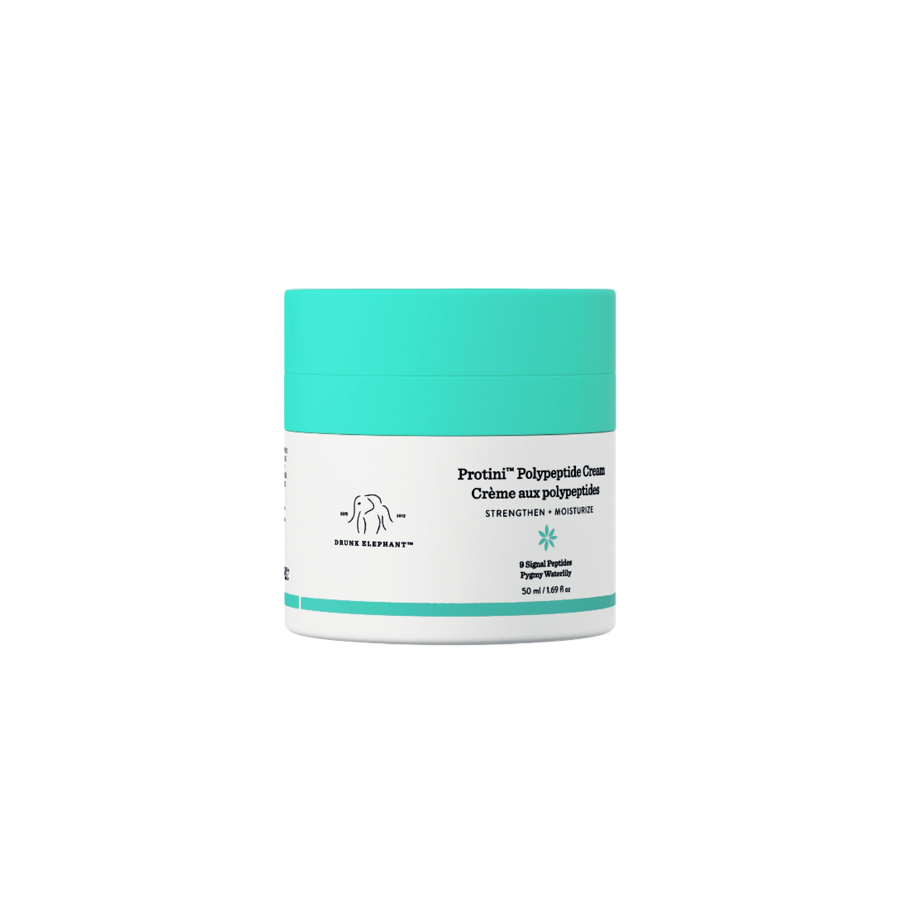
Protini Polypeptide Cream
- Price$72
- Size50 ml (1.69 fl oz)
- Works out at$1.44 per ml
Drunk Elephant US, 22 Nov 2026
See it on drunkelephant.com Drunk Elephant Protini →
Image: Drunk Elephant, from drunkelephant.com
What it costs, size by size
Protini Polypeptide Cream, which Drunk Elephant now calls the Protini Polypeptide Firming Refillable Moisturizer, costs $72 for the standard 50 ml jar, or $1.44 a millilitre, on Drunk Elephant's US site. The same page sells a 15 ml travel jar for $24 ($1.60 a millilitre), a 50 ml refill pod for $63 ($1.26) and a 100 ml “Big” jar for $99, which works out at 99 cents a millilitre and was down to $89.10 on 22 November.
The big jar is the only size worth buying if you already know you like it, because it costs 31% less per millilitre than the standard jar and less than the refill pod, which saves only $9 on the standard jar, and no refill is made for the big size. The price has barely moved in eight years: archived copies of Drunk Elephant's page show $68 for 50 ml in January 2018, April 2020 and February 2024, so the current $72 is a rise of under 6%.
The nine peptides, one by one
Drunk Elephant's page lists 58 ingredients, beginning with water, dicaprylyl carbonate (a light emollient), glycerin, cetearyl alcohol and two olive-derived emulsifiers, then marula oil (Sclerocarya birrea), a folic acid ferment and a water lily root extract, and only then the nine peptides that give the cream its name. The first five carry the prefix “sh”, which Altmeyer's dermatology encyclopedia defines as “synthetic and human”: they are lab-made copies of human proteins. Altmeyer's identifies the first, sh-oligopeptide-1, as a copy of human epidermal growth factor (EGF), and supplier sheets from the distributor Brenntag list sh-polypeptide-1 as a copy of basic fibroblast growth factor and sh-oligopeptide-2 as a mimic of insulin-like growth factor 1; we could not find a source we trust for what sh-polypeptide-9 and sh-polypeptide-11 copy.
The other four are the more familiar small peptides of anti-aging creams: copper palmitoyl heptapeptide-14, heptapeptide-15 palmitate, and the pair palmitoyl tetrapeptide-7 and palmitoyl tripeptide-1, which together are the blend sold as Matrixyl 3000, according to Clarins' ingredient library. Ten amino acids follow, alanine, arginine, glycine, histidine, isoleucine, phenylalanine, proline, serine, threonine and valine, with acetyl glutamine and aspartic acid further down, and then the moisturizing and texture ingredients: sodium hyaluronate, sodium PCA, sodium lactate, plant lipids and gel thickeners.
Drunk Elephant is open about the first group, if not about the details: Tiffany Masterson's note on the page says Protini is “jam-packed with crazy levels of amino acids, signal peptides, and safe, synthetic growth factors (the good kind)”, while the page's FAQ says that “Protini contains plant-derived peptides”, which can both be true, since Altmeyer's notes that such ingredients are made by engineered bacteria or plants, but the brand does not say which. The brand never gives percentages, and peptides are sold on what they do in laboratory and small clinical studies, so we would buy Protini for how it feels and what it leaves out rather than for a promise about collagen.
How it feels, by Drunk Elephant's account and its reviewers'
Drunk Elephant calls Protini a “lightweight gel-cream” for use morning and night, formulated at a pH of 4.0 and “100% free of essential oils, silicones, fragrance/dyes, and solvent alcohols”, and says it can be mixed with its vitamin C serum and its retinol treatments. Its clinical claims come from one study of 31 people over eight weeks, in which 96% showed improvement in tone, radiance and luminosity, 93% in texture and 90% in hydration.
Reviewers have described much the same cream for eight years: Refinery29's Rachel Krause found “a surprisingly lightweight, almost gel-like texture” in January 2018, and NewBeauty's Britt Fallon wrote in January 2026 that her skin “still feels hydrated and comfortable at the end of the day”. Shoppers broadly agree, judging by the 4.5 stars from 4,322 reviews printed on Ulta's listing on 22 November; Drunk Elephant's own page prints no figure.
it feels more moisturizing than most other gel-creams I've tried.
Britt Fallon, NewBeauty, January 2026
The story: from Houston to Shiseido's problem child
Tiffany Masterson founded Drunk Elephant in 2012 and its first products went on sale in August 2013, according to Adweek, and Protini was on the brand's own site at $68 by January 2018. Shiseido agreed to buy the brand in October 2019 for $845 million, when, by an estimate Fox Business attributed to the Business of Fashion, it had earned more than $150 million in 2018 from about 20 products.
The last two years have been hard. Drunk Elephant's sales fell 25% in 2024, which Shiseido first blamed on production and shipping problems, and then 57% in the first half of 2025, according to Cosmetics Business, which has tied the slide to the “Sephora Kids” episode of January 2024, after which, it says, millennial and older shoppers came to see Drunk Elephant as a brand for tweens. In January 2026 the brand wiped its Instagram feed and launched a “Please Enjoy Responsibly” campaign aimed at adults, Cosmetics Business reported, but sales fell another 14% in the second quarter of 2026 and 23% in the third, and Shiseido's finance chief, Ayako Hirofuji, told investors in November that the brand had “recorded some severe underperformance”, according to the same publication.
What goes wrong with Protini
The jar is the part to think about. Protini has come in a pump jar since launch, which keeps fingers out of the cream, and since March 2023, the Daily Beast reported, Drunk Elephant has also sold a refill pod for it, $60 then and $63 now, which saves $9 on a new jar but costs more per millilitre than the big jar, for which no pod is made. As with any new moisturizer, the $24 travel jar is the sensible way to find out whether your skin likes it before paying $72.
It is also not the cream for very dry skin or for anyone who wants sun protection, since it has no SPF and Drunk Elephant itself points dry skin to its ceramide cream, Lala Retro. We go into the jar, the refill and the formula in more depth in our full review of Protini.
Tatcha The Water Cream: Japanese ferments in an oil-free gel
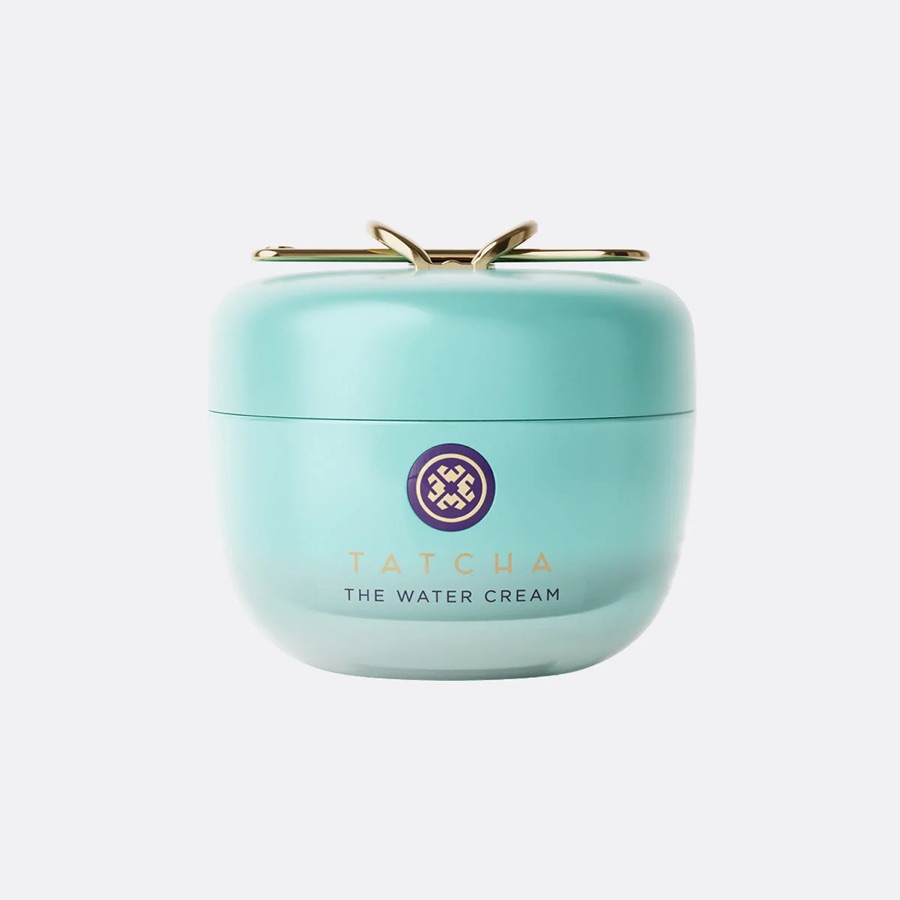
The Water Cream
- Price$74
- Size50 ml (1.7 fl oz)
- Works out at$1.48 per ml
Tatcha US, 22 Nov 2026 (full price; Tatcha also offered 25% off sitewide with a code that day)
Image: Tatcha, from tatcha.com
What it costs, size by size
The Water Cream costs $74 for the standard 50 ml jar on Tatcha's US site, or $1.48 a millilitre, 4 cents more than Protini. Tatcha also sells a 15 ml mini for $25 ($1.67 a millilitre), a 50 ml refill pod for $68 ($1.36) and a 75 ml jar, which it calls the Gratitude size, for $93, or $1.24 a millilitre, and on 22 November its Black Friday code took 25% off everything.
The refill saves only $6, or 8%, on the jar price, and Tatcha's own answer on its product page is that the pods “are designed to fit only the full-size 1.7 oz version”, not the 75 ml jar, so the bigger jar and the refill cannot be combined. The price has risen faster than Protini's: archived copies of Tatcha's page show $68 for 50 ml in May 2018 and January 2021 and $72 in January 2024, so today's $74 is about 9% above the 2018 price.
The Japanese ingredients, one by one
Tatcha's page lists 35 ingredients, and its Japanese identity rests on about seven of them. The second ingredient, saccharomyces/rice ferment filtrate, together with green tea leaf extract (Camellia sinensis) eighth and an Okinawan seaweed extract (Cladosiphon okamuranus) ninth, makes up Hadasei-3, which Tatcha describes as “double-fermented Akita rice, Uji green tea, and Okinawa algae”, developed by its founding chief scientist, Masato Tagawa, at the Tatcha Institute in Tokyo. In 2018 the three appeared on the label as a single co-ferment; since at least January 2024 they have been listed separately.
After gold, which Tatcha's 2018 page described as “a touch of 23-karat gold” for a shine-free glow, come four plant extracts: leopard lily root (Belamcanda chinensis), which Tatcha once marketed as Japanese Leopard Lily to “control excess oil”, Japanese wild rose fruit (Rosa multiflora), heartleaf (Houttuynia cordata), which Tatcha's 2024 page called an “azelaic acid alternative”, and sophora root (Sophora angustifolia). One botanical is not Japanese at all: the mastic gum from Pistacia lentiscus, a Mediterranean tree. Everything else is a modern gel-cream base, water, dimethicone third, propanediol, glycerin and diglycerin (Tatcha's “multi-weight glycerin”), two more silicones, sodium hyaluronate and silicone crosspolymers that give the gel its bounce.
Then there is the fragrance. The list ends with parfum, alcohol, phenoxyethanol, limonene, linalool and citral, and titanium dioxide, even though the same page says the cream is “formulated without” synthetic fragrances among other things, a distinction Tatcha does not explain. For anyone who avoids fragrance on the face, it does not matter.
How it feels, by Tatcha's account and its reviewers'
Tatcha has always sold the texture as the point: its 2018 page described a “unique water-burst cream” that “breaks upon application”, and today it recommends the cream for combination to oily skin, calls it oil-free and non-comedogenic, and claims, from panels of 27 to 36 people, three times the skin's hydration instantly, hydration for 72 hours, a reduction in oil in all of one panel after a week and improvement in “clogged and enlarged pores” in 97% of another. Reviewers largely agree on the feel: “The Water Cream provides the perfect light-weight moisture without feeling heavy or clogging pores,” wrote one with combination skin on Tatcha's page, and Refinery29's Karina Hoshikawa, whose skin is very oily, likened the texture in June 2019 to what she imagined “if a cloud could be packaged into a jar of face cream”.
The page printed a rating of 4.67 out of 5 from 5,478 reviews on 22 November, and the complaints in the reviews it shows mirror the praise: a longtime user of Tatcha's richer Dewy Skin Cream wrote in a three-star review that “it’s just not moisturizing enough for my mature skin,” and Who What Wear UK's Grace Lindsay, a fan with combination skin, drew the same line in July 2024: “If you have really dry skin, then a richer cream might be better.”
It does have a subtle, fresh floral fragrance, but nothing that irritated my skin.
Karina Hoshikawa, Refinery29, June 2019
A caution about the reviews on Tatcha's page
Read the review box on Tatcha's page with care. Of the ten reviews it printed on 22 November, three, all of them five-star, say the jar was “gifted by Tatcha”, and the AI-generated summary printed above them does not mention gifts at all; it does list scent among the five things customers praise, saying they “appreciate its amazing scent”, which sits oddly beside Tatcha's line that the cream is formulated without synthetic fragrances.
A one-star review there complains that “The size of the last 3 containers I have received of this product have decreased each time”, but Tatcha still sells the full size as the 50 ml, 1.7-ounce jar of its January 2024 page, with the same 35 ingredients word for word, so whatever that buyer noticed is not on the label.
The story: a San Francisco brand with a Tokyo lab and a London owner
Vicky Tsai founded Tatcha in San Francisco in 2009, according to a Coresight Research note on the Unilever deal, after what Tatcha's own story describes as a breakneck career that took a toll on her skin before she travelled to Kyoto, and the brand says its Tatcha Institute was founded in Tokyo in 2010. “I started traveling years ago because I was lost,” Tsai is quoted as saying on the page, which adds that a Zen monk, Toryo Ito, now the brand's director of mindfulness, introduced her to the idea that skin and mind share a root.
Unilever agreed to buy Tatcha in June 2019 for a reported price of almost $500 million, its biggest purchase since Dollar Shave Club, Coresight noted, when the brand was reportedly on course for $100 million of net sales that year. So Tatcha is best described as an American brand that formulates in Japan around Japanese ingredients and sells itself through Japanese ritual, owned by a British company, and its own footer says its products are made with “high-quality ingredients from Japan”, which is not the same as made in Japan.
What goes wrong with The Water Cream
Fragrance and lightness are the two drawbacks its reviewers keep returning to. The first rules it out for anyone who reacts to scented skincare, as even Refinery29's admiring reviewer allowed when she added that sensitive skin types “might react differently”, and the second means that dry or mature skin often needs something richer, which is why the three-star reviewer above went back to Dewy Skin Cream. As with Protini, the $25 mini is the sensible first purchase.
The jar is a smaller issue than Protini's, but it is still a jar you dip into with a gold spoon rather than a pump, and the refill pods do not fit the 75 ml size. The bigger issue is value: at full price, every size of Water Cream costs more per millilitre than the equivalent Protini.
Read the labels and neither jar quite matches its own marketing
Tatcha's page features “Japanese coix seed” as the first of its key ingredients, but coix (Coix lacryma-jobi) appears nowhere in the 35-ingredient list on the same page, nor in the list the Australian retailer Mecca prints, and that list has not changed since January 2024; we could not tell from either where the coix is. Drunk Elephant's key ingredients include a “pygmy waterlily stem cell extract”, but the ingredient its list actually names is Nymphaea alba root extract, which the European ingredient database COSMILE describes as a solvent extract of the roots of the white water lily, while the pygmy water lily is a different species, Nymphaea tetragona, according to the US Fish and Wildlife Service. The only cell-culture ingredient in Protini is the last one, a callus culture of comfrey.
Even the soybean has gone missing. Drunk Elephant still lists “soybean folic acid ferment extract” among Protini's key ingredients, and in January 2018 and April 2020 its ingredient list said “Bacillus/Soybean/Folic Acid Ferment Extract”, but by February 2024 the list read “Bacillus/Folic Acid Ferment Extract”, with no soybean. None of this means either cream is worse than its fans think, but it does mean the ingredient list, not the key-ingredient panel, is the thing to read.
Which suits oily, dry or sensitive skin?
For oily skin, The Water Cream is the safer first choice on the brands' own descriptions, because Tatcha designed it as an oil-free gel for combination to oily skin and its clinical claims are about oil, pores, smoothness and hydration, whereas Protini contains marula oil seventh on its list and is pitched at firmness rather than at a skin type. Protini is still a light gel-cream, though, which Refinery29 called “surprisingly lightweight” when it launched, so for oily skin the real dividing line may be fragrance rather than oil.
For dry skin, neither is the obvious pick, and Drunk Elephant's own comparison chart on the Protini page sends dryness to its ceramide cream, Lala Retro, while the longtime Tatcha buyer quoted above went back to its Dewy Skin Cream; of the two here, Protini, with its marula oil and fatty alcohols, is the more comforting. For sensitive skin, Protini's lack of fragrance, essential oils and solvent alcohols makes it the easier choice, and anyone with rosacea, eczema or active acne should ask a dermatologist before starting either. Say your nose shines by noon but your cheeks feel tight by evening: Protini twice a day is the simpler routine, while Water Cream on the T-zone and something richer on the cheeks is the more targeted one.
Which does more for lines and firmness?
On the brands' own claims, Protini is the one aimed at firmness: Drunk Elephant says it “visibly firms skin and supports healthy collagen production”, and its 31-person study reports improvements in tone, texture and hydration after eight weeks. Water Cream's claims are about hydration, oil and pores, and the anti-aging claim Tatcha makes for Hadasei-3, that it reduces fine lines and improves firmness “as effectively as retinol”, rests on what its page calls in vitro testing on collagen and elastin biomarkers, which means tests on cells in a dish, not on faces.
Neither brand publishes the size of its peptide or ferment doses, and no independent head-to-head study of the two exists that we could find, so we would treat both sets of numbers as marketing and choose on texture, fragrance and price.
Which is better value?
Protini is cheaper per millilitre at every size, and the gap widens with the jar. Say a 50 ml jar lasts you two months of morning and evening use: a year of Protini bought as six standard jars costs $432, or $297 as three 100 ml jars, while a year of Water Cream costs $444 as six standard jars or $372 as four 75 ml jars, so the cheapest way to buy Protini saves $75 a year over the cheapest way to buy Water Cream.
| Size and price | Drunk Elephant Protini | Tatcha The Water Cream |
|---|---|---|
| Mini | 15 ml for $24 ($1.60 a ml) | 15 ml for $25 ($1.67 a ml) |
| Standard jar | 50 ml for $72 ($1.44 a ml) | 50 ml for $74 ($1.48 a ml) |
| Refill pod | 50 ml for $63 ($1.26 a ml) | 50 ml for $68 ($1.36 a ml) |
| Biggest jar | 100 ml for $99 ($0.99 a ml) | 75 ml for $93 ($1.24 a ml) |
| Price of the 50 ml jar in 2018 | $68 (January 2018) | $68 (May 2018) |
Each brand's US website on 22 November 2026, and archived copies of the same pages. Prices per ml are our arithmetic.
Both jars cost $68 in 2018, and the refills are the worst deal on each shelf
In 2018 a 50 ml jar of either cream cost exactly $68, and archived pages show Protini still at $68 in April 2020 and Water Cream still at $68 in January 2021. Since then Tatcha has raised its jar to $74, up 9%, and Drunk Elephant to $72, up 6%, but the more interesting gap is in the big sizes: Protini's 100 ml jar, at 99 cents a millilitre, is 20% cheaper per millilitre than Water Cream's 75 ml jar and 21% cheaper than Protini's own refill pod.
That makes both refill programs harder to love than they look. Drunk Elephant's pod saves 12.5% on the standard jar but costs 27% more per millilitre than its big jar, and Tatcha's pod saves only 8% and fits only the 50 ml jar. If refilling matters to you for environmental reasons, refill; if price matters, buy Protini's big jar.
Using them together, and the alternatives
There is no reason not to use both, Protini at night and Water Cream in the morning on oily days, but at $146 for the two standard jars most people should pick one. Drunk Elephant says Protini can be mixed with its vitamin C serum and used with its retinol treatments, and both creams are light enough to wear under sunscreen, which neither contains.
For dry skin, Drunk Elephant's own Lala Retro, $68 for 50 ml, swaps peptides for three ceramides, cholesterol and what the brand calls five African oils, and for a cheaper peptide cream, Olay's fragrance-free Regenerist Micro-Sculpting Cream, $36.65 for 1.7 ounces, lists niacinamide, panthenol and three peptides, palmitoyl dipeptide-7, palmitoyl pentapeptide-4 and tripeptide-3, at about half Protini's price.
Our verdict
For most people choosing between these two jars, we would buy Protini, in the 100 ml size once you know you like it, because it is fragrance-free, silicone-free and cheaper per millilitre at every size, its ingredient list has stayed essentially the same since 2018, and its nine peptides, whatever they do on your face, are at least real and named on the label. We would skip the refill pod, which costs 27% more per millilitre than the big jar, at least until Drunk Elephant makes one for the big size.
We would buy The Water Cream instead if your skin is properly oily, you want the lightest possible gel under makeup and fragrance does not bother you, because that is the job Tatcha designed it for and the one its reviewers praise it for. Start with the $25 mini, read the gifted five-star reviews on Tatcha's page for what they are, and remember that the Japanese story on the jar is carried by about seven ingredients in a silicone gel made by an American brand owned by a British one.
Questions people ask
Which is better, Drunk Elephant Protini or Tatcha The Water Cream?
Protini is the better all-round choice for most skin, because it is fragrance-free and cheaper per millilitre ($1.44 against $1.48 in the 50 ml jar, and 99 cents in its 100 ml jar). The Water Cream is better for oily or combination skin that wants an oil-free gel, if fragrance is not a problem.
Is Tatcha The Water Cream fragrance-free?
No, its ingredient list names parfum, alcohol, limonene, linalool and citral, although Tatcha says it is formulated without synthetic fragrances. Drunk Elephant's Protini is sold as fragrance-free.
What peptides are in Drunk Elephant Protini?
Protini lists nine: sh-oligopeptide-1, sh-oligopeptide-2, sh-polypeptide-1, sh-polypeptide-9 and sh-polypeptide-11, which are lab-made copies of human proteins, among them epidermal growth factor, plus copper palmitoyl heptapeptide-14, heptapeptide-15 palmitate, palmitoyl tetrapeptide-7 and palmitoyl tripeptide-1. It also lists ten amino acids.
Is Protini or Water Cream better for oily skin?
The Water Cream is designed for combination to oily skin and is oil-free, so it is the safer first choice for very oily skin. Protini contains marula oil and is sold on firmness rather than for a skin type, so very oily skin should try its 15 ml jar first.
Is Tatcha a Japanese brand?
No, Tatcha was founded in San Francisco in 2009 by Vicky Tsai and has been owned by Unilever since 2019. It formulates at its Tatcha Institute in Tokyo and builds its products around Japanese ingredients such as fermented Akita rice, Uji green tea and Okinawa algae.
Who owns Drunk Elephant?
Shiseido, the Japanese cosmetics group, which agreed to buy Drunk Elephant for $845 million in October 2019. The brand was founded in 2012 by Tiffany Masterson.
Can you use Protini with retinol or vitamin C?
Yes, according to Drunk Elephant, which says Protini can be used or mixed with its retinol treatments and its C-Firma vitamin C serum. Anyone new to retinol should still introduce it slowly.
How we put this together
We read each brand's own product pages and full ingredient lists, what buyers report in public reviews and forums, and the news coverage linked on this page. Prices are the brand's own list prices in the US on the date shown, unless the page names another shop. Nothing here is rated or scored, and no brand paid to appear.
Sources (32)
- Drunk Elephant US: Protini Polypeptide Firming Refillable Moisturizer (prices, ingredients, claims, FAQ)
- Drunk Elephant Protini page, archived January 2018
- Drunk Elephant Protini page, archived April 2020
- Drunk Elephant Protini page, archived February 2024
- Drunk Elephant US: Lala Retro Nourishing Whipped Refillable Moisturizer
- Tatcha US: The Water Cream (prices, ingredients, claims, printed rating and reviews, Q&A)
- Tatcha Water Cream page, archived May 2018
- Tatcha Water Cream page, archived January 2021
- Tatcha Water Cream page, archived January 2024
- Tatcha: Hadasei-3, our proprietary complex
- Tatcha: Our story
- Tatcha: Founding team
- Mecca: Tatcha The Water Cream 50ml (ingredient list)
- Altmeyer's Encyclopedia: sh-Oligopeptide-1
- Brenntag: CG-bFGF (sh-Polypeptide-1)
- Brenntag: CG-IGF (sh-Oligopeptide-2)
- Clarins ingredient library: Matrixyl 3000
- COSMILE Europe: Nymphaea Alba Root Extract
- US Fish and Wildlife Service: pygmy water-lily (Nymphaea tetragona)
- Adweek: Shiseido acquires Drunk Elephant for $845 million
- Fox Business: Shiseido inks $845M deal for Drunk Elephant (October 2019)
- Cosmetics Business: Drunk Elephant continues to drag down Shiseido (August 2025)
- Cosmetics Business: Drunk Elephant shrugs off 'Sephora Kids' era (January 2026)
- Cosmetics Business: Shiseido returns to profit in Q3 (November 2026)
- Coresight Research: Unilever to acquire Tatcha for a reported $500 million (June 2019)
- Olay US: Regenerist Micro-Sculpting Cream Fragrance Free
- Ulta Beauty: Drunk Elephant Protini Polypeptide Firming Moisturizer (printed rating and review count)
- The Daily Beast: Drunk Elephant's two best-selling creams are coming in refillable pods (February 2023)
- Refinery29: Rachel Krause on Drunk Elephant's Protini Polypeptide Cream (January 2018)
- NewBeauty: Britt Fallon's Protini Polypeptide Moisturizer review (January 2026)
- Refinery29: Karina Hoshikawa on Tatcha's The Water Cream (June 2019)
- Who What Wear UK: Grace Lindsay's Tatcha The Water Cream review (July 2024)