Buy Cicaplast Balm B5+ if you want the cheaper, lighter, silicone-based balm with 5% panthenol that spreads thinly enough for a face, at 33 cents a millilitre in its 100 ml tube; buy Cicalfate+ if you want a thicker, silicone-free layer of mineral oil, waxes, zinc oxide and copper and zinc sulfates for chapped hands, cracked lip corners and dry patches on the body, and can accept paying about a fifth more per millilitre at full price.
- You want a balm for your face, since La Roche-Posay builds it on dimethicone and a light synthetic oil that spread thinly, and pitches it at combination skin with dry or irritated patches.
- You want the lower price, which is $32.99 for 100 ml at La Roche-Posay, Target and Ulta against $40 for Avène's tube of the same size at full price.
- You like panthenol and centella, because the US tube lists 5% panthenol, madecassoside and centella asiatica leaf extract, and Cicalfate+ contains none of the three.
- You avoid mineral oil and beeswax, neither of which appears in Cicaplast's list and both of which appear in Avène's.
- You avoid silicones, which Avène leaves out entirely, whereas Cicaplast's US label names dimethicone as its active ingredient.
- You want a heavier protective layer for chapped hands, elbows or the skin around a sore nose, built on mineral oil, hydrogenated vegetable oil, beeswax and microcrystalline wax.
- You want copper in the formula, since Cicalfate+ still lists copper sulfate beside zinc sulfate, while La Roche-Posay removed copper gluconate when it rewrote Cicaplast as B5+.
- You can catch a sale, as on 22 November, when Ulta's 30% Black Friday discount brought the 100 ml tube to $28, below Cicaplast's $32.99.
The one difference that matters: Cicaplast is a silicone balm built around 5% panthenol and madecassoside from centella asiatica, sold in America as an over-the-counter skin protectant, whereas Cicalfate+ is a silicone-free cream of mineral oil, waxes and zinc oxide built around copper and zinc sulfates and a postbiotic from Avène's spring water, and the two lists share only glycerin and magnesium sulfate besides water.
Avène says Cicalfate+ can separate into watery and oily layers in extreme weather, so read what buyers report before ordering a tube in a heatwave or a freeze.
| | |
|---|---|---|
| Price, 100 ml tube | $32.99 (La Roche-Posay US, Target, Ulta) | $40 (Avène US; Ulta's regular price) |
| Price per ml, 100 ml | 33 cents | 40 cents |
| Small tube | 40 ml for $18.99 (47 cents a ml) | 40 ml for $26 (65 cents a ml) |
| Sale price on 22 Nov 2026 | 40 ml for $13.69 at Target | 100 ml for $28 at Ulta (30% off) |
| How it is sold in the US | Over-the-counter skin protectant: dimethicone 1% listed as the active ingredient | Cosmetic cream: no active ingredient listed |
| Ingredients | 34 in the US, 33 in Britain | 19, the same list in the US, Britain and France |
| Key ingredients | 5% panthenol, madecassoside, centella leaf extract, zinc and manganese gluconates, the Tribioma prebiotic complex | C+-Restore postbiotic, copper and zinc sulfates, zinc oxide, Avène thermal spring water |
| Base | Silicone (dimethicone) and hydrogenated polyisobutene | Silicone-free: mineral oil, vegetable oil, beeswax and microcrystalline wax |
| Fragrance | Fragrance-free | Fragrance-free |
| Youngest age the brand names | Babies from 1 week in the US; from 3 months in Britain | Infants in the US; from birth in Britain |
| Rating at Ulta, 22 Nov | 4.7 from 3,122 reviews | 4.2 from 1,143 reviews |
| Brand and owner | La Roche-Posay, France, 1975; L'Oréal since 1989 | Eau Thermale Avène, France, 1990; Pierre Fabre, owned by a foundation |
US list prices from each brand's own page as archived in November 2026 (both sites block automated readers), checked against Target, Ulta and Dermstore on 22 November 2026. Prices per millilitre are our arithmetic.
Two French spa towns, one crowded pharmacy shelf
French pharmacies keep the two tubes within arm's reach of each other, and American drugstores and Ulta now do the same, because both promise much the same thing in nearly the same words: a thick, fragrance-free balm for skin that is cracked, chapped, raw after a cosmetic procedure or simply unhappy. Both come out of spa towns. La Roche-Posay takes its name from a spa town in the Vienne, in western France, whose baths have drawn visitors since 1869, and has made skincare under that name since 1975, while Avène is a village in the Hérault whose spring, by Avène's own telling, soothed a marquis's ailing horse in 1736 and whose skincare brand was created in 1990, fifteen years after the pharmacist Pierre Fabre bought the spa.
The owners could hardly be more different. La Roche-Posay has belonged to L'Oréal since 1989, according to the French brand register Marques de France, and L'Oréal now calls it the world's leading dermatological skincare brand, recommended by more than 100,000 dermatologists. Avène belongs to Laboratoires Pierre Fabre, which says it is owned by a humanitarian foundation, took €3.2 billion in revenue in 2025 and is the world's second-largest dermo-cosmetics company. Both balms have also been rewritten since 2019, Avène's in 2019 and 2020 and La Roche-Posay's in 2022 in Europe but only in 2025 and 2026 in America, which means a good deal of what you will read about them online describes formulas that are no longer in the shops.
Two 'cica' balms, two ingredients in common
Lay the current lists side by side, La Roche-Posay's 34 US ingredients against Avène's 19, and apart from water they share exactly two: glycerin and magnesium sulfate. Everything else differs, down to the form of zinc, which Cicaplast carries as zinc gluconate and Cicalfate+ as zinc sulfate and zinc oxide, and the base that gives each its feel, which is silicone and a light synthetic oil called hydrogenated polyisobutene in Cicaplast and mineral oil, hydrogenated vegetable oil, beeswax and microcrystalline wax in Cicalfate+.
The word 'cica' misleads as well. In Korean skincare it usually means centella asiatica, and Cicaplast does contain the plant twice, as a leaf extract and as madecassoside, one of its purified compounds, while Cicalfate+ contains no centella at all. And the two creams have moved in opposite directions on the ingredient they once had in common: La Roche-Posay's old US formula listed copper gluconate beside its zinc and manganese and the B5+ dropped it, whereas Avène kept its copper and zinc sulfates and instead removed sucralfate, the ingredient it named first on its 2019 US page and which the cream's own name still echoes.
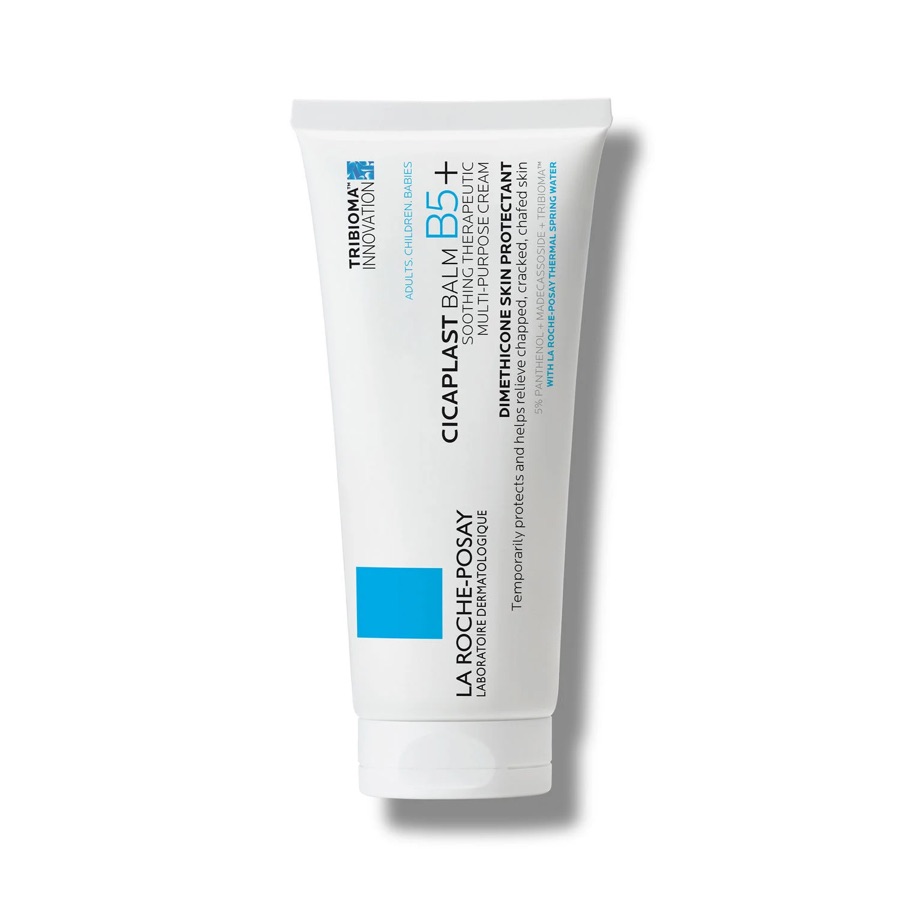
La Roche-Posay Cicaplast Balm B5+: the silicone balm sold as a skin protectant in America
Cicaplast Balm B5+ Soothing Therapeutic Multi-Purpose Cream
- Price$32.99
- Size100 ml (3.38 fl oz)
- Works out at$0.33 per ml
- FinishRich, non-greasy balm
La Roche-Posay US (archived copy of 12 Nov 2026; the site blocks automated readers); Target and Ulta also $32.99 on 22 Nov 2026
See it on laroche-posay.us La Roche-Posay Cicaplast Baume B5+ →
Image: La Roche-Posay, from laroche-posay.us
What it costs, size by size
La Roche-Posay's US site turns away automated readers, so our list prices come from its own product page as archived on 4 November 2026, which showed the balm in two sizes: $18.99 for the 40 ml tube, or 47 cents a millilitre, and $32.99 for the 100 ml tube, or 33 cents. On 22 November Target charged the same $32.99 for the big tube and had cut the 40 ml from $18.99 to $13.69, while Ulta charged $32.99 for the large tube and $20.99 for the small one, two dollars more than La Roche-Posay itself asks, and Dermstore listed the small tube at $18.99.
The arithmetic favors the big tube by a wide margin, since 100 ml costs only $14 more than 40 ml for two and a half times as much balm, and we would buy the small one only as a travel tube or a first try. It has also been creeping up in price: an archived copy of the page from December 2023 shows the 40 ml tube at $15.99, it was $16.99 in February 2025 and $18.99 by August 2025, a rise of 19% in under two years, while the 100 ml tube has stayed at $32.99 since it first appeared on the US site in June 2025.
What's in the US tube, and why it lists an active ingredient
In America Cicaplast is sold as an over-the-counter skin protectant (Target's listing even calls it the 'Cicaplast B5 OTC' cream), which is why La Roche-Posay's US page lists dimethicone 1% as the 'active ingredient' and everything else as 'inactive', and why the front of the tube calls it a 'dimethicone skin protectant' that temporarily protects and helps relieve chapped, cracked and chafed skin. The full list runs to 34 entries: water, hydrogenated polyisobutene, dimethicone, glycerin, shea butter, panthenol, corn starch, propanediol, butylene glycol, cetyl PEG/PPG-10/1 dimethicone, trihydroxystearin, centella asiatica leaf extract, Polymnia sonchifolia (yacon) root juice, zinc gluconate, madecassoside, manganese gluconate, alpha-glucan oligosaccharide, silica, aluminum hydroxide, magnesium sulfate, mannose, capryloyl glycine, Vitreoscilla ferment, citric acid, trisodium ethylenediamine disuccinate, Lactobacillus, acetylated glycol stearate, maltodextrin, pentylene glycol, polyglyceryl-4 isostearate, tocopherol, an antioxidant called pentaerythrityl tetra-di-t-butyl hydroxyhydrocinnamate, phenoxyethanol and titanium dioxide.
The headline ingredients are easy to place. Panthenol, the provitamin B5 that gives the balm its name, sits sixth, and La Roche-Posay says it makes up 5% of the formula and helps skin feel soothed and moisturized. Madecassoside, fifteenth, is a compound from centella asiatica that the brand describes as 'used as a therapeutic agent in wound healing', a description we report rather than repeat as a promise. Zinc and manganese gluconates are the mineral salts the balm has always carried, and the run of sugars and ferments in the second half of the list, from yacon root juice to maltodextrin, arrived with the B5+ rewrite, which is where La Roche-Posay's Tribioma, which it calls 'our proprietary prebiotic complex', must sit, although the brand doesn't say which ingredients make it up.
Most of what the balm does on the skin comes from the first four ingredients, because dimethicone and hydrogenated polyisobutene leave the thin, slippery film the brand calls a skin protectant and glycerin draws water into the top layer beneath it. Titanium dioxide, last on the list, is a white pigment here, and the tube makes no sun-protection claim; La Roche-Posay sells a separate Cicaplast Balm B5 UV SPF 50 for that, at $19.99 on its US page.
How La Roche-Posay says it feels, and what buyers report
La Roche-Posay calls the balm a 'non-greasy skin protectant' that relieves dry, rough patches and shields against the drying effects of wind and cold, says it can go on the face, body, hands and lips, and lists a long run of uses on its US page, from cracked and chafed skin, minor scrapes and diaper rash to dry noses, skin after sun and skin after non-ablative laser treatment. It suggests a generous layer as an overnight 'soothing mask' that leaves a 'glass skin' glow, says the formula is fragrance-free, paraben-free and non-comedogenic, and notes that it has been accepted by the National Eczema Association.
Shoppers rate it about as highly as anything on the shelf: on 22 November the balm showed 4.7 out of 5 from 3,122 reviews on Ulta's page and 4.73 from 1,406 ratings on Target's, and Amazon's listing showed 4.7 stars from 23,926 ratings. Those scores cover several years of shopping, though, and therefore both formulas, which is worth remembering when a five-star review praises a tube that may have been the old one.
La Roche-Posay's consultant dermatologist Justine Hextall, quoted in the 2023 Harper's Bazaar history of the balm, put the brand's case simply: the ingredients create conditions in which skin can recover while the balm provides a barrier that, in her words, 'soothes and hydrates dry, compromised skin'. She works with the brand, so we read that as La Roche-Posay's view rather than an independent one, but it is a fair description of what a silicone balm with panthenol is designed to do.
From 'Epidermal Repair Accelerator' to B5+
Cicaplast began in 2005 as 'Cicaplast – Epidermal Repair Accelerator', according to a 2023 history of the balm in Harper's Bazaar, and the Baume B5 followed in 2011, three years after a 2008 clinical study of the original cream. Its second life came on social media, and the same article reported that sales rose 53% in 2022, 'with reports that more than one tube is sold every minute'.
Europe got the rewritten B5+ first. The British retailer Escentual described it in November 2022 as a recent reformulation with new ingredients and new packaging, adding the Tribioma complex to the same panthenol and madecassoside base, and La Roche-Posay's British page now sells it as a 'new and improved' formula. American shoppers waited. The US page still listed the old formula, with copper gluconate, sodium benzoate and the antiseptic chlorhexidine digluconate, in February 2025; by June 2025 it showed two lists at once, the B5+ for a new 100 ml tube and the old formula for the 40 ml; and only by November 2026 did both sizes carry the same B5+ list.
What goes wrong with Cicaplast
The commonest grumble is the one any silicone balm attracts: on oily or acne-prone skin a film of dimethicone and hydrogenated polyisobutene can feel as if it sits on top, and like most silicone-rich creams it can pill if layered under other products before it has settled. We would use it as a targeted layer on dry patches, or a thin last step at night, rather than as an all-over moisturizer on oily skin, and La Roche-Posay itself recommends it for combination skin only on 'targeted areas'.
The second problem is the rewrite, because buyers who loved the old copper-containing formula now have no way back to it in the US, and the ratings above, built up over years, can't tell you which formula a reviewer was using. The third is plain confusion over what you are buying, since shops still use the old names (Target titles its 40 ml tube 'Cicaplast Balm Vitamin B5'), so if the version matters to you, look for 'B5+' and the word Tribioma on the tube.
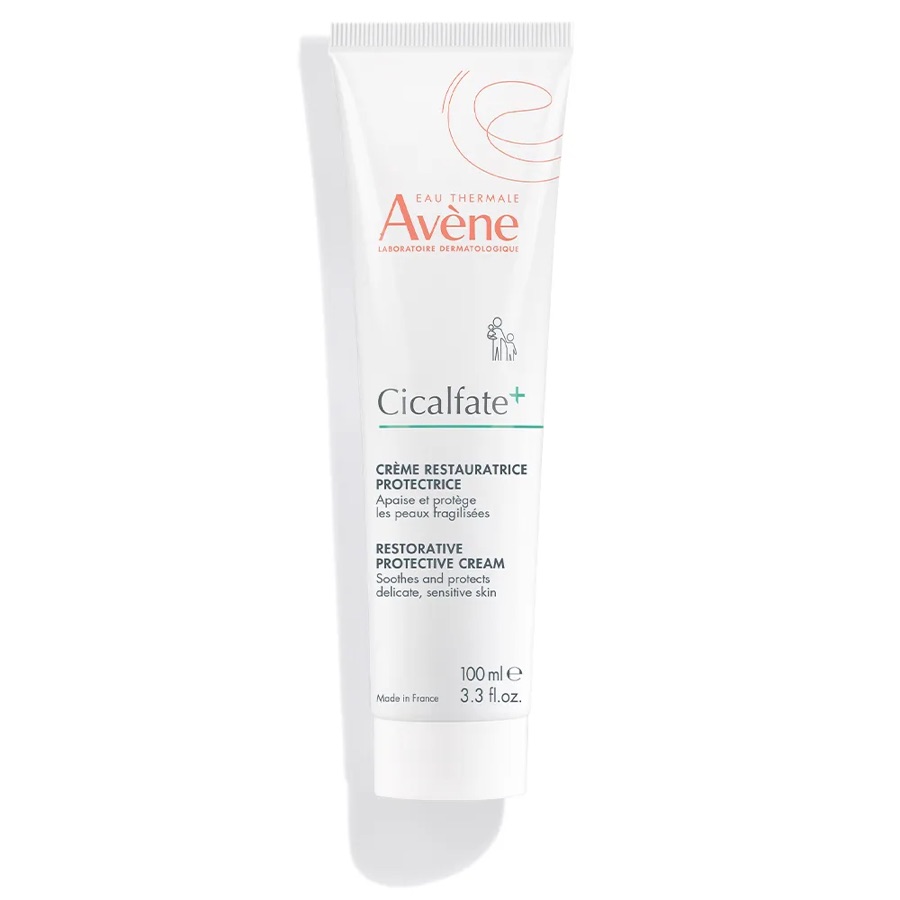
Avène Cicalfate+: the silicone-free cream with copper and zinc
Cicalfate+ Restorative Protective Cream
- Price$40
- Size100 ml (3.3 fl oz)
- Works out at$0.40 per ml
- FinishRich, occlusive cream
Avène US (archived copy of 9 Nov 2026; the site blocks automated readers); Ulta's regular price is also $40, with 30% off ($28) on 22 Nov 2026
Image: Avène, from aveneusa.com
What it costs, size by size
Avène's US site also turns away automated readers, and its product page as archived on 9 November 2026 listed two sizes: $26 for 1.3 fluid ounces (40 ml), or 65 cents a millilitre, and $40 for 3.3 fluid ounces (100 ml), or 40 cents. Those are the prices Ulta charges in an ordinary week, but on 22 November it had both sizes 30% off for Black Friday, at $18.20 and $28, which made the big tube briefly cheaper than Cicaplast's, and Dermstore listed the small tube at $26. In France, Avène sells a 15 ml tube as well, but not, as far as its US page shows, in America.
Unusually for a pharmacy brand, Avène's American prices have come down. In June 2020, when Cicalfate+ first appeared on its US site, the two tubes cost $28 and $42, exactly what the old Cicalfate had cost in 2019, so both sizes are $2 cheaper today than six years ago. Even so, the 100 ml tube costs 21% more per millilitre than Cicaplast's at full price and the 40 ml costs 37% more, so outside a sale Avène is always the dearer of the two in America.
What's in it: copper, zinc, waxes and a postbiotic
Avène lists 19 ingredients, and Ulta's US listing and Avène's British and French pages print the same 19 in the same order: Avène thermal spring water, caprylic/capric triglyceride, mineral oil, glycerin, hydrogenated vegetable oil, zinc oxide, propylene glycol, polyglyceryl-2 sesquiisostearate, PEG-22/dodecyl glycol copolymer, aluminum stearate, Aquaphilus dolomiae ferment filtrate, arginine, beeswax, copper sulfate, magnesium stearate, magnesium sulfate, microcrystalline wax, tromethamine and zinc sulfate. Avène's own US page leaves out the magnesium sulfate and misspells two names, the kind of slip that matters only to people who compare lists for a living.
The ingredient Avène sells the cream on is Aquaphilus dolomiae ferment filtrate, which it brands C+-Restore and describes as a postbiotic, 'rich in proteins', made from a bacterium found in its spring water; Avène's timeline dates it to 2019. The copper and zinc sulfates are the cream's oldest idea, and Avène's British page calls them an 'antibacterial complex' that 'limits the risk of bacterial proliferation', which is the brand's description of what they are for rather than anything a shopper can check. Zinc oxide, sixth on the list, is the white mineral familiar from diaper creams, and Cicalfate+ makes no sun-protection claim for it.
What is missing tells you as much. There are no silicones, which Avène advertises along with no fragrance, parabens, sulfates or alcohol, and there is no panthenol, no centella and no hyaluronic acid. The body comes instead from mineral oil, hydrogenated vegetable oil, beeswax and microcrystalline wax, which is why Avène's British page talks of a protective 'dressing effect' and why the cream sits more heavily on a face than Cicaplast does. Anyone who avoids mineral oil or beeswax can stop reading here.
From sucralfate to C+-Restore
Avène created Cicalfate in 2001, by its own history, and an archived copy of its US page from November 2019 shows what the original contained: the same base of mineral oil, waxes, zinc oxide and copper and zinc sulfates, plus aluminum sucrose octasulfate, the ingredient better known as sucralfate, which Avène then named as its first key ingredient and said 'helps restore and protect damaged skin'. That page called the cream a 'Water-in-Oil formula' in 'NEW soft, flexible packaging' and cited a dermatology-congress poster from 2002 for its sucralfate claims.
The plus sign arrived with the new postbiotic. By June 2020 Avène's US site was selling Cicalfate+ at the same $28 and $42, promising to donate a tube to a frontline worker for every new one bought, and the list had swapped sucralfate for Aquaphilus dolomiae ferment filtrate, arginine and tromethamine while keeping everything else. That makes Avène's the more conservative of the two rewrites: it replaced one key ingredient, whereas La Roche-Posay removed five ingredients from Cicaplast and added eleven.
How Avène says it works, and what buyers report
Avène's US page calls Cicalfate+ 'a rich, nourishing cream that provides up to 48 uses', from a daily moisturizer for sensitive skin prone to visible redness to minor cuts and scrapes, cracked or chapped skin, the diaper area and skin after sun, and says it is 'clinically proven to restore the skin in 48 hours', citing a study of 248 people applying it twice a day for 21 days. It describes the cream as safe for infants, children and adults, accepted by the National Eczema Association and non-comedogenic, and its British page says it can be used from birth and recommends applying it 'several times a day' to the irritated area.
Shoppers like it, but less than Cicaplast. On 22 November Cicalfate+ showed 4.2 out of 5 from 1,143 reviews on Ulta's page, against 4.7 from 3,122 for Cicaplast on the same site, a gap of half a star between two products sold to the same customers at similar prices. Avène's own claims are more clinical in tone than La Roche-Posay's: its US footnotes cite a second study of 20 adults whose forearm skin had been deliberately abraded with a laser, and a 2024 congress poster on people undergoing cancer treatment, which shows the kind of skin the brand has in mind, from the merely chapped to the seriously fragile.
What goes wrong with Cicalfate+
Separation is the problem peculiar to this cream, and Avène says so itself. Its product copy on Dermstore warns that the water and oily phases may separate 'in some extreme weather conditions' and says that this 'neither compromises the efficacy of the product nor poses a risk to the consumer', and both Dermstore's and Ulta's listings tell buyers not to expose the tube to temperatures below 32°F (0°C) because of 'the formula's sensitivity to cold temperature'. A cream that needs that warning is a poor choice for a car glovebox in Minnesota or a beach bag in July, and a tube that arrives in a cold mail truck may not look the way it should when you open it.
The second issue is weight. A cream built on mineral oil and waxes is the right choice for chapped knuckles and a poor one for an oily T-zone, and because its list has no panthenol or hyaluronic acid, on skin that is dehydrated rather than dry it can feel like a lid with little underneath. The third is price, since even after Avène's cuts it costs more than Cicaplast at full price in both sizes, and a tube that may separate in the post makes that premium harder to swallow.
The American Cicaplast is a different tube from the French one; Cicalfate+ is the same everywhere
Put La Roche-Posay's US list beside its British one and 32 ingredients match in the same order, but the preservatives differ: the British balm uses caprylyl glycol, while the American one replaces it with pentylene glycol and adds phenoxyethanol. The labels differ more. In the US the balm is labelled as an over-the-counter skin protectant, with dimethicone 1% as its active ingredient, and La Roche-Posay says it is suitable for babies from 1 week; in Britain the same name is sold as a cosmetic 'repairing balm' for babies from 3 months, with claims about the skin microbiome instead. Avène, by contrast, prints an identical 19-ingredient list in France, in Britain and on Ulta's US listing, and calls neither version a drug.
The price order flips across the Atlantic too. La Roche-Posay's British site charged £11 for 40 ml and £19.90 for 100 ml in early November, about $26.06 for the big tube at the day's exchange rate, while Cult Beauty sold Avène's 100 ml tube for £17.95, or $23.51, so in Britain Cicalfate+ is the cheaper of the two by about 10%. In America the same Avène tube costs $40, 70% more than in Britain, against a 27% American premium on Cicaplast, which is why the French cream that British shoppers treat as the cheaper choice arrives in American shops as the dearer one.
Which is better on a face?
For most faces we would pick Cicaplast, because silicones spread thinner than waxes and mineral oil, La Roche-Posay pitches it at combination skin with dry patches, and the brand suggests a generous layer as an overnight mask. Say your nose flakes and your cheeks feel tight every January while your forehead stays shiny: a thin layer of Cicaplast on the dry parts at night is the sensible use, and the same tube can go on lips and knuckles in the morning.
Cicalfate+ is the better face cream only where you want a heavier seal and don't mind the feel, such as the chapped skin under a streaming nose in a cold or the cracked corners of the mouth, and Avène's British page suggests using it on small irritated areas rather than as an all-over moisturizer. Anyone with acne-prone skin should patch test either one first, and anyone dealing with eczema, rosacea or a wound that isn't closing should take the question to a dermatologist rather than to a pharmacy shelf.
Which suits babies and the whole family?
Both brands sell their balms as family products and both carry the National Eczema Association's acceptance in America, so the label doesn't separate them. La Roche-Posay's US page says Cicaplast is suitable from 1 week old, including on a baby's scalp, and pitches it for diaper rash, while Avène's US page calls Cicalfate+ 'safe for infants, children and adults' and lists the diaper area among its uses.
The practical difference is the base. Parents who prefer to avoid silicones will lean to Avène, and those who would rather avoid mineral oil and beeswax will lean to La Roche-Posay; Avène's zinc oxide will also feel familiar to anyone who uses a zinc diaper cream. For a rash that doesn't settle within a few days, a pediatrician is the right first stop rather than either tube.
Which is better value?
At full price Cicaplast wins in both sizes: 33 cents a millilitre against 40 cents in the 100 ml tube, and 47 cents against 65 cents in the 40 ml. Say you get through one 100 ml tube a month for the five coldest months of the year: that comes to $164.95 of Cicaplast against $200 of Cicalfate+, a saving of about $35 for choosing the French balm with the American skin-protectant label.
Sales change the picture only for a few days at a time. Ulta's Black Friday discount made Cicalfate+ $28 for 100 ml on 22 November, or 28 cents a millilitre, while Target's discount that day applied to Cicaplast's 40 ml tube, at $13.69, or 34 cents. If you are stocking up during a sale, buy whichever big tube is discounted; otherwise buy Cicaplast's 100 ml.
| Size and price | Cicaplast Balm B5+ | Cicalfate+ |
|---|---|---|
| 40 ml, brand's US price | $18.99 (47 cents a ml) | $26 (65 cents a ml) |
| 100 ml, brand's US price | $32.99 (33 cents a ml) | $40 (40 cents a ml) |
| Best sale price on 22 Nov | $13.69 for 40 ml at Target (34 cents a ml) | $28 for 100 ml at Ulta (28 cents a ml) |
| Highest price we found | $20.99 for 40 ml at Ulta | $26 for 40 ml at Dermstore |
| 100 ml in Britain | £19.90 at La Roche-Posay UK (about $26.06) | £17.95 at Cult Beauty (about $23.51) |
| US price history | 40 ml: $15.99 (Dec 2023), $16.99 (Feb 2025), $18.99 (since Aug 2025) | $28 and $42 in 2019 and 2020; $26 and $40 now |
Brand prices from archived copies of La Roche-Posay's and Avène's US pages (November 2026); shop prices on 22 November 2026; pounds converted at the ExchangeRate-API rate for 22 November 2026 (£0.7636 to the dollar).
Dupes and alternatives
The cheapest alternative comes from La Roche-Posay's own parent company. CeraVe Healing Ointment, also owned by L'Oréal, is another American over-the-counter skin protectant, with petrolatum at 46.5% as its active ingredient and three ceramides with cholesterol among the rest, and Target sold the 12-ounce jar for $20.99 on 22 November, about 6 cents a gram. As an ointment, which CeraVe itself calls 'the thickest formula option', it is a heavier layer than either French balm and better suited to hands, heels and cracked lips than to a face under makeup. Aquaphor Healing Ointment, from Beiersdorf, uses 41% petrolatum as its active ingredient and cost $6.29 for a 1.75-ounce tube at Target the same day, which makes it the cheapest protective layer on the shelf by a distance.
Bioderma's Cicabio Crème, the third French pharmacy cream in this family, takes a different route again, with glycerin, rapeseed and jojoba oils, squalane, hyaluronic acid and what Bioderma calls an Optimal Skin Support Complex of polyglutamic acid, hyaluronic acid and xylose, and no silicone or copper at all. La Roche-Posay also sells a lighter Cicaplast B5 spray, at $24.99 for 3.38 ounces at Target. None of these is a straight copy of either balm, which is itself the lesson of this comparison: the shared 'cica' name tells you very little about what is in the tube.
Our verdict
If we were buying one tube for a bathroom shared by a family, we would buy La Roche-Posay's Cicaplast Balm B5+ in the 100 ml size at $32.99, because it costs less per millilitre at full price, spreads easily enough for a face, carries 5% panthenol and madecassoside in a fragrance-free base, and in its American form is labelled as a skin protectant with dimethicone 1%. We would not pay $20.99 for the 40 ml tube at Ulta when La Roche-Posay and Target charge less, and we would not expect an American tube to feel exactly like one bought in Paris, because the formulas and labels are not the same.
We would buy Avène's Cicalfate+ for a different job: a heavier, silicone-free layer for chapped hands, the skin under a sore nose or dry patches on the body, from a brand that has kept the same copper-and-zinc base since 2001 and has cut its American prices since 2020. Buy it on sale, keep it away from frost and heat, and squeeze a little out before you rely on it, because separation in extreme weather is the one problem Avène itself warns about and La Roche-Posay doesn't.
Questions people ask
Which is better, Cicaplast or Cicalfate?
Cicaplast Balm B5+ is the better all-round choice for most people, because it is cheaper per millilitre at full price ($32.99 against $40 for 100 ml in the US), lighter on a face and rated half a star higher on Ulta's site (4.7 against 4.2). Cicalfate+ is better if you want a silicone-free, heavier cream with copper and zinc sulfates for chapped hands and body patches.
Are Cicaplast and Cicalfate the same thing?
No, they are rival products from different French companies, La Roche-Posay (owned by L'Oréal) and Avène (owned by Pierre Fabre), and their current ingredient lists share only glycerin and magnesium sulfate besides water. Cicaplast is built on silicone with 5% panthenol and madecassoside, while Cicalfate+ is built on mineral oil, waxes and zinc oxide with copper and zinc sulfates.
Is the European Cicaplast Baume B5+ different from the US Balm B5+?
Yes, slightly in formula and a lot in labeling. The US version lists dimethicone 1% as an active ingredient, as American over-the-counter skin protectants do, and uses pentylene glycol and phenoxyethanol where the British version uses caprylyl glycol, and La Roche-Posay rates the US tube for babies from 1 week against 3 months in Britain. The US also got the B5+ formula about three years after Europe.
Does Avène Cicalfate+ still contain sucralfate?
No, the current Cicalfate+ contains no sucralfate (aluminum sucrose octasulfate). Avène replaced it around 2019 and 2020 with Aquaphilus dolomiae ferment filtrate, which it calls C+-Restore, and kept the copper sulfate, zinc sulfate and zinc oxide of the original.
Can you use Cicaplast or Cicalfate on your face?
Yes, both brands say their creams can be used on the face, but Cicaplast's silicone base spreads more thinly and suits a face better, especially as a targeted layer on dry patches or an overnight mask. Cicalfate+ is heavier and better kept for small chapped areas; patch test either if your skin breaks out easily.
Why is my Cicalfate+ watery or separated?
Avène says the water and oily parts of Cicalfate+ can separate in extreme weather, and that this does not affect how the cream works or make it unsafe. It also says the tube should not be exposed to temperatures below 32°F (0°C); if a new tube arrives badly separated, ask the shop for a replacement.
Can Cicaplast and Cicalfate be used on babies?
Both brands say so: La Roche-Posay's US page rates Cicaplast for babies from 1 week old, and Avène calls Cicalfate+ safe for infants. For a diaper rash or skin problem that doesn't clear up within a few days, ask a pediatrician first.
How we put this together
We read each brand's own product pages and full ingredient lists, what buyers report in public reviews and forums, and the news coverage linked on this page. Prices are the brand's own list prices in the US on the date shown, unless the page names another shop. Nothing here is rated or scored, and no brand paid to appear.
Sources (31)
- La Roche-Posay US: Cicaplast Balm B5+ page, archived 4 November 2026 (prices, active and inactive ingredients, claims, ratings)
- La Roche-Posay US: Cicaplast Balm B5 page, archived 7 December 2023
- La Roche-Posay US: Cicaplast Balm B5 page, archived 19 February 2025
- La Roche-Posay US: Cicaplast Balm B5 100 ml page, archived 19 June 2025
- La Roche-Posay UK: Cicaplast Baume B5+ Repairing Balm, archived 7 November 2026
- Target: La Roche-Posay Cicaplast B5 OTC cream, 3.38 fl oz
- Target: search results for Cicaplast Baume B5 (40 ml sale price)
- Ulta: La Roche-Posay Cicaplast Balm B5
- Dermstore: La Roche-Posay Cicaplast Balm B5+ (40 ml price)
- Amazon: La Roche-Posay Cicaplast Balm B5 listing (rating and number of ratings)
- Avène US: Cicalfate+ Restorative Protective Cream, archived 9 November 2026
- Avène US: Cicalfate+ page, archived 8 June 2020
- Avène US: Cicalfate Restorative Skin Cream (sucralfate formula), archived 14 November 2019
- Avène UK: Cicalfate+ Restorative Protective Cream
- Eau Thermale Avène France: Cicalfate+ Crème réparatrice protectrice
- Avène UK: history of Avène Thermal Spring Water
- Pierre Fabre: our group
- Ulta: Avène Cicalfate+ Restorative Protective Cream, 1.3 oz
- Ulta: Avène Cicalfate+ Restorative Protective Cream, 3.3 oz
- Dermstore: Avène Cicalfate+ Restorative Protective Cream (price, separation and storage note)
- Cult Beauty UK: Avène Cicalfate+ Restorative Protective Cream 100ml
- Harper's Bazaar via Yahoo: The History of the Hero, La Roche-Posay Cicaplast Baume B5 (March 2023)
- Escentual: La Roche-Posay Cicaplast Baume B5+ review (November 2022)
- Marques de France: La Roche-Posay
- L'Oréal: La Roche-Posay brand page (French)
- CeraVe US: Healing Ointment
- Target: search results for CeraVe Healing Ointment
- Aquaphor US: Healing Ointment 1.75 oz
- Target: search results for Aquaphor Healing Ointment
- Bioderma US: Cicabio Crème
- ExchangeRate-API: US dollar rates for 22 November 2026