Cicaplast Balm B5+ is a well-made, fragrance-free silicone balm with 5% panthenol and madecassoside that does a simple job well, laying a thin protective film over dry, chapped or irritated patches, and we would buy it in the 100 ml tube at 33 cents a millilitre; just know that the American tube is labelled and preserved differently from the European one, and that it is a targeted balm rather than an everyday moisturizer for oily skin.
- The 100 ml tube costs $32.99 at La Roche-Posay, Target and Ulta, 33 cents a millilitre, while the 40 ml costs $18.99, 44% more per millilitre, after a 19% rise since December 2023.
- In the US it is sold as an over-the-counter skin protectant with dimethicone 1% as its active ingredient; in Britain the same name is a cosmetic, rated for babies from 3 months rather than 1 week.
- Europe got the B5+ formula in 2022, but La Roche-Posay's US site still listed the old formula, with copper and chlorhexidine, in February 2025 and showed B5+ for both sizes only by November 2026.
- It showed 4.7 out of 5 from 3,122 reviews at Ulta on 22 November, half a star above Avène's Cicalfate+ on the same site.
Buy it if…
- Buy it if you want one fragrance-free balm for chapped lips, cracked knuckles, dry patches and skin stung by cold wind, which is the list of jobs La Roche-Posay gives it.
- Buy it if you prefer a silicone balm that spreads thinly to the thick, waxy feel of an ointment, since dimethicone and hydrogenated polyisobutene head its list.
- Buy it in the 100 ml tube, which at $32.99 costs 33 cents a millilitre against 47 cents for the 40 ml.
- Buy it if you want panthenol and centella on the label: it lists 5% panthenol, madecassoside and centella asiatica leaf extract.
Skip it if…
- Skip it as an all-over moisturizer for oily or acne-prone skin, where a silicone film can feel heavy and pill under makeup; La Roche-Posay itself recommends it on targeted areas of combination skin.
- Skip it if you avoid silicones, which form its base and, in the US, its labelled active ingredient.
- Skip the 40 ml tube at Ulta, which cost $20.99 on 22 November, two dollars more than La Roche-Posay's own price.
- Skip it if you are hunting for the old copper-containing formula, which has been replaced by B5+ in both Europe and the US.
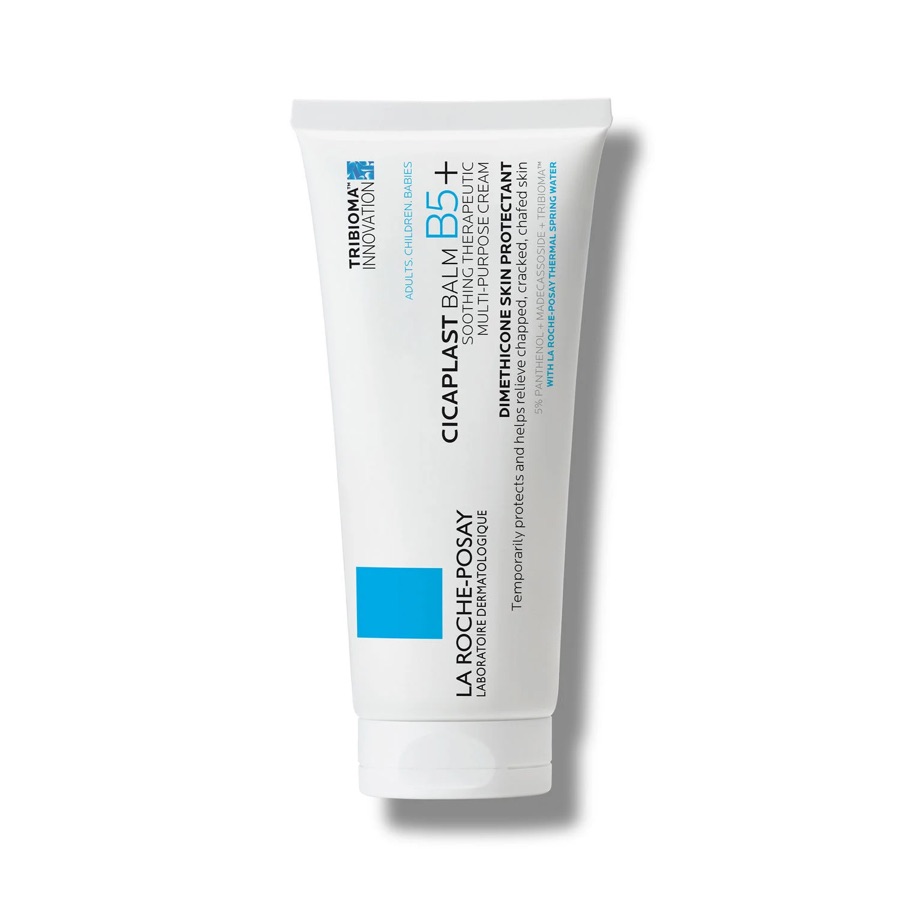
Cicaplast Balm B5+ Soothing Therapeutic Multi-Purpose Cream
- Price$32.99
- Size100 ml (3.38 fl oz)
- Works out at$0.33 per ml
- FinishRich, non-greasy balm
La Roche-Posay US (archived copy of 12 Nov 2026; the site blocks automated readers); Target and Ulta also $32.99 on 22 Nov 2026
See it on laroche-posay.us Cicaplast vs Cicalfate+ →
Image: La Roche-Posay, from laroche-posay.us
Cicaplast is the kind of product that ends up in every drawer of a house: a white tube with a blue square that La Roche-Posay sells for chapped lips, the diaper area, a sore nose in a cold, skin after a laser treatment and the backs of hands in January. It began life in 2005 as a repair cream, became the Baume B5 in 2011, and found a second audience on social media in the early 2020s, when, according to a 2023 history of the balm in Harper's Bazaar, sales rose 53% in a year, 'with reports that more than one tube is sold every minute'.
It reaches the end of 2026 freshly rewritten for Americans. The B5+ formula, with a prebiotic complex La Roche-Posay calls Tribioma, reached Europe in 2022 but replaced the old formula on La Roche-Posay's US site only in 2025 and 2026, and the American tube is a different thing on paper from the French one: an over-the-counter skin protectant, with dimethicone 1% as its active ingredient and slightly different preservatives. This review sets out what each ingredient on the US label is, what each size costs, what the rewrite changed, and whether the balm is still worth buying.
What it costs, size by size, and how that compares
La Roche-Posay's US site turns away automated readers, so our list prices come from its product page as archived on 4 November 2026 and 12 November 2026, which showed two sizes: the 40 ml tube for $18.99, or 47 cents a millilitre, and the 100 ml tube for $32.99, or 33 cents. On 22 November Target and Ulta both charged $32.99 for the big tube, while for the small one Target had a sale price of $13.69, down from $18.99, Ulta asked $20.99 and Dermstore $18.99.
The big tube is the obvious buy, since 100 ml costs only $14 more than 40 ml for two and a half times the balm, and the small tube now costs 44% more per millilitre. That gap has widened: an archived copy of the US page shows the 40 ml at $15.99 in December 2023, it was $16.99 in February 2025 and $18.99 by August 2025, a 19% rise in under two years, while the 100 ml has stayed at $32.99 since it first appeared on the US site in June 2025. Say you keep one small tube in a bag and one big tube at home and replace each twice a winter: that's $103.96 a year at today's prices, of which $37.98 buys just 80 ml.
Against its rivals it is mid-priced. Avène's Cicalfate+, its closest French competitor, costs $40 for 100 ml on Avène's US page, or 40 cents a millilitre; CeraVe's Healing Ointment cost $20.99 for a 12-ounce jar at Target, about 6 cents a gram; and Aquaphor Healing Ointment cost $6.29 for a 1.75-ounce tube, about 13 cents a gram, although ointments sold by weight and balms sold by volume don't compare exactly. In Britain, La Roche-Posay's own site charged £19.90 for 100 ml in early November, about $26.06 at the day's rate, so American buyers pay roughly 27% more for their version.
| Where and what | 40 ml | 100 ml |
|---|---|---|
| La Roche-Posay US (November 2026) | $18.99 (47 cents a ml) | $32.99 (33 cents a ml) |
| Target, 22 Nov | $13.69 on sale (was $18.99) | $32.99 |
| Ulta, 22 Nov | $20.99 | $32.99 |
| Dermstore, 22 Nov | $18.99 | Not checked |
| La Roche-Posay UK (November 2026) | £11.00 (about $14.41) | £19.90 (about $26.06) |
| La Roche-Posay US, earlier | $15.99 (Dec 2023), $16.99 (Feb 2025) | $32.99 since June 2025 |
US brand prices from archived copies of La Roche-Posay's US page; shop prices on 22 November 2026; pounds converted at the ExchangeRate-API rate for 22 November 2026 (£0.7636 to the dollar). Prices per millilitre are our arithmetic.
What's in it, ingredient by ingredient
La Roche-Posay's US page lists dimethicone 1% as the active ingredient and 34 inactive ingredients: water, hydrogenated polyisobutene, dimethicone, glycerin, shea butter, panthenol, corn starch, propanediol, butylene glycol, cetyl PEG/PPG-10/1 dimethicone, trihydroxystearin, centella asiatica leaf extract, Polymnia sonchifolia root juice, zinc gluconate, madecassoside, manganese gluconate, alpha-glucan oligosaccharide, silica, aluminum hydroxide, magnesium sulfate, mannose, capryloyl glycine, Vitreoscilla ferment, citric acid, trisodium ethylenediamine disuccinate, Lactobacillus, acetylated glycol stearate, maltodextrin, pentylene glycol, polyglyceryl-4 isostearate, tocopherol, pentaerythrityl tetra-di-t-butyl hydroxyhydrocinnamate, phenoxyethanol and titanium dioxide. There is no fragrance, and La Roche-Posay also describes it as paraben-free and non-comedogenic.
The base: silicone, a light oil and glycerin
The first four ingredients make the balm what it is. Hydrogenated polyisobutene is a light, synthetic emollient oil that gives slip without the weight of mineral oil, dimethicone is the silicone that forms a breathable film on the skin and, in the US, the labelled skin protectant, and glycerin is the humectant that draws water into the top layer underneath. Shea butter, fifth, adds some richness, and cetyl PEG/PPG-10/1 dimethicone and trihydroxystearin are the emulsifier and thickener that hold the whole thing together as a soft balm rather than a liquid.
Corn starch, seventh, is new in the B5+ and replaced a modified starch, aluminum starch octenylsuccinate, in the old formula; the British retailer Escentual's November 2022 editorial on the rewrite listed the 'Addition of starch for a smoother and non-greasy texture' as one of the changes. Titanium dioxide, last on the list, is a white pigment here, and the tube makes no sun-protection claim.
Panthenol and madecassoside: the names on the tube
Panthenol, sixth on the list, is the provitamin B5 in the name, and La Roche-Posay says it makes up 5% of the formula and helps 'the skin feel soothed and moisturized'; it is a humectant and skin-conditioning ingredient found in countless creams, used here at a generous level. Madecassoside, fifteenth, is one of the active compounds of centella asiatica, the 'cica' that gives the range its name, and the balm also contains a centella leaf extract, twelfth. La Roche-Posay's US page describes madecassoside as 'used as a therapeutic agent in wound healing', which is the brand's description of its use rather than a promise about what a tube will do for any particular cut, and anything more than a minor scrape belongs with a doctor.
Zinc, manganese, and the copper that left
Zinc gluconate and manganese gluconate, fourteenth and sixteenth, are the mineral salts the balm has always carried, and La Roche-Posay's British page calls zinc and manganese 'antibacterial agents'. The old formula also had copper gluconate, giving it a copper, zinc and manganese trio, and the antiseptic chlorhexidine digluconate among its preservatives; both are gone from the B5+, along with sodium benzoate and disodium EDTA. In their place the US version adds pentylene glycol to the phenoxyethanol the old formula already used, and trisodium ethylenediamine disuccinate, a chelating agent that does the job disodium EDTA used to do.
Tribioma: the sugars and ferments
The biggest addition is a run of sugars and ferments in the second half of the list: Polymnia sonchifolia root juice (from yacon, a South American root), alpha-glucan oligosaccharide, mannose, Vitreoscilla ferment, Lactobacillus and maltodextrin. La Roche-Posay markets the B5+ around Tribioma, which its US page calls 'our proprietary prebiotic complex' that 'helps restore the skin's natural moisture barrier', but it doesn't say which ingredients make it up, and these are the ones that arrived with it. A prebiotic is an ingredient meant to feed the skin's own bacteria rather than add new ones, and neither the US nor the British page cites a study of Tribioma on its own, so we would treat Tribioma as a modern extra on top of a balm that already worked rather than a reason to buy it.
What isn't in it
There is no fragrance, no lanolin, no petrolatum, no mineral oil, no beeswax and no essential oil, which makes Cicaplast an easy choice for anyone who reacts to those, and a different kind of product from the petrolatum ointments it often shares a shelf with. There are also no ceramides and no hyaluronic acid, so anyone who wants those in a barrier balm should look at CeraVe's ointment, which has both.
America got the new formula three years after Europe, and for a year one name covered two formulas
Archived copies of La Roche-Posay's US page trace the rewrite step by step. In February 2025 it still listed the old 28-ingredient formula, with copper gluconate, chlorhexidine digluconate and sodium benzoate, more than two years after Escentual described the B5+ as a recent change in Britain. By June 2025 the page showed two ingredient lists at once, headed 'INACTIVE INGREDIENTS IN 40ML' and 'INACTIVE INGREDIENTS IN 100ML', the first still the old formula and the second the B5+, and the same split was there in August 2025. Only by November 2026 did both sizes carry a single B5+ list.
Compare the old US list with the new one and La Roche-Posay removed five ingredients and added eleven: out went copper gluconate, chlorhexidine digluconate, sodium benzoate, disodium EDTA and aluminum starch octenylsuccinate, and in came centella leaf extract, corn starch, the six sugars and ferments, capryloyl glycine, pentylene glycol and trisodium ethylenediamine disuccinate. So an American who bought a travel tube and a big tube in the summer of 2025 could have taken home two different formulas under one name, and anyone comparing reviews written before and after should remember that many of the ratings on any shop's page describe a balm that is no longer made.
Texture, finish and wear, as La Roche-Posay and others describe them
La Roche-Posay calls the balm a 'non-greasy skin protectant' that 'relieves dry, rough patches and shields against the drying effects of wind and cold', for use on the face, body, hands and lips, and suggests a generous layer on clean skin as an overnight 'soothing mask' that leaves 'a smooth, radiant finish and a healthy "glass skin" glow'. Its British page describes 'an invisible protective layer' with a 'non-greasy finish' and says the formula is light enough to apply 'in a generous layer'. Escentual's editor, writing about the B5+ in 2022, described a thicker texture than that suggests and saw a practical use in it.
This thicker texture makes it perfect for under bandages or plasters.
Escentual's editorial review of Cicaplast Baume B5+, November 2022
Taken together, the descriptions are of a balm that is thick in the tube but spreads into a thin, non-greasy film and stays put longer than a lotion, which is why La Roche-Posay pitches it for the edges of the nose and lips and for hands that get washed often. La Roche-Posay's consultant dermatologist Justine Hextall, quoted in the 2023 Harper's Bazaar history, said the balm provides a barrier that 'soothes and hydrates dry, compromised skin' and that it can be used at any time of day after a gentle cleanser; she works with the brand, so we read that as La Roche-Posay's view rather than an independent one.
What shoppers say
Shoppers rate it about as highly as anything on the shelf. On 22 November it showed 4.7 out of 5 from 3,122 reviews on Ulta's page, 4.73 from 1,406 ratings on Target's and 4.7 from 23,926 ratings on Amazon's, while La Roche-Posay's British page showed 4.5 from 799 reviews of the European B5+. By comparison, Avène's Cicalfate+ showed 4.2 from 1,143 reviews on Ulta's page, half a star lower on the same site.
Those scores have built up over years, so many describe the old formula, and the British reviews, which are of the B5+, are the most useful guide to the new one. Of the eight most recent shown on La Roche-Posay's British page, several describe using it after facial treatments, microneedling or laser, and one on combination skin that needs a lighter barrier, which matches the brand's own pitch.
I appreciate how it provides soothing and nourishing hydration without leaving my skin feeling excessively heavy or greasy.
A five-star reviewer with combination skin on La Roche-Posay's UK site, September 2026
What goes wrong
Used as an all-over moisturizer on oily or acne-prone skin, a balm led by silicone and a synthetic oil can feel as if it sits on top, and like most silicone-rich creams it can pill under sunscreen or foundation if it hasn't settled first. La Roche-Posay itself pitches it at combination skin only 'on targeted areas', and we would follow that advice: a thin layer on dry patches at night, not a thick layer under makeup in the morning.
The rewrite is the second problem. Buyers who loved the old copper-containing formula can't buy it any more in the US, the star ratings on most shops mix reviews of both versions, and shops still use old names: Target titles its 40 ml tube 'Cicaplast Balm Vitamin B5' and Amazon's listing calls it 'Cicaplast Balm B5'. If the version matters to you, look for 'B5+' and the word Tribioma on the tube.
The third is that the label promises more in America than in Europe. La Roche-Posay's US page lists minor burns, minor scrapes and diaper rash among its uses, calls it suitable for babies from 1 week and for people undergoing chemotherapy and radiation (with a note to consult a medical professional first and not to use it on broken skin), and says it was tested after non-ablative laser treatment. Those are the brand's claims for a skin protectant, and for anything more than ordinary chapping, a baby's rash that won't settle or skin under medical treatment, a doctor or pharmacist should have the final word.
Same name, different tube: what the American label changes
Put the US list beside the one on La Roche-Posay's British page and 32 ingredients match in the same order. The differences are in the preservatives, where the British balm uses caprylyl glycol and the American one replaces it with pentylene glycol and adds phenoxyethanol, and in the label: in the US the balm is an over-the-counter skin protectant with dimethicone 1% as its active ingredient, suitable from 1 week old, and in Britain it is a cosmetic 'repairing balm', suitable from 3 months, sold on claims about the skin microbiome and 'faster and better repair from day 1' from an instrumental test on 26 people.
The price differs too. The British site charged £11 for 40 ml and £19.90 for 100 ml in early November, about $14.41 and $26.06, against $18.99 and $32.99 in the US, so Americans pay 32% more for the small tube and 27% more for the large one. None of this makes one version better than the other, but it does mean that an American reading British reviews, or a European buying the American tube online, is not quite comparing like with like.
The history: from a 2005 repair cream to a social-media staple
La Roche-Posay takes its name from a spa town in the Vienne, in western France, whose baths have drawn visitors since 1869; the cosmetics brand was founded in 1975 by Dr Levayer, according to the French brand register Marques de France, which says L'Oréal bought the brand in 1989, the thermal spring in 2003 and the spa in 2018, and L'Oréal's own history records the spa centre reopening in 2022. L'Oréal now calls La Roche-Posay the world's leading dermatological skincare brand, recommended by more than 100,000 dermatologists.
Cicaplast itself began in 2005 as 'Cicaplast – Epidermal Repair Accelerator', according to the Harper's Bazaar history, which says a clinical study of the original in 2008 showed how well sensitive skin tolerated it and that the Baume B5 followed three years later. The range has since grown to include lip and hand versions, a spray (sold at Target for $24.99 for 3.38 ounces) and a Cicaplast Balm B5 UV SPF 50, which La Roche-Posay's US page sells for $19.99. The B5+ rewrite, with Tribioma and corn starch, reached Europe in 2022 and America in 2025 and 2026, as the archived pages above show.
How it compares
Cicaplast's closest rivals are another French pharmacy balm built on a completely different base, and two American petrolatum ointments that cost much less per gram. Here is how each stacks up.
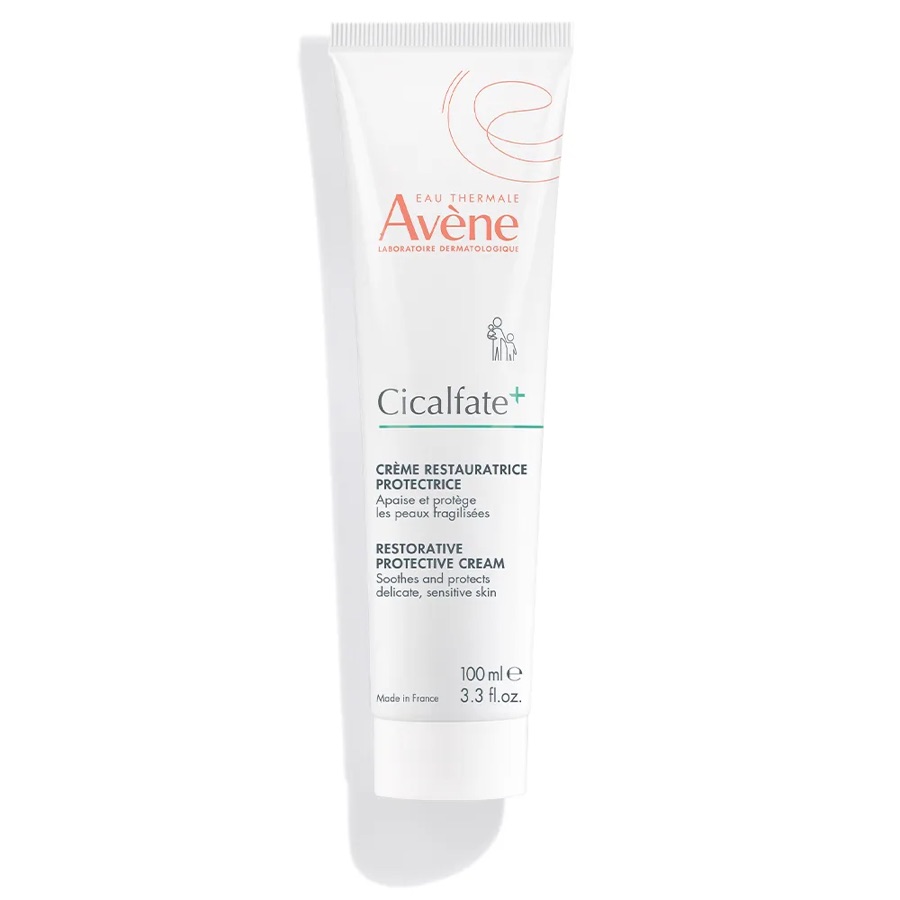
Cicalfate+ Restorative Protective Cream
- Price$40
- Size100 ml (3.3 fl oz)
- Works out at$0.40 per ml
- FinishRich, occlusive cream
Avène US (archived copy of 9 Nov 2026; the site blocks automated readers); Ulta's regular price is also $40, with 30% off ($28) on 22 Nov 2026
See it on aveneusa.com Cicaplast vs Cicalfate+ →
Image: Avène, from aveneusa.com
Avène's Cicalfate+ Restorative Protective Cream, $40 for 100 ml, is its most direct French rival, and the two share only glycerin and magnesium sulfate besides water. Cicalfate+ is silicone-free, built on mineral oil, vegetable oil, beeswax, microcrystalline wax and zinc oxide around copper and zinc sulfates and a postbiotic Avène calls C+-Restore, so it is heavier on the skin and better for chapped hands than for a face; Avène also warns that it can separate in extreme weather. Our full Cicaplast vs Cicalfate+ comparison goes through both labels and prices in the US and Europe.
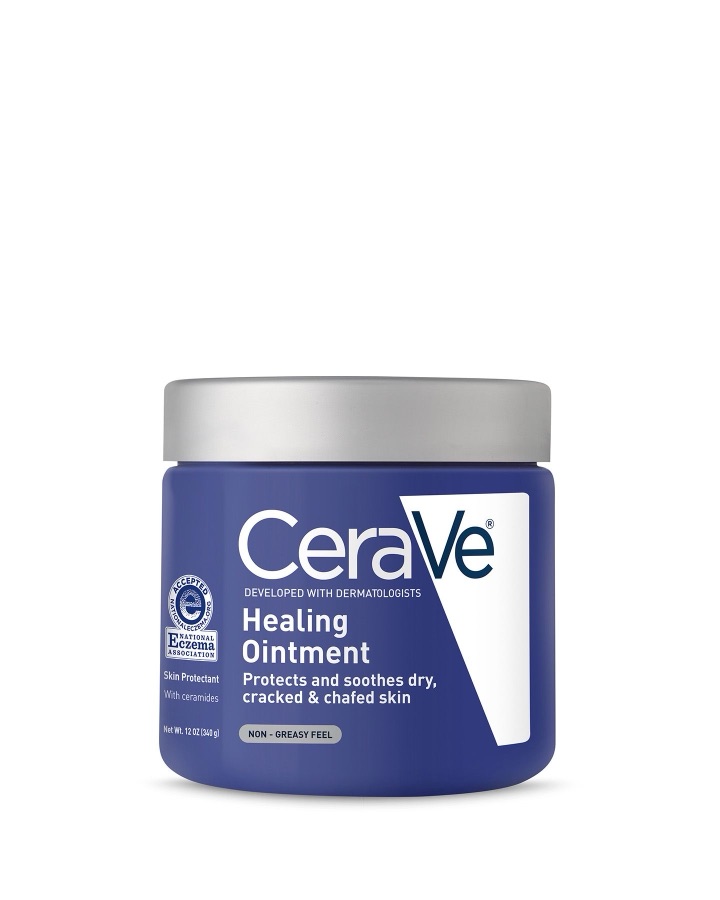
Healing Ointment
- Price$20.99
- Size340 g (12 oz)
- Works out at$0.06 per gram
- FinishOintment
Target, 22 Nov 2026 (CeraVe's US site shows no price)
Image: CeraVe, from cerave.com
CeraVe Healing Ointment, $20.99 for a 12-ounce jar at Target, comes from Cicaplast's own corporate family, since L'Oréal owns CeraVe too, and is the better buy if you want sheer occlusion for the least money: it is a skin protectant with 46.5% petrolatum as its active ingredient, plus three ceramides and cholesterol. It is an ointment, which CeraVe itself calls 'the thickest formula option', so it suits heels, hands and cracked lips better than a face. Aquaphor Healing Ointment, with 41% petrolatum, is cheaper still at $6.29 for 1.75 ounces at Target, and does the same job with fewer extras.
Our verdict
Cicaplast Balm B5+ is a simple, well-made balm wrapped in more marketing vocabulary than it needs. What it actually offers is a fragrance-free, lanolin-free and petrolatum-free silicone film with 5% panthenol, centella and zinc, light enough for a face and protective enough for lips and knuckles, at 33 cents a millilitre in the 100 ml tube, and for that job it is worth the money. We would buy the 100 ml tube from La Roche-Posay, Target or Ulta at $32.99, and we would not pay $20.99 for the 40 ml at Ulta.
We would not buy it for Tribioma, whose ingredients La Roche-Posay doesn't even name, and we would not expect the American tube to be identical to the one in a Paris pharmacy, because its preservatives, label and age guidance differ. If you want the most protection for the least money, CeraVe's Healing Ointment or Aquaphor will do it for a fraction of the price; if you want a silicone-free, heavier cream, Avène's Cicalfate+ is the French alternative; and if your skin is oily, use Cicaplast on the dry patches only.
Questions people ask
Is La Roche-Posay Cicaplast Baume B5 worth it?
Yes, in the 100 ml tube, which costs $32.99 in the US, or 33 cents a millilitre, for a fragrance-free silicone balm with 5% panthenol and madecassoside that suits chapped lips, hands and dry patches. The 40 ml tube costs 44% more per millilitre and is worth buying only for travel.
Can I use Cicaplast Baume B5 on my face every day?
Yes, La Roche-Posay says it can be used on the face, body, hands and lips and suggests it as an overnight mask. On oily or acne-prone skin we would use it only on dry or irritated patches, as the brand recommends for combination skin, because a silicone balm can feel heavy and pill under makeup.
Does Cicaplast Baume B5 clog pores?
La Roche-Posay describes it as non-comedogenic, meaning it is not expected to clog pores, and it contains no petrolatum, mineral oil or lanolin. Anyone prone to breakouts should still patch test it before using it all over the face.
Did La Roche-Posay change the Cicaplast formula?
Yes, the B5+ formula replaced the original Baume B5 in Europe in 2022 and in the US in 2025 and 2026, adding the Tribioma prebiotic complex, centella leaf extract and corn starch and removing copper gluconate, chlorhexidine digluconate and sodium benzoate. Panthenol, madecassoside, zinc and manganese stayed.
What is the difference between the US and European Cicaplast?
The US Cicaplast Balm B5+ is sold as an over-the-counter skin protectant with dimethicone 1% as its active ingredient, uses pentylene glycol and phenoxyethanol where the British Baume B5+ uses caprylyl glycol, and is rated for babies from 1 week rather than 3 months. The other 32 ingredients are the same, and the US version costs about 27% more for 100 ml.
Can you use Cicaplast on babies?
La Roche-Posay's US page says Cicaplast Balm B5+ is suitable for babies from 1 week old, including the scalp, and pitches it for diaper rash; its British page says 3 months. For a rash or skin problem that doesn't clear up within a few days, ask a pediatrician.
Can Cicaplast Baume B5 be used on lips?
Yes, La Roche-Posay lists dry and chapped lips among the uses for Cicaplast Balm B5+ and says it can go on the face, body, hands and lips. The brand also sells a separate Cicaplast lip balm.
How we put this together
We read each brand's own product pages and full ingredient lists, what buyers report in public reviews and forums, and the news coverage linked on this page. Prices are the brand's own list prices in the US on the date shown, unless the page names another shop. Nothing here is rated or scored, and no brand paid to appear.
Sources (24)
- La Roche-Posay US: Cicaplast Balm B5+ page, archived 4 November 2026 (prices, active and inactive ingredients, claims)
- La Roche-Posay US: Cicaplast Balm B5+ 100 ml page, archived 12 November 2026
- La Roche-Posay US: Cicaplast Balm B5 page, archived 7 December 2023
- La Roche-Posay US: Cicaplast Balm B5 page, archived 19 February 2025
- La Roche-Posay US: Cicaplast Balm B5 100 ml page with two ingredient lists, archived 19 June 2025
- La Roche-Posay US: Cicaplast Balm B5 page, archived 22 August 2025
- La Roche-Posay UK: Cicaplast Baume B5+ Repairing Balm, archived 7 November 2026 (prices, ingredients, claims, rating, reviews)
- Target: La Roche-Posay Cicaplast B5 OTC cream, 3.38 fl oz
- Target: search results for Cicaplast Baume B5
- Ulta: La Roche-Posay Cicaplast Balm B5
- Dermstore: La Roche-Posay Cicaplast Balm B5+
- Amazon: La Roche-Posay Cicaplast Balm B5 listing
- Ulta: Avène Cicalfate+ Restorative Protective Cream
- Avène US: Cicalfate+ Restorative Protective Cream, archived 9 November 2026
- Harper's Bazaar via Yahoo: The History of the Hero, La Roche-Posay Cicaplast Baume B5 (March 2023)
- Escentual: La Roche-Posay Cicaplast Baume B5+ review (November 2022)
- Marques de France: La Roche-Posay
- L'Oréal: La Roche-Posay brand page (French)
- L'Oréal: our history
- CeraVe US: Healing Ointment
- Target: search results for CeraVe Healing Ointment
- Aquaphor US: Healing Ointment 1.75 oz
- Target: search results for Aquaphor Healing Ointment
- ExchangeRate-API: US dollar rates for 22 November 2026