Buy Olaplex No. 3PLUS if you want the cheaper routine, a three-minute treatment you rinse off before shampoo, which works out at 27 to 34 cents a millilitre and contains no protein; buy K18 if you would rather leave a small dose in after washing and are willing to pay about four and a half times as much per millilitre for a formula that has hardly changed since 2021.
- You want the lower price per millilitre, which is 34 cents in the 100 ml bottle and about 27 cents in the 250 ml bottle, against $1.20 to $1.93 for K18.
- You like a rinse-out step in the shower, because No. 3PLUS goes on wet hair for three minutes before shampoo and is gone before you style.
- Your hair reacts badly to protein, since Olaplex calls No. 3PLUS protein-free, whereas K18's label lists hydrolyzed wheat protein.
- You want a creamier, more conditioning treatment, because the 2026 formula added shea butter and four plant oils that the old Hair Perfector never had.
- You want a treatment that stays on, since K18 goes onto towel-dried hair after shampoo, sits for four minutes and is never rinsed out.
- You value a formula that stays put: the 21 ingredients K18 listed in January 2021 are all still on the label, in the same order.
- You bleach, color or heat-style often and are happy to pay $75 for 50 ml, a price K18 has not changed in almost six years.
- You prefer a tiny dose, because K18 tells buyers to start with a single pump of the 50 ml bottle and says that less is more.
The one difference that matters: Olaplex No. 3PLUS is a rinse-out treatment you leave on wet hair for three minutes before shampoo, while K18 is a leave-in you apply to towel-dried hair after shampoo, with no conditioner first, and never rinse out, so the choice starts with which routine you will actually keep up.
The bottle sold as Olaplex No. 3 is not the one most reviews describe: Olaplex replaced No. 3 Hair Perfector with No. 3PLUS in 2026, a rewritten formula, so read what changed before you rebuy.
| | |
|---|---|---|
| Price, standard size | $34 for 100 ml (3.3 fl oz) | $75 for 50 ml (1.7 fl oz) |
| Price per ml | 34 cents (100 ml); about 27 cents (250 ml) | $1.50 (50 ml); $1.20 (100 ml) |
| Sizes on the brand's US site | 100 ml for $34; 250 ml for $68 | 15 ml for $29; 50 ml for $75; 100 ml for $120 |
| How it is used | Rinse-out, on wet hair before shampoo | Leave-in, on towel-dried hair after shampoo, with no conditioner first |
| Time on hair | 3 minutes, then rinse | 4 minutes, then style without rinsing |
| How often, per the brand | Every 1 to 3 washes, or daily if desired | 4 to 6 washes in a row, then as needed |
| Patented ingredient | Bis-aminopropyl diglycol dimaleate, 4th of 56 ingredients | sh-Oligopeptide-78, sold as K18Peptide, 9th of 23 |
| Protein | None; Olaplex calls it protein-free | Hydrolyzed wheat protein and wheat starch |
| Silicones | None on the label | None on the label |
| Fragrance and color | Fragrance, five named fragrance components, two yellow dyes | Fragrance and six named fragrance components; no dyes |
| Brand from, and owner | United States, 2014; owned by Henkel of Germany since July 2026 | United States, 2020; owned by Unilever after a deal agreed in December 2023 |
| Where to buy | Olaplex.com, Ulta, Amazon and salons | K18hair.com, Sephora and salons |
Prices from Olaplex's and K18's US websites on 22 November 2026, before discounts; Olaplex was running a 30% early-access offer for shoppers who signed up that day. Prices per millilitre are our arithmetic.
Two patents, two routines, and a bottle that changed this year
Olaplex No. 3 and K18 are the two names that come up first whenever bleached, colored or heat-tired hair is discussed, and they reached the bathroom shelf by very different roads. Olaplex began in 2014 as a salon treatment built on a molecule that its founder, Dean Christal, asked the scientist Craig Hawker to create, according to WWD's account of the company, and No. 3 followed later the same year as the take-home version; K18 launched in 2020 with a lab-made peptide and by 2021 had a deal that put it in more than 500 Sephora stores, Retail Dive reported.
Both brands now belong to European consumer giants, Olaplex to Germany's Henkel since July 2026 and K18 to Unilever after a deal agreed in December 2023, and the year has brought far more change to Olaplex's side of the shelf. In February 2026 Olaplex introduced No. 3PLUS Complete Repair Treatment, which its own guide calls “the newly formulated replacement” for No. 3 Hair Perfector, and the old product's address on Olaplex's US site now leads straight to the new one. Anyone comparing the two treatments today is therefore weighing K18 against an Olaplex formula that most of the reviews, videos and forum threads about “Olaplex vs K18” never saw, which is why we treat the change as the first thing to understand rather than a footnote.
Olaplex rewrote No. 3 in 2026, while K18 has barely touched its mask since 2021
Put the last ingredient list Olaplex published for Hair Perfector, in an archived copy of its US page from February 2026, beside today's No. 3PLUS and the two share just 15 ingredients. The old formula had 26, with the patented bis-aminopropyl diglycol dimaleate second, straight after water; the new one has 56, adds shea butter, four plant oils, two yellow dyes and five named fragrance components, and lists the patented molecule fourth, behind cetearyl alcohol and behentrimonium methosulfate, two standard conditioner ingredients. The FDA's labeling guide says ingredients must be listed in descending order of predominance, with only those at 1% or less allowed in any order at the end.
K18 went the other way. The 21 ingredients on its US page in January 2021 are all on today's label in the same order, with two fragrance components, amyl salicylate and benzaldehyde, added at the end, and the 50 ml bottle still costs $75. Olaplex's 100 ml bottle has meanwhile gone from $28 in April 2020 to $30 in February 2026 and $34 as No. 3PLUS, a rise of 21%, and its headline claim has moved as well: the old bottle promised hair “3X stronger after just one use” when used with Olaplex's shampoo, while the new one claims 3X stronger hair after four uses.
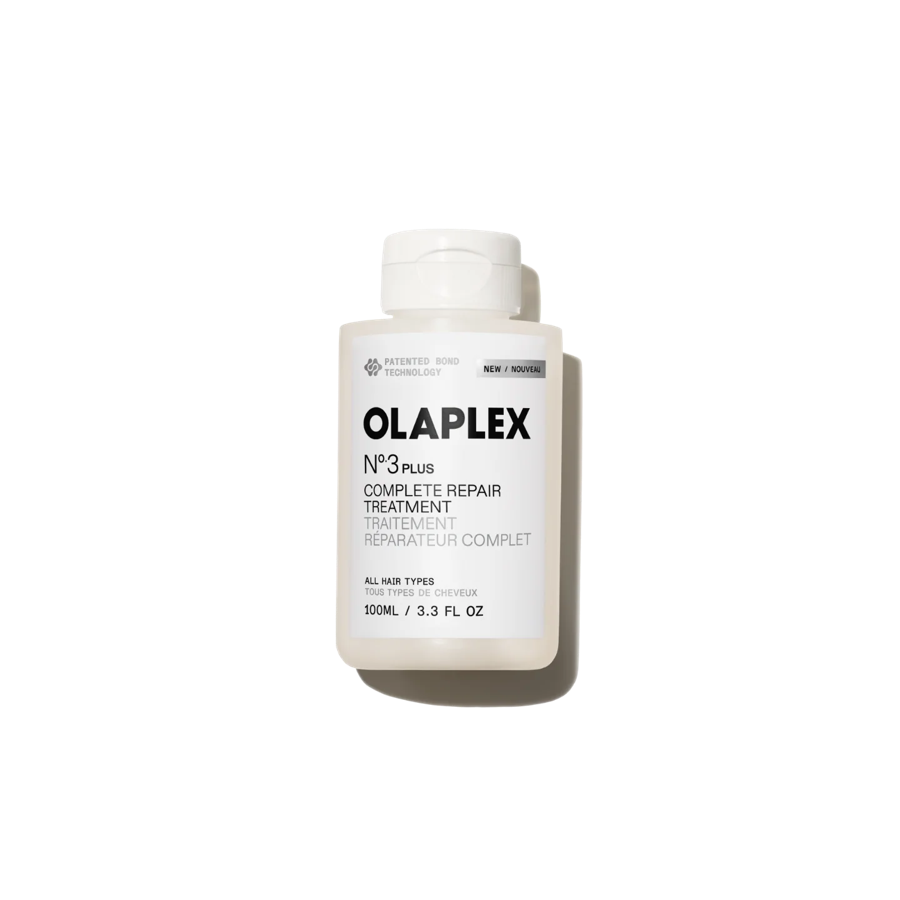
Olaplex No. 3PLUS: the old No. 3, rewritten
N°.3PLUS Complete Repair Treatment
- Price$34
- Size100 ml (3.3 fl oz)
- Works out at$0.34 per ml
Olaplex US list price, 22 Nov 2026 (Olaplex replaced No. 3 Hair Perfector with No. 3PLUS in 2026)
See it on olaplex.com Olaplex No. 3 →
Image: Olaplex, from olaplex.com
What it costs, size by size
Olaplex sells No. 3PLUS on its US site in two sizes: the 100 ml “full size” for $34, which is 34 cents a millilitre, and the 250 ml “jumbo” for $68, which brings it down to about 27 cents. At Ulta the 3.3-ounce bottle carried the same $34 list price on 22 November, or $32.30 with Ulta's 5% subscription discount, and Olaplex itself was offering 30% off sitewide to shoppers who signed up for early access to its holiday sale, so the list price is a ceiling rather than what most careful buyers will pay this month.
The jumbo bottle is the obvious buy for anyone who already knows they like the treatment, because it costs exactly twice as much as the small one for two and a half times the product, a saving of 20% per millilitre. The 100 ml bottle makes sense as a first purchase, or for someone with short hair who uses it every couple of weeks, and we would not bother with travel sizes or gift sets unless they come free, since Olaplex's own price list makes the big bottle the clear value.
What changed when Hair Perfector became No. 3PLUS
Olaplex's own comparison, published in October 2026, frames the change as an upgrade: it describes the old No. 3 as a “Hair rescue” that focused on internal bond repair and on colored or bleached hair, and the new one as “Hair repair and protection” that works “inside and outside the hair strand” on all hair types. Its FAQ answers the question many buyers are asking in one word, saying “Yes, Nº.3PLUS is replacing the original Nº.3”, and adds that No. 0, the brand's stronger pre-treatment, which was designed to be used before the original No. 3, is no longer needed with the new formula.
The label tells a more detailed story. Of the 26 ingredients in the last Hair Perfector, 11 are gone, among them aloe leaf juice, jojoba seed oil, ascorbic acid, phytantriol and tocopheryl acetate, and 41 are new, including shea butter, crambe, avocado, coconut and sunflower seed oils, rice bran and rosemary extracts, sodium PCA, several cationic conditioners whose names end in “-monium”, and the dyes Yellow 5 and Yellow 6. Olaplex credits what it calls a “Damage Defense Cationic Complex” and a “Natural Humectant Derived From L-Glutamic Acid” for the new benefits, without saying which ingredients make up the complex, and it still lists the bottle as free of SLS and SLES sulfates and of protein.
The routine has been simplified too. Olaplex's 2020 page told buyers to leave No. 3 on for “a minimum of 10 minutes or more”, its 2025 and early-2026 pages said three to 10 minutes, and No. 3PLUS says three minutes, then rinse, every one to three washes, or daily if you like. Olaplex had also removed lilial, a fragrance ingredient, from Hair Perfector worldwide in 2022, telling Highsnobiety that it had done so “out of an abundance of caution”, so the 2026 rewrite is the second time in four years that the familiar bottle has changed inside.
The patented molecule, as Olaplex tells it
Olaplex's whole business rests on one ingredient, bis-aminopropyl diglycol dimaleate, which WWD reported was created by the scientist Craig Hawker after Christal approached him with the idea of rebuilding the bonds that bleach breaks. The company's 2024 annual report calls it “our patent-protected bond-building technology”, and Olaplex's patents page lists US patent 9,095,518, among others, against No. 3 Hair Perfector.
The brand's explanation of what the molecule does is simple: disulfide bonds give hair its strength, bleach, color and heat break them, and what Olaplex calls its Bond Building Technology works “on a molecular level to repair these bonds”, in the words of its hair health guide. That is the brand's claim rather than something a shopper can check at the counter, and the best evidence Olaplex offers on the product page is its own testing, which reports 3X stronger hair after four uses, 3X softer hair measured against bleached hair, and 75% stronger internal hair structure over time.
What buyers report
On Ulta's website No. 3PLUS showed an average of 4.6 out of 5 from 360 reviews on 22 November, and Amazon's US listing for the 250 ml bottle showed 4.7 out of 5 from 449 ratings, 88% of them five stars and 4% one star, a strong start for a product less than a year old. The review highlights Amazon prints on that page count 29 buyers mentioning frizz control, 26 of them favorably, and nine mentioning softness, all favorably, and speed is a recurring theme, with one buyer quoted there writing that “It’s so much faster than the regular No 3 and the results are great”.
Value splits buyers far more evenly: Amazon's highlights count 18 mentions of value for money, nine positive and nine negative, and the sharpest negative quoted there calls it “Overpriced & overrated in my opinion. NOT the same product used in salons”. The press has been friendlier, and Refinery29's March 2026 review praised the speed, though its line that the original needed over 10 minutes is true only of Olaplex's older instructions, which by 2025 had come down to three to 10 minutes.
After one use of No.3 Plus, my lengths looked and felt brand new.
Jacqueline Kilikita, reviewing No. 3PLUS for Refinery29, March 2026
What goes wrong with Olaplex
The biggest risk is buying No. 3PLUS expecting the old Hair Perfector, because only 15 of the new bottle's 56 ingredients were in the old one, and anyone whose hair or scalp got on with the old, simpler formula is effectively starting again with a new product. People who avoid dyes or fragrance allergens should read the label, since the new one adds Yellow 5, Yellow 6, linalool, citronellol, hydroxycitronellal, alpha-isomethyl ionone and linalyl acetate, and people who avoid coconut oil will find it in the new list but not the old.
Olaplex also carries some history. In February 2023, 28 women in the US said publicly that Olaplex products had left them with hair loss, breakage and scalp irritation, and Olaplex answered that its products “do not cause hair loss or hair breakage” and pointed to results it had released from independent laboratories, Dermatology Times reported. Hair shedding has many causes, and anyone who notices unusual loss or scalp irritation after changing products should stop and see a dermatologist rather than read reviews.
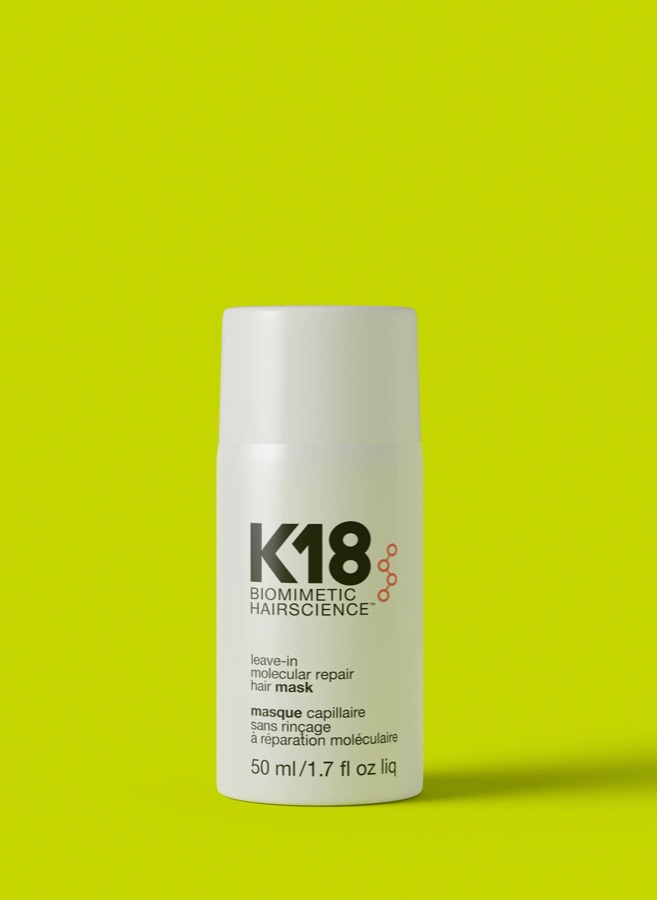
K18 Leave-In Molecular Repair Hair Mask: a peptide you don't rinse out
Leave-In Molecular Repair Hair Mask
- Price$75
- Size50 ml (1.7 fl oz)
- Works out at$1.50 per ml
K18 US, 22 Nov 2026
See it on k18hair.com The best hair products at Sephora →
Image: K18, from k18hair.com
What it costs, size by size
K18 sells its mask on its US site in three standard sizes: a 15 ml mini for $29, which is $1.93 a millilitre, the 50 ml full size for $75, or $1.50, and a 100 ml jumbo for $120, which brings it down to $1.20. A limited-edition scented version made with Future Society costs the same $75 for 50 ml, and the brand offers savings of up to 15% to subscribers, so the jumbo on subscription is the cheapest way to buy it.
What stands out is how still the price has been. An archived copy of K18's page shows the 50 ml bottle at $75 in January 2021, and the 15 ml mini was $29 in February 2023, exactly as today, while most of the prestige hair shelf has crept up. We would start with the mini, which at $29 costs less than one bottle of Olaplex and is enough to learn whether the routine suits you, and then move to the jumbo rather than the 50 ml.
The peptide, as K18 tells it
K18's active ingredient is listed on the label as sh-oligopeptide-78 and sold as K18Peptide, and the brand's patents page says the technology was developed by researchers led by Professor Artur Cavaco-Paulo at the Centre of Biological Engineering at the University of Minho in Portugal, with Solfarcos Technologies, and is covered by patents or patent applications in the US and abroad. The “sh” prefix is the naming convention for synthetic, lab-made peptides modelled on human ones, and K18 describes its peptide as biomimetic, meaning designed to mimic the structure of hair's own keratin.
Its science page claims that the peptide “uniquely matches and clicks into hair's keratin structure”, reconnecting what K18 calls polypeptide chains as well as disulfide bonds, which is how the brand distinguishes itself from Olaplex's focus on disulfide bonds. The product page adds that it is “clinically proven to repair damage from bleach + color, chemical services and heat”, that the formula is pH-optimized at 5.0 to 6.0, and that most people see results after two or three uses, all claims that come from K18 rather than from independent testing we could find.
Why no conditioner first? The routine K18 insists on
K18's instructions are strict and worth following to the letter. You shampoo but don't condition, towel-dry thoroughly, apply one to three pumps from the ends upwards, wait four minutes, then comb and style without rinsing, and K18 says to do this for four to six washes in a row after a salon service and then as needed; its how-to page suggests hair should be about 65% wet, because if it's too dry the peptide can't get in and if it's too wet the product is watered down.
The rule against conditioner is the one people break most. K18's FAQ says conditioner leaves “a film that blocks our peptide from penetrating effectively”, and that you are free to use conditioner, a leave-in or any other product once the four minutes are up, though it adds that most people find they don't need one. Say you wash your hair on Sunday night and blow-dry it: the K18 routine adds four minutes between towel and hairdryer, whereas Olaplex adds three minutes before you even pick up the shampoo.
What's in the bottle
The label lists 23 ingredients: water, alcohol denat., propylene glycol, cetearyl alcohol, dicaprylyl ether, cetyl esters, behentrimonium chloride, polysorbate 20, sh-oligopeptide-78, hydrolyzed wheat protein, hydrolyzed wheat starch, isopropyl alcohol, tocopherol, phenoxyethanol, potassium sorbate, citric acid, fragrance, geraniol, linalool, hexyl cinnamal, benzyl alcohol, amyl salicylate and benzaldehyde. Alcohol comes second, which surprises people, and K18 answers the question on its own page, saying its “unique blend of 3 alcohols functions to open the hair cuticle” so that the peptide can reach the inner layers of the hair.
The other ingredient worth noticing is hydrolyzed wheat protein, tenth on the list, because Olaplex makes a selling point of being protein-free, and that matters to anyone who finds that protein treatments leave their hair stiff. K18 calls the mask vegan, color-safe and cruelty-free, which is consistent with wheat, but anyone avoiding wheat or protein should know it is there. Like No. 3PLUS, it contains no silicones, and unlike No. 3PLUS, it contains no dyes.
What buyers report
K18's own site showed 9,624 reviews of the mask averaging 4.7 out of 5 on 22 November, with 93% of reviewers saying they would recommend it, and the summary K18 generates from the 100 most recent reviews says buyers report softer, less frizzy hair after a single use while noting the high price and that a little goes a long way. The featured reviews come mostly from people with colored, curly or fine hair: “I have searched for a product for years that does what this product does for me,” wrote one curly-haired reviewer, and another, with color-treated hair, wrote that their hair had been breaking “so much less since starting K18”.
The same summary says a few buyers recommend using a conditioner alongside the mask, which matches the most common complaint about K18, that hair can feel dry or crunchy afterwards. K18 addresses this directly on its how-to page, telling anyone whose hair “feels dry, frizzy, and crunchy post-mask” to troubleshoot, usually by using less product, clarifying first and getting the dampness right, so the crunch is often a sign of too many pumps rather than of a bad bottle.
I have searched for a product for years that does what this product does for me.
A verified reviewer with curly, color-treated hair, on K18's US site (a review about a year old in November 2026)
What goes wrong with K18
Price is the plain drawback: at $1.50 a millilitre in the 50 ml bottle, K18 costs about four and a half times as much per millilitre as No. 3PLUS in its 100 ml bottle, and the gap is the same between the two brands' biggest sizes. K18 would point out that the dose is small, one to three pumps, but since neither brand says how many treatments a bottle holds, we can't turn that into a reliable price per use.
The routine is the second risk, because K18 only works as the brand intends if you skip conditioner, get the dampness right and wait the full four minutes, and buyers who rush it are the ones who report crunchy ends. The alcohol near the top of the list may give pause to anyone whose hair is already very dry, and the wheat protein rules it out for people who avoid it, which makes K18 the more demanding of the two for some hair types even as it is the simpler of the two for others.
Rinse-out or leave-in: which fits your week?
The practical difference between the two is where they sit in your shower and how long they add to it. No. 3PLUS is a pre-wash: wet hair, apply generously from roots to ends, wait three minutes, rinse, then shampoo and condition as normal, so it suits anyone who already lingers in the shower and wants the treatment gone before the hairdryer comes out. K18 is a post-wash: shampoo, no conditioner, towel-dry, a pump or three, four minutes of waiting, then style, so it suits people who would rather spend the time outside the shower and like the idea of the treatment staying in their hair until the next wash.
Olaplex also asks for more product per use, by its own description, since “apply generously” on wet hair is a different quantity from K18's single pump on towel-dried hair, which is part of why its bottles are bigger and cheaper per millilitre. If you wash every day, Olaplex's own suggestion of every one to three washes is easier to fit than K18's run of four to six consecutive washes, and if you wash twice a week, either routine is easy to keep.
Which suits bleached, curly, fine or protein-sensitive hair?
Both brands say their treatment works on all hair types, and both say it is aimed above all at damage from bleach, color, chemical services and heat, so the real decision comes down to secondary details. Olaplex used to describe Hair Perfector as best on colored and bleached hair and now describes No. 3PLUS as for all hair types, and the new formula's shea butter and plant oils make it the more conditioning of the two; that suits thick, curly and coily hair, and frizz control is the benefit Amazon buyers mention most.
Fine hair that collapses under heavy products is the case for K18, since a single pump left in is lighter than a creamy rinse-out, as long as you avoid over-applying. Protein-sensitive hair is the case for Olaplex, because No. 3PLUS is protein-free and K18 contains hydrolyzed wheat protein. Say your hair is bleached platinum, fine and prone to frizz: we would start with K18's $29 mini and use it exactly as directed, and if your hair is thick, curly and dry, we would start with No. 3PLUS in the 100 ml bottle.
Which is better value per millilitre?
Olaplex is far cheaper per millilitre at every size, and the gap is remarkably constant: K18's 50 ml bottle costs about 4.4 times as much per millilitre as Olaplex's 100 ml bottle, and K18's 100 ml jumbo costs about 4.4 times as much as Olaplex's 250 ml jumbo. Even K18's cheapest millilitre, $1.20 in the jumbo, costs more than three times Olaplex's dearest, 34 cents in the 100 ml bottle.
| Size and price on the brand's US site | Olaplex No. 3PLUS | K18 Leave-In Mask |
|---|---|---|
| Smallest size | 100 ml for $34 (34 cents a ml) | 15 ml for $29 ($1.93 a ml) |
| Standard size | 100 ml for $34 (34 cents a ml) | 50 ml for $75 ($1.50 a ml) |
| Largest size | 250 ml for $68 (about 27 cents a ml) | 100 ml for $120 ($1.20 a ml) |
| Price of the standard size in earlier years | $28 in 2020; $30 in February 2026 (as Hair Perfector) | $75 in January 2021 |
Brands' US websites on 22 November 2026 and archived copies of the same pages. Prices per millilitre are our arithmetic.
Two American challengers, now both owned in Europe, and Olaplex sold for a tenth of its peak
Olaplex and K18 were both born as American upstarts, and both now belong to European consumer giants. Henkel, the German consumer goods company, agreed on 26 March 2026 to buy Olaplex for $2.06 a share, an equity value of about $1.4 billion, Cosmetics Business reported, and Henkel completed the deal on 7 July, giving Olaplex's 2025 sales as about €370 million. When Olaplex listed on Nasdaq in September 2021, Glossy reported a fully diluted value of more than $14 billion, so Henkel paid roughly a tenth of that.
K18 went the other way. Unilever agreed in December 2023 to buy it, three years after launch, without disclosing a price, and in October 2026 it listed K18 among the brands with double-digit, volume-led growth in its third quarter, Cosmetics Business reported. Olaplex's own results show what happened to its business in between: sales fell 34.9% to $458.3 million in 2023 and a further 7.8% to $422.7 million in 2024, according to its 2024 results, which puts the 2026 rewrite of its best-known product in context, as part of a brand trying to win buyers back rather than a tweak to a bestseller that didn't need one.
Can you use both, and in what order?
Yes, the two routines fit together without clashing, because one happens before shampoo and the other after it: apply No. 3PLUS to wet hair, rinse after three minutes, shampoo, skip conditioner, towel-dry, then apply K18 and wait four minutes before styling. Doing both every wash doubles the cost and the time, so the sensible way to combine them is to keep K18 for the run of washes after a bleach or color appointment, as K18 suggests, and use No. 3PLUS in between.
The one rule to respect is K18's: don't put Olaplex's No. 5 conditioner, or any other conditioner, on before K18, because K18 says conditioner blocks its peptide. Using No. 3PLUS first is fine, since it is rinsed off before you shampoo.
Alternatives worth knowing
Olaplex's own No. 0 Intensive Bond Building Treatment, $30 on its US site, was designed as a primer for the old No. 3, and Olaplex now says it is not required with No. 3PLUS, so we would only buy it if your stylist asks you to. If what you mainly want is softness, shine and less frizz rather than bond repair, a finishing oil does that job for less effort, and our Moroccanoil vs Gisou comparison looks at the two best-known ones, both of which list silicones before any oil.
If you come across old stock of Hair Perfector, remember that Olaplex no longer sells it on its US site, so we would not pay a premium for it or buy it from a seller you don't know. For everything else about Olaplex's treatment on its own, from the patent story to the company's sale, see our full Olaplex No. 3 review.
Our verdict
For most people we would buy Olaplex No. 3PLUS, in the 250 ml bottle once you know you like it, because at about 27 cents a millilitre it costs a fraction of K18, its three-minute rinse-out is easy to fit into any shower, it contains no protein, and the 2026 formula added conditioning oils and shea butter that the old Hair Perfector didn't have. We would buy it knowing that it is a new product wearing an old number, with dyes and more fragrance components than before, and we would read the label if you have sensitivities.
We would choose K18 if you bleach or color often, if your hair is fine and dislikes anything heavy, or if you simply prefer a leave-in, and we would start with the $29 mini before moving to the jumbo. Its formula and price have been the steadier of the two for almost six years, which counts for something when a treatment is meant to be used for months, but it is the dearer habit by a wide margin, and it only works as K18 intends if you follow the routine exactly, conditioner rule included.
Questions people ask
Is K18 better than Olaplex?
Neither is better for everyone: K18 is a leave-in that suits fine or heavily bleached hair and people who prefer a small dose after washing, while Olaplex No. 3PLUS is a cheaper rinse-out that suits thick, curly or protein-sensitive hair. Per millilitre, K18 costs about four and a half times as much as Olaplex on the brands' US sites.
Can you use K18 and Olaplex together?
Yes, as long as you keep them in the right order: Olaplex No. 3PLUS goes on wet hair before shampoo and is rinsed off, and K18 goes on towel-dried hair after shampoo, with no conditioner in between, and is left in. Doing both every wash is expensive, so many people keep K18 for the washes after a color appointment.
Do you use Olaplex or K18 first?
Olaplex No. 3PLUS comes first, because it is a pre-shampoo treatment you rinse off after three minutes, while K18 is applied after shampooing and left in. K18 says not to use conditioner before its mask, because it can block the peptide.
Is Olaplex No. 3 discontinued?
Olaplex has replaced No. 3 Hair Perfector with No. 3PLUS Complete Repair Treatment, which its blog calls the next-generation version, and the old product's page on Olaplex's US site now leads to the new one. No. 3PLUS costs $34 for 100 ml and $68 for 250 ml.
Do you rinse out K18?
No, K18 is a leave-in mask: you apply it to towel-dried hair after shampoo, wait four minutes and then style without rinsing. K18 says you can use conditioner or styling products after the four minutes are up.
Does K18 have protein in it?
Yes, K18's ingredient list includes hydrolyzed wheat protein and hydrolyzed wheat starch, alongside its patented peptide, sh-oligopeptide-78. Olaplex describes No. 3PLUS as protein-free.
Who owns Olaplex and K18?
Olaplex has been owned by Henkel, the German consumer goods company, since it completed a deal of about $1.4 billion in July 2026. K18 belongs to Unilever, which agreed to buy it in December 2023.
How we put this together
We read each brand's own product pages and full ingredient lists, what buyers report in public reviews and forums, and the news coverage linked on this page. Prices are the brand's own list prices in the US on the date shown, unless the page names another shop. Nothing here is rated or scored, and no brand paid to appear.
Sources (28)
- Olaplex US: N°.3PLUS Complete Repair Treatment, 100 ml (price, ingredients, directions, claims)
- Olaplex US: N°.3PLUS Complete Repair Treatment, 250 ml
- Olaplex: Nº.3 vs. Nº.3PLUS, what's the difference? (October 2026)
- Olaplex: Your guide to Nº.3PLUS Complete Repair Treatment (February 2026)
- Olaplex Nº.3 Hair Perfector page, archived February 2026
- Olaplex No.3 Hair Perfector page, archived April 2020
- Olaplex: patents
- Olaplex: foundational hair health
- Ulta: Olaplex No.3PLUS listing (price, rating)
- Amazon US: Olaplex N°.3PLUS, 250 ml listing (ratings and review highlights)
- K18 US: Leave-In Molecular Repair Hair Mask, 50 ml (price, ingredients, directions, FAQ, reviews)
- K18 mask page, archived January 2021
- K18 15 ml mask page, archived February 2023
- K18: how to use
- K18: our science
- K18: patents
- FDA: Cosmetics labeling guide
- WWD via Yahoo: WWD Honors, Olaplex (October 2021)
- Olaplex Holdings: 2024 annual report (Form 10-K)
- Olaplex Holdings: fourth quarter and fiscal 2024 results
- Glossy: Olaplex goes public, valued at $14 billion (September 2021)
- Cosmetics Business: Henkel to acquire Olaplex in $1.4bn deal (March 2026)
- Henkel: Henkel closes acquisition of Olaplex (7 July 2026)
- Retail Dive: Unilever acquires hair care brand K18 (December 2023)
- Cosmetics Business: Unilever's beauty brands, K18 drive growth in Q3 (October 2026)
- Highsnobiety: Olaplex and lilial
- Dermatology Times: buyers' hair-loss reports and Olaplex's response (February 2023)
- Refinery29: Olaplex No.3 Plus review (March 2026)