Buy Moroccanoil Treatment if you want the classic at almost half the price per millilitre, 50 cents in its 100 ml bottle, a seven-ingredient label and a warm amber scent; buy Gisou Honey Infused Hair Oil if you want honey and four plant oils on the label, a dropper, a heat-protection claim and a honeyed scent, and accept paying 92 cents a millilitre now that the big bottle has gone from Gisou's US site.
- You want the lowest price per millilitre, which is 50 cents in the 100 ml bottle, against 92 cents for the largest Gisou bottle on its US site.
- Your hair is medium to thick or curly, which is the hair Moroccanoil recommends the Original for, with an identically listed Light version for fine hair.
- You like a short label: Moroccanoil lists seven ingredients, against Gisou's 18, and has kept the same list since at least 2022.
- You love warm, spicy scents, since Moroccanoil describes its signature fragrance as spicy amber with sweet floral notes.
- You want a heat-protection claim, since Gisou says its oil protects up to 450°F (230°C) in a lab test, a claim Moroccanoil doesn't make for its Treatment.
- You want more than one oil on the label: Gisou lists honey, sweet almond, coconut, argan and passionflower seed oils and a gardenia extract.
- You like a dropper that lets you count out the one or two drops Gisou suggests for fine hair.
- You would rather avoid cyclomethicone, the cyclic silicone mixture that leads Moroccanoil's label.
The one difference that matters: these are two silicone serums with oils added, built on a strikingly similar base, so the choice comes down to price, scent and extras, and on price Moroccanoil wins clearly, at 50 cents a millilitre in its 100 ml bottle against 92 cents for Gisou's 50 ml.
Neither is mainly oil: both labels list silicones before any oil, so if you want a silicone-free hair oil, read what the labels say before buying either.
| | |
|---|---|---|
| Price, standard size | $50 for 100 ml (3.4 fl oz) | $46 for 50 ml (1.7 fl oz) |
| Price per ml | 50 cents (100 ml) | 92 cents (50 ml) |
| Sizes on the brand's US site | 25 ml for $20; 50 ml for $38; 100 ml for $50 | 20 ml for $25; 50 ml for $46 |
| First three ingredients | Cyclomethicone, dimethicone, argan oil | Dimethicone, dimethiconol, trisiloxane |
| Number of ingredients | 7 | 18 |
| Oils and extracts on the label | Argan oil; linseed extract | Honey; sweet almond, coconut, argan and passionflower seed oils; gardenia flower extract; vitamin E |
| Scent | Spicy amber with sweet floral notes, per Moroccanoil | Fragrance, with coumarin, hexyl cinnamal, limonene and linalool listed |
| Dyes | Red 17 and Yellow 11 | Yellow 11 and Red 17 |
| Brand's main claims | Up to 118% more shine after one use; detangles; speeds up drying | Up to 2x shinier; up to 3 days of frizz control and hydration; heat protection to 450°F |
| Applicator | Pump on the 100 ml bottle | Glass dropper |
| Brand from | Israel; born of a Tel Aviv salon find in 2006 | Netherlands; founded in 2015 by Amsterdam-born Negin Mirsalehi |
| Where to buy | Moroccanoil.com and salons | Gisou.com, and Sephora since 2020 |
List prices from the brands' US websites on 22 November 2026; Moroccanoil was running 30% off sitewide and Gisou 25% off sitewide that day. Prices per millilitre are our arithmetic.
Two hair oils from outside the usual beauty capitals
Most famous beauty products come from Paris, New York, Seoul or Tokyo, which makes these two unusual, because what Moroccanoil calls the best-selling prestige hair oil in America began with a treatment its co-founder found in a Tel Aviv salon, and its most fashionable rival began with a family recipe and a bee garden in the Netherlands. Carmen Tal first tried argan oil at a salon in Tel Aviv in 2006, according to a 2013 profile in Nuvo, and the company she formed with her then-husband, Ofer Tal, now cites Circana data to call Moroccanoil Treatment the number one hair oil in US prestige beauty in the first half of 2026.
Gisou is younger and smaller but just as tied to a place. Negin Mirsalehi, described by WWD as an Amsterdam native, created the brand in 2015 around a hair oil her mother, a hairdresser, first made in the 1990s, and around honey from the Mirsalehi Bee Garden that her father set up in Almere after moving from Iran in the 1980s, according to Gisou's own account. The two oils sit side by side on many bathroom shelves and in plenty of “which is better” videos, yet the most useful thing to know about them is how much their labels have in common.
Five of Moroccanoil's seven ingredients are also in Gisou's bottle, down to the same two dyes
Put the two ingredient lists side by side and the overlap is striking. Of the seven ingredients on Moroccanoil's label, five, dimethicone, argan oil, fragrance and the dyes CI 47000 (Yellow 11) and CI 26100 (Red 17), also appear on Gisou's, so both bottles get their amber color from exactly the same pair of colorants. The only Moroccanoil ingredients missing from Gisou are cyclomethicone, its first ingredient, and linseed extract.
Both lists also start with silicones rather than oil: Moroccanoil's first two ingredients are silicones and argan oil comes third, while Gisou's first three are silicones, dimethicone, dimethiconol and trisiloxane, with honey fourth. The FDA's labeling guide says ingredients must be listed in descending order of predominance, with only those at 1% or less allowed in any order at the end, so each bottle contains more of its leading silicones than of any oil, and the oils that give the products their names are the supporting cast. And Moroccanoil's Light version, which the brand says is lighter in formulation, texture and color, has exactly the same seven ingredients in the same order, so the difference lies only in proportions the label doesn't show.
Moroccanoil Treatment: the amber bottle that started the argan craze
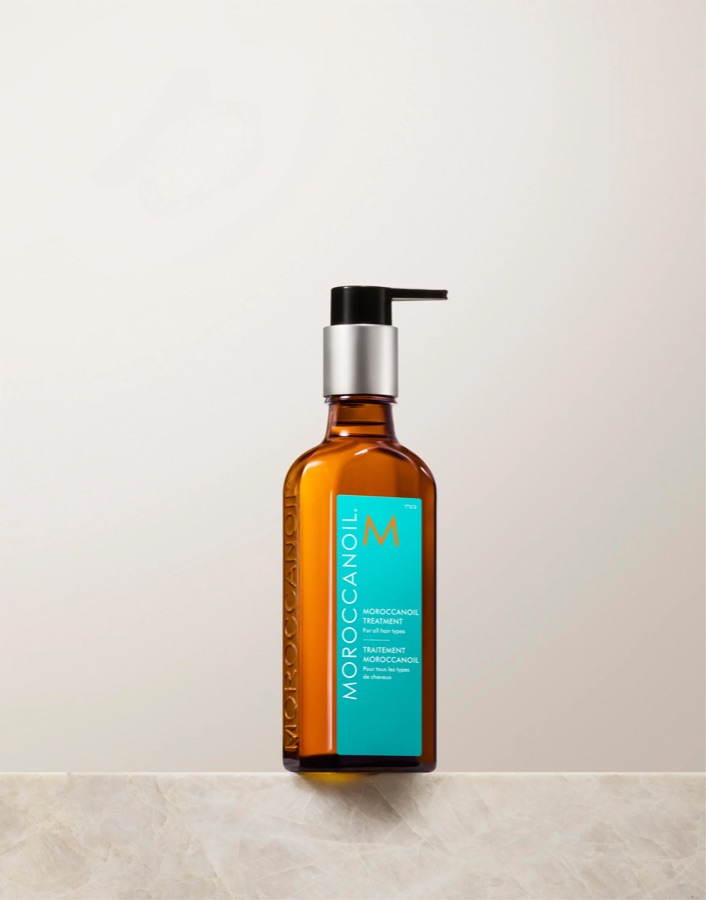
Moroccanoil Treatment Original
- Price$50
- Size100 ml (3.4 fl oz)
- Works out at$0.50 per ml
Moroccanoil US list price, 22 Nov 2026 (a 30% sitewide sale was running that day)
Image: Moroccanoil, from moroccanoil.com
What it costs, size by size
Moroccanoil sells the Original Treatment on its US site in three sizes: a 25 ml travel bottle for $20, which is 80 cents a millilitre, a 50 ml midi for $38, or 76 cents, and the 100 ml full size for $50, or 50 cents. On 22 November the whole site was 30% off with no code needed, which brought the 100 ml bottle to $35, and anyone who uses a hair oil daily should wait for sales like this one, because the brand runs them often enough to make full price look optional.
The 100 ml bottle is the only size we would buy, since the travel bottle costs 60% more per millilitre and the midi 52% more, and Moroccanoil's own buyers say a little goes a long way; one reviewer on its site wrote that “one bottle will last me like a year”. The price has crept up, though: archived copies of Moroccanoil's US site show the 100 ml bottle at $44 in September 2020, $48 in January 2024 and $50 since early 2026, a rise of 14% in six years.
What's in it: seven ingredients, two of them silicones
Moroccanoil's label reads, in full: cyclomethicone, dimethicone, argan kernel oil, fragrance, linseed seed extract, CI 26100 (Red 17) and CI 47000 (Yellow 11), and an archived copy of the page from December 2022 shows exactly the same list. Cyclomethicone, the first ingredient, is described by the European ingredient database COSMILE as an earlier name for a mixture of three cyclic silicones, D4, D5 and D6, used to leave hair “easy to comb, supple, soft and shiny”, and dimethicone, the second, is one of the most widely used silicones in hair products.
Argan oil, third on the list, is the ingredient that gives the brand its name and, by its own account, its story; Moroccanoil calls it rich in essential fatty acids, antioxidants and vitamin E, and describes the linseed extract as a source of alpha linolenic acid, another fatty acid. The two dyes give the liquid its amber color, and the fragrance is the brand's signature scent, which Moroccanoil's about page describes as “a Mediterranean-inspired blend of spicy amber and sweet floral notes”. The label lists no individual fragrance components, which some people with fragrance sensitivities will notice.
How Moroccanoil says to use it, and what it claims
Moroccanoil tells buyers to apply a small amount to clean, towel-dried hair from the mid-lengths to the ends, then blow-dry or let it dry naturally, and to use it on dry hair to tame flyaways and smooth split ends; it also suggests mixing a few drops into one of its masks. Its headline claim is that one application increases shine by up to 118%, “according to an independent study”, and it adds that the Treatment detangles and speeds up drying time, without making a heat-protection claim for this product.
The brand's own FAQ is unusually direct about who should buy which version: the Original for medium to thick or curly hair, Treatment Light for fine or light-colored hair, and a Purple version for light-colored hair that turns brassy. Say your hair is fine and blonde and goes limp under anything rich: Moroccanoil would steer you to the Light, which costs the same and lists the same seven ingredients in the same order, but which the brand says is lighter in formulation, texture and color.
What buyers say
Moroccanoil's site showed an average of 4.86 out of 5 from 9,268 reviews on 22 November, and the review summary on the page, generated from customers' comments, puts softness first, raised in 39% of the comments it summarized, and also notes shine, smoother frizz and the pleasant smell. The featured reviews keep returning to the scent and to how little is needed: “It's not greasy, and you only need a small amount to cover your hair,” wrote one five-star reviewer, and several of the others shown that day mentioned the smell before anything else.
The complaints on the page are about delivery and packaging rather than the oil itself. A two-star reviewer wrote that “Over 3/4 of bottle was spilling out during shipping” and that the plastic bottles in the order arrived crushed and leaking, and a four-star reviewer marked it down only because their bottle didn't come with a pump, which suggests checking which size and format you are buying, since the 100 ml bottle in Moroccanoil's photograph has one.
It's not greasy, and you only need a small amount to cover your hair.
A five-star reviewer featured on Moroccanoil's US product page, November 2026
The story: from a Tel Aviv salon to the top of the US chart
Carmen Tal's own telling, in the 2013 Nuvo profile, starts with a hair catastrophe in 2006 that a Tel Aviv salon fixed with argan oil, after which she and Ofer Tal built a business around the treatment; she took on marketing, product development and education, and he handled distribution and importing. By 2013, Nuvo reported, 80% of Moroccanoil was made in a warehouse about two hours north of Jerusalem, and the company had offices in São Paulo, Tokyo, New York, Tel Aviv and Montreal.
Moroccanoil's own history says the brand began in salons and spread as stylists recommended it, before growing into a full hair range, a body collection and professional hair color, with argan oil in every product. Its product page now cites Circana to call the Treatment the number one hair oil in US prestige beauty by dollar sales in the first half of 2026, which is a remarkable position for a product whose formula, at least since 2022, has not changed at all.
What goes wrong with Moroccanoil
The first problem is a matter of expectation: anyone who buys Moroccanoil Treatment believing it is an argan oil will find that it is a silicone serum with argan oil in third place, and Moroccanoil itself sells a separate Pure Argan Oil, which its FAQ describes as 100% argan oil, for people who want the real thing. The silicones are what make the Treatment feel silky and spread easily, but people who avoid silicones, or who find that their hair needs a clarifying wash after a week of serum, should know what they are buying.
The second is cyclomethicone. COSMILE notes that D5, one of the silicones in the cyclomethicone mixture, is classified as very persistent and accumulating in the environment, which has led to a very low dose limit in rinse-off products, with a similar limit being considered for leave-on ones. Gisou's bottle contains no cyclomethicone, so this is one point on which the two genuinely differ, and the price is the third: at $50 for 100 ml, Moroccanoil is still far cheaper per millilitre than Gisou, but it costs 14% more than in 2020.
Gisou Honey Infused Hair Oil: a family recipe in a dropper bottle
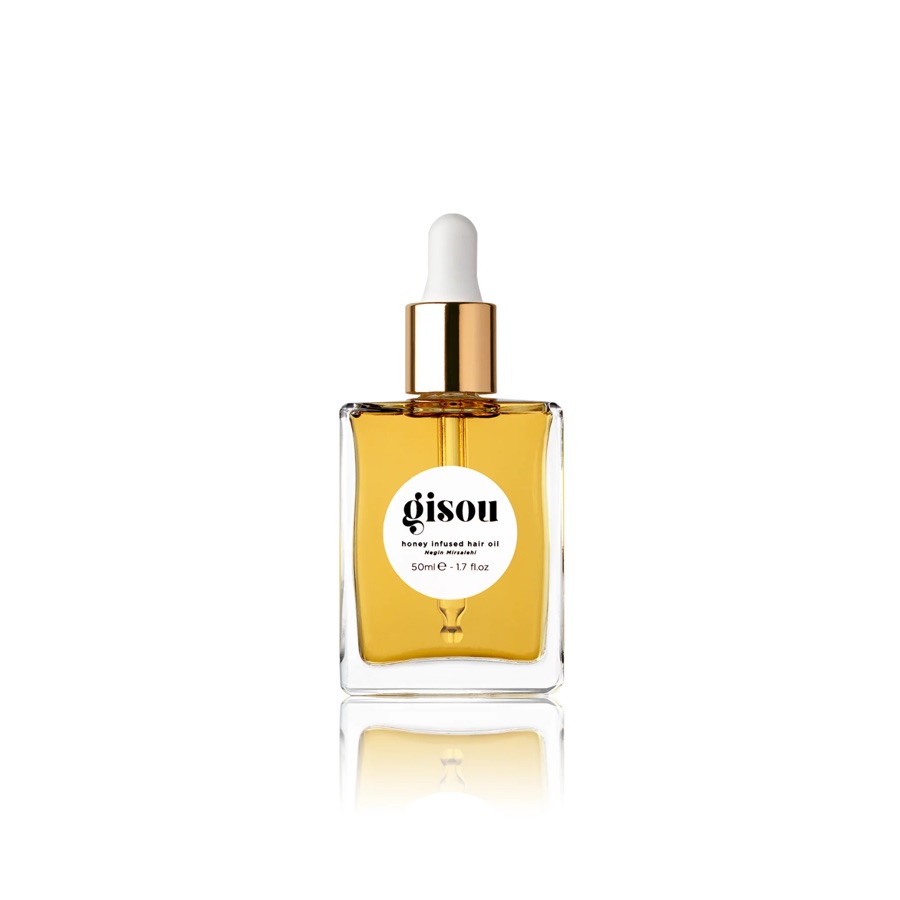
Honey Infused Hair Oil
- Price$46
- Size50 ml (1.7 fl oz)
- Works out at$0.92 per ml
Gisou US list price, 22 Nov 2026 (a 25% sitewide sale was running that day)
Image: Gisou, from gisou.com
What it costs, and where the big bottle went
Gisou's US site sold the oil in two sizes on 22 November: a 20 ml bottle for $25, which is $1.25 a millilitre, and the 50 ml bottle for $46, or 92 cents a millilitre. The whole site was 25% off that day with no code needed, which brought the 50 ml bottle to $34.50, still more per millilitre than Moroccanoil at full price.
The missing size is the story. Archived copies of Gisou's US site show a 100 ml bottle for $87 in January 2021, January 2023 and January 2025, when the 50 ml cost the same $46 it costs now, but the 100 ml was not offered on 22 November, and Gisou's European store listed only the 20 and 50 ml sizes in January 2026. A reviewer on Gisou's site in October 2026 said they would “love for it to come in a bigger size as well”, recalling that they once had a special edition, which is as close as the page comes to acknowledging the change.
What's in it: three silicones, then honey
Gisou's label lists 18 ingredients: dimethicone, dimethiconol, trisiloxane, honey, sweet almond oil, coconut oil, argan kernel oil, passionflower seed oil, tocopheryl acetate, fragrance, gardenia flower extract, CI 47000 (Yellow 11), tocopherol, CI 26100 (Red 17), coumarin, hexyl cinnamal, limonene and linalool. The three silicones come first, and the honey, which Gisou calls Mirsalehi Honey, “sustainably sourced from the Mirsalehi Bee Garden”, comes fourth; Gisou has long described honey as a natural humectant, meaning an ingredient generally used to attract and hold moisture.
Gisou also sells the formula on what it calls a “proprietary eight-oil blend”, and that is where the label and the marketing part ways, because the list it publishes names four plant oils, sweet almond, coconut, argan and passionflower seed, plus a gardenia flower extract and two forms of vitamin E, and doesn't show where the rest of the eight might be. The formula has otherwise barely moved: the January 2021 list had the same ingredients in the same order, plus the preservative phenoxyethanol, which has since disappeared. The sweet almond oil is the detail anyone with a nut allergy should notice, since Moroccanoil's bottle contains no nut oil.
The claims, and the single strand behind them
Gisou makes bigger promises than Moroccanoil: up to 2x shinier hair, up to three days of frizz and humidity control, up to three days of hydration, and heat protection up to 230°C or 450°F, which it says makes the oil suitable as a heat protectant before straighteners, curling irons and blow-dryers. The footnote on its page says these results are “Based on an independent laboratory study carried out on the Honey Infused Hair Oil, applied to one strand of hair, using scientifically proven instrumental testing”, which means a measurement on a hair sample in a laboratory rather than a trial on people's heads.
The directions are precise about the dose: one or two drops for fine hair, two or three for medium and three or more for thick hair, warmed between the palms and worked through from the mid-lengths to the ends, before or after styling. Gisou also suggests using it overnight, with a full dropper on each of two sections of hair, braided in and rinsed out in the morning if needed, which uses far more oil than the daily dose.
What buyers say
Gisou's site showed an average of 4.8 out of 5 from 1,687 reviews on 22 November, a smaller and more international crowd than Moroccanoil's, since several of the newest reviews were written in German, Italian and Spanish. The summary Gisou generates from its 100 most recent reviews says buyers praise the shine, the smoothness and the “pleasant, subtle fragrance”, while some note that it can be heavy if overused, several mention leaking bottles, and many find the price steep.
The newest reviews match that summary closely. A wavy-haired reviewer who bought the 20 ml bottle in November 2026 wrote, “First of all, it smells SO good,” and that the oil left their hair soft “without leaving behind a very greasy effect”, while a reviewer with thick, coiled, bleached hair wrote in October that they had bought the small bottle “just to see” and loved it, which suggests the 20 ml size is doing its job as a trial, even at $1.25 a millilitre.
First of all, it smells SO good.
A verified buyer with wavy hair, on Gisou's US site, November 2026
The story: bees in Almere and a recipe from a hairdresser mother
Gisou's account of its bee garden, published in July 2026, says Negin Mirsalehi's father moved from Iran to the Netherlands in the 1980s and set up his own bee garden in Almere, near Amsterdam, building on six generations of beekeeping, and that the brand opened a second garden in 2023. Her mother, a hairdresser, created the original honey-infused hair oil, and Mirsalehi turned it into Gisou in 2015 with her co-founder, Maurits Stibbe.
Sephora began selling Gisou online in the US in August 2020, WWD reported at the time, describing the oil as the brand's hero product and quoting Mirsalehi saying that “the most important thing — the honey — is always there.” In 2022 the investment firm Eurazeo took a minority stake, which the companies said would support Gisou's expansion in the US, FashionUnited reported.
What goes wrong with Gisou
Price is the obvious problem, and the loss of the 100 ml bottle made it worse, because the cheapest millilitre on Gisou's US site is now 92 cents, nearly twice Moroccanoil's 50 cents, for a product whose first three ingredients are silicones. Buyers who love the honey scent will pay it, and the dropper does make it easy not to waste any, but anyone buying a hair oil for the oil should know that the honey and plant oils come after the silicones.
Leaking bottles come up often enough in Gisou's review summary to be worth a warning for travel, and so does heaviness when too much is used, which on fine hair can mean greasy-looking roots. The sweet almond oil rules it out for some households, and the heat-protection claim rests on a laboratory test of a single strand, so we would not rely on it alone before a flat iron at its highest setting.
Silicones vs oils: which is really in the bottle?
Both products are sold as hair oils, both are sold in amber-tinted glass with a story about a precious ingredient, and both are, by the order of their own labels, silicone serums in which oils play a supporting role. That isn't a trick so much as the standard recipe for a finishing oil: silicones spread easily and, in COSMILE's description of cyclomethicone, leave hair “easy to comb, supple, soft and shiny”, which is exactly what most buyers of a finishing oil want, and the plant oils and honey add a little conditioning and a lot of story.
The silicones themselves differ. Moroccanoil leads with cyclomethicone, a mixture of cyclic silicones, and then dimethicone, while Gisou uses dimethicone, dimethiconol and trisiloxane and no cyclic silicones at all, which may matter to buyers who follow the environmental debate about D5. Neither label shows quantities, so there is no way to tell from the outside how much argan oil or honey either contains, only that each comes after the silicones.
Amber or honey: which smells better?
Scent is the strongest reason people give for choosing one over the other, and it is entirely a matter of taste. Moroccanoil describes its signature fragrance as spicy amber with sweet floral notes, and its buyers mention the smell more than almost anything else; Gisou's label names coumarin, hexyl cinnamal, limonene and linalool among its fragrance components, and its buyers describe the result as pleasant and subtle.
Scent is also part of what you pay for, since both brands build their image around it. Anyone sensitive to fragrance should start with the smallest bottle of either, the 25 ml Moroccanoil for $20 or the 20 ml Gisou for $25, and should note that Gisou lists four individual fragrance components while Moroccanoil lists none.
Which suits fine, thick or curly hair?
Moroccanoil gives the clearest guidance: the Original for medium to thick or curly hair, the Light for fine or light-colored hair, and the Purple for brassy blondes. Gisou says its oil suits all hair types and handles the difference with the dose, one or two drops for fine hair and three or more for thick, which is easy to follow with a dropper and harder with a pump.
Say your hair is thick, curly and frizzes the moment it rains: either oil will smooth it, but Moroccanoil's Original is the one its maker designed for you and costs half as much per millilitre. If your hair is fine and you straighten it most days, Gisou's heat claim and drop-by-drop dosing make it the more convenient choice, and Moroccanoil Treatment Light is the cheaper alternative from the other side.
Which is better value per millilitre?
Moroccanoil is cheaper per millilitre at every comparable size, and its advantage grows with the bottle. Someone who gets through 100 ml of hair oil a year would spend $50 on Moroccanoil at full price and $92 on two 50 ml bottles of Gisou, a difference of $42 a year, or $35 against $69 at the two brands' sale prices on 22 November.
| Size and price on the brand's US site | Moroccanoil Treatment | Gisou Honey Infused Hair Oil |
|---|---|---|
| Smallest size | 25 ml for $20 (80 cents a ml) | 20 ml for $25 ($1.25 a ml) |
| Middle size | 50 ml for $38 (76 cents a ml) | 50 ml for $46 (92 cents a ml) |
| Largest size | 100 ml for $50 (50 cents a ml) | No longer offered; 100 ml was $87 (87 cents a ml) in January 2025 |
| Largest size in earlier years | 100 ml: $44 in 2020, $48 in 2024 | 100 ml: $87 in 2021, 2023 and 2025 |
Brands' US websites on 22 November 2026 and archived copies of the same pages. Prices per millilitre are our arithmetic.
Gisou kept its prices but dropped its big bottle; Moroccanoil kept its bottle and raised its price
The two brands have taken opposite routes on price since 2020. Moroccanoil's 100 ml bottle went from $44 in September 2020 to $48 in 2024 and $50 in 2026, a rise of 14%, while Gisou's 100 ml bottle cost $87 on its US site in January 2021, January 2023 and January 2025, and its 20 and 50 ml bottles cost the same $25 and $46 in January 2025 as they do today. But Gisou's 100 ml bottle, at 87 cents a millilitre its best value, was no longer offered on its US site on 22 November 2026, so the cheapest Gisou millilitre a shopper can buy from the brand rose from 87 to 92 cents without any price on the site changing.
Measured against each other, the gap is wider than either brand's sticker suggests. At full price a millilitre of Gisou now costs 84% more than a millilitre of Moroccanoil, for a formula that shares five of Moroccanoil's seven ingredients, and even at the two brands' sale prices that day, $34.50 for 50 ml of Gisou against $35 for 100 ml of Moroccanoil, the Dutch oil cost almost exactly twice as much per millilitre.
Alternatives worth knowing
The closest alternative to Moroccanoil Treatment is its own Treatment Light, which costs the same $50 for 100 ml and lists the same seven ingredients in the same order, but which Moroccanoil says is lighter in formulation, texture and color, and is meant for fine or light-colored hair. For anyone who wants an oil without silicones, Moroccanoil's Pure Argan Oil is, by the brand's description, 100% argan oil, and it is the better pick for that purpose than either serum on this page.
If your hair is broken and brittle from bleach rather than just frizzy, a finishing oil will smooth it but is not designed to do more, and a bond-building treatment is the next step; our Olaplex No. 3 vs K18 comparison and our Olaplex No. 3 review cover the two best known.
Our verdict
If we were buying one hair oil, we would buy Moroccanoil Treatment in the 100 ml bottle, and preferably on one of the brand's frequent sales, because it does the same job as Gisou with a shorter label, a pump, a long track record and a price per millilitre almost half of Gisou's. We would buy the Original for thick or curly hair and the Light for fine hair, knowing that both are silicone serums with argan oil in third place, not argan oil.
Gisou is the better buy for a narrower group: people who love its honey scent, who want a dropper and a heat-protection claim, or who prefer a formula without cyclomethicone, and who don't mind paying 92 cents a millilitre for those things. We would buy the 50 ml bottle rather than the 20 ml, and we would not buy either oil expecting it to be mostly oil, because, by the order of their own labels, neither is.
Questions people ask
Is Gisou hair oil worth it?
Gisou is worth it if you love its honey scent and want a dropper and a heat-protection claim, but it costs 92 cents a millilitre in its 50 ml bottle on Gisou's US site, against 50 cents for Moroccanoil's 100 ml bottle. Both list silicones as their first ingredients.
Does Moroccanoil Treatment have silicones?
Yes, Moroccanoil Treatment's first two ingredients are silicones, cyclomethicone and dimethicone, followed by argan oil, fragrance, linseed extract and two dyes. Moroccanoil sells a separate Pure Argan Oil for people who want 100% argan oil.
Does Gisou hair oil have silicones?
Yes, Gisou Honey Infused Hair Oil lists three silicones first, dimethicone, dimethiconol and trisiloxane, followed by honey and four plant oils. It contains no cyclomethicone, the cyclic silicone mixture that leads Moroccanoil's label.
What does Moroccanoil smell like?
Moroccanoil describes its signature scent as a Mediterranean-inspired blend of spicy amber and sweet floral notes. The smell is one of the things buyers mention most often in reviews on Moroccanoil's site.
Can you use Gisou hair oil as a heat protectant?
Gisou says yes, claiming heat protection up to 450°F (230°C) based on an independent laboratory test on a single strand of hair. Moroccanoil makes no heat-protection claim for its Treatment.
Is Moroccanoil an Israeli brand?
Yes, Moroccanoil grew out of an argan oil treatment its co-founder, Carmen Tal, discovered at a Tel Aviv salon in 2006, and in 2013 about 80% of its products were made in Israel, north of Jerusalem. It sells worldwide, and in 2013 it had offices in Tel Aviv, New York, Montreal, Tokyo and São Paulo.
What is the difference between Moroccanoil Treatment and Treatment Light?
Moroccanoil says Treatment Light is lighter in formulation, texture and color and is meant for fine or light-colored hair, while the Original suits medium to thick or curly hair. Both cost $50 for 100 ml and list the same seven ingredients in the same order.
How we put this together
We read each brand's own product pages and full ingredient lists, what buyers report in public reviews and forums, and the news coverage linked on this page. Prices are the brand's own list prices in the US on the date shown, unless the page names another shop. Nothing here is rated or scored, and no brand paid to appear.
Sources (16)
- Moroccanoil US: Moroccanoil Treatment Original (prices, ingredients, directions, FAQ, reviews)
- Moroccanoil US: Moroccanoil Treatment Light
- Moroccanoil: our story
- Moroccanoil Treatment page, archived September 2020
- Moroccanoil Treatment Original page, archived December 2022
- Moroccanoil Treatment Original page, archived January 2024
- Nuvo: Moroccanoil Magic (February 2013)
- Gisou US: Honey Infused Hair Oil (prices, ingredients, claims, FAQ, reviews)
- Gisou US Honey Infused Hair Oil page, archived January 2021
- Gisou US Honey Infused Hair Oil page, archived January 2025
- Gisou Honey Infused Hair Oil page (European store), archived January 2026
- Gisou: the Mirsalehi Bee Garden (July 2026)
- WWD via Yahoo: Gisou makes strides in US market with Sephora (August 2020)
- FashionUnited: Gisou receives investment from Eurazeo (2022)
- COSMILE Europe: cyclomethicone
- FDA: Cosmetics labeling guide