Triclone Skin Tech is a well-made, fragrance-free, medium-coverage foundation with a natural, slightly luminous finish, and we would buy it for normal, dry or combination skin that wants to look like skin, starting with the $12 Discovery Set to find the shade; we would not buy it for very oily skin without powder, for anyone who needs an olive shade, or for anyone who wants sunscreen in their foundation.
- It costs $52 for 30 ml on Haus Labs's US site and at Sephora, $1.73 a millilitre, the same as Estée Lauder's Double Wear and $7 more than its $45 launch price in 2022.
- The 51 shades run from 000 Fair to 590 Deep, but on Haus Labs's own labels only three are olive, 20 neutral, 11 golden, 10 rosy and seven peach.
- Its headline ingredient, fermented arnica, is listed 21st of 46 ingredients, behind a silicone base, glycerin and denatured alcohol.
- Haus Labs's own site showed 4.7 stars from 18,874 reviews on 22 November, many marked incentivized, against 4.00 stars on Sephora's foundation shelf in April.
Buy it if…
- Buy it if you want medium coverage that you can build up and that still looks like skin, which is how Haus Labs and most published reviewers describe it.
- Buy it if you avoid fragrance or talc, since Haus Labs calls the formula fragrance-free and talc-free and the label bears that out.
- Buy it if you sit between shades, because the $12 Discovery Set gives you five 2 ml samples from one shade family before you commit to a $52 bottle.
- Buy it if your skin is normal to dry and you like a soft glow, the finish reviewers from Who What Wear to Shop TODAY describe.
Skip it if…
- Skip it if your skin is very oily and you dislike powder, because Shop TODAY's reviewer and several buyers found it needs setting on oily skin.
- Skip it if you need an olive shade, since only three of the 51, 190, 260 and 330, carry Haus Labs's olive label.
- Skip it if you want SPF in your foundation, because there is none in the formula and Haus Labs makes no sun claim.
- Skip it if you want a hard matte finish and the longest wear claim on the shelf, which is Estée Lauder's Double Wear's job rather than this one's.
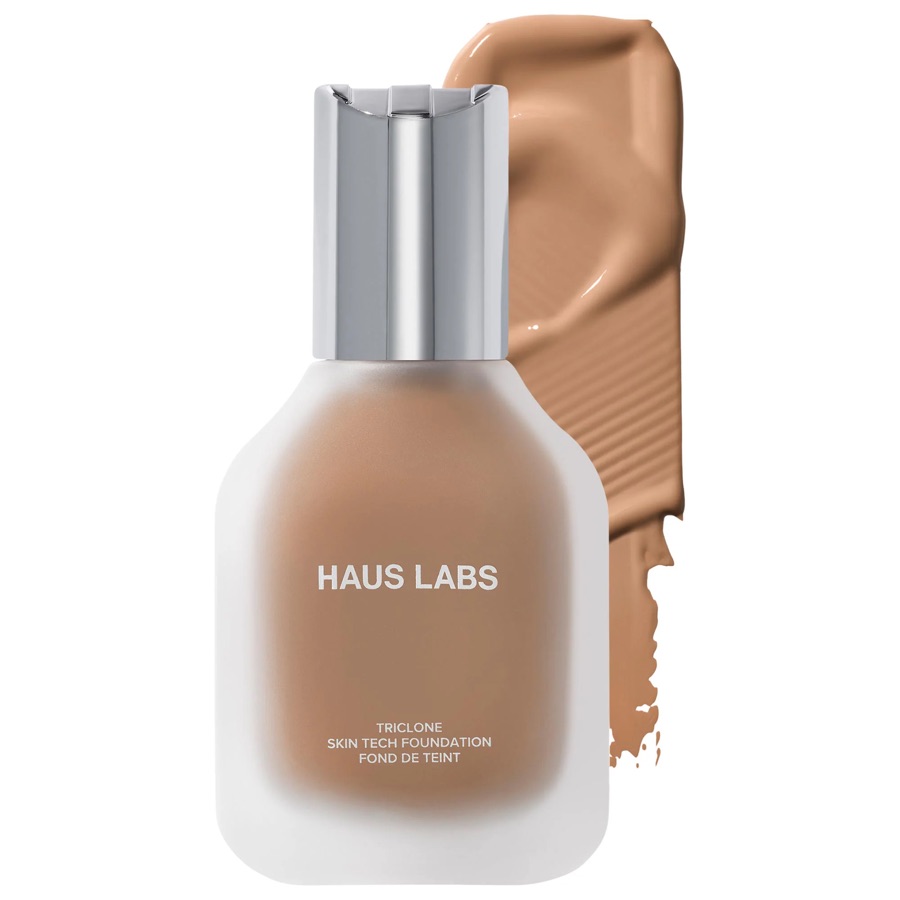
Triclone Skin Tech Medium Coverage Foundation with Fermented Arnica
- Price$52
- Size30 ml (1 fl oz)
- Works out at$1.73 per ml
- Shades51
- FinishNatural
Haus Labs US, 22 Nov 2026; also $52 on Sephora's shelf page
See it on hauslabs.com Best foundations at Sephora →
Image: Haus Labs by Lady Gaga, from sephora.com
Triclone Skin Tech is the foundation that turned Haus Labs from a celebrity side project into one of Sephora's biggest makeup brands. Lady Gaga's company first launched as Haus Laboratories in 2019, sold only on Amazon, and after a strong first Prime Day it faded, according to Marketplace Pulse; it then relaunched, reformulated, as Haus Labs by Lady Gaga, sold only at Sephora and on its own site from 9 June 2022, as WWD reported, and added Triclone on 8 September 2022, at $45, as its first complexion product. Four years later it was the first bottle on Sephora's US foundation shelf, both in an April archive and when we checked on 22 November, and it sat eighth on Sephora's list of best-selling makeup with about 5,800 reviews.
It arrives at the end of 2026 at a moment of change for the brand rather than the bottle. Haus Labs's co-founder and chief executive, Ben Jones, left in October, and Lady Gaga took over as chief executive herself, Cosmetics Business reported, while the formula, Haus Labs says, has stayed the same through a 2026 relabeling of its shades. The question this review answers is what $52 buys inside the frosted bottle, and for whom it is the right one.
What it costs, and the $12 way to try it
Haus Labs sells Triclone in one size, 30 ml (1 fl oz), for $52 on its US site, the same price Sephora's page showed in August, which works out at $1.73 a millilitre, and it has no mini or travel size. Glossy listed it at $45 in September 2022, so the bottle has gone up by $7, or 15.6%, in a little over four years. That puts it exactly level with Estée Lauder's Double Wear and Natasha Denona's Hy-Glam, both $52 for 30 ml, below Armani's Luminous Silk at $69 and above Huda Beauty's Easy Blur at $37, as our guide to the best foundations at Sephora sets out.
The cheapest way in is the Discovery Set, which costs $12 for five 2 ml samples from one of six shade families, and it works more like a deposit than a purchase: Haus Labs's terms say you pay shipping when you order and are charged the $12 plus tax only if you don't buy a full-size bottle within 21 days, and the set is sold in the US only and can't be returned. Haus Labs also offers what it calls a Shade Match Guarantee, a free exchange or return within 60 days for US buyers, so between the two there is little reason to guess at a $52 shade online.
Say you sit between two families, Light Medium and Medium, and live far from a Sephora: order the set for your likelier family, wear the five samples for a week in daylight, and if none is right, use the guarantee rather than buying a second bottle. The only catch is the paperwork, because the Discovery Set page itself is inconsistent, describing five samples while its FAQ, like the brand's general FAQ, still says three, and an older three-sample kit with the pre-2026 shade names is still listed, out of stock.
Fifty-one shades, and what the new undertone names reveal
The range runs from 000 Fair to 590 Deep in six families, seven Fair shades, eight Light and nine each in Light Medium, Medium, Medium Deep and Deep, so the deepest third of the range is as fully stocked as the middle. In 2026 Haus Labs replaced its old warm, cool and neutral descriptions with five new undertone names, Golden, Peach, Neutral, Rosy and Olive, and its page is careful to say that only the descriptor has changed, not the shade number or the formula, so anyone who already knows their number can ignore the new words.
Count the new labels, though, and the range looks less even than its marketing. Of the 51 shades, 20 are Neutral, 11 Golden, 10 Rosy, seven Peach and just three Olive, 190, 260 and 330, all in the Light to Medium families, so there is no olive option at all for fair or deep skin, and no Peach in the Fair or Deep families either. The page also says the five undertones run across all its shade families, which the shade list itself contradicts, and old labels survive in places, with one ingredient list still headed 145 Light Cool and the Discovery samples still named warm, cool and neutral.
Only three of Triclone's 51 shades are olive, and none of them is fair or deep
Haus Labs's 2026 relabeling gave every Triclone shade one of five undertone names, and tallying them on the brand's own shade list gives a lopsided range: Neutral 20, Golden 11, Rosy 10, Peach seven and Olive three. The three olive shades, 190 Light, 260 Light Medium and 330 Medium, sit in a narrow band in the middle of the range, so someone with an olive undertone and fair or deep skin has no olive Triclone to choose, and the brand's statement that its undertones run across all families is not borne out by its own list.
That matters because the relabeling invites buyers to choose by undertone first, and an olive-skinned buyer at either end of the range will find no shade that carries the label. If your skin is olive and fair or deep, start the Discovery Set in the Neutral shades of your family, which make up the largest group, rather than looking for an olive label that isn't there, and read our list of the best foundations at Sephora for Natasha Denona's Hy-Glam, a range sold on its undertone matching.
What's in it, ingredient by ingredient
The label on Haus Labs's page lists 46 ingredients for its deepest shade, 590 Deep, and the first seven are the base: water, then four silicones, diphenylsiloxy phenyl trimethicone, phenyl trimethicone, caprylyl methicone and trimethylsiloxysilicate, a film-former that helps makeup stay put, with propylene glycol dibenzoate, an emollient, and isododecane, a fast-evaporating solvent. In plain terms this is a silicone-in-water foundation of the kind that spreads easily, sets to a flexible film and resists water and sweat, which is the basis of Haus Labs's claims that it is waterproof, sweat-proof, transfer-proof and humidity-proof.
Glycerin and butylene glycol, two humectants, come eighth and ninth, followed by more silicones and silicone emulsifiers, a light alkane, denatured alcohol in 15th place and the thickener disteardimonium hectorite. Lighter shades list 48 ingredients, adding titanium dioxide and aluminum hydroxide to the iron oxides that give the deepest shade its color, and none of the shades contains a sunscreen ingredient, so Triclone has no SPF and Haus Labs makes no sun claim; it also calls the formula fragrance-free and talc-free, and nothing on the list contradicts either.
The fermented arnica, and the 20 skincare ingredients
The ingredient the full name advertises is listed as arnica montana flower extract, marked with a footnote that reads “fermented”, and it sits 21st of 46, after the peptide palmitoyl tetrapeptide-10 and before hydrolyzed hyaluronic acid and squalane. Haus Labs calls it patent-pending and proprietary, says it helps visibly reduce redness and irritation, helps even skin tone and protects from environmental stress, and its Discovery Set page claims it is 860% more potent than conventional arnica, a figure it does not explain; WWD's 2022 report described the arnica as patented, while the brand itself still says patent-pending.
The rest of what Haus Labs counts as its more than 20 skincare ingredients comes after that: four ferment filtrates made with a yeast, Pseudozyma epicola, from tea seed, apricot, olive, almond and sunflower oils, and a run of plant extracts, tomato, a microalga, ginger lily root, hollyhock, dandelion, perilla, notoginseng, licorice, chamomile and centella, with vitamin E among them; Haus Labs groups its extras under two names, a BioFerment 7 Complex it calls antioxidant and an IntelliZen 7 Complex of what it calls medicinal herbs, without saying which listed ingredient belongs to which. All of them come in the second half of the list, which under the FDA's labeling guide is ordered by quantity except for ingredients at 1% or less, so the label can't tell you how much of each is there, only that the base is silicone, water and glycerin and the skincare sits on top of it.
Coverage, finish and wear, as Haus Labs and reviewers describe them
Haus Labs describes medium, buildable coverage that you can push to full, a naturally luminous finish and a second-skin effect, and it calls the formula longwear without putting an hour figure on it, which is unusual among its rivals at Sephora, whose claims run from 16 to 36 hours. Its evidence is a one-week consumer study of 185 people by a third party, in which 96% agreed their skin tone looked more even straight away, 96% that it felt extremely comfortable after 12 hours, 95% that it felt weightless after 12 hours and 90% that their skin felt more hydrated after a week; these are perceptions rather than measurements, and the brand also calls the formula dermatologist-tested, non-comedogenic and suitable for every skin type, from acne-prone and sensitive to mature, dry and oily.
Published reviewers mostly agree on the finish and differ on oily skin. Shawna Hudson, who has acne-prone skin, called it “love at first swipe” in a Who What Wear review updated in October 2025, listing the luminous finish as the only drawback for anyone who wants matte; Lucy Abbersteen of Marie Claire UK found it medium in coverage and well behaved on her oilier skin, wishing only that it were cheaper; and Danielle Murphy of Shop TODAY found the finish stayed natural however much she layered, but advised powder or setting spray for oily skin.
Heat and sensitivity come up too. Michelle Rostamian of W Magazine wrote in May that it held up through heat and humidity in Costa Rica, and Kleigh Balugo of Hypebae, who has sensitive skin, described it in January as weightless and free of irritation, with finding her shade the only struggle. Say your skin is combination, shiny on the nose by mid-afternoon and dry on the cheeks: on the reviewers' evidence, a thin layer over moisturizer with powder pressed into the center of the face is the way to wear it, rather than building it to full coverage everywhere.
What buyers praise and complain about
Haus Labs's own page showed 4.7 out of 5 from 18,874 reviews on 22 November, and many of the newest reviews carried the label “Incentivized review”, meaning the writer was given something for it; Sephora's foundation shelf, as archived in April, showed a much lower 4.00 stars from 5,346 reviews, and an archived copy of Sephora's product page from August counted 5,600 reviews and about 1.3 million loves, with the tags Blendability, Coverage and Lightweight under highly rated. We read Sephora's lower average, built up over four years rather than in launch bursts, as the better guide to how often it disappoints.
The praise on Haus Labs's page is about comfort and texture: a buyer over 60 with dry skin wrote on 22 November, in an incentivized review, that it was the only foundation she had found that didn't crease under her eyes. The complaints are mostly about oil. A buyer with oily skin wrote on the Discovery Set page on 21 November that it was not for her and that she would buy a matte version, and on the brand's older sample kit page a one-star reviewer, not marked incentivized, wrote in February simply, “Made my skin look greasy”, to which Haus Labs replied that the formula didn't suit her skin.
What goes wrong
Whether it oxidizes, darkening or warming on the skin as the day goes on, is one of the questions shoppers most often ask about Triclone, and Haus Labs's page does not address it. The fullest independent account we found is Britt Witkin's long-running review on The Style Shaker, a beauty blog, first written in October 2022 and updated in March 2026, which found strong wear in her tests but reported that it settled around her nose on dry days and turned peachy-yellow on her skin after a few months; that is one reviewer's experience rather than a pattern we can measure, but it is a reason to judge a shade after a full day, not in the first five minutes.
Oily skin is the second risk, for the reasons buyers give above, and very dry skin the third, since The Style Shaker's reviewer saw it settle around her nose on dry days; prep with a richer moisturizer if your skin is dry. The others are smaller: there is no SPF, the review score you see depends heavily on where you read it, and the Discovery Set's terms, five samples or three, a $12 charge that becomes real after 21 days, are spelled out inconsistently across the brand's own pages, so read the order page carefully.
The history: from an Amazon launch to the top of Sephora's shelf
Haus Laboratories was announced in July 2019 with backing from the venture firm Lightspeed Venture Partners, which wrote at the time that Amazon would be its exclusive retailer worldwide, with Lady Gaga as chairwoman, and CNBC reported that it would launch that September in nearly a dozen countries. Marketplace Pulse found that it reached the top of Amazon's makeup ranking on Prime Day 2019 but failed to hold attention afterwards, and when the brand relaunched in 2022, WWD's industry sources put the first incarnation's sales at about $30 million and expected the Sephora relaunch, which began in 25 stores and was to grow to more than 500 across the US and Canada, to bring in $45 million to $50 million at retail.
Triclone was the turning point. It went on sale on 8 September 2022, first on Haus Labs's site and then at Sephora, and quickly became the brand's best-seller, and by August 2026 WWD's Power Brands list described double-digit growth every year since 2022 with the $52 foundation as the hero product. Along the way it collected awards that Haus Labs lists on its page, among them Allure's 2025 Best of Beauty for best liquid foundation, and in February, when a rival launched a foundation with the stated aim of becoming Sephora's No. 1, Glossy reported that the bottle it would have to beat was Triclone.
Haus Labs is still owned by its founders and investors, and its founder is now its chief executive
Who owns Haus Labs has a plain answer that few shoppers know: the brand's own terms of service say its site is owned and operated by HLB90067, Inc., a Delaware corporation, which also holds the Haus Labs, Haus Laboratories and Triclone trademarks. It is privately held, backed since 2019 by Lightspeed, whose investment was never priced in public, and we found no sale, new funding round or valuation through November 2026; in October Lady Gaga became its chief executive after Ben Jones, a co-founder, left, Cosmetics Business reported.
That makes it the exception among the celebrity brands at the top of Sephora's makeup list. rhode, whose blush, lip tint and bronzer took three of Sephora's top six makeup places on 22 November, was bought by e.l.f. Beauty in August 2025 for $800 million at closing plus up to $200 million more, according to e.l.f.; Haus Labs, after a failed first launch and four years of growth at Sephora, has so far stayed in the hands of the people who built it, with the founder herself now running it.
How it compares
Triclone's two most useful rivals at Sephora are a matte longwear bottle at exactly the same price and a glowing Italian one that costs a third more. Here is how they stack up.
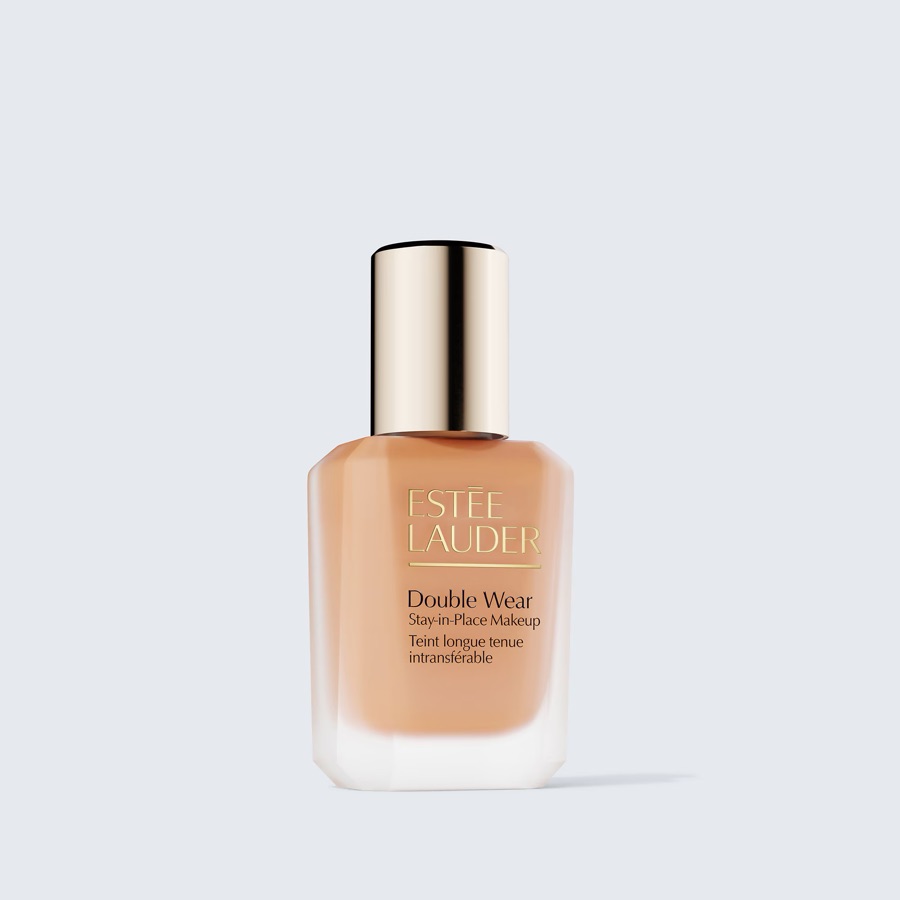
Double Wear Stay-in-Place Longwear Matte Foundation (2026 formula)
- Price$52
- Size30 ml (1 fl oz)
- Works out at$1.73 per ml
- Shades70
- FinishNatural matte
Ulta and Sephora US, 22 Nov 2026; same $52 on Estée Lauder US (page archived 8 Aug 2026). 70 shades on Estée Lauder's site, 57 at Ulta and Sephora
See it on esteelauder.com Double Wear vs Pro Filt'r →Best foundations at Sephora →
Image: Estée Lauder, from esteelauder.com
Estée Lauder's Double Wear Stay-in-Place Longwear Matte Foundation, reformulated in January 2026, costs the same $52 for 30 ml, $1.73 a millilitre, and is the better choice for oily skin and very long days, because it is sold on a natural matte finish and a 36-hour wear claim, while Triclone gives a soft glow and makes no hour claim; Double Wear also comes in 70 shades on Estée Lauder's site, 57 at Sephora. Its trade-off is the opposite of Triclone's, a matte finish that suits oily skin better than dry, and its early ratings leaned on free bottles, as our Double Wear vs Fenty face-off found; for oily skin specifically, see our best foundations for oily skin.
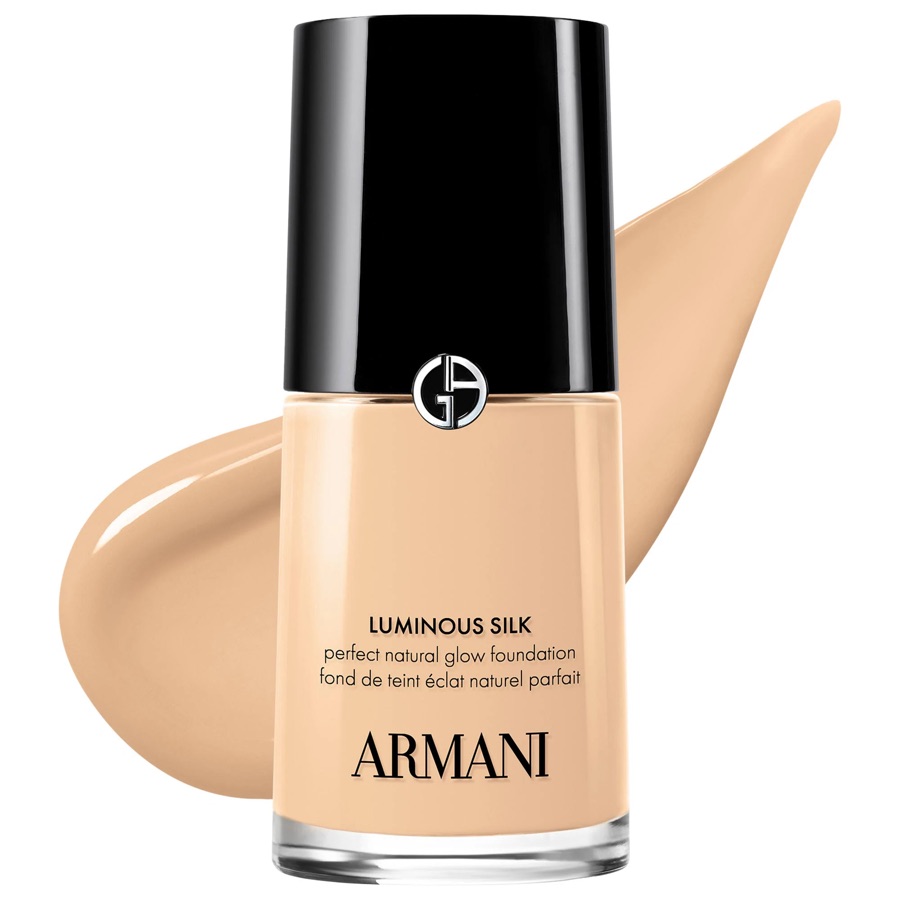
Luminous Silk Natural Glow Blurring Liquid Foundation with 24 Hour Wear
- Price$69
- Size30 ml (1 fl oz)
- Works out at$2.30 per ml
- Shades44
- FinishNatural glow
Nordstrom US, 22 Nov 2026, and Sephora's shelf page ($69, or $48 for a mini); Armani's own US site turns away automated readers
See it on nordstrom.com Best foundations at Sephora →
Image: Armani Beauty, from sephora.com
Armani's Luminous Silk, relaunched at the end of 2025, costs $69 for 30 ml, $2.30 a millilitre, about a third more than Triclone, in 44 shades with a natural glow finish and a 24-hour wear claim, and it is the one to choose if you want more radiance than Triclone gives and don't mind paying for the name; a $48 mini makes it cheaper to try, though at a worse price per millilitre. Triclone offers seven more shades and a cheaper trial through its Discovery Set, so for most people who want a skin-like, slightly luminous base we would start with Haus Labs and keep Armani for a splurge.
Our verdict
Triclone Skin Tech has earned its place at the top of Sephora's foundation shelf honestly: it is a fragrance-free, talc-free, silicone-based foundation that gives medium coverage with a natural, slightly luminous finish, its price of $52 is the going rate for a prestige foundation, and the $12 Discovery Set and 60-day shade guarantee make it cheaper and safer to try than almost any rival. We would buy it for normal, dry and combination skin that wants to look like skin, and for anyone who avoids fragrance in makeup.
We would not buy it for its fermented arnica, which sits halfway down the list and rests on the brand's own unexplained potency figure, and we would think twice if your skin is very oily, if you need an olive shade at either end of the range, or if you want sunscreen in your base. And we would read its reviews where they are written over years rather than in launch bursts, because the gap between 4.7 stars on Haus Labs's own site and 4.00 on Sephora's shelf is the most useful number on the page.
Questions people ask
Is Haus Labs Triclone foundation full coverage?
No, it is a medium-coverage foundation that Haus Labs says you can build up to full coverage. Marie Claire UK's reviewer found it medium with some buildability, and reviewers describe a natural finish even when layered.
Is Haus Labs Triclone good for oily skin?
It can work on oily skin, but Haus Labs's luminous finish means most oily-skinned reviewers set it with powder; Shop TODAY's reviewer recommended powder or setting spray, and some buyers with oily skin found it greasy. If your skin is very oily, a matte foundation such as Estée Lauder's Double Wear is the safer choice.
Does Haus Labs foundation oxidize?
Haus Labs does not say, and most published reviews don't mention it, but one long-term reviewer on The Style Shaker reported that it turned peachy-yellow on her skin after a few months. Judge your shade after a full day of wear, ideally with the $12 Discovery Set samples.
Does Haus Labs Triclone have SPF?
No. There is no sunscreen ingredient on its label and Haus Labs makes no sun-protection claim, so wear a separate sunscreen underneath.
Is Haus Labs vegan and cruelty-free?
Haus Labs says its products are clean, cruelty-free and vegan, and it describes Triclone as fragrance-free and talc-free. We did not find a Leaping Bunny or PETA logo on the pages we read, so those are the brand's own descriptions.
Who owns Haus Labs?
Haus Labs is owned by HLB90067, Inc., a privately held Delaware company founded by Lady Gaga and backed by the venture firm Lightspeed Venture Partners. Lady Gaga became its chief executive in October 2026, and we found no sale of the company.
Where can you buy Haus Labs Triclone?
In the US it is sold on Haus Labs's own site and at Sephora, which the brand calls its exclusive retail partner in the US, Canada, the UK and Europe; the brand stopped selling through Amazon when it relaunched in 2022.
How we put this together
We read each brand's own product pages and full ingredient lists, what buyers report in public reviews and forums, and the news coverage linked on this page. Prices are the brand's own list prices in the US on the date shown, unless the page names another shop. Nothing here is rated or scored, and no brand paid to appear.
Sources (26)
- Haus Labs: Triclone Skin Tech Foundation (price, shades, ingredients, claims, study, reviews)
- Haus Labs: Triclone Discovery Set (price, samples, terms, reviews)
- Haus Labs: foundation sample kit (older listing, reviews)
- Haus Labs: FAQs (Shade Match Guarantee, retail partners)
- Haus Labs: terms of service (owner)
- Sephora US: Triclone Skin Tech product page, archived 9 August 2026 (price, reviews, loves)
- Sephora US: foundation shelf, archived 20 April 2026 (order, ratings)
- Sephora US: best-selling makeup, 22 November 2026
- WWD: Lady Gaga's Haus Labs enters phase two (May 2022)
- WWD: Beauty Power Brands 2026 (August 2026)
- Cosmetics Business: Lady Gaga assumes CEO role of Haus Labs (29 October 2026)
- Lightspeed Venture Partners: Going Gaga for Haus Labs (July 2019)
- CNBC: Lady Gaga to launch beauty line on Amazon (10 July 2019)
- Marketplace Pulse: Lady Gaga's beauty brand gives up on Amazon (May 2022)
- PinkNews: Haus Labs foundation release date (September 2022)
- Glossy: Haus Labs launches its first TikTok campaign (26 September 2022; Triclone at $45, No. 1 bestseller)
- Glossy: m.ph aims to become Sephora's No. 1 foundation (5 February 2026)
- Who What Wear: Shawna Hudson's Triclone review (updated October 2025)
- Marie Claire UK: Lucy Abbersteen's Haus Labs foundation review (May 2025)
- Shop TODAY: Danielle Murphy's Haus Labs foundation review (updated November 2024)
- Hypebae: Triclone review (January 2026)
- W Magazine: best sweat-proof foundations (May 2026)
- The Style Shaker: long-term Triclone review (updated March 2026)
- US FDA: Cosmetics labeling guide (ingredient order)
- e.l.f. Beauty: agreement to acquire rhode (28 May 2025)
- e.l.f. Beauty: first-quarter fiscal 2026 results (rhode deal closed 5 August 2025)