Buy Halo Glow if you want the Flawless Filter look for less than a third of the price, because it is built on the same base, shares twelve of Charlotte Tilbury's eighteen ingredients and now comes in 15 shades to the original's 12; buy Flawless Filter if you want a shorter ingredient list with no phenoxyethanol, a slightly thinner texture that reviewers describe as gel-like, or a bottle to mix with Charlotte Tilbury's own foundations, and wait for a sale if you can.
- You want the lower price, $15 for 31.5 ml or 48 cents a millilitre, against $1.67 a millilitre for Flawless Filter, with a 30-day refund from e.l.f. if the shade turns out wrong.
- Your skin is very fair or very deep, because e.l.f.'s 15 shades now run from 00 to 8.5, beyond both ends of Charlotte Tilbury's range of 1 to 8.
- You want more hydrating ingredients, since e.l.f. lists squalane third and adds two forms of hyaluronic acid, sunflower seed oil and vitamin E to the shared base.
- You want a formula its maker calls vegan, which e.l.f. says of every product it sells.
- You prefer a shorter formula: 18 ingredients plus pigments, against Halo Glow's 31, with no phenoxyethanol, no EDTA and no plain dimethicone.
- You like a thinner texture, which Temptalia described as gel-like and which PureWow's tester found slightly thinner than Halo Glow's.
- You already wear Charlotte Tilbury foundation, since the brand designs Flawless Filter to be mixed with its Airbrush Flawless, Light Wonder and Magic foundations.
- You can buy it on sale, as British shoppers could on 22 November, when Charlotte Tilbury UK cut it from £40 to £30.
The one difference that matters: the two bottles are built on the same base of water, hydrogenated didecene, glycerin, squalane and the same emulsifier, with the same five pigments, so what separates them is price, shade range and a handful of supporting ingredients rather than a different kind of product.
Neither bottle contains sunscreen, so neither one replaces your SPF in the morning. What's in each bottle.
| | |
|---|---|---|
| Price and size | $50 for 30 ml (1 fl oz) at Charlotte Tilbury US | $15 for 31.5 ml (1.06 fl oz) at e.l.f. US |
| Price per ml | $1.67 | 48 cents |
| Price in the UK | £40 (£30 in the brand's sale on 22 November) | £16 |
| Launched | 2018, at $44 | July 2022, at $14 |
| Shades | 12, numbered 1 to 8 with four half-steps | 15, numbered 00 to 8.5, each with an undertone |
| Ingredients | 18 plus pigments; water, hydrogenated didecene and mica first | 31 plus pigments; water, hydrogenated didecene and squalane first |
| Shared ingredients | 12 of its 18 are in Halo Glow | Same five pigments as Flawless Filter |
| What it's for, per the brand | Wear alone, under, mixed with or over foundation, or as highlighter | The same four ways |
| SPF | None | None |
| Vegan | No vegan claim on its page | Yes, per e.l.f. |
| Reviews on the brand's own site | 4.56 average from 4,294 | 4.6 average from 9,614 |
| Who makes it | Charlotte Tilbury Beauty, London (2013), majority-owned by Puig of Barcelona since 2020 | e.l.f. Cosmetics, Oakland, California (2004), part of the listed e.l.f. Beauty |
Prices from Charlotte Tilbury's US and UK sites and e.l.f.'s US and UK sites on 22 November 2026; prices per millilitre are our arithmetic. Launch prices from Temptalia's July 2018 review and e.l.f.'s July 2022 product page (archived).
How a $14 bottle became beauty's best-known dupe
Charlotte Tilbury, the British makeup artist who launched her brand at Selfridges in London in 2013, introduced Hollywood Flawless Filter in early 2018 as what Hypebae called “a customizable complexion booster that works as a primer, highlighter and pore minimizer”, a tinted, light-catching fluid you could wear alone, under foundation, mixed into it or dabbed on the cheekbones. It cost $44 for 30 ml when Temptalia reviewed it that July, it grew from seven shades to 12 when Charlotte Tilbury added five more in December 2020, and it became one of the products that defined the brand, which Puig, the Barcelona fragrance and fashion group, took majority control of in 2020.
e.l.f. launched Halo Glow Liquid Filter in July 2022 at $14 for 31.5 ml in eight shades, and within weeks the internet had decided what it was: Stylist reported that “many proclaimed it to be on a par with other complexion boosters – such as Charlotte Tilbury’s Hollywood Flawless Filter”, and PureWow ran a head-to-head asking whether it was “Really a $14 Dupe”. e.l.f. hardly needed to make the comparison itself, because its customers and TikTok made it for the company, and e.l.f. Beauty, whose shelves are full of affordable takes on prestige favorites, reported net sales of $1.64 billion in the year to March 2026, up 25%, which its chief executive, Tarang Amin, called the company's “7th consecutive year of net sales and market share growth” in its results statement.
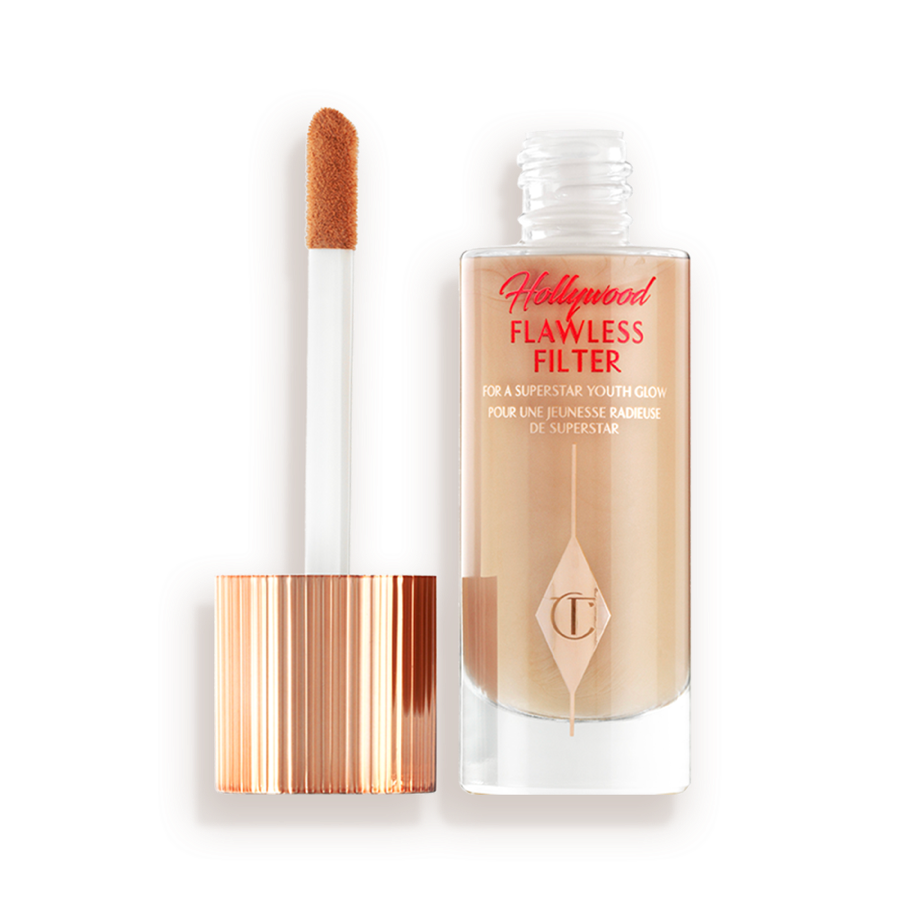
Hollywood Flawless Filter: what $50 buys
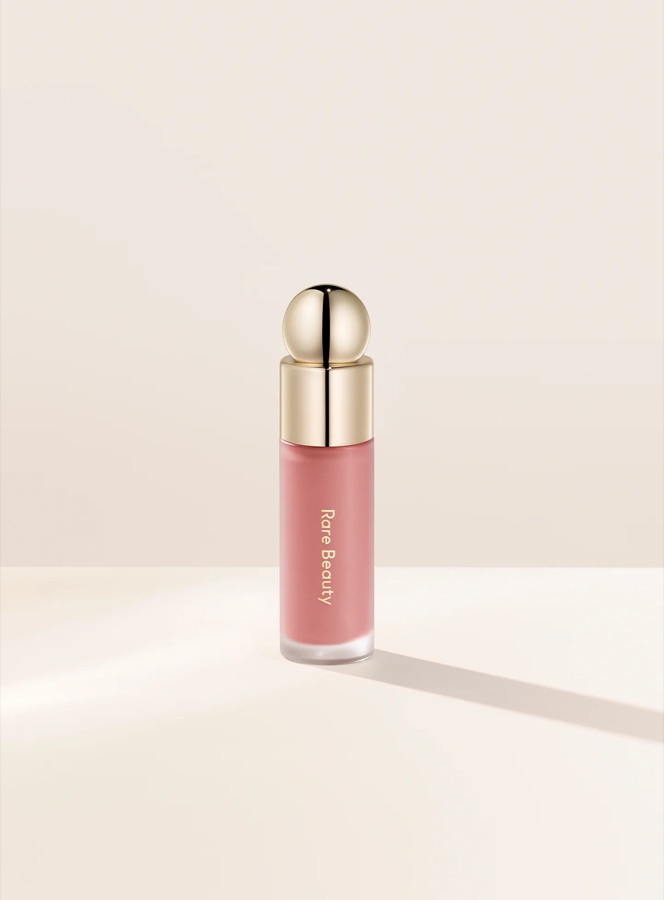
Hollywood Flawless Filter in 4 Medium
- Price$50
- Size30 ml (1 fl oz)
- Works out at$1.67 per ml
- Shades12
- FinishLuminous, sheer
Charlotte Tilbury US, 22 Nov 2026 (every shade $50; £40 in the UK, cut to £30 in that day's sale)
See it on charlottetilbury.com
Image: Charlotte Tilbury, from charlottetilbury.com
What it costs, and how that has changed
Flawless Filter costs $50 for 30 ml in every shade on Charlotte Tilbury's US site, which the brand itself works out at $16.67 per 10 ml, or $1.67 a millilitre, and there was no discount on the single bottle there on 22 November, although the site was promoting gift kits at up to half off. In Britain it lists at £40, and on the same day Charlotte Tilbury UK had it at £30 in its Black Friday sale, so British shoppers who time their purchase pay a quarter less than the usual British price.
The American price has risen three times in eight years, and twice since e.l.f. arrived with its alternative. Archived copies of Charlotte Tilbury's own page show $44 from August 2019 to July 2022, $49 by March 2023 and $50 by February 2026, so the bottle costs $6 more than it did the month e.l.f.'s alternative appeared, an increase of about 14%.
What's in it, ingredient by ingredient
Charlotte Tilbury lists 18 ingredients plus pigments, and the order tells you what kind of product this is. Water comes first, then hydrogenated didecene, a light, silky emollient, then mica, the mineral that gives the glow its shimmer, then glycerin and propanediol, two humectants that draw in water, and squalane, a light oil; after that come cetyl PEG/PPG-10/1 dimethicone, an emulsifier that holds the water inside the oils, isoamyl laurate, another light emollient, a styrene-based polymer that thickens the oil phase, sodium chloride, which helps stabilize that kind of emulsion, and caprylic/capric triglyceride, an oil usually made from coconut. Charlotte Tilbury's page credits a “glossy oil” and “smoothing airbrush polymers” for the effect without naming the ingredients behind those phrases.
The rest of the list is housekeeping and marketing, the ingredients that keep a water-and-oil fluid fresh and give the label its story. Hydroxyacetophenone, 1,2-hexanediol and caprylyl glycol preserve the formula without parabens or phenoxyethanol, trisodium ethylenediamine disuccinate binds metal traces, pentaerythrityl tetra-di-t-butyl hydroxyhydrocinnamate stops the oils going stale, and Hoya lacunosa flower extract is the brightening porcelain flower extract, “derived from a Thai flower”, that Charlotte Tilbury features on the page, though it is listed 17th of 18. The pigments are titanium dioxide, three iron oxides and bismuth oxychloride, a pearly white that adds to the sheen, and the list has changed once in recent years: between July 2022 and March 2023 Charlotte Tilbury dropped glycosaminoglycans and added the antioxidant pentaerythrityl tetra-di-t-butyl hydroxyhydrocinnamate.
How it looks and wears, according to Charlotte Tilbury and reviewers
Charlotte Tilbury says the filter “blurs, smooths and illuminates”, that it moisturizes for up to 24 hours on a test of 16 people, and that 96% of 300 people who used it for a week agreed it gave skin “a real-life filter”; the brand also calls it the number one highlighter in the US prestige makeup market, citing Circana sales data, and the third in Britain. Those are the brand's own figures, and the most useful independent description is still Temptalia's from 2018, which found a texture that was “smooth and lightweight, like a thin gel-based primer in feel”, and a finish that stayed on its own for eight and a half to nine hours without migrating.
Reviewers agree on what it does and disagree only on how much it is worth. Writing for Yahoo Style Canada in January 2023, Katie Scott said that it “definitely lived up to its promise of smoothing and visibly brightening my skin” and that her skin felt very moisturized, and she said she would keep it for events and nights out while wearing e.l.f.'s version day to day.
It gave me a lit-from-within-glow that was luminous but not tacky or truly glossy, just looked dewy on my skin.
Temptalia, reviewing Flawless Filter in shade 3, July 2018
Shades: twelve steps from fair to deep
Flawless Filter comes in 12 shades, numbered 1 to 8 with half-steps at 2.5, 4.5, 5.5 and 6.5, and Charlotte Tilbury groups them as fair, medium, tan and deep; the shade pictured here, 4 Medium, is described as “an olive shade that's perfect for medium skin tones”. Because the product is sheer and meant to be blended into or under foundation, a near match is usually enough, but the range has not grown since December 2020, and at both ends it now stops short of e.l.f.'s.
Charlotte Tilbury offers online shade matching and in-store appointments, and if you are between two numbers it is worth asking for a sample at a counter and trying it in daylight before you commit $50 to a bottle.
What goes wrong with Flawless Filter
Price is the first objection, and it has grown sharper since 2022, because a $50 bottle is hard to justify once you have read an ingredient list that shares its backbone with a $15 one. The second is the finish itself, which suits some faces better than others: Temptalia, who liked it, still warned that “I can see one person finding that finish to look ‘oily’”, and anyone whose T-zone shines by noon may prefer to use it only on the high points of the face.
The third complaint is really about what the product is not, since Flawless Filter has no SPF, gives only sheer coverage and will not hide much on its own, so the people most likely to be disappointed are those who buy it expecting a foundation, and those with very fair or very deep skin, who now have more choice at e.l.f.
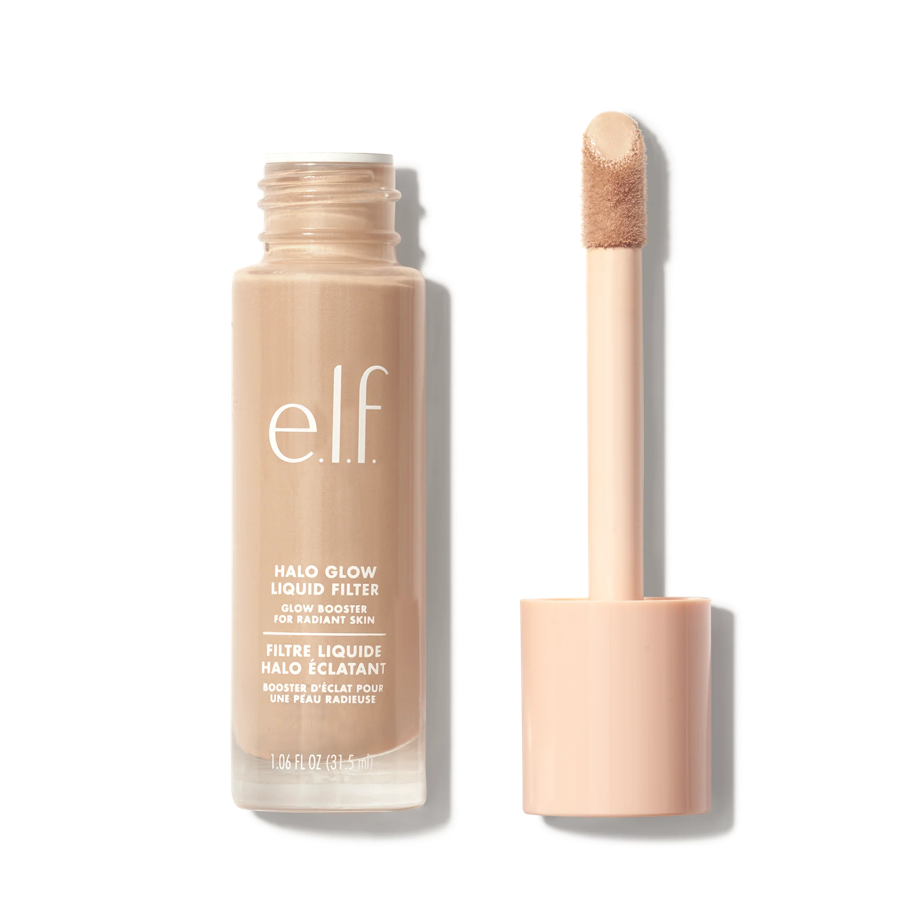
Halo Glow Liquid Filter: what $15 buys
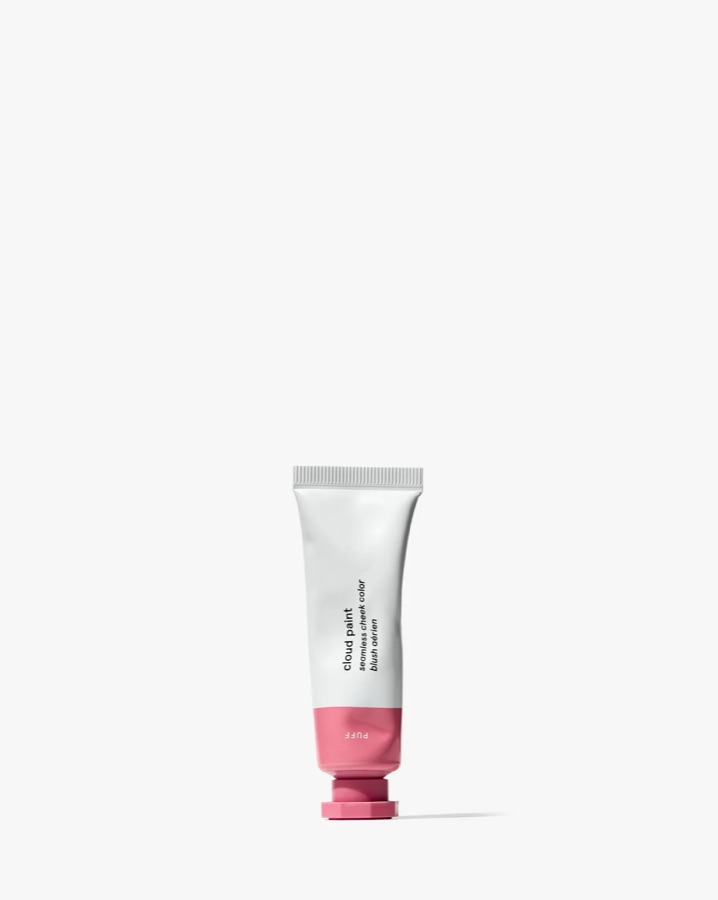
Halo Glow Liquid Filter in 4 Medium Neutral
- Price$15
- Size31.5 ml (1.06 fl oz)
- Works out at$0.48 per ml
- Shades15
- FinishLuminous, sheer
e.l.f. US, 22 Nov 2026 (every shade $15; £16 in the UK)
Image: e.l.f. Cosmetics, from elfcosmetics.com
What it costs, and why it went up a dollar
Halo Glow costs $15 for 31.5 ml in every shade on e.l.f.'s US site, or 48 cents a millilitre, which makes Flawless Filter three and a half times as expensive by volume, and e.l.f. promises to refund the purchase within 30 days if the shade is wrong. In Britain it costs £16 on e.l.f. UK, up from the £14 Stylist reported at launch.
The American price was $14 when the product launched, as e.l.f.'s July 2022 page shows, and it went to $15 on 1 August 2025, when e.l.f. added a dollar to every product in its range; the company told customers that “inflation and tariffs are hitting us hard”, Retail Dive reported, at a time when, according to its finance chief, about 80% of its products were sourced from China. Even so, the gap with Charlotte Tilbury has widened, from $30 a bottle in 2022 to $35 today.
What's in it, and what it shares with the original
Halo Glow lists 31 ingredients plus pigments, and the first two are the same as Flawless Filter's, water and hydrogenated didecene, followed by squalane, which e.l.f. names as one of two key ingredients, then propylene glycol and glycerin as humectants, octyldodecanol as a further emollient, and synthetic fluorphlogopite, a laboratory-made mica, as the shimmer. Further down sit the same emulsifier, cetyl PEG/PPG-10/1 dimethicone, the same styrene-based thickener, the same isoamyl laurate, caprylic/capric triglyceride, polyglyceryl-4 isostearate and sodium chloride, and the same antioxidant that Charlotte Tilbury added to its list in 2022 or 2023, which e.l.f. has listed since launch.
The extra ingredients in e.l.f.'s list are mostly about texture and moisture rather than glow, and they explain why its formula runs to 31 items. e.l.f. adds plain dimethicone and ethylhexyl hydroxystearate for slip, a clay thickener and propylene carbonate, polymethylsilsesquioxane, a fine powder that blurs, sunflower seed oil, vitamin E, calendula extract and two forms of hyaluronic acid, its other headline ingredient, and it preserves the formula with phenoxyethanol and ethylhexylglycerin rather than Charlotte Tilbury's hydroxyacetophenone system. The pigment list is identical, titanium dioxide, three iron oxides and bismuth oxychloride, and the formula has not changed since launch: the 31 ingredients on the July 2022 page are the 31 listed today, with only the synthetic mica moving up from tenth place to seventh.
Twelve of Flawless Filter's eighteen ingredients are in Halo Glow, and the other six have stand-ins
Set the two current lists side by side and twelve of Charlotte Tilbury's eighteen ingredients appear word for word in e.l.f.'s: water, hydrogenated didecene, glycerin, squalane, cetyl PEG/PPG-10/1 dimethicone, isoamyl laurate, hydrogenated styrene/isoprene copolymer, sodium chloride, caprylic/capric triglyceride, polyglyceryl-4 isostearate, caprylyl glycol and pentaerythrityl tetra-di-t-butyl hydroxyhydrocinnamate. The two products also share exactly the same five pigments.
Each of the other six has an equivalent doing the same job in Halo Glow: Charlotte Tilbury's mica against e.l.f.'s synthetic mica, propanediol against propylene glycol, hydroxyacetophenone and 1,2-hexanediol against phenoxyethanol and ethylhexylglycerin as preservatives, trisodium ethylenediamine disuccinate against disodium EDTA as the metal binder, and the porcelain flower extract against calendula. The one structural difference is position: Flawless Filter lists its mica third, ahead of every humectant and oil but the first, while Halo Glow lists its synthetic mica seventh, behind squalane, two humectants and octyldodecanol, which fits reviewers' sense that the e.l.f. version is the dewier and slightly thicker of the two.
How it looks and wears, according to e.l.f. and reviewers
e.l.f. promises “a soft-focus social filter effect IRL”, calls Halo Glow a “glowy makeup and skincare hybrid for dewy skin” and says it suits dry, oily and combination skin, to be worn the same four ways as Flawless Filter. On its own site it averages 4.6 from 9,614 reviews, more than twice as many as Charlotte Tilbury shows for Flawless Filter, and the early professional reviews were warm: Stylist's Vanese Maddix concluded in July 2022: “At £14, I really don’t think you can go wrong with E.l.f.’s Halo Glow Liquid Filter.”
The head-to-head reviews found more similarity than difference. Olivia Dubyak of PureWow, comparing them in August 2022, wrote that Halo Glow “had the same effect: a glowy, lightweight finish sans wetness”, but that the consistency was “a tiny bit thicker than the Charlotte Tilbury, so I didn't need as much when applying”, and Katie Scott of Yahoo Style Canada found the e.l.f. version looked a little dewier, smoothed the under-eye area better on her skin, and needed a few minutes to set before mascara.
From eight shades to fifteen
Halo Glow's shade range was its weak point at launch, and its own reviews still record it. It came in eight shades, numbered 1 to 8, and the oldest reviews on e.l.f.'s page, from July 2022 and January 2023, are complaints from very fair buyers that even the lightest shade looked orange or bronzed; one, in January 2023, wrote that e.l.f.'s customer service had said there were no plans to expand the range, and ended: “I’ll be sticking with CT flawless filter because of this.”
e.l.f. did expand it, to 12 shades by September 2024, including a new 0, 0.5 and 8.5, and to 15 by September 2025, by which time 00, 3.5, 5.5 and 6.5 had joined them. Every shade now carries an undertone in its name, from 00 Fair Neutral and 0.5 Fair Cool to 3.5 Medium Neutral Olive and 8.5 Rich Neutral Warm, which is more guidance than Charlotte Tilbury's numbers give.
I have seen many other complaints about this and after contacting customer service they said they don’t have plans on expanding the shade range.
A reviewer on e.l.f.'s US site, January 2023
What goes wrong with Halo Glow
The shade problem has largely been solved, but a color can look different in the bottle from the way it looks on a screen, so e.l.f.'s 30-day refund is worth knowing about, and one of the reviews on its page advises very fair buyers to compare the bottle with their skin in a shop rather than ordering blind. The slightly thicker texture that PureWow's tester described is a plus on dry skin and a possible minus on oily skin, where a glow product of this kind can tip into shine by mid-afternoon.
The formula is longer and more conventional than Charlotte Tilbury's, with phenoxyethanol, EDTA and propylene glycol, which matters to people who read lists for ingredients they prefer to avoid, though all three are common in makeup. And like Flawless Filter, it has no SPF; e.l.f. sells sun protection in a separate Halo Glow skin tint rather than in this bottle.
Since Halo Glow arrived, Flawless Filter has gone up $6 and moved closer to it, while e.l.f. has added seven shades
In July 2022, when Halo Glow launched, Flawless Filter cost $44 and Halo Glow $14, a gap of $30 and a ratio of 3.3 to 1 per millilitre. Today they cost $50 and $15, a gap of $35 and a ratio of 3.5 to 1, so the original has become relatively dearer even though e.l.f. raised its price too.
Over the same period, Charlotte Tilbury's ingredient list lost glycosaminoglycans and gained pentaerythrityl tetra-di-t-butyl hydroxyhydrocinnamate, an antioxidant that e.l.f.'s list had included from the day Halo Glow went on sale, while e.l.f. went from eight shades to 15 and Charlotte Tilbury stayed at 12. We are not suggesting either company followed the other, only that the familiar story of a prestige original and a cheaper copy no longer fits the facts: on price, on shade range and now on part of the ingredient list, the two have converged, and on shades the alternative has overtaken the original.
Bottles and wands: does the packaging matter?
Both come in glass bottles with a doe-foot wand fixed into the cap, which is the right choice for a fluid you dot on, mix on the back of your hand or tap along the cheekbones, and they hold almost exactly the same amount, 30 ml against 31.5 ml. Charlotte Tilbury's is the more decorative, with a rose-gold fluted cap and the brand's diamond logo on the glass, and Temptalia described its wand as “jumbo”, which made it easier to dot on for highlighting and priming than to measure out for mixing into foundation.
e.l.f.'s bottle is plainer, with a pale peach cap, and the company says the glass is recyclable; Katie Scott, who compared them for Yahoo Style Canada, wrote that e.l.f.'s applicator “felt like you could control the amount of product that comes out of the bottle”, and that the two “hold about the same amount of liquid”. Neither has a pump, and with a wand the last few drops of any bottle are the hardest to reach, which is one more reason not to pay $50 for what is left at the bottom.
Do they look the same on the skin?
Close enough that most people will not tell them apart across a room, on the evidence of every side-by-side review we found. PureWow found the same glowy, non-wet finish from both, Yahoo Style Canada found them “definitely similar” with the e.l.f. a little dewier, and the shared base, with the same emollient second on both lists and the same pearly pigments, explains why.
The differences are in the details, and they follow from the lists rather than from the logos. Flawless Filter's higher mica and shorter list point to a slightly more reflective, thinner fluid, and Halo Glow's extra oils, humectants and blurring powder point to a slightly richer, softer one; say you mix three or four drops into a foundation, and those differences shrink further, because the foundation does most of the work. If you wear it alone as a tinted glow, the shade match matters more than the brand.
Which suits oily, dry or mature skin?
e.l.f. says Halo Glow suits dry, oily and combination skin, and Charlotte Tilbury pitches Flawless Filter at everyone, but both are emollient glow products, so oily skin is the harder case for either. If your skin is oily, we would use either one only on the cheekbones and the bridge of the nose, or mix a little into a matte foundation, rather than wearing it all over; if your skin is dry, Halo Glow's extra squalane, hyaluronic acid and sunflower oil make it the more comfortable of the two on paper.
For mature skin, Charlotte Tilbury's own survey, in which 99% of 300 users agreed their skin looked “more youthful”, is the only claim of its kind either brand makes, and it is a perception study rather than a measurement. Both products sit on top of the skin like any makeup, and if you have rosacea, eczema or another skin condition, ask a dermatologist before adding a shimmering product to your routine.
Which shade should you buy?
There is no official conversion between the two ranges, and although both number their shades from fair to deep, e.l.f.'s 4 is not Charlotte Tilbury's 4. Start with the undertone, which e.l.f. names in every shade and Charlotte Tilbury describes for some, such as the olive 4 Medium, and remember that both are sheer, so a shade slightly off will matter less than it would in a foundation.
If you are fair and found Halo Glow too dark in 2022, look at its newer 00, 0 and 0.5; if you are deep, its 8.5 Rich Neutral Warm goes beyond Charlotte Tilbury's 8. Buy in a shop if you can, where you can see the bottle against your jaw in daylight, and keep the receipt.
Which is better value?
Halo Glow is the better value by a wide margin: 48 cents a millilitre against $1.67, for a bottle that is 1.5 ml larger and shares the original's base. Say you wear one of them every day and finish a bottle every three months; a year of Flawless Filter at full price would cost $200 in the US, and a year of Halo Glow $60, a difference of $140.
Flawless Filter's value improves only with sales and kits, such as the £30 price in Britain on 22 November or the gift sets Charlotte Tilbury sells each holiday season, and even at £30 it costs about twice as much per millilitre as Halo Glow does in Britain at £16. If you already own Flawless Filter and love it, there is no reason to switch, but if you are buying your first glow booster, we see no case for paying $35 more.
Where you can buy them
Both are easy to find in the US and Britain, though they sit in very different parts of the shop and the market. Charlotte Tilbury sells Flawless Filter through its own sites, its counters and prestige retailers such as Sephora and Ulta Beauty, and Cosmetics Business reported in February that the brand's growth in 2025 was helped by “distribution gains through Amazon in the US”, in a year when its owner Puig passed €5 billion of revenue for the first time and counted Charlotte Tilbury as the biggest contributor to its makeup sales.
e.l.f. sells Halo Glow on its own US and UK sites and through mass retailers and Ulta Beauty, and the brand belongs to e.l.f. Beauty, a New York-listed company based in Oakland that has also bought the skincare brand Naturium, for $355 million in 2023, and Hailey Bieber's rhode, for up to $1 billion in 2025, according to its Wikipedia entry.
Our verdict
We would buy Halo Glow, and we would not feel we were settling for second best, because it shares Flawless Filter's base, twelve of its eighteen ingredients and all five of its pigments, it now covers more skin tones, it gives a finish that every side-by-side reviewer we found judged very close to the original, and it costs $35 less for a slightly larger bottle. The dupe label usually flatters the cheaper product, but in this case the ingredient lists back it up.
Flawless Filter is still a lovely product, and we would buy it if you prefer a shorter formula without phenoxyethanol, like a thinner fluid, or already build your face around Charlotte Tilbury's foundations, and we would wait for a sale or a kit rather than pay $50. What we would not do is pay that price in the belief that it contains something Halo Glow does not; for the most part, it doesn't.
Questions people ask
Is e.l.f. Halo Glow the same as Charlotte Tilbury Flawless Filter?
Not identical, but very close: twelve of Flawless Filter's eighteen ingredients appear in Halo Glow, including the first two, water and hydrogenated didecene, and both use the same five pigments. Halo Glow adds hydrators such as hyaluronic acid and sunflower oil, uses different preservatives and costs $15 against $50.
Is Halo Glow a good dupe for Flawless Filter?
Yes, on the evidence of its ingredient list and of side-by-side reviews by PureWow and Yahoo Style Canada, which found the same glowy finish, with the e.l.f. version slightly thicker and dewier. It also comes in more shades, 15 against 12.
Can you wear Flawless Filter or Halo Glow alone instead of foundation?
Yes, both brands say you can wear them alone, under foundation, mixed into it or as a highlighter. On their own they give a sheer, tinted glow rather than real coverage, so they will not hide much.
Do Flawless Filter and Halo Glow have SPF?
No, neither contains sunscreen, so wear an SPF underneath. e.l.f. sells sun protection in a separate Halo Glow skin tint, and Charlotte Tilbury in a separate primer.
Which Halo Glow shade matches my Flawless Filter shade?
There is no official conversion, and the numbers do not line up exactly, so start from your undertone, which e.l.f. names in every shade. e.l.f. offers a 30-day refund if the shade is wrong.
Is Halo Glow good for oily skin?
e.l.f. says it suits dry, oily and combination skin, but it is a rich, emollient glow product, so on oily skin it works best on the high points of the face or mixed into a matte foundation rather than worn all over.
Why does Halo Glow cost $15 now instead of $14?
e.l.f. added $1 to every product in its range on 1 August 2025, telling customers that inflation and tariffs were hitting the company hard, as Retail Dive reported. Flawless Filter has gone from $44 to $50 over the same period.
How we put this together
We read each brand's own product pages and full ingredient lists, what buyers report in public reviews and forums, and the news coverage linked on this page. Prices are the brand's own list prices in the US on the date shown, unless the page names another shop. Nothing here is rated or scored, and no brand paid to appear.
Sources (22)
- Charlotte Tilbury US: Hollywood Flawless Filter, 4 Medium (price, claims, ingredients)
- Charlotte Tilbury UK: Hollywood Flawless Filter, 4 Medium
- Charlotte Tilbury: five new Hollywood Flawless Filter shades, December 2020
- Charlotte Tilbury: Flawless Filter page, August 2019 (archived)
- Charlotte Tilbury: Flawless Filter page, July 2022 (archived)
- Charlotte Tilbury: Flawless Filter page, March 2023 (archived)
- Charlotte Tilbury: Flawless Filter page, February 2026 (archived)
- e.l.f. Cosmetics US: Halo Glow Liquid Filter (price, shades, ingredients, reviews)
- e.l.f. Cosmetics UK: Halo Glow Liquid Filter
- e.l.f.: Halo Glow page at launch, July 2022 (archived)
- e.l.f.: Halo Glow page, September 2024 (archived)
- e.l.f.: Halo Glow page, September 2025 (archived)
- Retail Dive: e.l.f. Beauty to raise prices by $1, May 2025
- e.l.f. Beauty: fourth quarter and fiscal 2026 results, May 2026
- Cosmetics Business: Charlotte Tilbury helps Puig revenue pass €5bn, February 2026
- Wikipedia: e.l.f. Cosmetics
- Wikipedia: Charlotte Tilbury
- Hypebae: Charlotte Tilbury's Hollywood Flawless Filter, January 2018
- Temptalia: Charlotte Tilbury Hollywood Flawless Filter review, July 2018
- Stylist: e.l.f. Halo Glow Liquid Filter review, July 2022
- PureWow: Is e.l.f.'s Halo Glow Filter really a $14 dupe? August 2022
- Yahoo Style Canada: e.l.f. Halo Glow vs Charlotte Tilbury, January 2023